AlphaSense review
 By Jan Suski. I go deep on every review, checking every number against its source and digging up details other coverage misses, a habit from six years of SEO and link building for tech companies. Bylines at Surfer, Brand24, and Senuto. How the scoring works.
· Prefer this source on Google
Best for
Investment banks, hedge funds and corporate strategy teams running constant due diligence who need filings, broker research and expert transcripts unified under one AI search engine.
Not for
Teams without room to invest in ramp time or the budget for a five-figure annual contract and ongoing training investment.
What it costs
No published rate card. A UK public contract works out to £81,900 a year; Vendr's brokered median across 38 purchases is $17,500, from $9,250 to $51,000.
- Document library
- More than 500 million business documents covering public and private companies
- Content types
- SEC filings, broker research, quarterly and annual reports, expert call transcripts, structured financials
- AI search
- Reads a query the way a person would, returning relevant snippets without needing exact keyword matches
- Smart Synonyms
- Expands a term through natural language processing to catch the jargon an analyst missed
- Generative Search
- One citation-backed answer synthesized across several documents at once
- Sentiment layer
- Sentiment analysis and summarization run across filings and earnings reports to surface themes
- Expert transcripts
- Tegus library folded in through the $930 million 2024 acquisition
- Internal repositories
- Connects to enterprise document stores so internal reports sit beside company filings
- Collaboration
- Annotate, clip and share inside the platform
- Onboarding
- Structured program; self-service training rarely covers every workflow on day one
- Data sources
- More than 2,000 premium business data sources
- Company coverage
- More than 27,000 public and private companies
- Languages
- More than 37
- Ingestion
- Continuous, with millions of documents added annually, so coverage is same-day
Contracts observed
- UK public contract
- £163,800 over two years to the Financial Reporting Council, 1 Dec 2024 to 30 Nov 2026, or £81,900 a year
- Per named user
- £6,300 a year, dividing that contract by the 13 users named in the pre-award requirement
- Vendr median
- $17,500 total contract value across 38 brokered purchases, ranging $9,250 to $51,000
- Per-seat estimate
- $10,000 to $20,000, up to $50,000, estimated by Sacra; not a vendor figure
- Revenue per customer
- Roughly $85,700 a year, dividing $600M+ ARR by 7,000+ enterprises; an average, not a quote
- Benchmark set
- Our AlphaSense pricing report sets the median contract against Bloomberg, FactSet and Koyfin
- Customer base
- More than 7,000 global enterprises as of June 2026, and 88 percent of the S&P 100 by the company's own account
- Offices
- New York headquarters, with Bengaluru, Pune and New Delhi on engineering and client success
- Published rate card
- None; the pricing page compares two plans and carries no numbers
- Content add-ons
- Expert calls and Canalyst models sit outside both plans, with no published price
- What moves the number
- Scope and which content packages are included
FactSet
Not forA team whose real bottleneck is reading filings and transcripts fast. FactSet covers structured numbers and screening in depth, leaving AI summarization of unstructured filings to AlphaSense.
Bloomberg
Not forA corporate strategy team that mostly reads documents. Bloomberg's edge is live market data, a job AlphaSense doesn't do.
Pairs well with AlphaSense
Which AlphaSense cost figures are contracts, which are buyer data, and which are somebody's estimate
AlphaSense publishes no rate card, so none of the cost figures above is a vendor price. The £163,800 is a published public contract: what the UK Financial Reporting Council agreed to pay, disclosed on Contracts Finder because the buyer is a public body, with the 13-user count taken from the pre-award Statement of Requirement.
The $17,500 median and the $9,250 to $51,000 range are anonymised buyer data from Vendr, across 38 purchases it brokered, last updated February 2026. The $10,000 to $20,000 per-seat range and the $50,000 top end are estimates published by Sacra, a private-markets research firm that sells private-company estimates, and appear in no AlphaSense document. The $85,700 is a computed average, dividing total company revenue across the full customer base.
The 500 million document count, the 2,000 sources, the 27,000 companies, the 37 languages, the 7,000+ enterprises and the 88 percent S&P 100 claim are AlphaSense's own numbers, the last two from its announcement of 3 June 2026, which also carries the $600 million ARR and $7.5 billion valuation. The $930 million Tegus price is from the 2024 acquisition. Figures as of the 9 August 2026 update.
AlphaSense is an AI-powered market intelligence platform built around a query engine that reaches across company filings, broker notes, expert call transcripts, trade journals, and news. Jack Kokko co-founded the company in 2011 with Raj Neervannan, and AlphaSense is now based in New York.
This AlphaSense review covers what the platform does, who backs it, if Goldman Sachs uses it, the AlphaSense controversy people ask about, how AI search and generative search work, what AlphaSense costs per seat, and who gets the most value from it. Grounded in company research and real user comments, it also covers reviews of AlphaSense as a place to work.
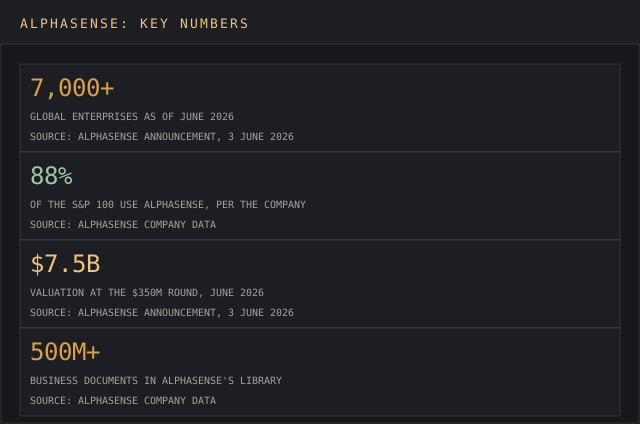
AlphaSense serves more than 7,000 global enterprises as of its June 2026 announcement and says it is used by 88 percent of the S&P 100, with a library of more than 500 million business documents covering public and private companies alike.
Beyond the core product, this review looks at customer feedback, training and onboarding, how AlphaSense compares with other tools, and what reviews on independent sites say once the sales pitch is over. Market insights from analysts who use AlphaSense daily shape most of what follows, along with a look at the reports, comments, and findings that make up its research library.
Company data pulled every March, plus reviews left by everyday users who switched over from a plain Google lookup, round out the picture below.
↑ FACT SHEETWhat Does AlphaSense Do?
AlphaSense helps finance and corporate strategy teams turn market research into usable market intelligence faster than a manual look through company filings and broker research ever could. Analysts use it for due diligence, equity research, and monitoring a sector for early signs of change.
The platform integrates with enterprise document repositories so a team finds internal reports alongside company filings, expert transcripts, and trade journals from one place, eliminating the fragmented workflows that come from checking five separate tools for one answer.
Sales teams use the same platform to track competition and demand signals inside an account before a renewal call, a shift led by finance professionals who eliminated separate research workflows once everything moved into one place.
↑ FACT SHEETCompany History and Funding
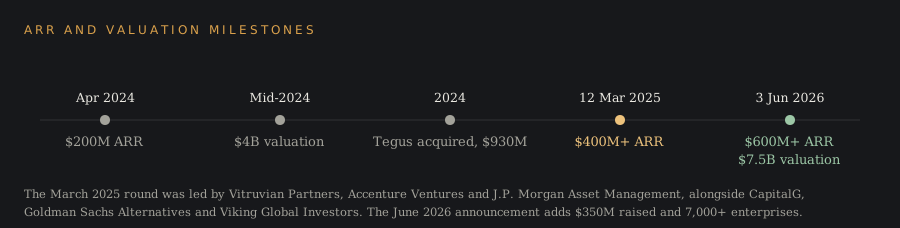
AlphaSense's valuation reached $4 billion by mid-2024, and on March 12, 2025, the New York company announced it had surpassed $400 million in annual recurring revenue, roughly doubling since reaching $200 million in April 2024.
That growth round was led by Vitruvian Partners, Accenture Ventures, and J.P. Morgan Asset Management, alongside existing investors CapitalG, Goldman Sachs Alternatives, and Viking Global Investors.
AlphaSense acquired Tegus for $930 million in 2024, adding millions of pages from Tegus's expert transcripts library to its own content database and extending its reach into private companies and private equity research from its New York offices.
Both of those marks have since been passed. On 3 June 2026 AlphaSense announced a $350 million round at a $7.5 billion valuation, more than $600 million in ARR for the first quarter of 2026 against $500 million in October 2025, and more than 7,000 global enterprises on the platform.
Who Is the CEO of AlphaSense? Who Is AlphaSense Backed By?
Jack Kokko, a former Morgan Stanley research analyst working out of New York, is the CEO and co-founder of AlphaSense. The company is backed by Goldman Sachs, Viking Global Investors, Innovation Endeavors, CapitalG, and other investors who have put more than a billion dollars into the platform since 2011.
Does Goldman Sachs Use AlphaSense?
Yes. Goldman Sachs is both an investor in AlphaSense and a customer, using the platform's tools internally alongside the bank's own generative AI assistant. That dual relationship, investor and customer, is unusual and is often cited as a signal of confidence in the product.
What Is the AlphaSense Controversy?
The most prominent AlphaSense controversy is a trademark dispute with AlphaSights, an unrelated expert network with a similarly-named brand.
AlphaSights sued AlphaSense in January 2025 in the Southern District of New York, alleging that the similar names caused client emails and invoices to reach the wrong company. A court denied AlphaSense's motion to dismiss key claims in August 2025, and the case remains active in New York courts.
AlphaSense also sued Tegus over patent infringement before acquiring the company outright, a dispute the two sides resolved once the acquisition closed.
AI Search and Generative Search
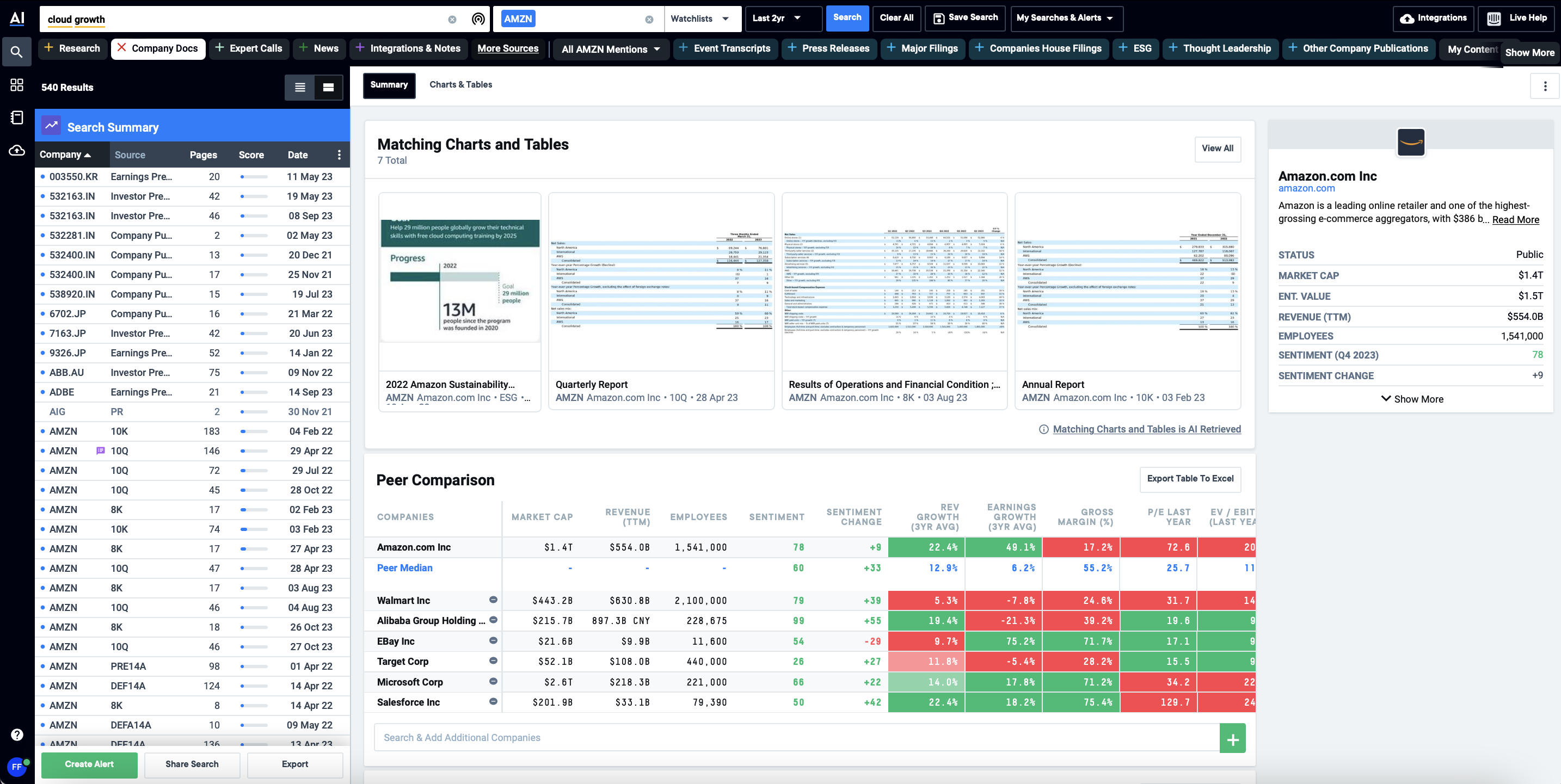
AlphaSense's AI search interprets a query the way a person would, retrieving insights from its library of more than 500 million documents, reports, and transcripts, surfacing relevant snippets and leaving out the wall of unrelated results a plain keyword search returns. Reviewers describe this as a leap past a plain keyword lookup toward something closer to an analyst's assistant.
Smart Synonyms and Natural Language
The Smart Synonyms feature expands a query using natural language processing, so one term also catches the industry jargon and synonyms an analyst might have missed, cutting through the noise of a raw keyword lookup and reducing the tons of irrelevant snippets a broader term would otherwise return.
Generative Search, Citation-Backed Answers, and AI-Powered Insights
Generative Search synthesizes an answer from multiple documents, reports, and comments at once, returning a citation-backed response and skipping the list of links a user would otherwise have to open and read one by one. The same engine answers inside Claude through a beta connector, covered in our AlphaSense MCP review.
Reviewers say this next generation of AI tooling, the second such generation the company has shipped since 2011, saves hours of manual work compared with reading company filings one at a time, and the underlying output is easier to defend in a client meeting because every claim traces back to a source document.
The same AI-powered insights layer sentiment analysis and summarization on the document library, surfacing insights and themes across filings and earnings reports that would take an analyst days to read manually. That confidence, backed by a visible source, is what reviewers say separates AlphaSense's findings from a plain AI chatbot's unsourced answer.
↑ FACT SHEETData Coverage: Filings, Broker Research, and Transcripts
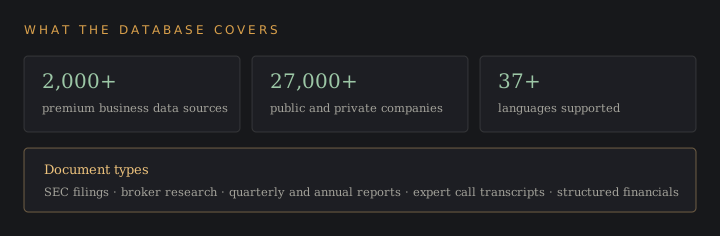
AlphaSense's database includes SEC filings, broker research, quarterly and annual reports, and expert call transcripts, plus structured financial data pulled from company filings across sectors. The platform supports queries across more than 2,000 premium business data sources and covers more than 27,000 public and private companies.
Content ingestion runs continuously, with millions of documents, reports, and comments added annually so a team using AlphaSense today gets same-day coverage, and support for more than 37 languages keeps global teams working from a single shared platform.
Access to premium content not freely available through a standard web lookup is a big part of the pitch for financial institutions weighing the subscription cost, and reviewers describe the resulting data workflows as more helpful than piecing together the same coverage from five separate vendors.
User Interface and Usability
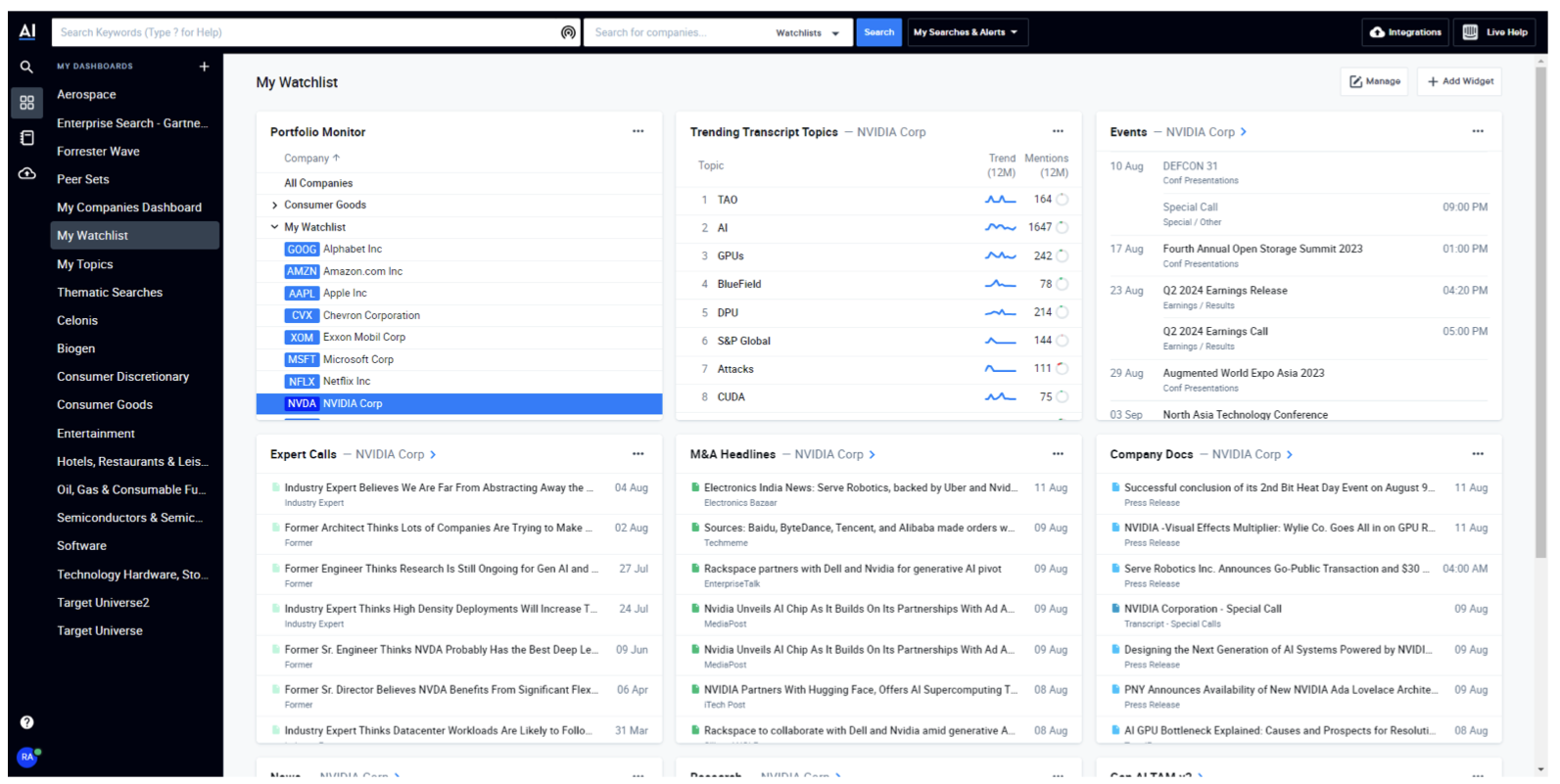
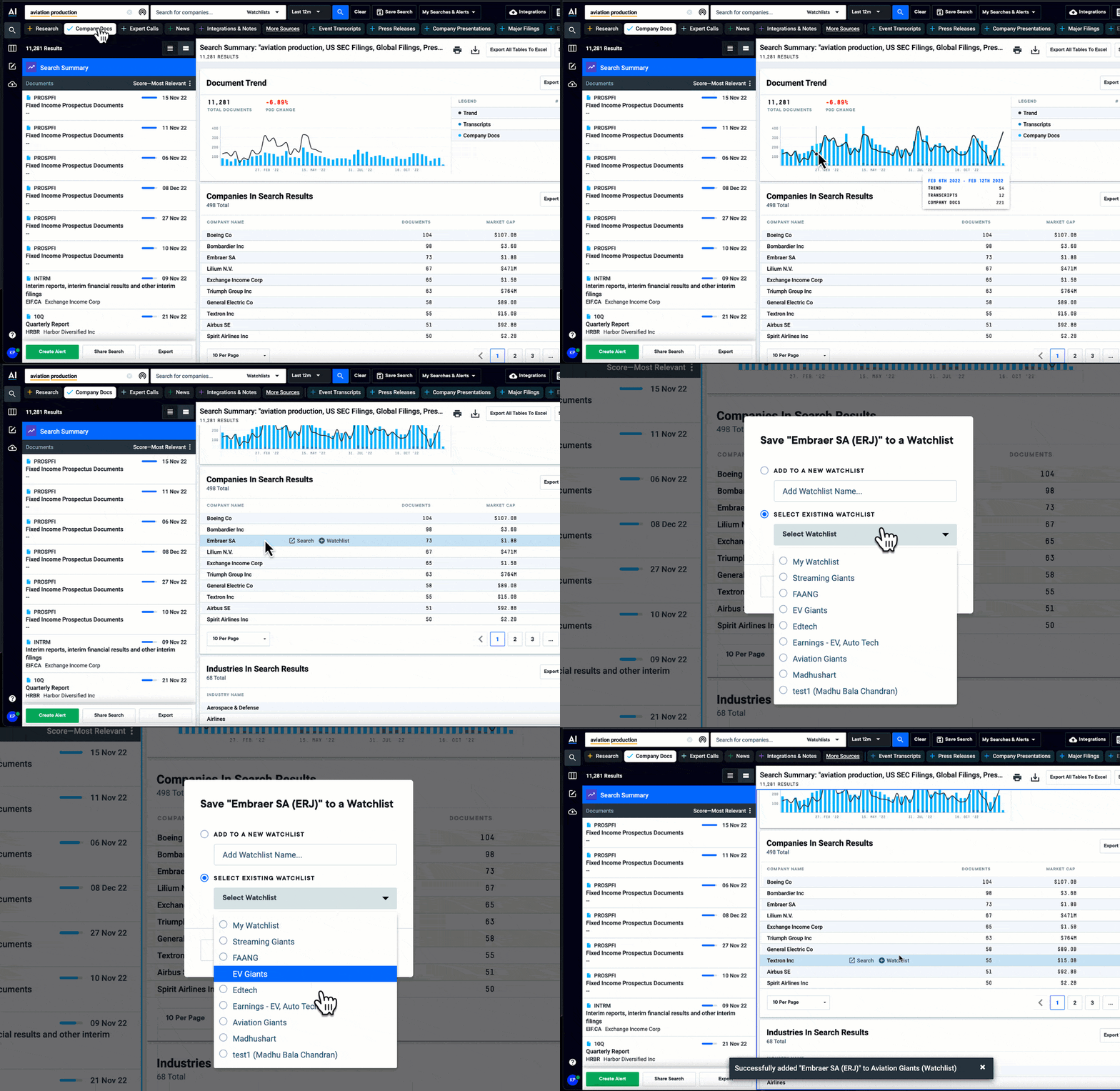
Users describe AlphaSense's interface as clean and modern, built for speed and collaboration; a helpful user can annotate, clip, and share insights directly inside the platform. Even so, users report a steep learning curve tied to the platform's complexity, and new hires need real onboarding before they use every feature well.
AlphaSense in India
AlphaSense employs a large share of its global staff out of India, with offices in Bengaluru, Pune, and New Delhi handling engineering and client success work. India is described internally as one of AlphaSense's fastest-growing markets, and the company continues hiring across its India offices as its global headcount passes 2,000 employees.
Employee reviews and comments from India describe a fast-paced culture with real ownership over product decisions, alongside the long hours common at a growth-stage company. AlphaSense's India staff increasingly own core product work alongside support as the company's footprint there grows, working closely with the New York headquarters on shared reports.
Is AlphaSense Legit? Is It Trustworthy?
Yes, AlphaSense is a real, well-funded company with more than a billion dollars raised, a $7.5 billion valuation as of June 2026, and more than 7,000 paying enterprises, including major financial institutions and consulting firms researching Google, Amazon, and other large companies on behalf of clients.
Reviewers emphasize verified source material as one reason they trust AlphaSense's AI-driven insights enough to act on them with confidence.
What Is AlphaSense Good For? Who Is It Best For?
AlphaSense is best suited for professionals who perform market research and competitive analysis:
- Investment banking staff.
- Hedge funds.
- Corporate strategy groups.
- Equity research desks that need due diligence done fast, ahead of the write-up in an equity research report.
It excels at qualitative analysis of market trends and competitor insights, delivering account-level insights that would otherwise take an analyst days to assemble by hand from scattered reports.
↑ FACT SHEETHow Much Does AlphaSense Cost? Pricing Per Seat
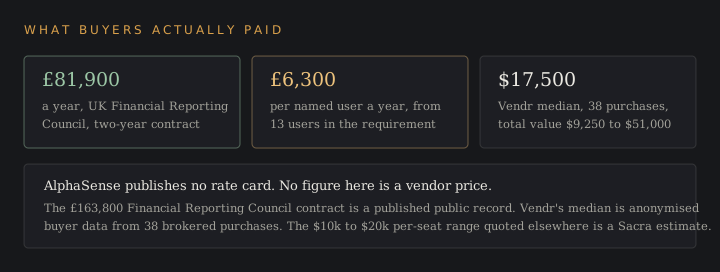
AlphaSense publishes no rate card. Its pricing page compares two named plans, Market Intelligence and Enterprise Intelligence, lists expert calls & Canalyst models as add-ons outside both, and carries no numbers anywhere on it. Our full breakdown of AlphaSense pricing sets the median contract against Bloomberg, FactSet and Koyfin.
One published public contract puts a per-user number on it. The UK Financial Reporting Council agreed £163,800 for two years of AlphaSense for its Market Intelligence and Insights team, 1 December 2024 to 30 November 2026, competitively tendered. That's £81,900 a year, what one named public buyer pays.
The pre-award Statement of Requirement behind that tender specifies 13 named users across 24 months, which divides to £6,300 per named user a year. That user count comes from the pre-award requirement document, and the notice states "Price in US Dollar", so the sterling figure is a conversion.
Vendr, which publishes anonymised contract data from purchases it brokers, puts the median AlphaSense deal at $17,500 across 38 purchases, spanning $9,250 to $51,000, last updated February 2026. Those are total contract values, so a thirteen-seat deal and a one-seat deal land in the same distribution.
The $10,000 to $20,000 per-seat range that circulates for AlphaSense, and the $50,000 top end attached to it, come from Sacra, a private-markets research firm that sells estimates of private-company revenue. Treat both as a third-party estimate. Neither appears in an AlphaSense document or a buyer's contract.
Across the customer base the arithmetic runs higher than any of those. More than $600 million of ARR divided by more than 7,000 enterprises is roughly $85,700 of annual revenue per customer, an average across the base. Both inputs are floors, and that ARR counts expert calls and Tegus content alongside seats.
Weaknesses and Trade Offs
The steep learning curve is the most common complaint in user feedback, and the trade offs of that complexity fall hardest on smaller teams without a dedicated training budget.
Cost is the other recurring theme: AlphaSense delivers real quality, but the price puts it out of reach for teams that only need occasional support, and a few reviewers note that the sheer volume of reports and comments can still bury a specific finding under too much noise.
AlphaSense Compared to Other Tools
Buyers comparing AlphaSense against a general web search or a free news aggregator quickly find the gap: AlphaSense's premium content and expert transcripts are not available for free anywhere else.
Against direct competitors like FactSet, Bloomberg, and Tegus, the acquired rival now folded into AlphaSense, reviewers say AlphaSense's generative search and AI-powered summarization feel a full generation ahead, though the cost premium is real and worth weighing against a team's actual demand for that depth of reports. Our AlphaSense vs FactSet comparison puts the two side by side on coverage counts, MCP tools and Vendr medians.
Customer Feedback, Comments, and Case Studies
Customer feedback consistently cites time saved as the biggest win: users report AlphaSense saves hours of manual work every week, freeing analysts for higher-value tasks. That time no longer goes into hunting through filings and reports by hand.
Enterprise customers in banking, consulting, and corporate strategy describe the platform as efficient enough to justify the training investment new hires need to get up to speed, and their comments frequently mention faster turnaround on client-ready reports, deeper insights, and fewer professionals needed per company account.
Sales staff inside AlphaSense's own customers also use the platform's findings on competition and market growth to prep account reviews, a use case that extends the tool well past the investment desks it was originally built for.
New customers typically go through a structured onboarding program, since the learning curve is steep enough that self-service training rarely covers every workflow on day one, and support fields comments on both technical questions and methodology, with response times reviewers describe as helpful.
Reviews and Reputation
AlphaSense holds strong reviews on G2 and TrustRadius, with reviewers consistently rating AlphaSense's quality, insight generation, and customer support highly, and calling out its insights as a reason they renew each year. Reading through hundreds of individual reviews and comments, a clear pattern shows up: five-star reviews praise speed and answer quality, while lower-rated reviews focus almost entirely on price.
Most negative comment threads on review sites focus on cost and the learning curve, and few reviews or comments question if the platform's output is accurate, a pattern that holds across G2, TrustRadius, and a plain Google lookup for the company's name.
A smaller number of reviews mention onboarding friction, though most of that comment volume fades once a group completes initial training and starts producing its own reports.
Rolling AlphaSense out across a company usually means retiring a handful of older workflows: a team that once split its day between Google lookups, PDF folders, and a separate news terminal finds that most of that manual routine gets eliminated once the platform becomes the default starting point.
Professionals on investment and corporate development teams describe the switch as a real speed gain, since the confidence that comes from a sourced answer means less time double-checking data by hand.
Company-wide adoption takes longer than a single team's onboarding, and access for every professional who needs it, past the analysts who requested the tool, is what determines if those workflows change.
Millions of dollars in analyst time is the number companies cite most when justifying the cost internally, and the themes that come up most in that internal pitch are speed, access to primary sources, and fewer hours spent chasing filings by hand across a company's various teams.
Is AlphaSense Worth It?
For investment banks, hedge funds, and large corporate strategy teams doing heavy due diligence, AlphaSense is worth the cost: the time saved and the confidence that comes from citation-backed answers, sourced insights, and AlphaSense's company-wide reports routinely justifies the price. For a smaller team with occasional needs, a cheaper tool covers the gap without the enterprise price tag.
FAQ
Is it AlphaSense or Alpha Sense?
AlphaSense, one word with a capital S in the middle. Alpha Sense as two words is a common variant in search, and the domain is alpha-sense.com with a hyphen, which is where much of the confusion starts.
What does AlphaSense do?
AlphaSense is an AI-powered market intelligence platform for due diligence and equity research across company filings, broker notes, and expert transcripts.
What is the AlphaSense controversy?
A trademark lawsuit from AlphaSights over the similarity of the two names, filed in January 2025 and still active as of August 2025.
Does Goldman Sachs use AlphaSense?
Yes, Goldman Sachs is both an investor and a customer of AlphaSense.
Who is AlphaSense backed by?
Goldman Sachs, Viking Global Investors, CapitalG, and other investors who have funded the company since 2011.
Is AlphaSense legit?
Yes. It serves more than 7,000 global enterprises, says 88 percent of the S&P 100 use it, and announced a $350 million round at a $7.5 billion valuation on 3 June 2026.
How much does AlphaSense cost per seat?
AlphaSense publishes nothing, so the one per-user figure on record is a public contract: £6,300 a year, dividing the UK Financial Reporting Council's £163,800 two-year deal by the 13 named users in its pre-award requirement.
Vendr's median across 38 brokered purchases is $17,500 in total contract value, and the widely quoted $10,000 to $20,000 per seat is an estimate published by the research firm Sacra.
What is AlphaSense good for?
Market research, due diligence, and equity work for teams and professionals that need company filings, broker notes, and expert transcripts unified in one platform, insights included.
Bottom Line
AlphaSense remains one of the strongest AI search platforms in our market intelligence tools ranking for teams that need company filings, broker research, and expert transcripts unified in one place, with generative search that turns hours of manual work into a citation-backed answer in minutes.
The learning curve and the price are real trade offs, but AlphaSense's findings hold up: next generation coverage keeps the company's documents current, and demand for that speed has only grown as workflows shift toward fewer standalone tools, so for investment banks, hedge funds, and corporate strategy groups running constant due diligence, AlphaSense earns its cost.