Exploding Topics review
 By Jan Suski. I go deep on every review, checking every number against its source and digging up details other coverage misses, a habit from six years of SEO and link building for tech companies. Bylines at Surfer, Brand24, and Senuto. How the scoring works.
·
Best for
Solo marketers, founders and small teams who want to catch consumer and product trends 12 or more months before they hit the mainstream.
Not for
Teams that need audience data, competitor traffic numbers or survey capability; none of the three are part of the product.
What it costs
Three tiers publish outright: $39 a month for Entrepreneur, $99 for Investor, $249 for Business, each with a seven-day trial that converts automatically.
- Lead time
- Trends identified 12 or more months before mainstream coverage
- Trends database
- Over 1.1 million trends tracked in the wider database
- Curated set
- Over 779,000 emerging topics and trending products
- Per-trend metrics
- Search volume, percentage growth and a historical data curve
- Trend Search
- Checks any keyword you bring against the catalog
- Projects
- Save and track topics, with alerts when a saved trend accelerates or breaks out
- Weekly reports
- Top emerging trends in a chosen area, with analyst notes on the biggest movers
- Meta Trends
- Groups related topics into one larger movement
- Trending products
- Pro feed, sortable by growth and by price range
- Trending startups
- Tracker showing which companies are scaling behind a product trend
- Forecasts
- Investor plan only; which trends should keep climbing
- Data sources
- Search queries, social platforms including Reddit, and e-commerce product listings
- Detection
- Machine learning flags fast risers; human analysts cut one-week fads before the feed
- Filters
- Category, growth rate and date range, from months to years; tech, health, beauty, finance and dozens more
- Noise screening
- Established keywords everyone already knows get screened out
- Entrepreneur
- $39 a month, the cheapest entry point in our ranking
- Investor
- $99 a month; adds trending startups and trend forecasts
- Business
- $249 a month; adds API access and exports
- Free tier
- A limited public list of trending topics on the website
- API and exports
- Business tier only
Coverage limits
- Not covered
- No audience data, no competitive traffic, no survey capability
- Ownership
- Semrush; founded by Brian Dean and Josh Howarth
- Trial
- Seven days on all plans; it converts automatically
- Annual billing
- Pro plans marketed as starting at $1.29 a day
- Cancellation
- Account settings, billing section; access runs to the end of the paid period
Alternatives to Exploding Topics
Google Trends
Not forA founder hunting a niche they can't name yet, because the tool scores a keyword you already have. It won't discover one for you.
Semrush
Not forA solo founder who wants trend discovery and nothing else, since the trend module rides on a $139.95 platform subscription.
Pairs well with Exploding Topics
When these prices were checked, and which counts are the vendor's own
Plan prices reflect the rate card as of July 2026, the month this review was last updated. The 1.1 million tracked trends, the 779,000 curated topics and the 12-months-ahead lead time are Exploding Topics' own published claims. Nobody has independently measured them here. Growth percentages in the app sit on small bases, so a four-digit spike on tiny volume needs a second data check before anyone acts on it.
Exploding Topics is a trend-spotting platform designed to identify emerging trends 12 or more months before they go mainstream.
Founded by Brian Dean and Josh Howarth and now owned by Semrush, the tool tracks over 1.1 million trends in its wider database and maintains a curated set of over 779,000 emerging topics and trending products.
This look at Exploding Topics covers where the data comes from, how the detection works, what the plans cost as of July 2026, and if the signals deserve real money; it sits in our trend research ranking and our market intelligence tools top 10.
↑ FACT SHEETWhat Is Exploding Topics?
Exploding Topics does one thing: identify trends undergoing an aggressive rise before most of the internet notices them, anticipating market trends and shifts in consumer behavior.
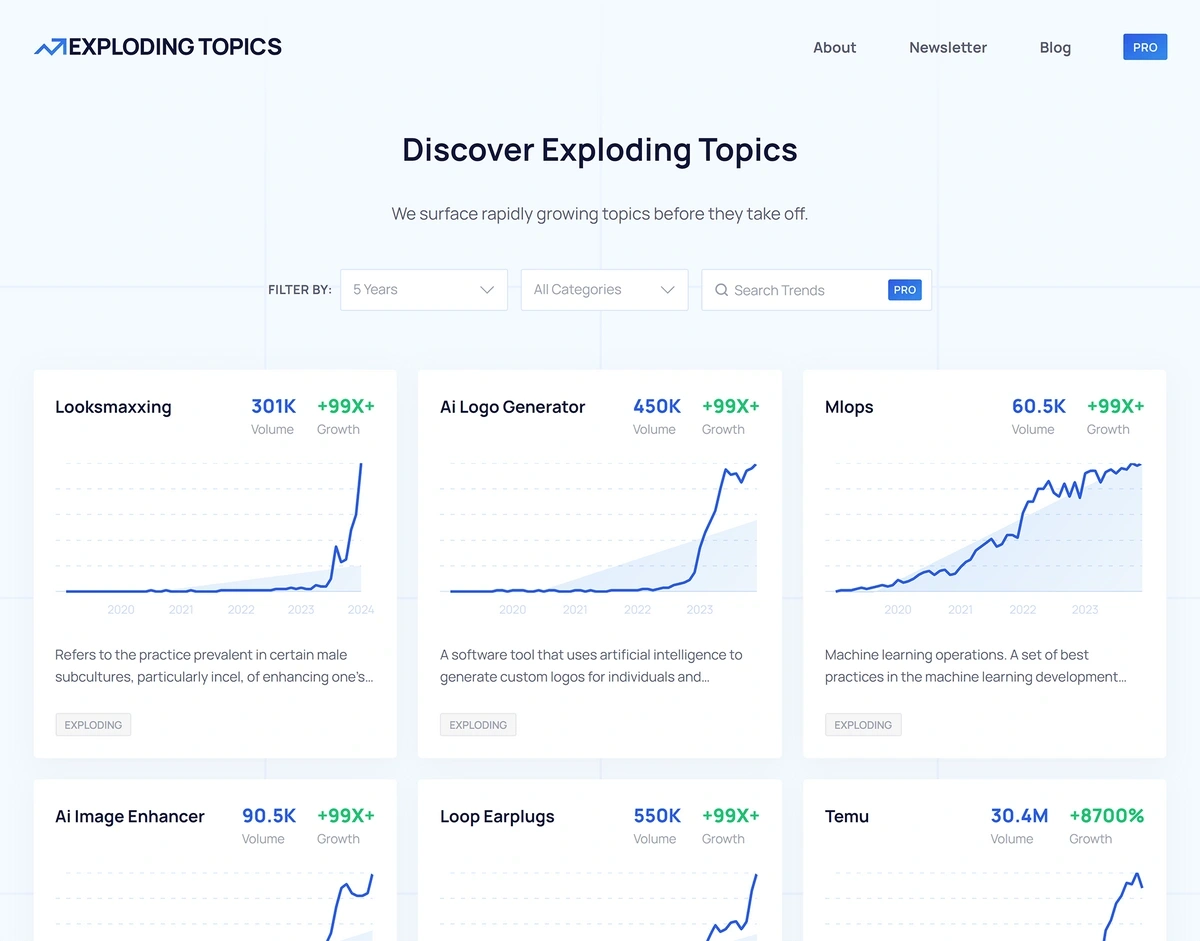
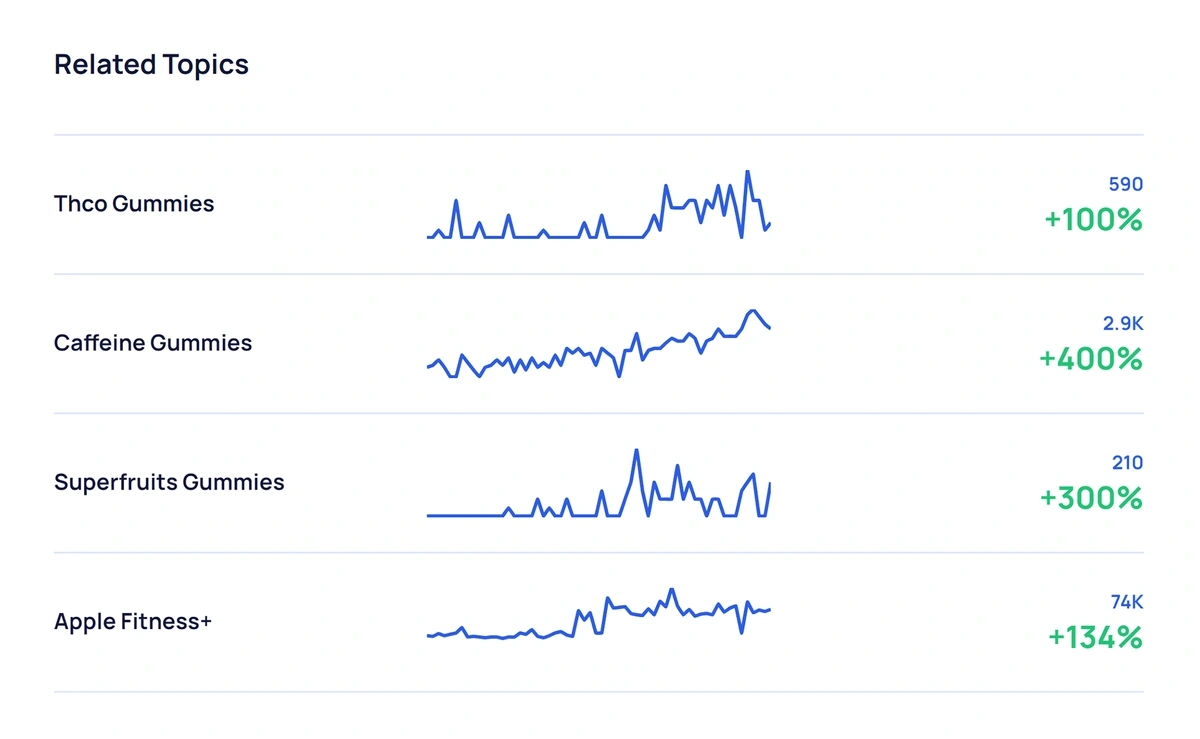
Trends in the app each carry search volume, percentage growth, and a historical data curve, metrics that show both size and trajectory.
The platform eliminates noise from mainstream topics deliberately: established keywords everyone already knows get screened out, and the trends database keeps only what is still climbing.
Businesses use those insights to catch under-saturated markets early, when content creation is cheap, keywords are winnable, and competitors haven't arrived; getting in before markets crowd is the whole pitch.
↑ FACT SHEETWhere Does Exploding Topics Get Its Data?
Exploding Topics analyzes signals across data sources spanning search, social media, and e-commerce platforms, watching how consumers talk, shop, and buy across the internet, and turning those raw signals into insights.
Threads on social platforms like Reddit, plus queries and product listings, all feed the detection systems, which is why trends often get identified while their communities are still small.
Machine learning does the first pass, flagging fast-rising keywords and products; human analysts then vet what the models flag, cutting one-week fads before they reach the curated feed.
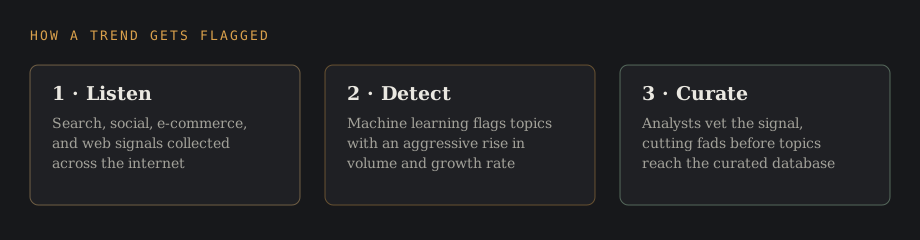
That two-step process is the product's real answer to credibility questions: the models find the signal, and the curation keeps the feed from filling with junk.
The Trends Database and Filters
The trends database is browsable by category, growth rate, and date range: users can filter to tech, health, beauty, finance, or dozens of other industry categories, and set the time window from months to years.
A Trend Search feature checks any keyword you bring, and Projects let users save and track specific topics, with weekly reports highlighting the top emerging trends in a chosen area.
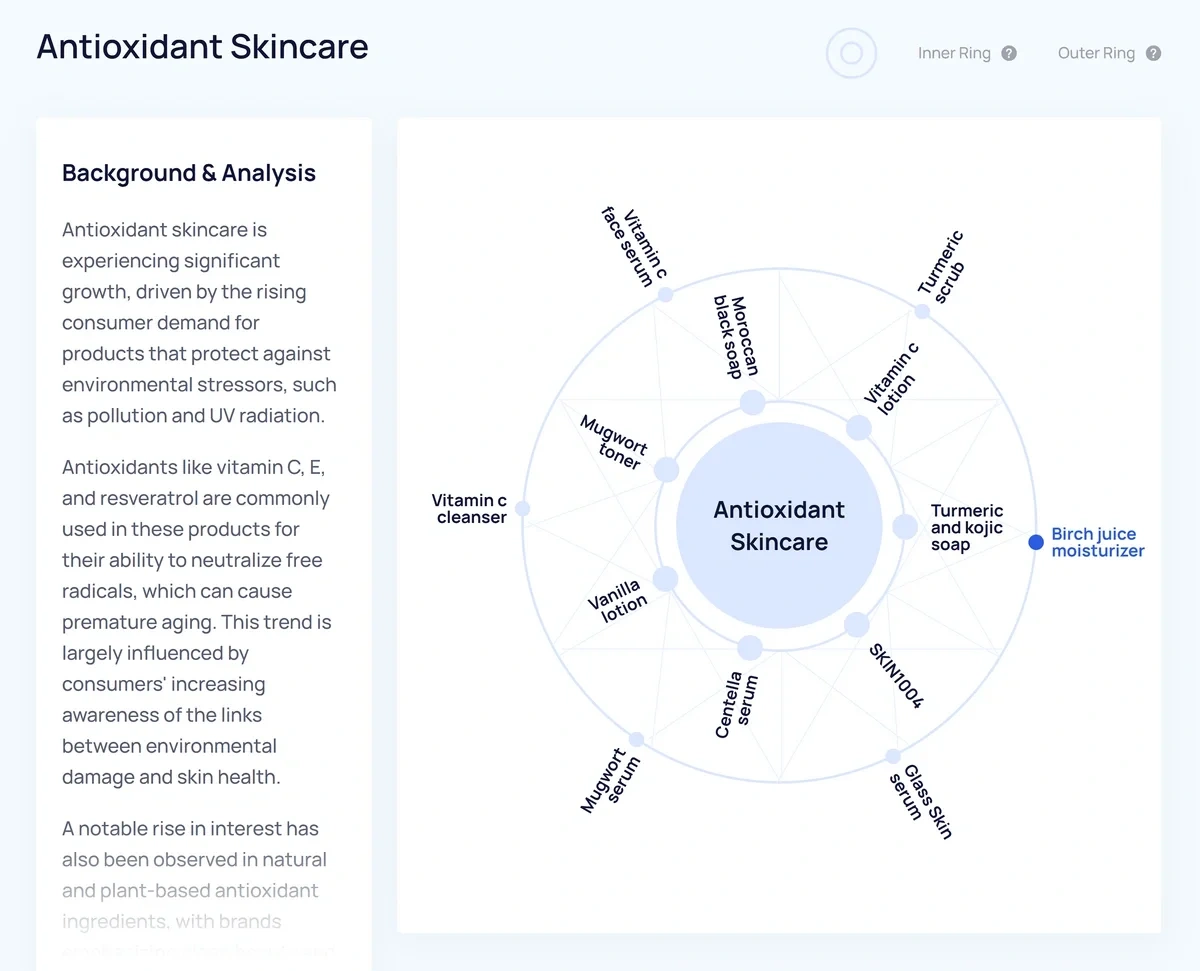
Meta Trends group related topics into larger movements, useful when a dozen rising keywords are one shift in consumer behavior, the kind of pattern shaping whole markets.
Trending Products and Startups
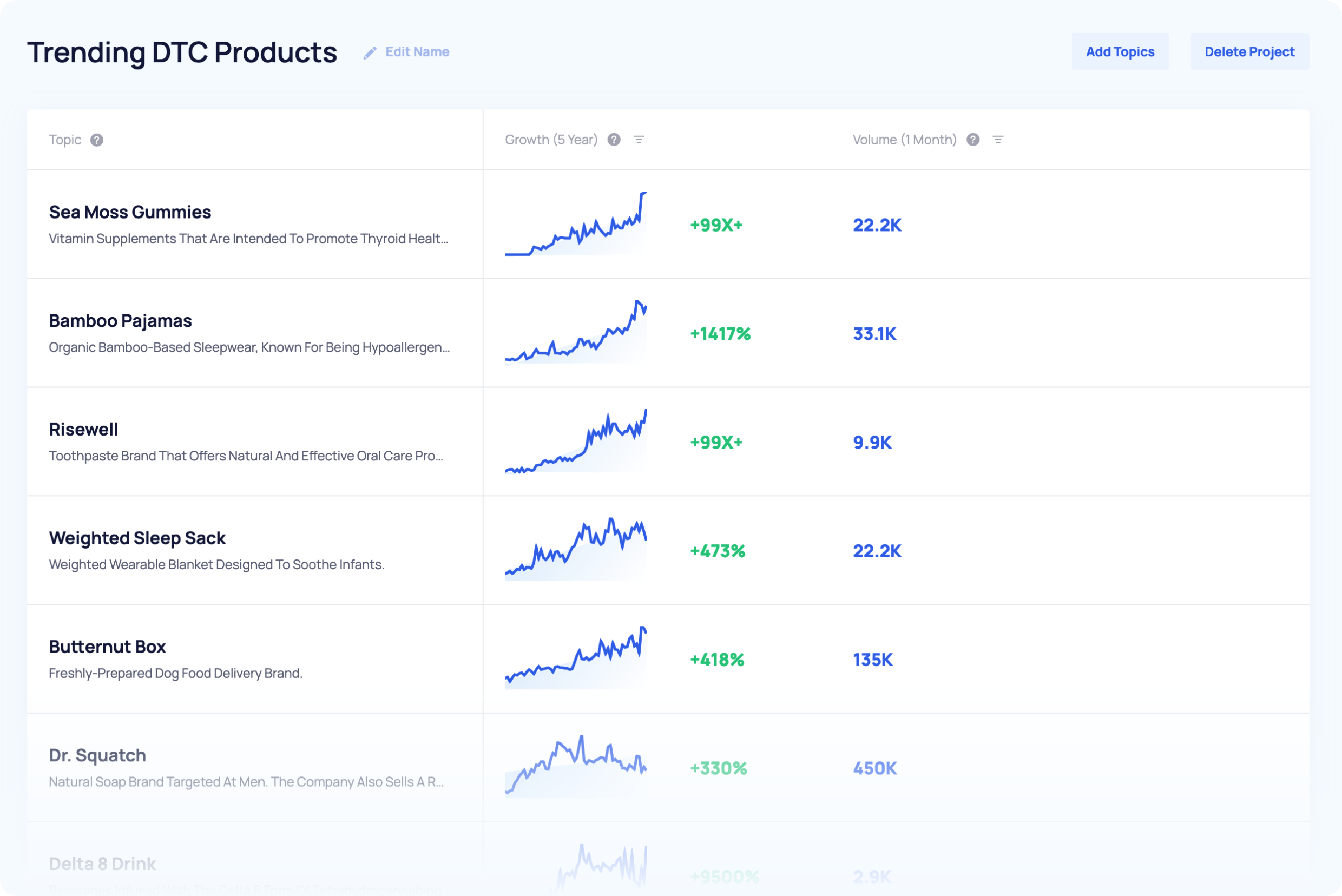
Beyond keywords, Exploding Topics Pro runs a trending products feed and a trending startups tracker, both aimed at people who invest early.
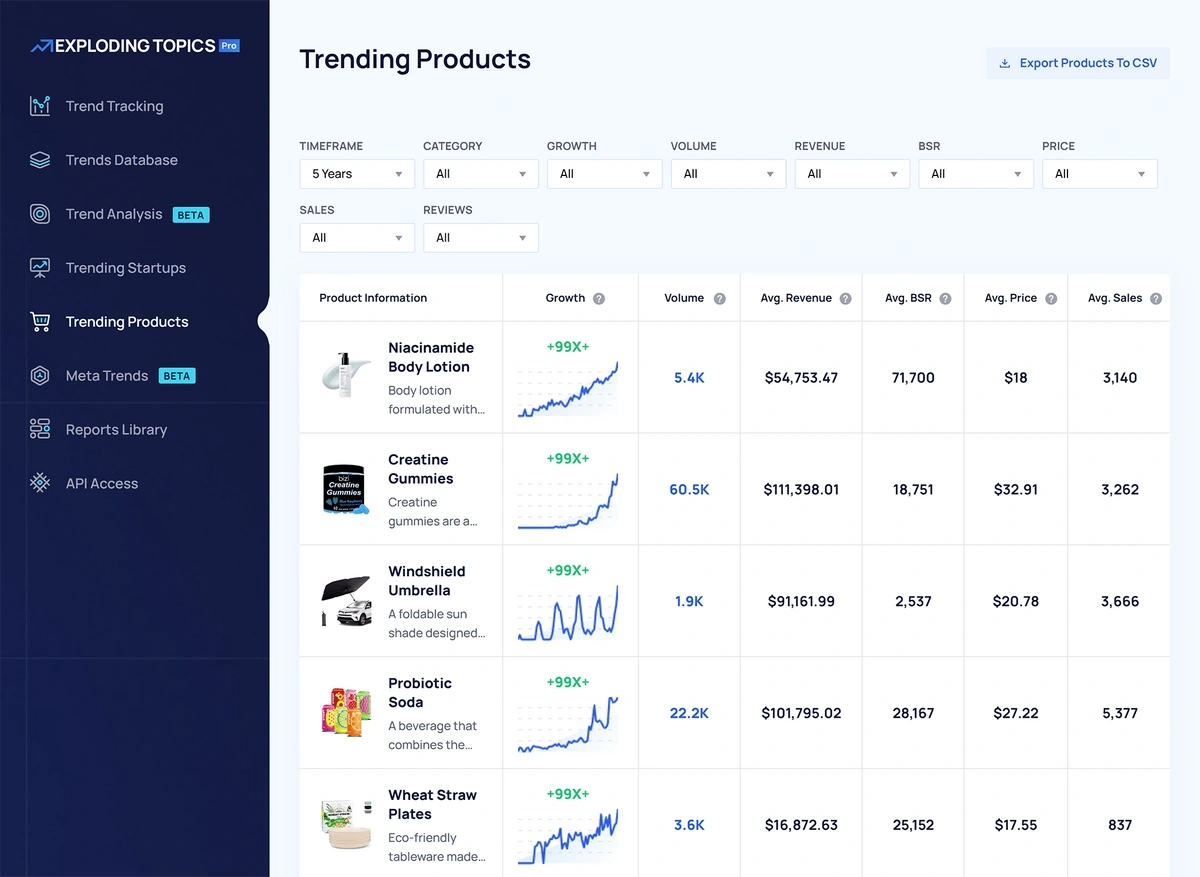
An investor scanning for the next breakout category can filter trending products by growth and see which startups are scaling behind them; the Investor plan adds forecasts of which trends should keep climbing.
Trending products also sort by price range, so an operator can scan only items in a target price band before committing inventory.
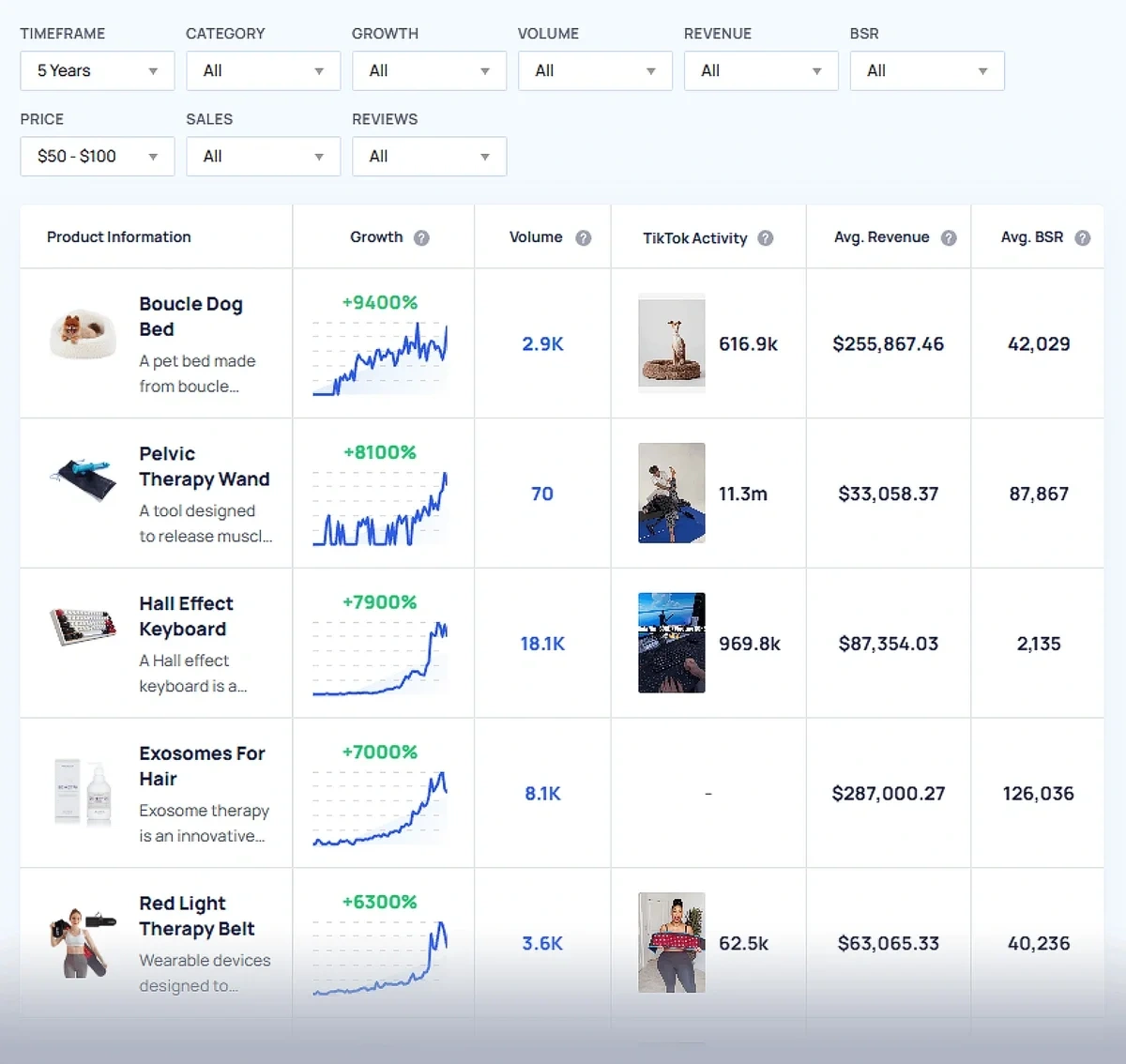
Marketers use the same data in the other direction: spotting the products consumers are starting to look for, then building marketing strategies and content around those keywords before competitors do.
Exploding Topics vs Google Trends
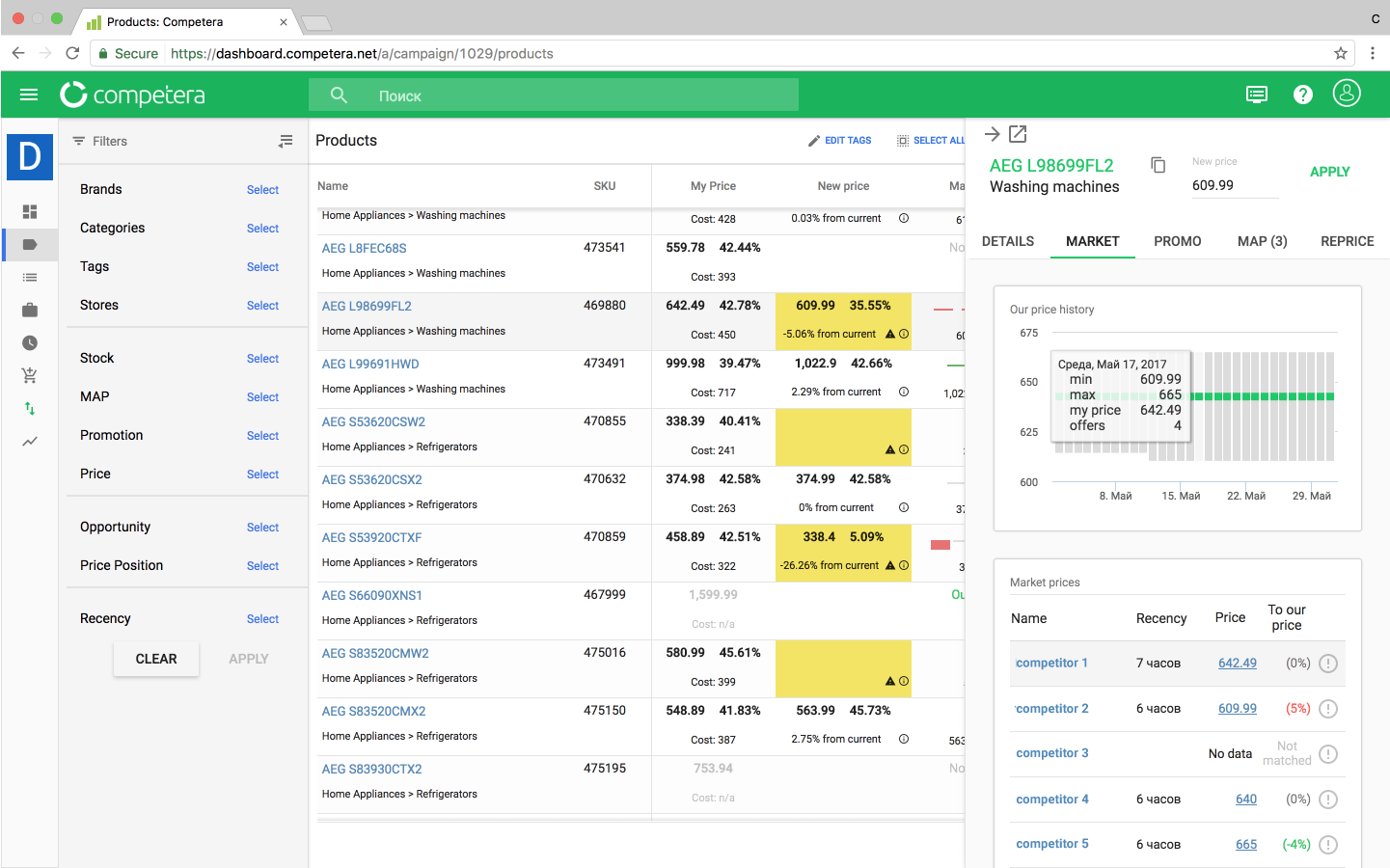
The difference is direction. Google Trends answers questions about keywords you already know, with relative scores; Exploding Topics surfaces topics you didn't know to ask about, with absolute volumes and growth percentages attached.
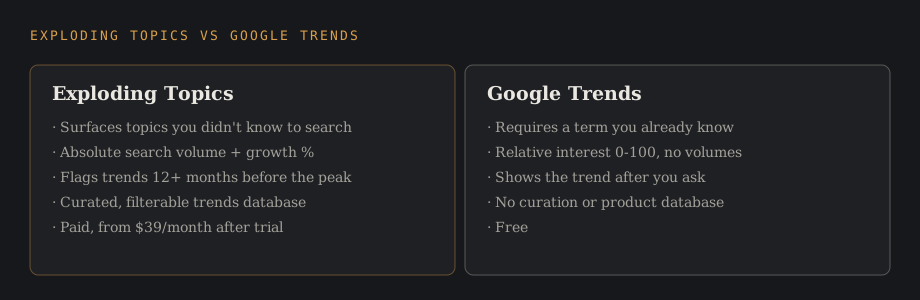
The practical pairing: discover market trends in Exploding Topics, validate them in Google Trends, then run proper keyword research in Semrush to size the opportunity; since Semrush owns the company, the platforms increasingly connect.
↑ FACT SHEETIs Exploding Topics a Credible Source?
Credible for what it claims to do, with limits worth naming plainly.
Exploding Topics' track record includes trends identified 12+ months before mainstream coverage, and its data reflects real measurement, a real difference from listicle guesswork.
Semrush ownership deserves to be mentioned here too: the trends data now runs on a larger company's infrastructure, which strengthens the collection side.
The limits: growth percentages on small bases look dramatic, some flagged trends stall, and the tool tells you a topic is rising, never why or for how long.
Treat it as a reputable early-warning service for future trends, and no forecasting oracle; the curation keeps quality high, and your own validation does the rest.
Key Features of the Web App
The Exploding Topics web app's features cluster around discovery and monitoring, and users get the same core resources at every tier.
- Trend lookup and category views across the full trends catalog.
- Tracking projects with alerts when saved trends accelerate or break out across platforms.
- Weekly newsletter reports with analyst insights on the biggest movers.
- API access and exports on the Business tier for teams scaling their own analysis.
- Trending products and startup features for investors watching what consumers buy next.
↑ FACT SHEETPricing: What Does It Cost?
The free website tier shows a limited public list of trending topics; the paid Pro plans unlock the complete trends catalog.
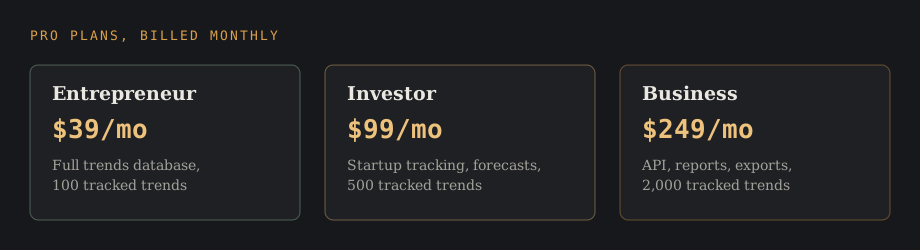
Exploding Topics pricing starts at $39 per month for the Entrepreneur plan, the Investor plan runs $99, and the Business plan costs $249, with API access at the top tier; the marketing frames Pro plans as starting at $1.29 per day on annual billing. Our full pricing breakdown covers the Trends API's usage tiers and the separate TikTok Insights add-on.
All plans include a free trial option, currently seven days; users sign up, check their own markets, and judge the signal quality against what they already know.
↑ FACT SHEETHow Do I Cancel an Exploding Topics Subscription?
Cancelling Exploding Topics runs through the website's account settings; sign in, open the billing section, and cancel there, or contact support if the option isn't visible, and the site's help resources cover the edge cases.
Do it before the trial or billing date rolls over, since access continues to period end and trials convert automatically; a quick confirmation email is worth keeping.
Who Is It Best For?
The tool is particularly useful for marketers and product researchers, and it is commonly used by investors and content creators for the same reason: cheap, early, browsable demand insights.
A founder hunting for a niche, a content lead seeding keyword research for next quarter, a VC watching deal flow, an ecommerce operator picking products for new markets, all get value at the $39 tier, the cheapest entry point in our entire ranking; content teams create publishing calendars straight from the trends feed.
It is not a full research platform: no audience data, no competitive traffic, no survey capability, so teams pair it with social listening or a traffic intelligence tool when a flagged trend deserves a deeper look.
Weaknesses and Limitations
- Directional and no more: the ability to see what is rising comes without the why, the who, or the ceiling.
- Small-base growth: four-digit percentage spikes on tiny volumes can mislead without a second data check.
- Breadth over depth: category coverage spans the whole consumer web, but any single vertical or industry gets modest depth.
- Timing an exit is challenging: the tool flags the rise, and knowing when a trend will break or peak remains your problem.
- Overlap risk for Semrush subscribers, since some discovery value now ships inside Semrush's own tools.
FAQ
What are Exploding Topics?
Rapidly growing search topics identified by the platform of the same name, which scans the internet for keywords and products with fast-rising interest and lists them with volume and growth data.
What are the top 10 trending topics right now?
They change weekly; the free page publishes a current public list, and the newsletter delivers the top movers every week, so any static answer here would miss by the time you read it.
What are current hot topics?
The reliable pattern in recent years: AI tools and services dominate the tech categories, while health, beauty, and finance supply steady streams of product trends; the live list, narrowed to the categories most relevant to your business, is the only current answer worth trusting.
Is Exploding Topics a reputable source?
Yes, within its scope: measured search and social data, curated by analysts, owned by Semrush; verify individual trends before betting a launch on them.
Where does the data come from?
Search volume data, social platforms including Reddit, and e-commerce signals, processed by machine learning and reviewed by people.
Is there an Exploding Topics Pro review verdict in short?
Worth $39 monthly if you act on early signals professionally; skip it if you'd only browse out of interest, since the free list covers curiosity.
How is this different from Google Trends?
Google Trends measures terms you supply, relatively; this surfaces terms you don't know yet, with absolute volumes, growth rates, and a curated database behind them.
Bottom Line
Exploding Topics turned trend discovery into a product: a massive database of trends identified early, filterable in minutes, at the lowest price in the category.
Its signals are valuable at the moment they matter most, before a market gets crowded, and nearly worthless if nobody in your business acts on them.
Take the trial, search the markets you know best, and imagine the cost of having missed the last trend it would have shown you; that comparison settles the purchase either way.