
Market analysis template
Studies the industry, target buyers, and rivals in one structured document, surfacing competitive gaps, demand patterns, and the risks that could stall a launch.
Jump to templateDownload (DOCX)40 reusable market research templates for market intelligence work, and how to fill each with sourced data.


·
Nothing matches that. Press Escape to clear the box.
How big the market is, which forces move it, and the report that carries the findings to a decision-maker.
Back to the template groupsStudies the industry, target buyers, and rivals in one structured document, surfacing competitive gaps, demand patterns, and the risks that could stall a launch.
Jump to templateDownload (DOCX)
A working calculator that turns assumptions into TAM, SAM, and SOM, then runs a top-down cross-check that catches sizing errors before an audience does.
Jump to templateDownload (XLSX)
Runs three TAM calculation methods side by side, narrows to a SAM and SOM with live formulas, and outputs a slide-ready narrative sized for a fundraising deck.
Jump to templateDownload (XLSX)
Maps the political, economic, social, and technological forces no company controls, one section per factor with impact, likelihood, and response columns, before they arrive as surprises.
Jump to templateDownload (DOCX)
Turns scattered trend-spotting into a longitudinal record: trends in rows, time intervals in columns, and percent change computing itself, with an archive sheet that keeps history.
Jump to templateDownload (XLSX)
Converts raw findings into a document decision-makers can act on, with nine ready-to-fill parts and prompts, plus a companion brief template meant to be filled in first.
Jump to templateDownload (DOCX)Nine sections from executive summary to data sources, built for a report that repeats quarterly, each with a prompt line so users fill in findings without guessing at structure.
Jump to templateDownload (DOCX)Side-by-side competitor grids, positioning charts, and the battlecards and win-loss logs sales teams open mid-deal.
Back to the template groups
Puts every competitor in one grid, scoring products, pricing, positioning, strengths, and weaknesses on the same columns, so the comparison runs entirely on facts.
Jump to templateDownload (XLSX)
Turns performance comparisons into an actionable document: which metrics trail the industry, why, and who closes the gap by when, plus a KPI sheet with live formulas.
Jump to templateDownload (XLSX)
Sorts one decision into four boxes: strengths, weaknesses, opportunities, and threats, with prompts holding each quadrant to 3-5 checkable points, each assigned an owner and a date.
Jump to templateDownload (DOCX)
Lays Company, Customer, and Competitor side by side around Kenichi Ohmae's strategic triangle, with a worked example priced in real numbers and a synthesis step that turns the three sections into one key success factor.
Jump to templateDownload (DOCX)
Gives a sales team one page per rival, structured in Know, Say, and Show layers, plus an objection-handling version with a Fact, Impact, Act column for live calls.
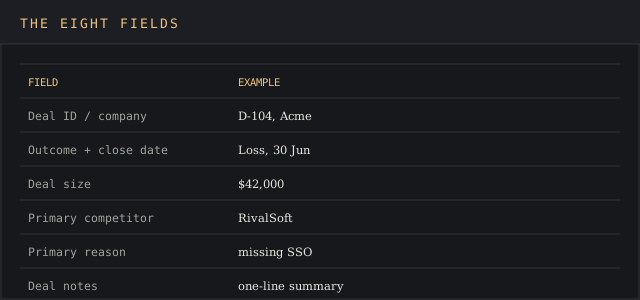
Jump to templateDownload (DOCX)Logs why deals are won or lost, in the buyer's own words, the same way every time, with an eight-field deal log and a ratios sheet computing win rates automatically.
Jump to templateDownload (XLSX)
Turns 1-to-7 survey ratings into brand scores, plots any two attributes against each other, and ranks every brand by its distance to the ideal product buyers describe.
Jump to templateDownload (XLSX)Personas, segments, journey maps, and the acquisition and engagement plans built on top of them.
Back to the template groups
Builds one fictional character standing in for a target audience segment, covering demographics, goals, pain points, and behaviors, with a buyer persona version for the purchasing side.
Jump to templateDownload (DOCX)
Collects and organizes buyer data across four layers, then splits it into two pieces: a per-account profile with feedback metrics, and an account scoring sheet.
Jump to templateDownload (XLSX)Splits a customer base into named segments, scores each with RFM, and plots them on a size-versus-value matrix, using a nested-IF formula against recency, frequency, and monetary fields.
Jump to templateDownload (XLSX)
Lays out the customer experience stage by stage, from awareness through advocacy, so a team sees where customers get stuck. Each row tracks touchpoints, emotions, pain points, and opportunities.
Jump to templateDownload (XLSX)
Turns a quarterly growth target into an ICP, a six-stage funnel plan and a channel budget with live CAC, LTV:CAC and payback formulas, worked through an $84,000 quarter that signs 32 customers.
Jump to templateDownload (XLSX)
Names who you're engaging, which channel, how often, and what result counts as success, with a worked example cutting 90-day churn from 18% to 12%.
Jump to templateDownload (DOCX)
Finds your ideal customer in your own CRM data by churn, contract value and sales cycle, then writes the profile with disqualifiers and scores new accounts A, B or C.
Jump to templateDownload (XLSX)Launch plans, messaging, positioning statements, monetization models, and the white-space map that shows where to expand next.
Back to the template groups
Covers the five elements a launch needs before a date gets set: target market, value proposition, pricing strategy, distribution channels, and KPIs, with a B2B worked example included.
Jump to templateDownload (XLSX)
Covers pre-launch planning, launch day, and post-launch analysis in one document, so product, marketing, and sales work from the same list of owned tasks, phased with a status column.
Jump to templateDownload (DOCX)
Lays out the value proposition, three to five messaging pillars, and the proof point behind each, so marketing, sales, and product stay consistent, tying into a positioning statement below.
Jump to templateDownload (DOCX)
Fills in the four elements, target audience, frame of reference, brand promise, and reason to believe, then adapts a fill-in-the-blank statement to the brand, with real examples from named brands.
Jump to templateDownload (DOCX)
Five-tab Excel workbook: a twelve-field strategy canvas, weighted scoring of revenue models, tier pricing with an MRR forecast, LTV vs CAC per tier, and an assumptions log.
Jump to templateDownload (XLSX)
Maps buying centers against product lines, scores every blank cell on five weighted factors, and sorts the results into Pursue, Park, or Pass, with a worked account example pre-filled.
Jump to templateDownload (XLSX)
Sorts growth ideas into market penetration, market development, product development and diversification, then scores each on revenue, investment and confidence to show where the budget sits on the risk gradient.
Jump to templateDownload (XLSX)Risk scoring, feasibility checks, stakeholder maps, OKRs, root-cause reports, and exit planning.
Back to the template groups
Scores every risk by likelihood and impact on a 5x5 grid, so a team can see which risks need attention now, plus a risk register with owner and mitigation columns.
Jump to templateDownload (XLSX)
Nets scored risks against scored benefits in a four-tab workbook, with a Verdict tab that computes the benefit-cost ratio and flags any decision that clears the acceptance threshold.
Jump to templateDownload (XLSX)
Score a proposed project on market, technical, financial, operational and legal feasibility, with NPV, payback and sensitivity tabs plus a nine-section Word report.
Jump to templateDownload (XLSX)
Plots each stakeholder by power and interest into one of four quadrants, then turns the plot into an engagement plan with a contact frequency and channel assigned to each quadrant.
Jump to templateDownload (XLSX)
Tracks objectives and key results in one dashboard, with a progress score that updates as results move, scored on a traffic-light scale so a team spots an at-risk goal instantly.
Jump to templateDownload (XLSX)
Walks a problem from symptom to fix with a six-section report plus a corrective-action tracker that confirms the fix worked.
Jump to templateDownload (DOCX)
Six-tab Excel workbook for planning a business exit: valuation gap, weighted exit options scorecard, net proceeds after tax, milestone timeline and a five Ds contingency plan.
Jump to templateDownload (XLSX)
Lays out how a business makes money across nine blocks, from customer segments to cost structure, with a prompt sheet per block and a coffee-subscription example carrying real revenue and cost figures.
Jump to templateDownload (DOCX)Supplier scorecards, bid comparison, RFP responses, and an equity research report with a valuation model.
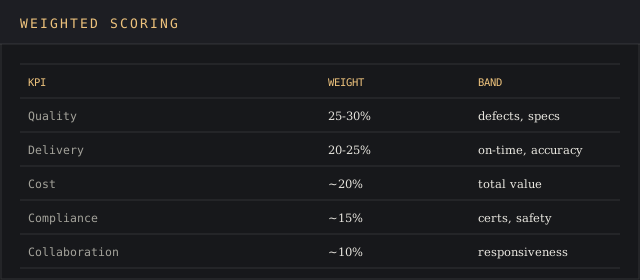
Back to the template groupsTurns supplier management from anecdotes into numbers: weighted KPIs with a computed total score, a quarterly trend line per supplier, and a profile sheet for renewals and owners.
Jump to templateDownload (XLSX)
Lines up contractor bids row by row, prices each bidder's exclusions back in, screens out noncompliant bids, and ranks the rest on weighted scores.
Jump to templateDownload (XLSX)
Structures a response into eight sections evaluators expect, cover letter through appendices, plus a compliance matrix that maps every RFP requirement to the section answering it.
Jump to templateDownload (DOCX)
Free Word equity research report template with eight sections, plus an Excel valuation model running a DCF, comps and sensitivity grid, pre-filled with a $46 worked example.
Jump to templateDownload (DOCX)A market research template is a pre-built structure, a table, a matrix, a prompt list, that tells a team what to collect up front. Market research templates cut the setup phase of a market research project from days to minutes, and using templates saves time and resources in research efforts: nobody rebuilds the same table for every question.
The same logic extends to the outward-facing frameworks aimed at external signals: competitors, market trends, and industry shifts. Effective market intelligence combines structured qualitative and quantitative frameworks, and the key types mirror the types of market intelligence: competitive intelligence, customer intelligence, product, and market views, one lens per question a business asks about customers and competitors.
Templates make findings comparable: a market research template filled the same way each quarter lets users compare insights over time and track market trends, replacing one-off documents that can't be compared against each other. Every framework here can be customized to fit specific needs, or create the grid from scratch; Miro publishes template libraries its users apply at various stages of market research.
One caution: a market research template focuses thinking. It supplies no facts. Each section notes where the real market data comes from.
Market research helps businesses understand customer needs before customers churn, uncovers new market opportunities before a competitor claims them, and effective market research minimizes investment risks: testing demand for new products and services on paper costs a fraction of a launch.
The numbers argue for continuous market research. Sales-performance research put salespeople hitting their 2024 targets at 57%, down from 61% a year earlier, blamed partly on stale assumptions about the target market. Regular market research helps track changes in customer needs over time; that is the fix. Surveys are a common method for gathering this evidence; short surveys beat long ones nobody finishes.
Findings from market research provide insights beyond the research team: market intelligence informs product development and marketing strategies, and business strategies built on measured demand outlast conviction.
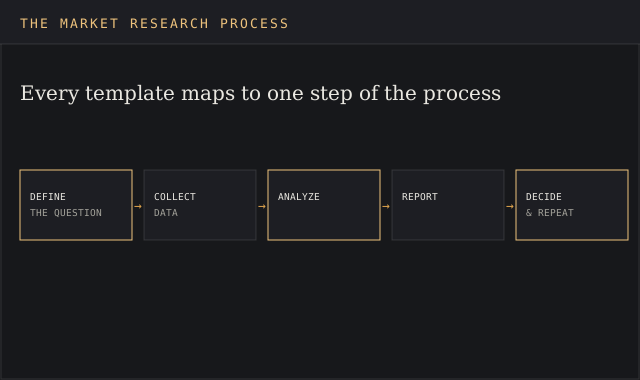
Every template below maps to a step of the market research process: define the question, collect data, analyze data, report the findings, decide, repeat. A research project without a defined question yields no conclusion.
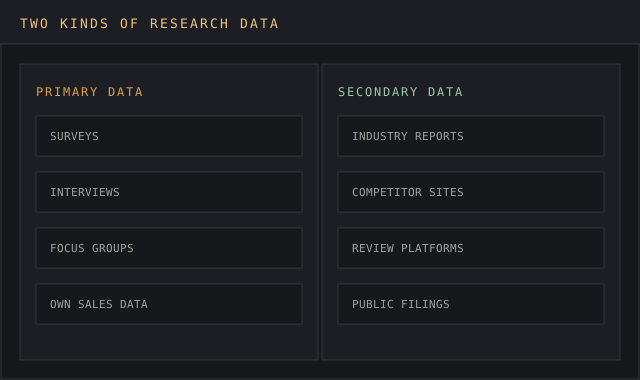
Collection splits into two research methods. Primary data means your own surveys, interviews, and sales records; secondary sources, industry reports, review platforms, public filings, supply the background information that frames every market research template. Effective research requires the collection of both primary and secondary data; the how to gather market intelligence guide covers gathering information from both.
Qualitative research supplies the why; quantitative data supplies the how much, and enough of it lets analysts find patterns interviews never show. The templates mix both: either alone gives half the story, together a complete picture.
Each entry covers what the template captures and where the data comes from; together they span the market research efforts most organizations run in a year.
The market overview template summarizes market size, growth, and the key trends that could move it: the full view that anchors any market analysis, the page an executive reads first; every number needs a source.
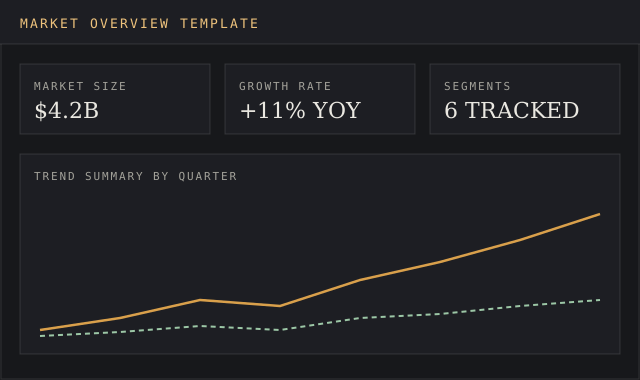
Fill this market research template from secondary sources: analyst services for size figures, plus Similarweb for digital insights on how customers split across segments.
The market sizing template defines total revenue opportunities for a business in three nested numbers: total addressable market, serviceable available market, and serviceable obtainable market. It answers how much demand exists, shrinking a headline figure to the slice of the target market one business can reach.
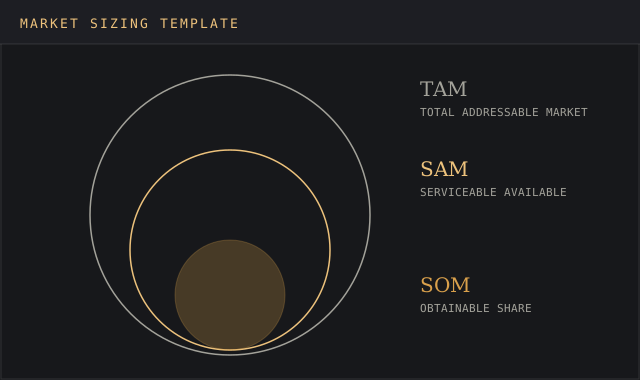
Build this market research template bottom-up: potential customers in the target market, times realistic annual spend, beats a top-down slice of an industry figure.
Download the calculator (XLSX)
The competitive analysis template tracks products, pricing, and positioning across rivals in one table: one row per dimension, one column per competitor, a running map of every named rival. Templates like this help in tracking competitors' strengths and weaknesses systematically; the assessment updates on a schedule.
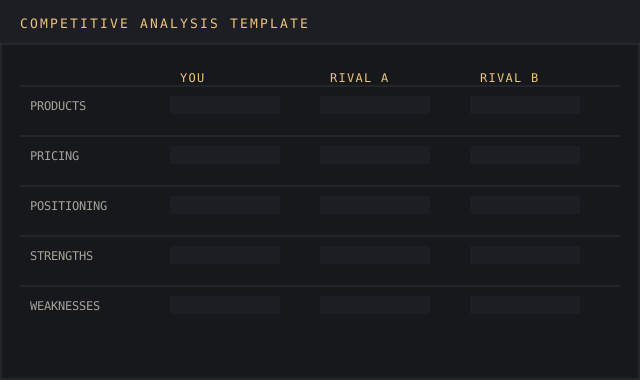
Competitor research for this template starts at pricing pages, changelogs, and review sites; the market intelligence tools ranking compares the platforms that automate tracking, and the grid scales from three competitors to thirty.
A benchmarking matrix plots competitors on two axes, usually price against feature coverage, to identify gaps in rival product lines where a unique value proposition can live. The empty region of the chart is the finding.
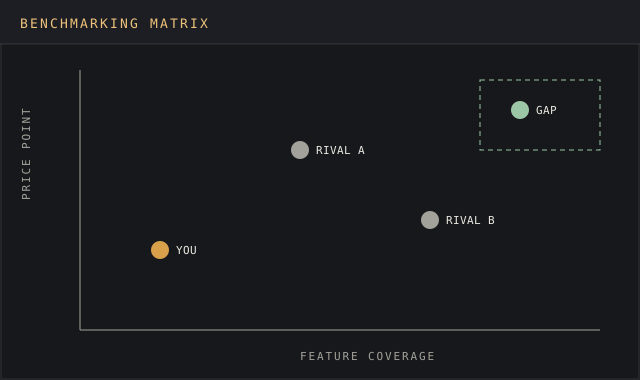
This market research template pairs with the competitor research above: that table supplies the coordinates; the chart makes the gap visible.
SWOT analysis assesses internal operations against external market conditions across four quadrants: strengths, weaknesses, opportunities, threats. This market research template depends on specificity; "strong brand" is filler, "renewal rate 14 points above the category median" is a finding.
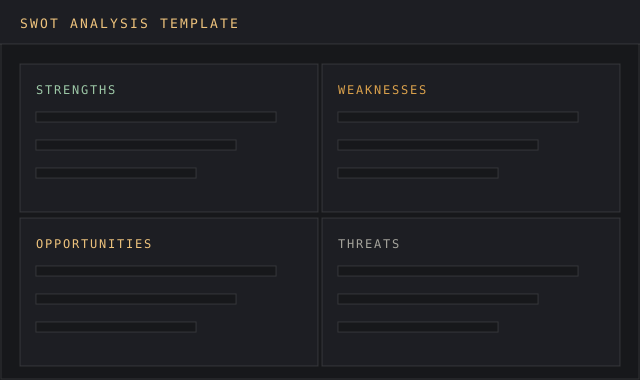
Strategic planning teams lean on it to align company goals with market shifts; the AI SWOT analysis guide covers where machine-drafted quadrants fail.
PEST analysis evaluates external forces impacting an industry across four columns: political, economic, social, and technological. Where SWOT examines one business, this market research template shifts the focus to the environment every business shares.
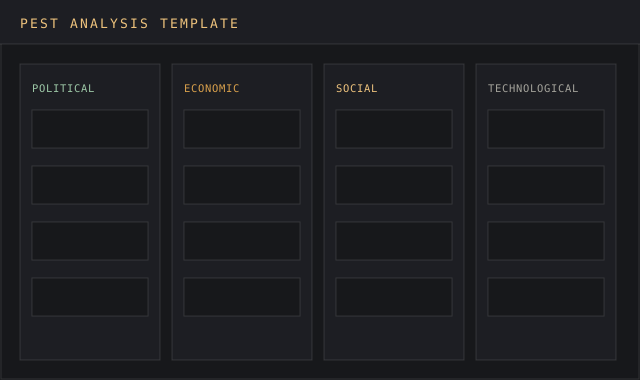
Run it yearly, or when entering a new market; external forces change slower than competitors, and the findings feed the SWOT quadrants above.
Consumer persona templates gather insights on customer pain points and motivations, keeping the focus on one named buyer type: what pushes them to buy, what stops them, and where customers research. A persona built from surveys, with survey results and interview quotes attached, gives marketing teams a deeper understanding of the target audience than demographics tables.
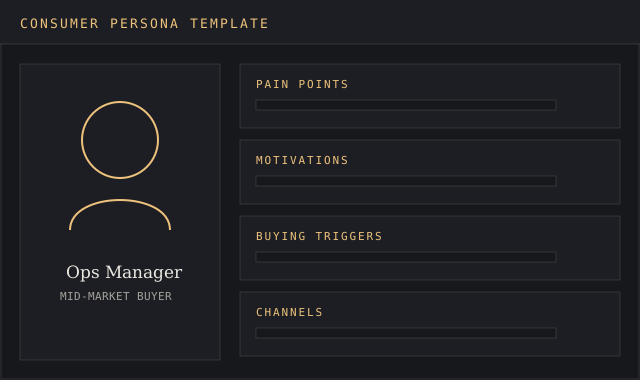
Conference-room personas describe the ideal customer the team wishes existed; ground this market research template in customer research: real quotes from target customers, real support tickets.
Customer intelligence templates capture segments, needs, and buying behaviors across all customers: which segments of customers exist, what share of revenue each holds, how customer behavior differs between them, and where customer satisfaction surveys run high or low.
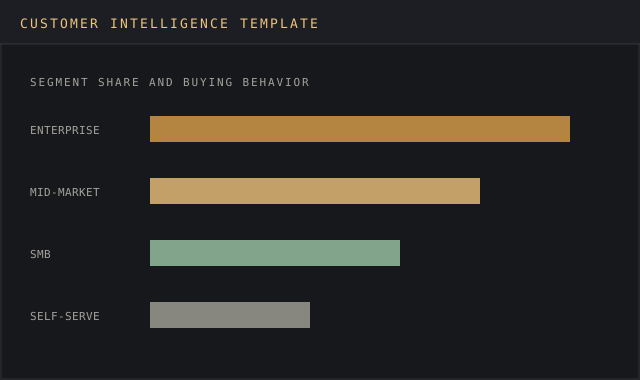
This is the market research template where internal records earn their keep: market intelligence combines internal and external data for insights, sales history reveals buying behaviors no outside source sees, and product usage shows which key features users open. The consumer intelligence guide covers the discipline.
Market trends trackers monitor emerging technologies and consumer behavior on a fixed cadence: each tracked trend gets a direction, a research note, and a review date. The job of this market research template is keeping the focus on identifying trends on schedule, well ahead of a rival's launch notes.
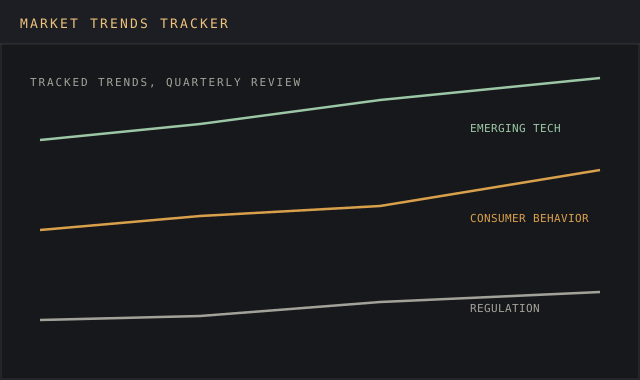
Feed it with a trend research tool; platforms like Exploding Topics surface current trends with volume data, turning the tracker from opinion into measurement, helping teams stay ahead of what customers want next.
The market research report template structures the final deliverable: objective, method, market findings, competitor findings, key insights, and recommended actions: the actionable insights a stakeholder can approve. A market research analysis template for the middle sections keeps findings organized mid-project, so users create the report as they go.
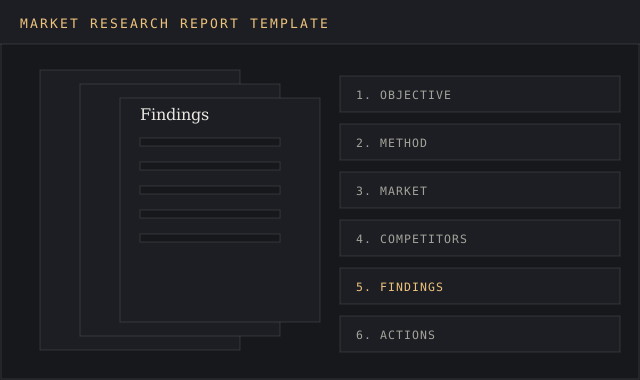
Research earns its budget here: findings that never reach a decision-maker change nothing. Lead this market research template with the three findings that demand action; decision-makers read the first page, researchers read the rest.
The competitor battlecard template turns the research into a sales-side page per rival: context, counter-messaging, proof, and scripted objection responses for mid-call use.

Download the battlecard (DOCX)
The vendor evaluation scorecard grades suppliers on weighted KPIs, quality through service, scored quarterly.
The win-loss log records why deals close: eight fields per deal, plus buyer interviews.
The market intelligence report template structures a recurring intelligence cycle into nine sections: report overview, executive summary, market trends, competitive landscape, customer intelligence, opportunities and risks, recommendations, metrics to track, and data sources and methodology.
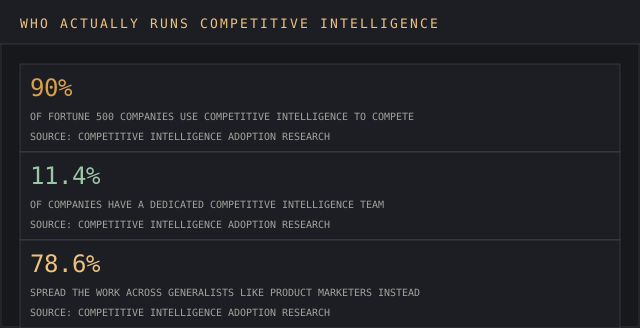
90% of Fortune 500 companies use competitive intelligence to compete, yet only about 11.4% have a dedicated competitive intelligence team; a fixed template is what keeps that generalist-run process consistent from one report to the next.
Download the report template (DOCX)
The stakeholder map template sorts the people and groups tied to a project by how much power they hold and how much interest they take in the outcome, then plots them onto a grid with four quadrants: manage closely, keep satisfied, keep informed, monitor.
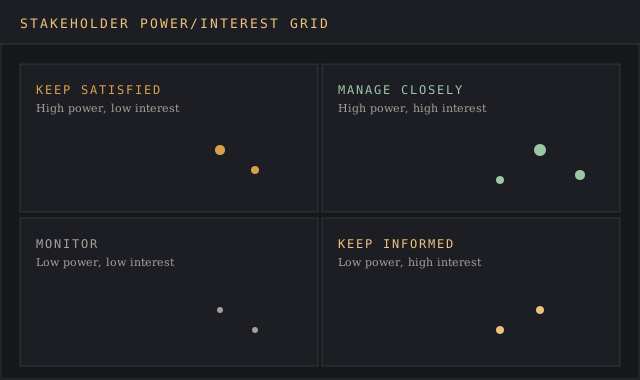
The download auto-assigns each row's quadrant with a formula and ships with a worked example: a finance-system rollout with the CFO and IT security in manage-closely, the auditor in keep-satisfied.
Download the stakeholder map (XLSX)
The risk assessment matrix template scores each risk on a 5x5 grid, likelihood against impact, so a team can see at a glance which risks need immediate attention and which can wait.
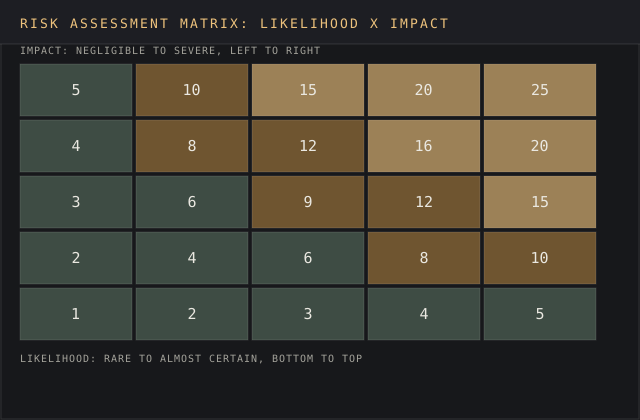
The download adds a risk register tab with owner and mitigation columns, and the risk score recalculates automatically once likelihood and impact are entered; both tabs import cleanly into Google Sheets.
Download the risk matrix (XLSX)
The product launch checklist template bridges product development and marketing execution across three phases, pre-launch planning, launch day, and post-launch analysis, so product, marketing, and sales work from one shared list, retiring the three separate lists that used to quietly disagree.
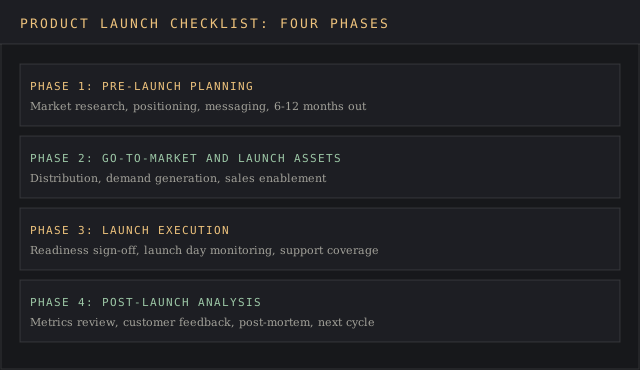
Each phase breaks into owned tasks with a status column, and the download ships with a worked example filled in for a B2B software launch.
The customer journey map template visualizes the customer experience across five stages, awareness, consideration, purchase, retention, and advocacy, with columns for touchpoints, emotions, pain points, and opportunities at each one.
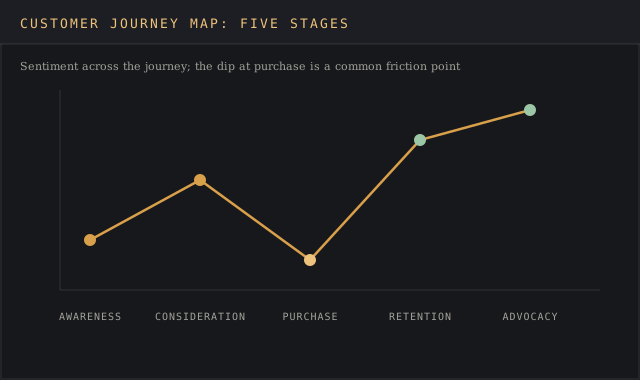
The grid imports cleanly into Google Sheets and pairs with the user persona template's tab layout, so a team building both keeps a consistent format.
Download the journey map (XLSX)
The OKR tracker template holds every objective, its key results, an owner, and a live progress score in one dashboard, replacing the quarterly slide deck nobody reopens after kickoff.
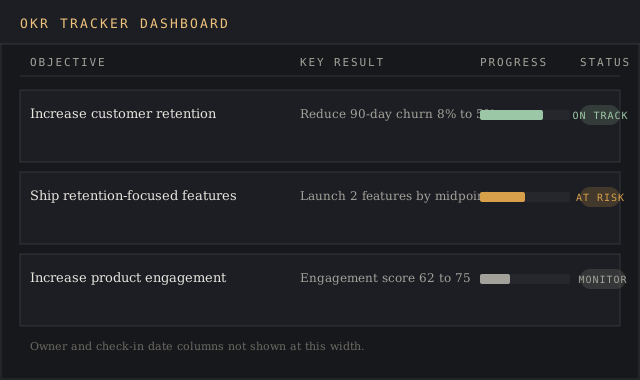
The download auto-scores each row on a traffic-light scale from a Start/Current/Target formula, so a team can flag an at-risk key result without a status meeting.
Download the OKR tracker (XLSX)
The messaging framework template lays out the core value proposition, three to five messaging pillars with a proof point behind each one, buyer personas, and a positioning statement, so marketing, sales, and PR describe the product in the same words.
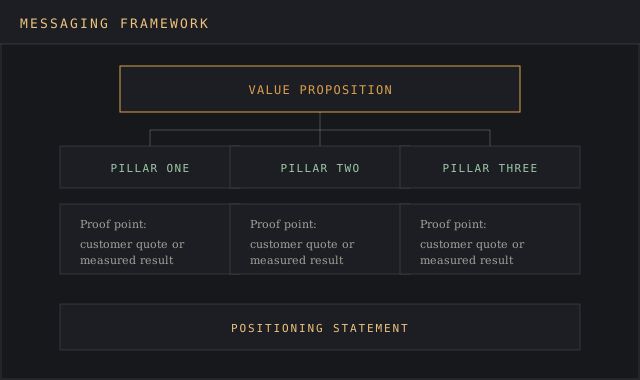
The download ships with a worked example from a B2B scheduling-tool launch: a value proposition, three pillars, and the proof point behind each.
The positioning statement template walks through the four elements every effective positioning statement needs: target audience, frame of reference, brand promise, and reason to believe.
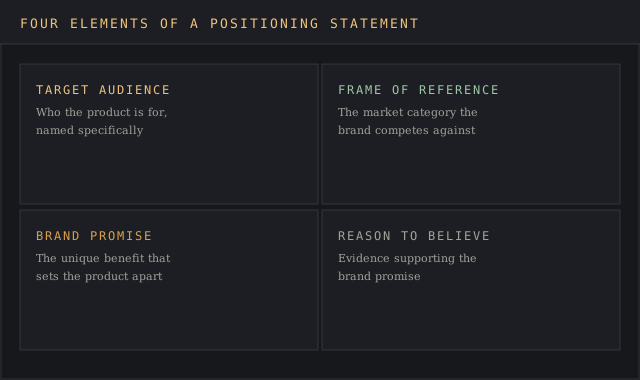
It includes real positioning statement examples from Nike, Apple, and other named brands, plus a fill-in-the-blank statement template and a worked example for a construction project-management launch.
Download the statement template (DOCX)
The go-to-market plan template covers the five elements a launch needs before a date gets set: target market and target customers, value proposition, pricing strategy, distribution and sales channels, and key performance indicators.
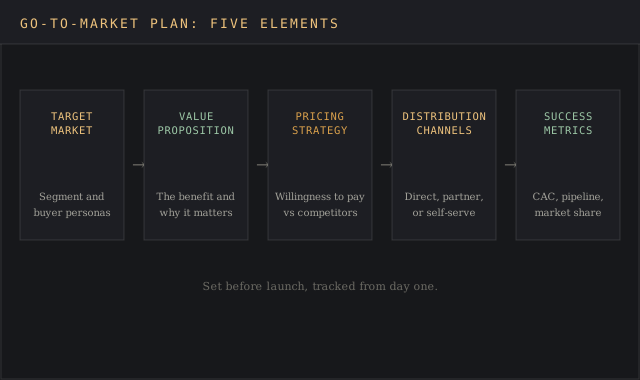
The download ships with a worked example for a B2B software company entering a new market segment: a value proposition, tiered pricing, and success metrics set before launch.
Download the plan template (XLSX)
Market analysis template⬇DOCXMarket sizing template⬇XLSXCompetitive analysis template⬇XLSXBenchmarking report template⬇XLSXSWOT analysis template⬇DOCXPEST analysis template⬇DOCXUser persona template⬇DOCXCustomer intelligence template⬇XLSXTrend tracker template⬇XLSXMarket research report template⬇DOCXVendor evaluation scorecard⬇XLSXWin-loss analysis template⬇XLSXCompetitor battlecard template⬇DOCXMarket intelligence report template⬇DOCXStakeholder map template⬇XLSXRisk assessment matrix template⬇XLSXProduct launch checklist template⬇DOCXCustomer journey map template⬇XLSXOKR tracker template⬇XLSXMessaging framework template⬇DOCXPositioning statement template⬇DOCXGo-to-market plan template⬇XLSXCustomer segmentation template⬇XLSXRFP response template⬇DOCXRisk-benefit analysis template⬇XLSX3C analysis template⬇DOCXRoot cause analysis report template⬇DOCXCustomer engagement strategy template⬇DOCXWhite space analysis template⬇XLSXTotal addressable market template⬇XLSXCustomer acquisition strategy template⬇XLSXBid comparison template⬇XLSXExit strategy template⬇XLSXFeasibility analysis template⬇XLSXEquity research report template⬇DOCXMonetization strategy template⬇XLSXAnsoff matrix template⬇XLSXBusiness model canvas template⬇DOCXPerceptual map template⬇XLSXIdeal customer profile template⬇XLSXSeveral templates above depend on knowing who the target market is, and market research helps identify customer demographics and behaviors precisely enough to act on. Gather data on age, location, income, and interests, then segment: specific market segments improve marketing effectiveness and customer loyalty. Customers grouped by real customer behavior respond better than customers grouped by age.
A business that cannot name the target audience for a campaign should start with the persona and customer intelligence templates above, then narrow the focus to the target audience segments that respond; surveys of existing and potential customers are the fastest honest insights.
Loyal customers deserve their own segmentation row: the customer experience keeping them renewing is measurable, and gaining insights into it tells a business what to protect while chasing growth.
Every framework on this page works as a free market research template: rebuild the structure in a spreadsheet; the research method is identical. A free market research template plus real data beats paid software plus empty fields, for users with no budget, free resources cover the method.
Paid tools and services earn their price on the data side. Automated market research improves efficiency and accuracy once tracking runs weekly: a competitor grid a platform refreshes saves time every cycle, and tools like Semrush for search data or ZoomInfo for company data fill fields about customers and competitors that would cost an analyst a day. The same services run surveys at scale, recruiting respondents and returning results ready for insights.
The sequence for most organizations: run a free market research template for one full project cycle, note which fields hurt to fill, then buy the tool that fills those fields. Our methodology page covers how we score the shortlist.
Product, price, promotion, place, and people: the five dimensions a market research project checks a market against. Most market research templates on this page cover one or two P's; the report template is where all five meet.
It is a valuable tool for structure: users who give it a narrow focus and a source document get surveys and summaries drafted. It cannot supply verified market data; the ChatGPT for market research guide covers the boundary.
Defining the objective, designing the method, data collection, analysis, and reporting: the five steps every team follows to create a study, shown in the diagram above.
Who are the customers, what do they buy, when do they buy, where do they buy, why do they choose it, how do they buy, who else competes. A completed persona, customer view, and competitor table answer all seven.
Four views: competitor intelligence, product intelligence, market understanding, and customer intelligence, spanning customer experience and buying patterns, the four ways organizations watch markets and customers move. The market intelligence vs market research page separates the disciplines.
Depends on the job: ZoomInfo for sales and company data, AlphaSense for document-heavy financial research, and Semrush for digital and search intelligence, each with pricing detailed in our reviews; the top-10 comparison lives on the homepage.
Define one question, fill the relevant templates with sourced data, then use the market research report template from section ten. Lead with what should change, attach the supporting insights, and date every data point so the next report measures movement.
Templates are the cheapest resources in a market research practice: the structures on this page cost nothing and create comparable findings quarter after quarter. Regular use of these frameworks leads to data-driven business decisions: a labeled empty field makes the missing fact visible, and visible gaps get filled.
The competitive advantage never comes from the template itself. Organizations that stay ahead of competitors fill fields with sourced data about real customers on a schedule, then connect the documents, and the services behind them, to actual business decisions. Pick the one market research template that matches this quarter's hardest question; a single well-fed tracker beats ten empty frameworks, and the market intelligence examples page shows the filled-in versions.