User Persona Template
 By Jan Suski. I go deep on every review, checking every number against its source and digging up details other coverage misses, a habit from six years of SEO and link building for tech companies. Bylines at Surfer, Brand24, and Senuto. How the scoring works.
· Prefer this source on Google
A user persona template is a structured document that outlines a fictional character representing a target audience segment: one named, described person standing in for thousands of real users.
Personas exist so decisions stop orbiting "the user" in the abstract; an effective user persona template helps teams understand who users are and what they want to accomplish.
This persona template is part of our market intelligence templates library, and it downloads free, with a buyer persona version alongside for the purchasing side of the same audience.
Download the Persona Templates
Download the user persona template (DOCX)Basic information, demographics, goals, pain points, behaviors, a quote field, and a validation log.
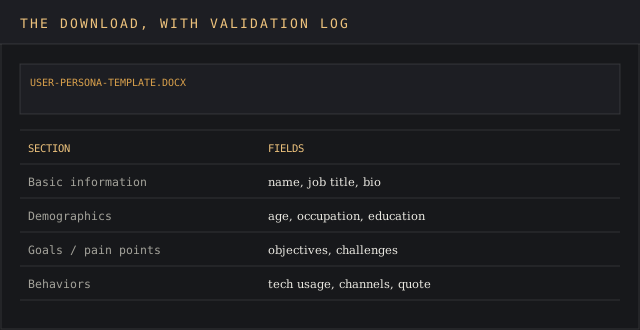
Download the buyer persona template (DOCX)Buying triggers, objections, decision making process, and messaging notes for the person who signs.
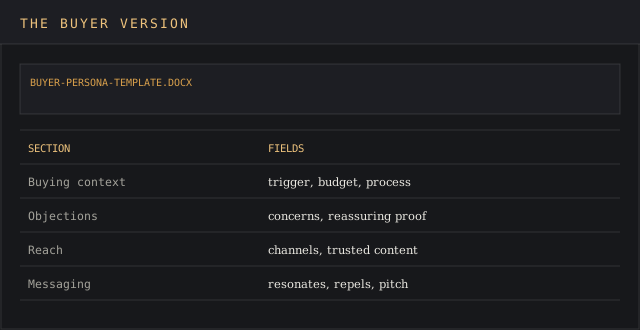
Both persona templates open in Word or Google Docs, carry our branding, and ship with worked examples in every field.
Duplicate the template once per persona: create one file per character, create a folder for the set, and the collection becomes a shared reference the whole team can open.
Personas template free of charge means no excuse for the conference-room version; the fields below only work when real user data fills them.
What Is a User Persona?
A user persona is a fictional character built from real research to represent one segment of your user base: who they are, what they want, and what stands in their way.
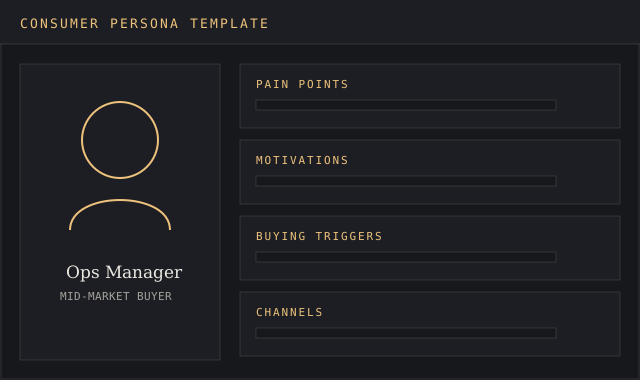
User personas are essential for UX design and marketing strategies alike, because both crafts fail the same way: building for an average user who exists nowhere.
User personas help teams create user-centered designs and marketing strategies, help teams empathize with users, and prevent assumption-based design; the persona gives every debate a referee.
User personas sharpen understanding of target audiences, improve cross-team collaboration, and drive alignment: a shared understanding of the audience beats five private ones.
What Is a Persona Template?
A persona template is the reusable structure underneath: the fields every persona fills in, so each new character is comparable with the last, and each template you create inherits the lessons of the previous one.
The template answers "what do we need to know," the research answers "what is true," and the persona is where they meet.
Templates also make persona creation fast enough to happen: an afternoon with research in hand. The alternative is a quarter-long project nobody finishes.
Why Teams Create User Personas
The first reason is time: creating user personas can save time and money in product development, because arguments end faster when the audience has a face.
The clearest gain is a shared understanding: marketing, product, and sales stop describing three different customers and start consulting one set of characters.
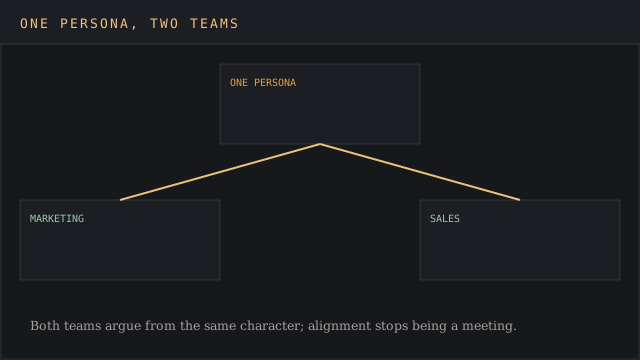
Personas also make research legible. Raw studies produce findings; a persona turns the key insights into a character anyone can consult without reading the appendix.
The complete picture is what to build: demographics alone stereotype, goals alone float free, and together they create a clear picture of the target user your work serves.
Customers benefit too, indirectly: products created for well-drawn personas fit real customers better, and the customers who never joined a study still get the improvements their segment's persona argued for.
None of this is helpful without honesty: a persona built to flatter the roadmap is a mirror, and mirrors do not create key insights about the audience.
Building Personas From Customer Data
Building personas starts with the customers you already have: interviews, surveys, analytics, and support tickets each contribute a different layer.
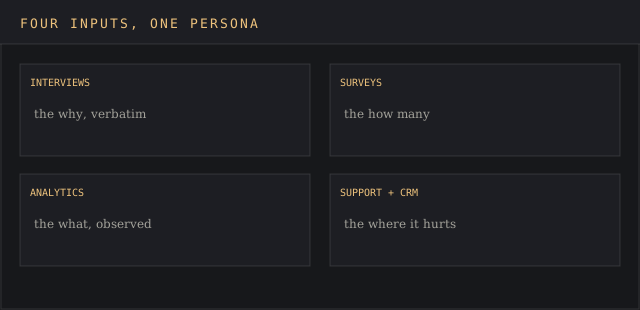
No single source suffices: interviews carry the why, surveys the how many, analytics the observed actions, and customer feedback the friction. Personas built from a single source inherit its blind spot.
Company size belongs in the notes for B2B work, because customers at a 20-person company and customers at a 2,000-person company can share a job title and share nothing else; company size changes tooling, process, and patience.
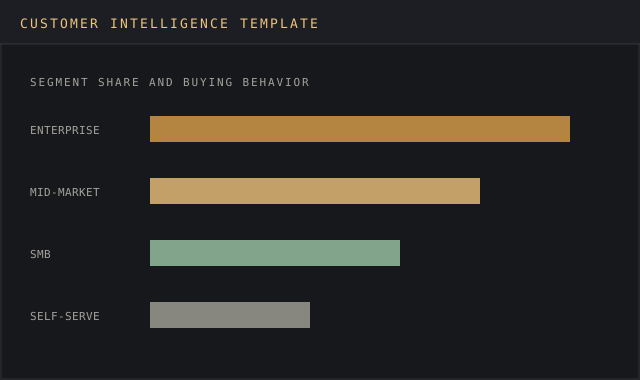
The key attributes to extract are the ones that repeat: goals customers state twice, challenges that appear across interviews, channels multiple customers name unprompted. Repetition is the signal that a segment exists.
A customer segmentation template turns that same repetition into named, sized segments scored by RFM, smaller and more specific than a single composite persona.
Our customer intelligence guide covers keeping that data current, and how to gather market intelligence maps the collection habits behind it.
What Should Be in a User Persona
A good user persona includes a fictional name, job title, objectives, challenges, and behaviors; the user persona template dedicates a field to each, and a good persona earns every field it keeps.
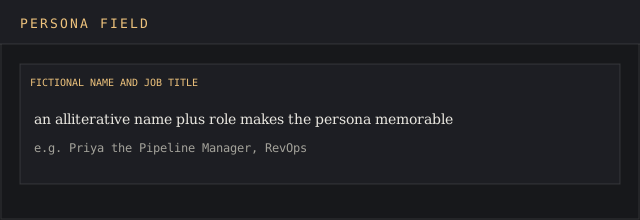
Fictional Name and Job Title
A fictional name makes the persona memorable, and a job title anchors the context; "Priya the Pipeline Manager" survives meetings that "Segment 3" never will.
Demographics
Demographic details in a user persona include age, occupation, location, and education; key demographics stay short, because they describe the person without explaining them.
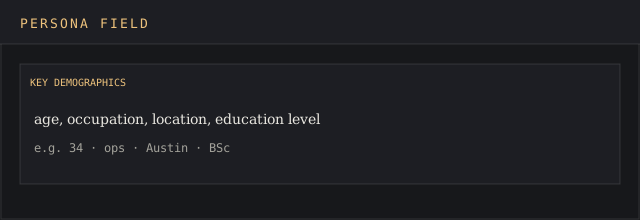
Education level matters more in some markets than others: for a developer tool the education level predicts onboarding needs, and for consumer products the education level often predicts nothing; include it when it changes a decision.
Short Bio
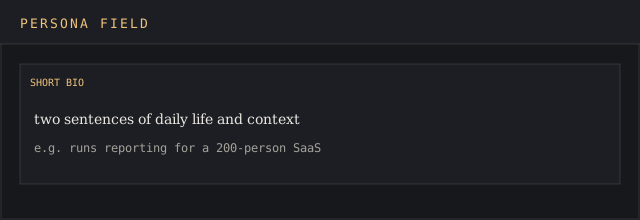
A short bio, two sentences of daily life, keeps the character human: what a normal day and daily routine look like, and where your product might interrupt it.
Goals and Objectives
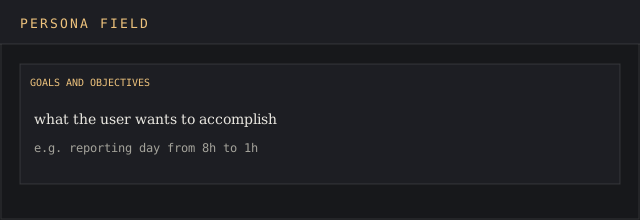
Goals state what the target user wants to accomplish, in their words, at their altitude; user needs live here, and features come later.
Challenges and Pain Points
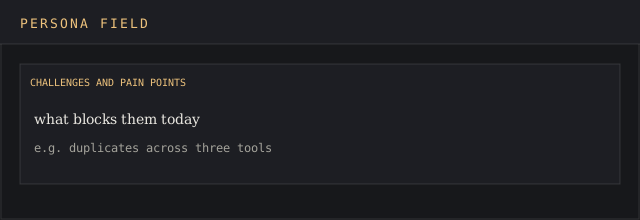
User personas include demographics, goals, and pain points as the non-negotiable trio, and pain points carry the most weight: the biggest challenge a persona faces is usually the reason your product exists.
List challenges in the user's ranking and not yours; the challenges customers mention first in interviews rarely match the ones the roadmap assumed, and that gap is the finding.
Behaviors
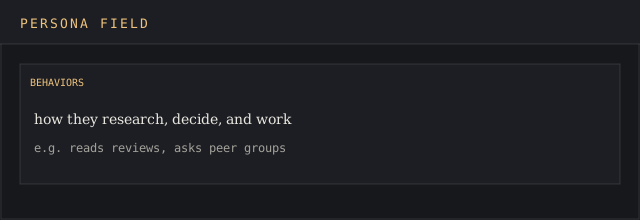
Behaviors describe how the persona researches, decides, and works: behavior predicts adoption better than any demographic, which is why the field sits mid-template where nobody skips it.
Motivations
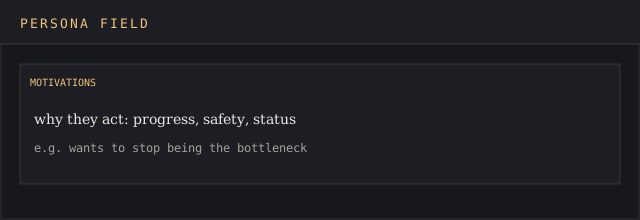
Motivations explain the why underneath the goals: progress, safety, status, or relief. Two personas can share goals and differ entirely in motivations, and the messaging that lands differs with them.
Motivations also sort segments: two clusters of customers with matching goals but different motivations are two personas. Write motivations as forces, the way a jobs to be done template frames them: "wants to stop being the bottleneck" motivates decisions in a way "ambitious" never will, and the challenges section reads differently once the motivations behind it are named.
Technology Usage
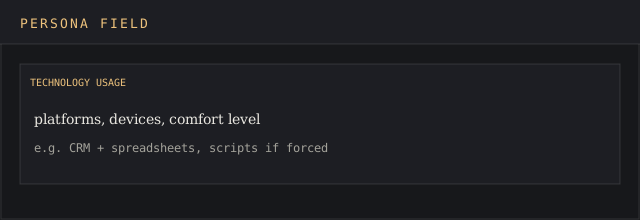
User personas can include information about technology usage and preferred communication channels; the tools a persona already lives in decide what "easy to adopt" means for them.
Preferred Channels
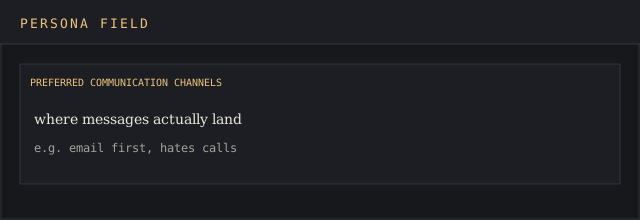
Communication preferences tell marketing where messages land and sales how to open: preferred channels are the difference between a welcome email and a cold call that burns the relationship.
A Real Quote
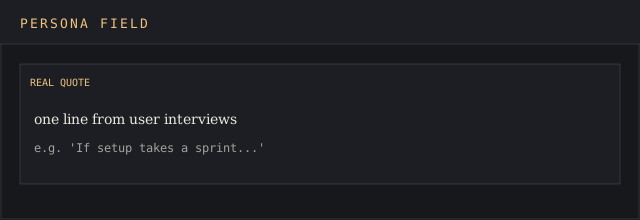
Real quotes from user research encapsulate user attitudes better than any summary; one verbatim line from user interviews carries the voice into every meeting the persona attends.
Images
Most persona templates include images: a photo or illustration per persona. Images help recall, but choose neutral ones; stock images that are too specific smuggle in assumptions the research never made. Four or five consistent images across the persona set beat one glamour shot.
A User Persona Example
Here is a complete persona from the worked set that ships inside the template.
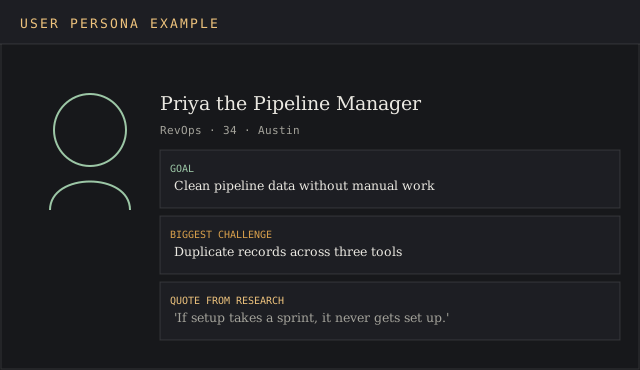
Every field traces to research: the goal came from interviews, the biggest challenge from support tickets, the quote verbatim from a call. That is what makes the persona actionable.
Notice what a complete persona example leaves out: no invented hobbies, no favorite color, nothing the team cannot use. Describe what decisions need, and stop.
More Persona Examples
Different segments produce visibly different personas; here are five more from the worked set, spanning user and buyer roles.
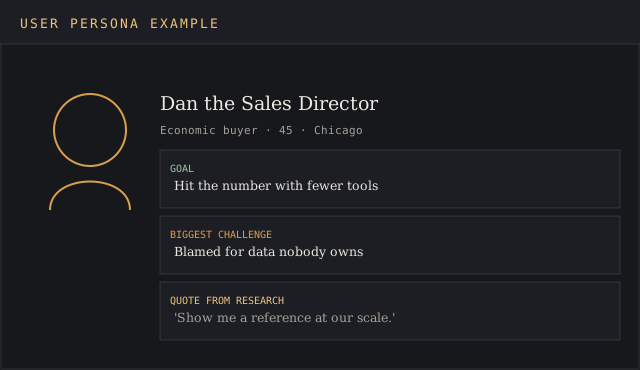
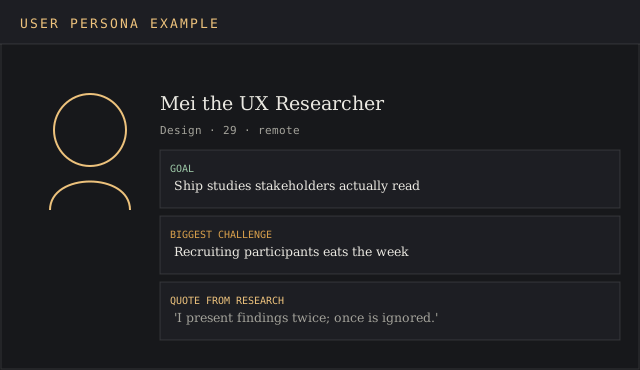
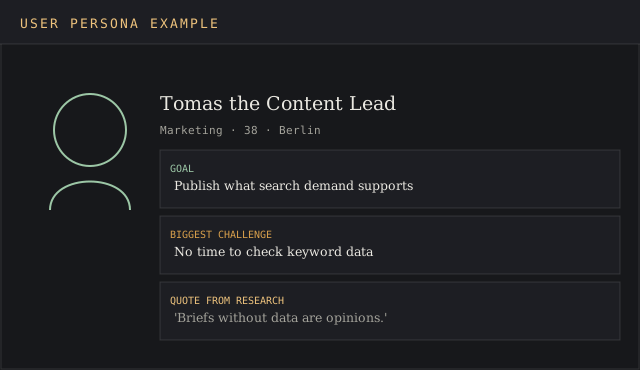
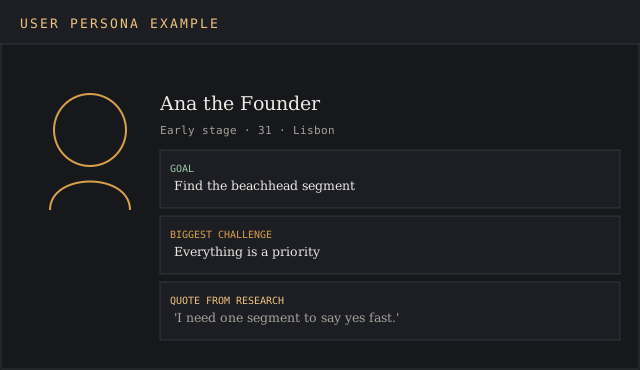
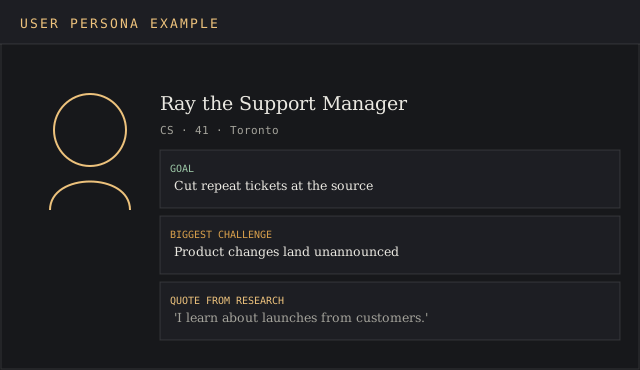
Read the five side by side and the point of multiple personas appears: the same product means something different to each character, and marketing to all five with one message means missing all five.
The Four Types of Personas
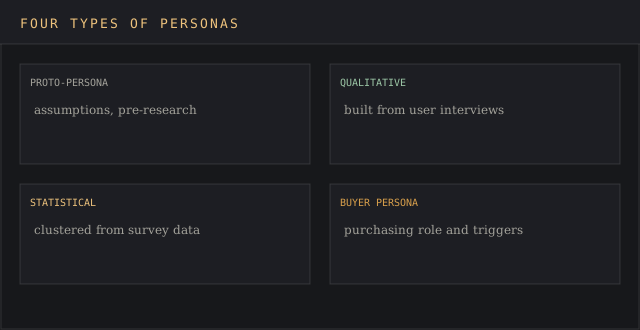
Persona work comes in four types, split by how much research sits underneath.
Proto-Personas
Proto-personas are assumption drafts made before research: useful for surfacing what the team believes, dangerous the moment anyone forgets they are unvalidated.
Qualitative Personas
Qualitative personas come from user interviews and observation, the most common kind and the sweet spot for most teams: rich detail at interview cost.
Statistical Personas
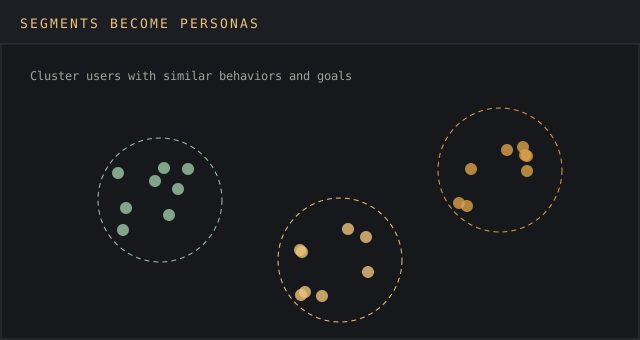
Statistical personas cluster survey and analytics data: grouping users with similar behaviors and goals into distinct clusters or segments, then describing each cluster as a character.
Buyer Personas
Buyer personas describe the person who purchases. User personas describe the person who uses the product; in B2B those are often different people with different pain points.
User Personas vs Buyer Personas
The user persona wants the product to work; the buyer personas want the purchase to be safe. Both matter, and conflating them produces messaging that convinces neither.
Buyer personas earn their own template because the purchasing role asks different questions: what does this cost, what breaks if it fails, who else approved it.
Buyer personas carry fields user personas skip: budget authority, the trigger that starts a search, the decision making process, and the objections that stall it.
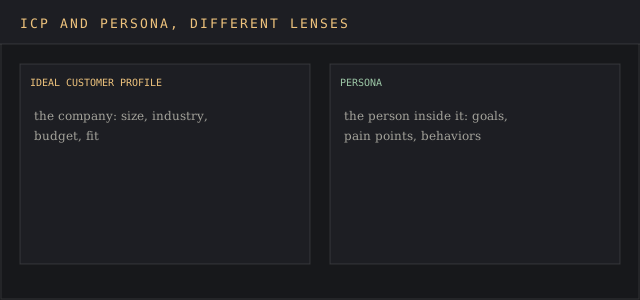
Buyer personas also differ from the ideal customer profile: the ICP describes the company, buyer personas describe the humans inside it. An ideal customer in B2B is an account; the personas are the people who champion, sign, and use.
Work both lenses: the ideal customer profile filters which accounts to pursue, and the buyer personas script how to talk once inside. Sales teams that keep the two documents side by side stop pitching the ideal customer a message written for the daily user.
Customer persona templates bridge the two: a customer persona covers the person across their whole relationship, from first marketing touch through renewal, which is why customer success teams keep their own copy.
The four types of customer personas most teams track mirror the funnel: the researcher, the champion, the buyer, and the daily user; small companies compress them into two, and enterprise deals can involve all four in one account.
How Many User Personas Do You Need?
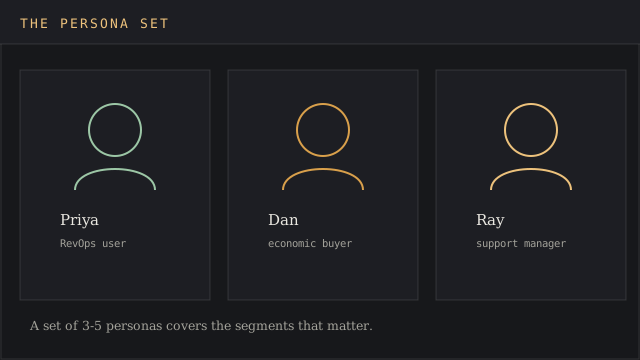
Most teams create 3-5 distinct user personas, and creating 3-5 distinct personas is usually sufficient for most projects.
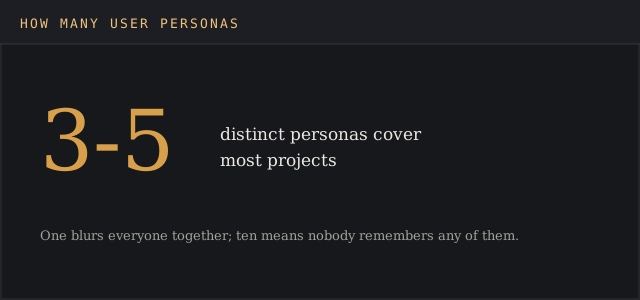
One persona blurs every segment into an average; ten means nobody remembers any of them. Detailed personas beat numerous ones.
Entering a new market segment is the exception: create a fresh persona for it, then validate before trusting it.
Company size moves the number too: products sold into enterprises meet more roles per account, so more personas; a tool for freelancers may need exactly one, drawn with care.
How to Create a User Persona
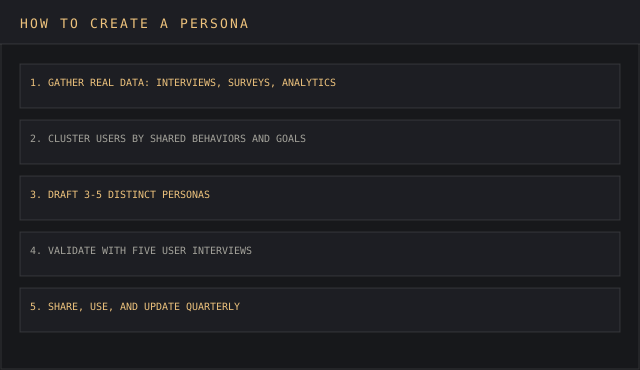
Creating user personas is a research task before it is a writing task, and creating user personas well runs in five steps; the best personas appear when the research comes first.
Step 1: Gather Real Data
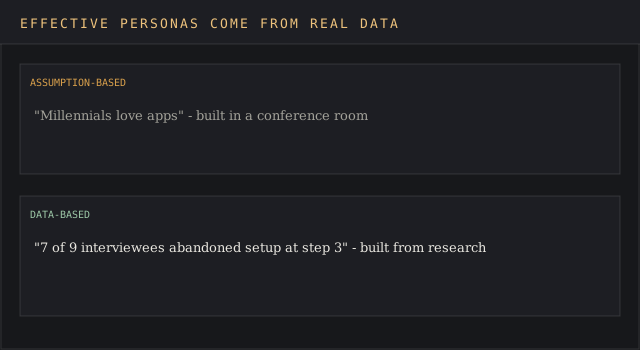
Effective personas are built from real data, never assumptions: user interviews, survey responses, analytics, support tickets, and customer feedback all feed the file.
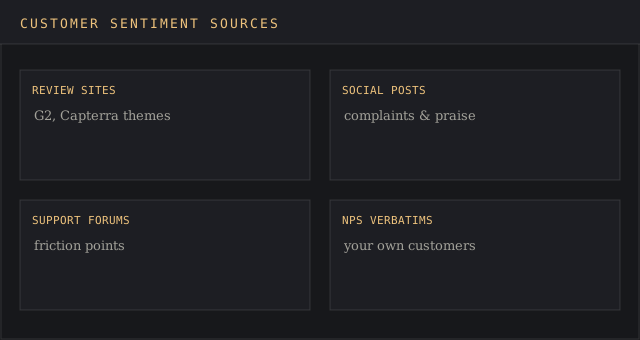
Reviews of your own product and competitors' add unprompted voice-of-customer material; our G2 review covers mining them, and the consumer intelligence guide maps the wider sources.
Step 2: Cluster the Audience
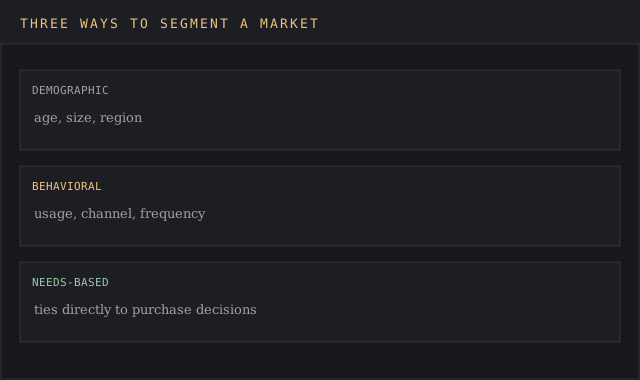
Group users with similar behaviors and goals into distinct clusters or segments; segmentation by needs and behavior beats demographics alone, since behavior is what your product meets.
Step 3: Create the Personas
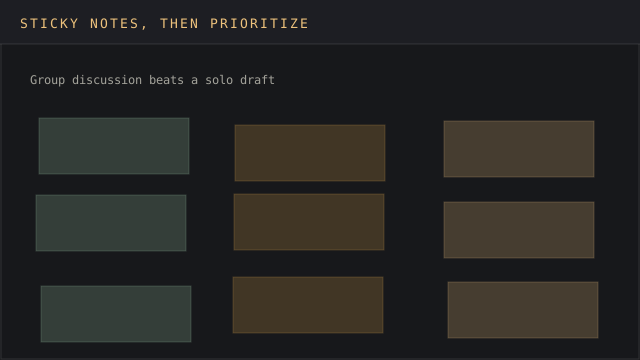
Create one persona from the template per cluster: name, demographics, goals, pain points, behaviors, channels, quote. A workshop with sticky notes gets the whole team's knowledge onto the wall before the template freezes it.
Step 4: Validate
Five user interviews can validate persona assumptions: read the draft to five real customers and mark what survived. Development of user personas should be iterative, with validation and updates based on user feedback, and each pass you create gets cheaper.
Step 5: Share and Use
A persona nobody opens is shelf decoration; pin the set where the team works, cite personas in the specs and briefs you create, and let the characters attend the meetings their customers cannot.
Keeping Personas Alive
User personas should be updated quarterly or when significant changes occur; personas should be living documents, and personas become fiction if untouched for a year.
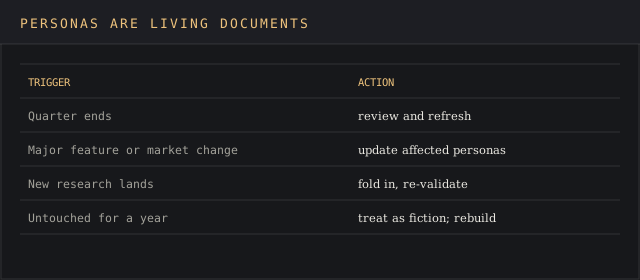
Update personas when significant new data is gathered, and revisit personas every few months if the user base evolves; a changing user base outdates a persona faster than any calendar.
The template's validation log makes the habit visible: every tested assumption gets a date and a result, so the next reader knows how current the character is.
Personas in Marketing
Marketing gets the fastest payback from personas, because marketing spends the most when the target audience is a guess, and marketing budgets forgive the least.
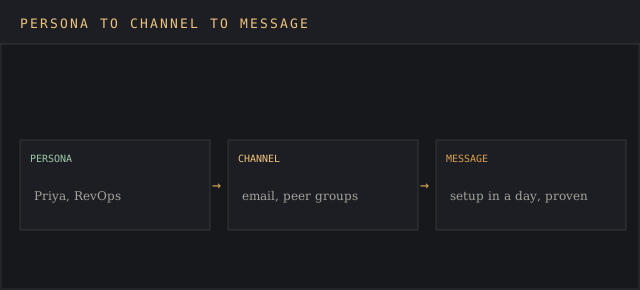
Each persona maps to a channel and a message: marketing strategies built per persona replace one broadcast with three conversations, and the target audience stops being an average.
Buyer personas sharpen the commercial half: campaigns aimed at buyer personas talk budget and risk, campaigns aimed at user personas talk workflow and relief, and the same product markets differently to each.
Content follows the same split. A content strategy keyed to personas answers the questions each character searches, which is where persona work meets keyword data; audience research names the topics, search data sizes them.
Email, ads, and landing pages inherit the targeting: customers click messages that describe their own challenges, and the persona file is where those challenges are already written down in the customers' own words.
The measurement loop closes it: campaigns tagged by persona show which characters convert, which is marketing feedback the next persona update folds in.
Who Uses Personas, and for What
User personas help teams understand their target audience better, and each team pulls something different from the same characters.
UX and Design
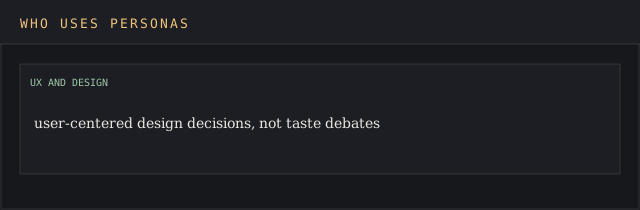
Personas guide design decisions to meet user needs effectively: in the design process, "would Priya find this" beats "do we like this," and user-centered designs start with knowing the user by name. Design skills matter less at this development stage than knowing who the design serves; personas supply that, whatever the team's design skills.
Marketing
Personas help tailor marketing messages to specific audiences: a marketing manager can shape messaging per persona, aim campaigns at the preferred channels, and build a content strategy around the questions research surfaced.
Sales
Sales teams open conversations with the persona's actual problem, customers notice the difference, and the buyer persona's objection list doubles as call preparation; our competitor battlecard template pairs with it for competitive deals.
Product and Customer Success
Product teams prioritize features against personas, and customer success teams route onboarding by persona, which shows up as fewer tickets. Creating products for named characters with a clear idea of their needs saves time and money in product development; creating products for "everyone" produces features nobody asked for.
The characters also identify gaps: a persona whose biggest challenge no feature addresses is either a roadmap item or a customer you should stop marketing to.
Free Tools to Create Personas
The download above covers the document route; dedicated persona tools add collaboration and design polish, and the best tools stay out of the way while you create.
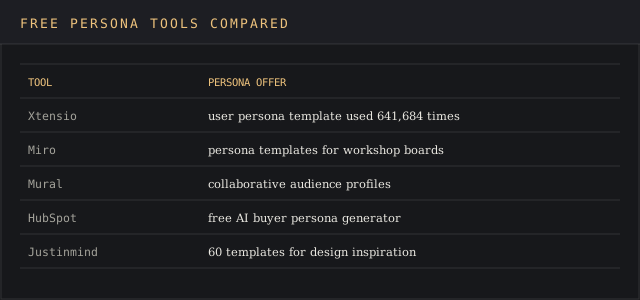
Xtensio's user persona template has been used 641,684 times, and its user persona examples are editable and shareable; numbers like that say the user persona template format is doing something right. Miro's persona templates help create detailed audience profiles on workshop boards, with real time collaboration and various persona templates for different contexts and different aspects of the audience.
Mural's user persona template aids in understanding target audiences the same way; HubSpot's AI tool generates structured buyer personas instantly, worth a look as a first draft the research then corrects; and Justinmind features 60 user persona templates for design inspiration.
Google Docs remains the quiet default among the tools: the DOCX above opens there directly, and helpful sharing beats design polish for a document whose whole job is being read.
Whichever of the tools wins, the fields stay the same, and so does the rule: real data in, or fiction out. Tools change yearly; the user persona template fields have barely moved in a decade, and the same characters emerge from all of the tools.
Common Persona Mistakes
The classic failure is fiction: personas someone built on assumptions alone, starring an audience the company wishes it had.
Demographics-only personas come second: age and location describe customers without explaining them, and marketing aimed at a demographic converts worse than marketing aimed at a motivation.
Too many characters is a quieter failure: create eight personas and the team remembers none; the target audience fragments into trivia.
Orphaned personas follow: files nobody opens, created once and consulted never. If marketing plans campaigns without them and product ships without them, the personas are documentation, and the tools that made them do not matter.
The buyer personas gap rounds out the list: B2B teams that only create user personas keep losing deals to objections the daily user never raises, because the customers who sign think in budgets and risk.
Every one of these mistakes is cheaper to fix in the template than in the market: audit the persona set against this list before the next campaign borrows it.
A Checklist Before You Trust a Persona
Before the set ships, run six checks.
Every field traces to research: interviews, surveys, or analytics, with customers quoted verbatim at least once per persona.
The target audience splits cleanly, and the target audience for each persona is nameable: no two personas would respond identically to the same message, and each maps to real customers the business can name.
The commercial side exists: buyer personas cover whoever signs, and the ideal customer profile says which companies to look inside.
Marketing can act on it: each persona names channels and a message; a persona marketing cannot use is a character study.
The update cadence has an owner and a date, and the tools holding the personas are ones the whole team can open.
The set stays small: 3-5 characters create alignment. A crowd creates nothing.
FAQ
What is a persona template?
The reusable field structure a persona fills: name, demographics, goals, pain points, behaviors, channels, and a quote. It makes every persona comparable and persona creation repeatable.
How to create a persona template?
Start from the fields above, cut what your decisions never use, and add what they always need; or download the persona template at the top and edit it, which beats trying to create one from a blank page.
How to write a persona template?
Write field labels as questions the research can answer, keep each answer to a line or two, and include one field that carries the user's own words. A template that fits on one page gets read.
What are the 4 types of personas?
Proto-personas from assumptions, qualitative personas from interviews, statistical personas from clustered data, and buyer personas for the purchasing role.
What are the four types of customer personas?
The funnel version: researcher, champion, buyer, and daily user. Enterprise accounts can hold all four; smaller customers compress them into one or two people.
How can I create my persona?
Gather what you know from real interactions with customers, fill the template honestly, and mark every unvalidated field; even a proto-persona you create alone beats none, provided the gaps stay visible.
How do I create a customer persona?
Same five steps: gather data from customers, cluster by shared traits, create the draft in the template, validate with five conversations, and update quarterly. The customer version adds the relationship: purchase trigger, renewal risk, support history.
What is a customer persona template?
A persona template extended across the customer lifecycle, from first touch to renewal, used by marketing, sales, and customer success on the same character.
What should a customer persona include?
Everything the user version holds, demographics, goals, pain points, behaviors, plus buying context: trigger, decision process, objections, and preferred channels.
What is the free tool to create personas?
Xtensio and HubSpot's generator lead the free persona tools, Miro and Mural cover workshops, and the free DOCX above needs no account at all; the first personas usually get made in whichever tools the team already runs.
Are there user persona templates?
Yes, plural: the download above, plus Xtensio, Miro, Mural, and Justinmind versions. Every serious user persona template circles the same core fields.
How to write a user persona?
One page: an invented name, job title, key demographics, a two-line bio, goals, the biggest challenge, behaviors, channels, and a real quote. Create it from research on real customers, and note what still needs validating.
What is a user persona example?
Priya the Pipeline Manager above: a named RevOps character with a sourced goal, a documented challenge, and a verbatim quote, standing in for one behavioral segment of the user base.
What should be in a user persona?
Demographics, goals, and pain points at minimum; a good user persona adds a fictional name, job title, behaviors, motivations, technology usage, and communication preferences.
Bottom Line
A user persona template converts audience research into characters a team can consult: named, described, validated, and shared. Marketing borrows them for the target audience, sales for the customers who sign, product for the users who stay; the format is old because it works, and the failures come from skipping the research.
Download the persona templates, create 3-5 distinct personas from real data, and put the update cadence on the calendar; the customer intelligence guide covers the ongoing data side, and our market intelligence tools ranking compares the platforms that keep audience data current.
The test of a good persona set is a quieter meeting: fewer arguments about what users want, because someone already asked the users.