SWOT Analysis Template
 By Jan Suski. I go deep on every review, checking every number against its source and digging up details other coverage misses, a habit from six years of SEO and link building for tech companies. Bylines at Surfer, Brand24, and Senuto. How the scoring works.
· Prefer this source on Google
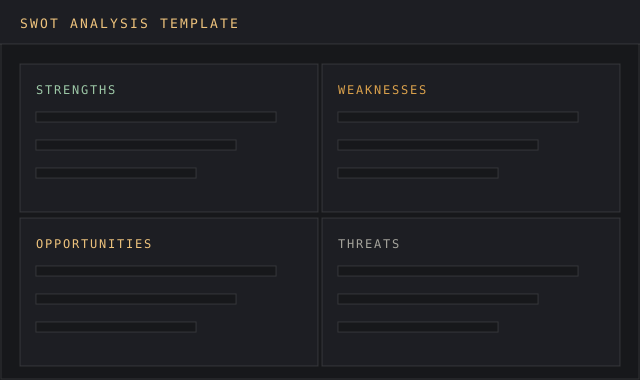
A SWOT analysis sorts one decision into four boxes: internal strengths, internal weaknesses, external opportunities, external threats. The format dates to the 1960s and has outlived every strategy fashion since, because four boxes are the most a group can argue about productively in one meeting.
Every entry has to be checkable. A renewal rate 14 points above the category median survives cross-examination; a strong brand is a claim every rival also makes about itself. Point the grid at one specific objective, hold each quadrant to 3-5 points, and give every point an owner and a date.

Get the SWOT analysis template
Page one is the quadrant grid with prompts and room for 3-5 points each. Page two holds a TOWS matrix pairing the quadrants into strategies, plus an action-plan table with owners and dates.
Download DOCXPersonal versionWhat Does SWOT Stand For?
SWOT stands for Strengths, Weaknesses, Opportunities, and Threats: the four elements every version of the SWOT matrix shares. Two describe the organization, two describe the world around it.
Strengths are internal factors that give an advantage. Weaknesses are internal factors that need improvement. Opportunities are external factors that can be acted on for growth, and threats are external factors that could harm performance.
That two-by-two logic is the whole SWOT framework: strengths, weaknesses, opportunities, and threats, and nothing else. Everything beyond the four words is discipline in the filling.
Internal and External Factors
The line that makes a SWOT analysis work runs between internal and external factors. Internal factors include strengths and weaknesses you can control: operations, product, pricing, team, process.
External factors are opportunities and threats beyond your control: market trends, regulation, competitors, the economy. Any SWOT analysis stands or falls on sorting the external factors from the internal factors correctly.
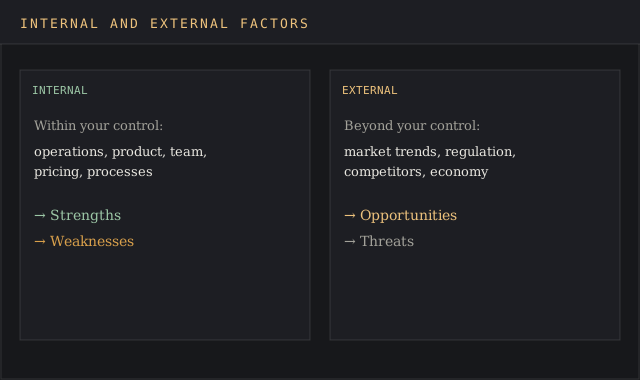
The distinction matters because the responses differ. Internal weaknesses get fixed; external threats get planned around, since they sit outside the company's control. A team that files a rival's price cut under weaknesses has misdiagnosed the problem, and the strategy that follows will aim at the wrong target.
The Four Quadrants, With Prompts
Each quadrant of the SWOT analysis template ships with prompts, because a blank box invites either silence or filler. The prompts below come straight from the template, and they read like examples on purpose.
Strengths
Internal, helpful. What do customers praise in reviews, which metrics beat the category median, what do you win deals on?
The goal is to identify strengths you can prove: internal strengths a competitor would concede, the unique advantages column of any honest SWOT analysis.

Weaknesses
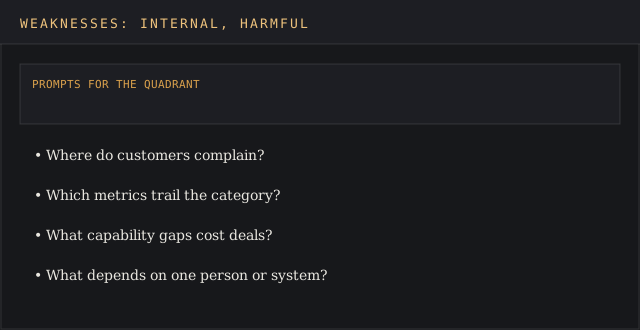
Internal, harmful. Where do customers complain, which metrics trail the category, what capability gaps cost deals? Weaknesses hide wherever nobody has measured lately.
Honesty here decides if the exercise works; a SWOT analysis that cannot name a real weakness is a press release.
Opportunities
External, helpful. Opportunities are external trends that organizations can capitalize on for growth: market gaps a rival left open, underserved segments, a shift in consumer behavior that favors you.
Every one of them expires, which is why the template dates each entry.

Threats
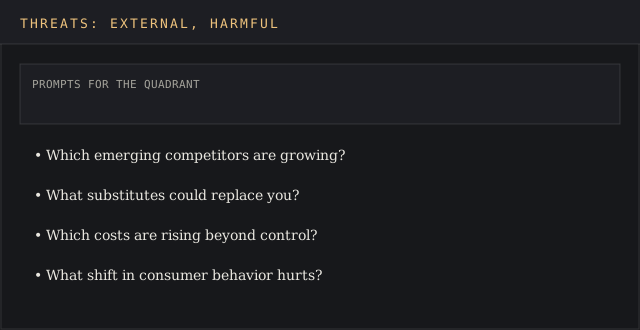
External, harmful. Emerging competitors, substitutes, rising input costs, regulation: anything that could negatively impact performance from outside, and anything that could potentially harm next year's plan.
Potential threats belong in the template even when uncomfortable; the quadrant exists for early sight of trouble; comfort is a different document.
Conducting a SWOT Analysis, Step by Step
Conducting a SWOT analysis takes an hour when the inputs exist and a week when they don't. The steps below assume the honest version.
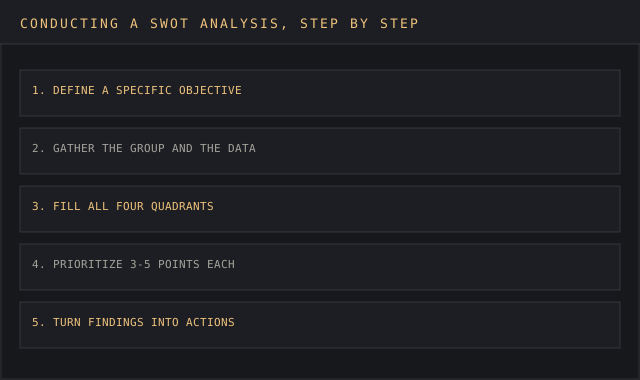
First, define a specific objective: a launch, a market entry, a product roadmap decision.
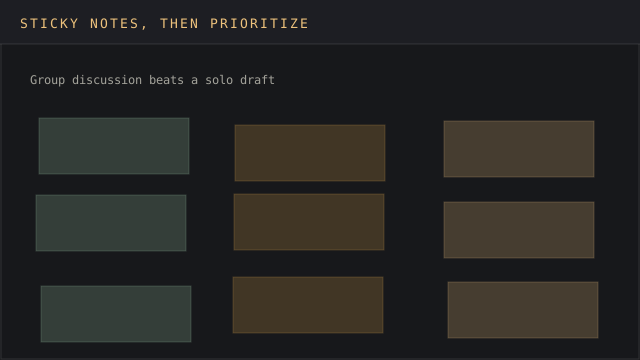
Second, gather the group and the data. Pull in sales, support, and product; those three views rarely match, and the gaps between them are where the useful entries hide. A group discussion around sticky notes beats one strategist's solo draft. Rival-by-rival detail belongs in the competitive analysis template, which feeds the opportunities and threats quadrants directly.
Third, fill the grid: strengths, weaknesses, opportunities, and threats, in that order, since the internal half warms the group up for the harder external half.
Fourth, prioritize. Limit each SWOT category to 3-5 key points for clarity; prioritizing and refining findings helps the group focus on the most significant factors, the key areas worth acting on. A short list beats a wall of twenty sticky notes.
Fifth, turn the findings into actionable plans with owners and dates. A well-conducted SWOT analysis leads to actionable strategies for growth, and one without an action plan is a poster.
When the opportunities box holds several growth bets, sort them by risk in the Ansoff matrix template before any of them gets a budget.
Use Measurable Statements
Use measurable statements for accuracy in your SWOT analysis. "Strong brand" says nothing a rival's SWOT analysis wouldn't also say; "renewal rate 14 points above category median" is a fact someone checked.
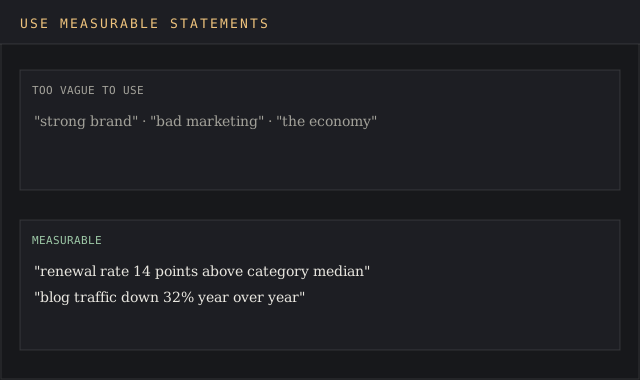
The test for every entry: could someone disagree, and could data settle it? If nobody could disagree, the point is filler.
Market share numbers, review scores, churn rates, and cost figures all qualify; adjectives do not. Our guide on how to gather market intelligence covers where those numbers come from.
SWOT Analysis Examples
Two worked SWOT analysis examples, one business, one personal, both around a defined objective. Good SWOT analysis examples show the strategy falling out of the grid, so both examples below end with the decision they produced.
A Business SWOT Analysis Example
The objective: should a mid-market SaaS company raise prices this year? The business SWOT analysis below pulls each point from checkable data, review scores, market share by segment, and rival pricing moves included.
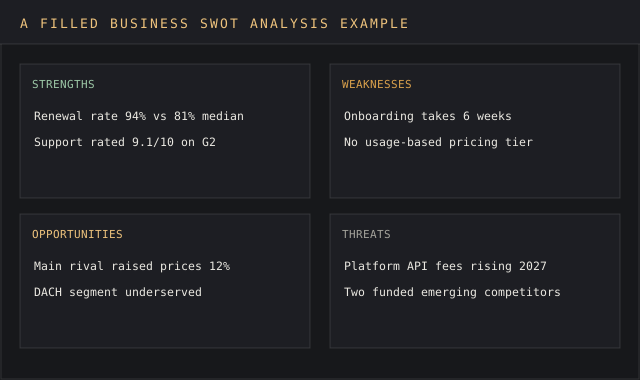
Reading it, the strategy suggests itself: internal strengths (a 94% renewal rate) support a price move, the six-week onboarding weakness argues for grandfathering existing customers, and the rival's 12% increase is the external opening.
That is decision making the grid earned, and spotting the rival's move did most of the work.
A Personal SWOT Analysis Example
A personal SWOT analysis aids in self-assessment and growth: the same SWOT matrix, redirected from a market to a career goal. Personal SWOT analysis templates help with the honesty problem here too, since "public speaking untested" is more useful than "could improve communication."
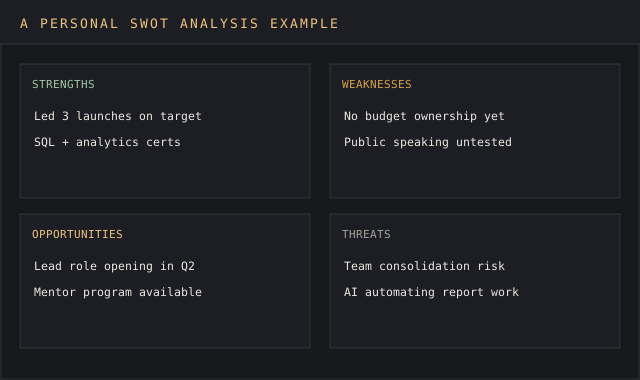
The career download above adds a next-steps table, because a self-assessment without deadlines is a diary entry.
How to write a SWOT analysis example of your own: pick the goal, write 3-5 measurable points per quadrant, and give every point either evidence or an expiry date. More examples ship inside the SWOT analysis template itself, and the weaknesses examples tend to be the ones people copy.
FAQ
What is a good format for SWOT analysis?
A good SWOT analysis format is the two-by-two grid: SWOT stands for strengths, weaknesses, opportunities, and threats, with the internal pair on top, the external pair below, 3-5 measurable points per quadrant, and one stated objective above the grid. Both SWOT analysis template downloads on this page use exactly that format.
How do I write my SWOT analysis?
Define the objective, gather the data and get sales, support and product in the room, identify strengths and weaknesses first, then opportunities and threats, cut to the points that would change a decision, and finish with actions. Write your own SWOT analysis in an hour using the five steps above.
How to do a simple SWOT analysis?
Conducting a SWOT analysis the simple way: take one sheet, draw the grid, set a 15-minute timer per quadrant, and allow only statements someone could check. A simple analysis beats a skipped one; depth can come next quarter.
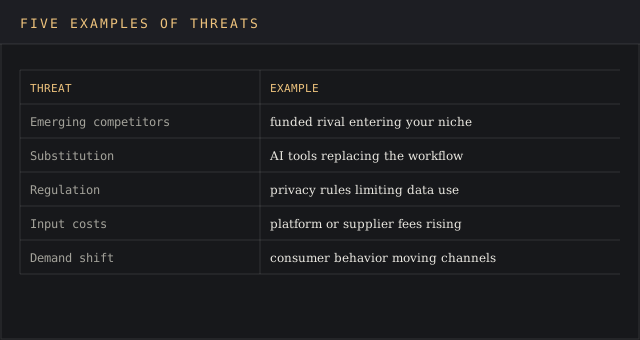
What are 5 examples of threats in SWOT analysis?
Emerging competitors entering your niche, substitute products replacing the workflow, new regulation limiting data or pricing practices, rising input or platform costs, and demand shifting to channels where you are weak. Every SWOT analysis should check all five examples against its own market before calling the threats quadrant done.
Bottom Line
SWOT survived every strategy fashion cycle because four questions fit on one page and none of them can be dodged: where are the strengths, where are the weaknesses, which opportunities and threats are live, and which of those deserves the next hour.
The grid holds its value while the entries stay measurable and the findings carry owners and dates.
Download the template, set one objective, and book the hour with sales, support, and product in the room. Feed the quadrants current data from the market intelligence tools we rank, then re-run it each quarter so the comparison shows what moved. An AI SWOT analysis can draft a starting matrix worth checking by hand.