Competitor Battlecard Template
 By Jan Suski. I go deep on every review, checking every number against its source and digging up details other coverage misses, a habit from six years of SEO and link building for tech companies. Bylines at Surfer, Brand24, and Senuto. How the scoring works.
· Prefer this source on Google
This competitor battlecard template gives a sales team one page per rival: who the competitors are, what to say when competitors come up, and the evidence that backs it.
The download ships as two files: a branded battlecard DOCX and a second objection-handling version built for live calls, both free and pulled from the same templates library as the rest of the set.
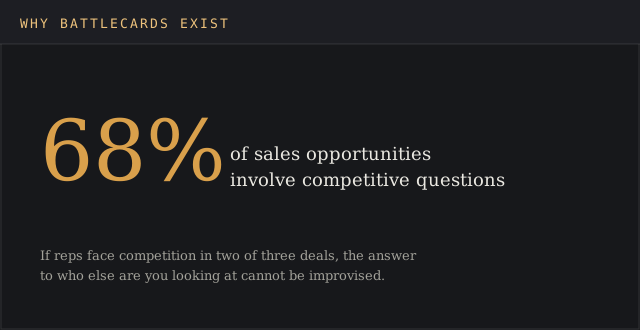
The case for the format is one number: 68% of sales opportunities involve competitive questions. When two of three deals include a "who else are you looking at" moment, the right answer cannot be improvised per rep, per call.
Download the Battlecard Templates
Download the competitor battlecard template (DOCX)One page per competitor, structured in Know, Say, and Show layers, with an objection table and landmine questions on page two.

Download the objection-handling battlecard template (DOCX)Pricing, feature, and switching objections with a Fact, Impact, Act column for each response.

Both files carry our branding, open in Word or Google Docs, and rebrand in a minute.
Each battlecard template ships with worked examples in every field, so the first draft starts as an edit.
What Is a Competitor Battle Card?
A competitor battle card is a one-page internal document that helps sales teams win deals against competitors by highlighting key features, strengths, and the counters to a specific competitor's pitch.
Competitor battlecards are for internal use by customer-facing teams: sales reps, account managers, the retention team, and anyone else a prospect might quiz about the competition.
Sales battlecards are one-page documents on purpose. Most successful battlecards are limited to one or two pages, because a well-designed battlecard enables quick decision-making during sales calls, and nobody scans a twelve-page brief while a prospect waits.
The battle cards described here are strategic documents. Competitors change, prospects vary; the cards arm judgment against competitors.
Why Sales Battlecards Win More Deals
Sales battlecards increase sales efficiency by providing quick access to information at the moment it is needed, which is usually mid-call; a sales battlecard is the difference between a pause and an answer.
They help sales teams articulate unique value propositions effectively, and consistent messaging from battlecards keeps the whole team on the same page and builds customer trust: five reps giving five answers about the same competitor reads as five guesses.
Battle cards also compress ramp time. They cut onboarding time for new sales reps, since a new hire with competitor battlecards learns in a week what tribal knowledge teaches in a quarter.
And effective battlecards improve sales team performance and win rates measurably: track win rates against a particular competitor before and after the rollout, and the battle cards either pay for their upkeep or they don't.
The compounding effect is the real competitive advantage: sales teams with current battle cards close more deals against the same competitors quarter after quarter, and the competitive advantage widens each time competitors' reps improvise while yours read.
The Know, Say, Show Layers
The battlecard template is structured in three layers, and each answers a different mid-call need.

Know
The 'Know' layer of a battlecard provides context about the competitor: company overview, product positioning, pricing, recent developments, competitor strengths and weaknesses.
A brief description per field is the discipline. Three sentences is the cap for a competitor overview; anything longer moves to a research document, off the battle card.
Say
The 'Say' layer includes messaging to counter the competitor's narrative. Specific messaging is important to counter competitors' common narratives: "they claim faster deployment; their largest reference customer is 80 seats, ours is 3,000."
The best battlecards focus on messaging differentiation. A feature list doesn't move buyers., because a feature list ties, while a story about what the features mean wins.
Show
The 'Show' layer provides evidence to back up claims against competitors: metrics, third-party reviews, and customer stories with numbers attached.
It is important to include customer success stories in a battlecard to validate claims; customer stories close the gap between "we say" and "they verified," proof straight from the horse's mouth.
The Five Types of Battlecards
Battle cards specialize by audience, and most sales organizations facing several competitors end up with more than one kind.
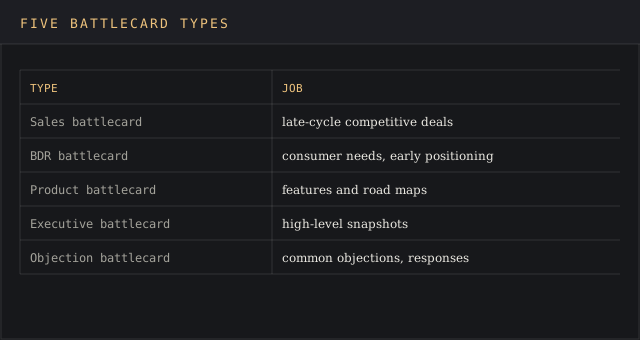
Sales battlecards are used late in the sales cycle, when a shortlist of competitors exists and competitive deals are decided head to head.
BDR battlecards focus on consumer needs and competitor positioning earlier in the funnel, where discovery calls set the frame and pain points first get named.
Product battlecards detail features and future road maps, built with product marketing for technical evaluations.
Executive battlecards provide high-level competitor snapshots for leadership: two paragraphs, one chart, no talk tracks.
Competitive battlecards analyze competitors' strengths and weaknesses in depth, and objection-handling battlecards address common customer objections; the second download above is exactly that, and a competitive battlecard template plus an objection deck covers most teams' needs.
Feature Comparison, Without the Feature War
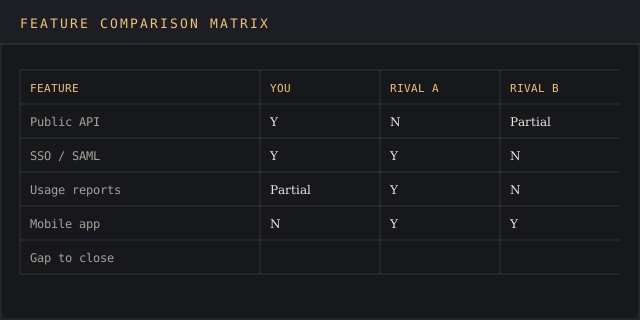
A feature comparison block sits in most competitor battlecards: your product and two or three competitors, key features down the side, a mark per cell.
Keep the feature comparison honest, including the cells competitors win, and call a spade a spade when a rival's feature genuinely beats yours. A sales rep caught overclaiming loses more than the feature row; competitor comparisons only persuade when the buyer can verify every mark.
Competitors' own comparison pages are the counter-artifact: study them, because that's the map of positioning your prospect has already seen, and that map looks different from their side.
A Structured Approach to Competitive Situations
Battle cards impose a structured approach on the messiest part of selling: competitive situations where the prospect knows your competitors better than your newest sales team members do, because prospects demo all the competitors and reps rarely can.
Without cards, inconsistent messaging creeps in; each rep builds a private theory of the competitors, and customer questions get five different answers. With them, the whole sales team runs one consistent sales process against the competition.
The card is also where key information about competitors survives staff turnover. Talk tracks for recurring customer questions, pricing questions included, plus key differentiators per competitor, outlive the rep who first wrote them down.
The right tools help here: surfacing the card at the right moment, inside the CRM record for the deal, beats the best-organized folder nobody opens and left on the back burner.
Battlecards for the Whole Sales Team
The sales team is the primary audience, but not the only one; sales team members from BDRs to account managers face different versions of the same competitors.
Early-funnel sales reps meet potential customers still forming the shortlist, so their sales battlecard leads with customer pain points, and with the customer pain points competitors leave unsolved.
Late-funnel sales reps face procurement and pricing questions, so their sales battlecard leads with comparisons, proof, and the pain points that money decisions surface.
Customer success sees competitors at renewal, when potential customers have become customers a rival wants back; a retention card covering competitors' win-back plays completes the set.
What Goes Inside the One-Pager
An effective competitor battlecard template should be concise enough to fit on one screen, and the anatomy is stable across industries.

Competitor battlecards include company overview and product positioning at the top, because context comes before counters.
They provide pricing comparisons between your product and competitors: list price, discount behavior, and the add-ons competitors' quotes hide, the fine print that can cost an arm and a leg once the invoice arrives. Pricing questions surface in nearly every competitive conversation, and the right answer arrives as a comparison.
Competitor battlecards should highlight unique selling points and differentiators: the key differentiators a specific competitor cannot match, stated as facts a rep can defend.
Key benefits beat key features here; the card notes what the product addresses for the buyer over what it contains.
Proof points close the page: metrics, named accounts where permitted, and review-site pull quotes comparing you with competitors. Our G2 review covers mining verified reviews for exactly this material.
Bullet points keep all of it scannable; a rep reads the card in the seconds between a prospect's question and the answer, so relevant information has to sit exactly where the eye lands.
A Sales Battlecard Example
The sales battlecard template above ships filled: a worked sales battlecard example against a fictional rival, from company overview through objection responses.
Copy the shape: the example shows the altitude each field wants, cutting to the chase with two lines of fact where two paragraphs of research about competitors would drown a rep.
Objection Handling, With the Fact-Impact-Act Framework
Objection handling strategies are essential in competitor battlecards, and the template dedicates a full table to them.
They often include common objections and responses for sales reps: the same objection tends to arrive in every deal against the same competitors, so a battlecard should include pre-written responses to competitor complaints.
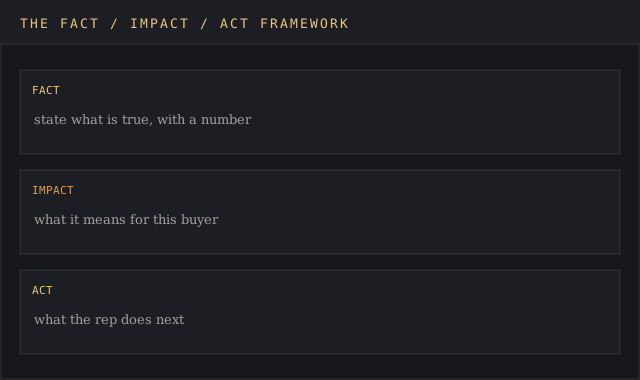
Use the Fact-Impact-Act framework for structuring responses. Fact: what is true, with a number. Impact: what it means for this buyer. Act: what the rep does next.
An example, for the objection "they are cheaper": Fact, their list price excludes onboarding and the support tier. Impact, year-one cost lands within 5%. Act, offer to match quotes line by line.
Responses must sound natural, and pre-written lines only sound natural after practice; role-play the same objection in team meetings until the answer arrives conversationally.
A battlecard should also address common objections before they arise: effective sales strategies can include strategic questions to expose competitor weaknesses, the landmine questions on page two of the download, asked early so the objection never forms, nipped in the bud before a prospect gets the chance to raise it.
Sales reps need quick access to objection responses during calls; the second download exists so that access costs one glance.
How to Create a Battlecard
Creating effective sales battlecards is a research task before it is a writing task.
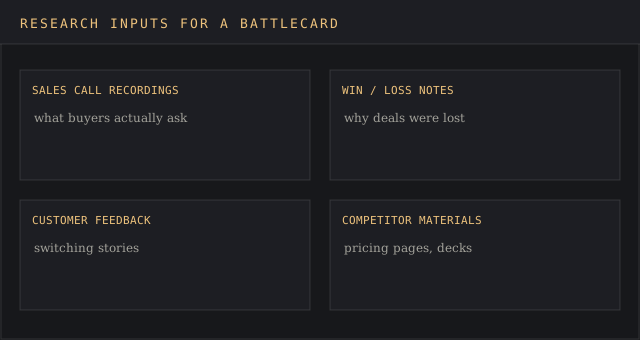
Research for battlecards should gather insights from sales calls and customer feedback first: what buyers ask beats what marketing assumes they ask.
Lost deals are the second source. Win-loss notes name the objections that decided competitive deals, and lost deals against particular competitors tell you which claims failed under pressure.
Internal insights from customers sharpen battlecards directly: switching stories, renewal reasons, and support tickets all feed the Say layer.
Competitors' own materials come last but not least: pricing pages, decks, and review profiles fill the Know layer. Our competitive analysis template feeds this step directly, and the sources of market intelligence guide lists where else to look.
Then write tight. Effective battlecards include competitor overviews and product differentiators in bullet points, and effective battlecards should provide actionable insights; a sales team needs the three things that win deals; thirty that describe the wider market help nobody mid-call.
Finally, assign ownership. One named owner per card, usually in product marketing or competitive intelligence, with sales leaders reviewing quarterly; a battlecard without an owner is a rumor with formatting.
Where Battlecards Live
Battlecards should be easily accessible within the tools used by sales teams, or they will not be used at all.
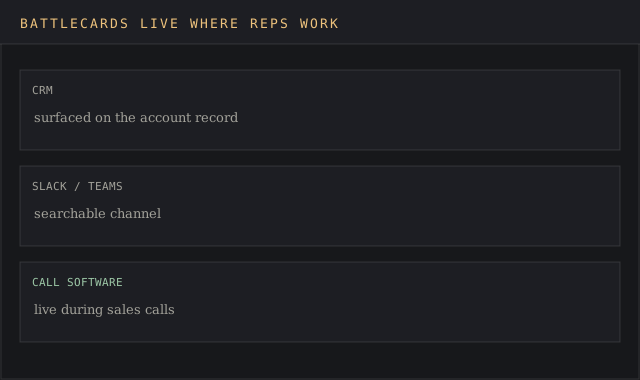
The practical set: pinned in the CRM on the account record, searchable in the team chat, and open beside the call software during sales calls.
Sales Battle Cards vs Slide Decks
Slide decks work for training sessions, but a deck is where sales battle cards go to age; sales battle cards live or die on being one search away mid-call.
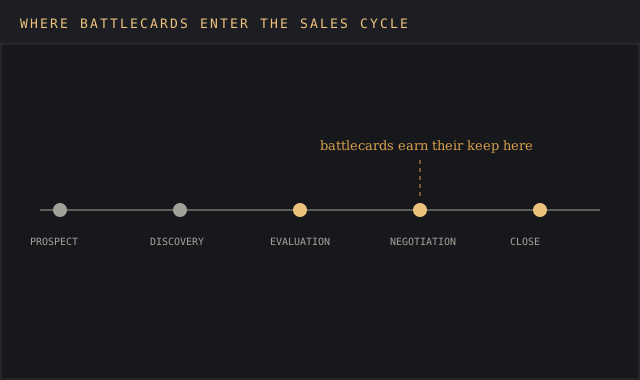
Placement in the sales process matters too. Sales battlecards earn their keep late in the sales cycle, right down to the wire before a deal closes, so surfacing the right card when a deal enters evaluation stage is the highest-value automation most sales tools offer.
Keeping Battlecards Current
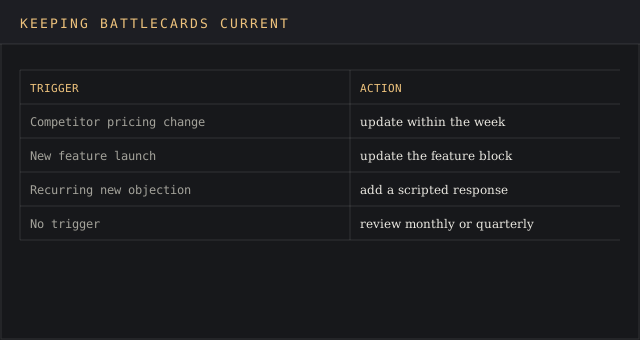
Battlecards should be updated regularly as competitors change pricing or messaging; competitors move quarterly, and a card quoting last year's pricing loses the deal it was written to win.
Battlecards should be updated monthly or quarterly on a schedule, and immediately when market conditions shift: competitors' price changes, a big launch, or a new objection appearing across discovery calls.
Measuring Battlecard Effectiveness
Regular updates to battlecards can ensure that the data remains relevant and actionable, because competitor information goes stale the day competitors ship something new.
Measuring battlecard effectiveness keeps the habit honest: card usage, win rates per competitor, and sales reps' feedback in the same review, turning usage data into actionable insights about which cards help sales reps win.
Some competitive intelligence platforms offer automated reporting on exactly this, tracking battlecard effectiveness and flagging stale cards; automated reporting is worth having once the sales team runs cards against many different competitors.
AI and Battlecards
AI can accelerate battlecard creation from hours to minutes, drafting a first pass at the drop of a hat: point a model at the research on competitors and it drafts the Know layer while the coffee brews.
AI-generated battlecards provide real-time competitive intelligence when connected to live sources, and AI can continuously update battlecards with new insights automatically, which attacks the staleness problem directly.
AI helps create tailored battlecards for specific sales scenarios, a card per segment or region, and it can assist in generating objection-handling strategies for reps facing new competitors.
The caution is the same as everywhere in AI market intelligence: a generated claim about competitors needs a human check before a rep repeats it to a prospect, because a confident wrong answer in a live deal is the costlier mistake.
FAQ
What is a competitor battle card?
A one-page internal reference that preps customer-facing teams for competitive deals: competitor overview, counter-messaging, proof points, and objection responses for one specific competitor. Sales battle cards are the best-known kind, but the format serves BDRs, executives, and product teams too.
How to create a battlecard?
Gather insights from sales calls, win-loss reviews, and customer feedback to get the ball rolling; fill the Know, Say, Show layers; write objection responses in Fact-Impact-Act form; keep it to one page; assign ownership and an update cadence. The free sales battlecard template above holds the whole structure.
What is a competitive intelligence battlecard?
The same card viewed from the research side: competitive intelligence teams maintain the facts, sales teams consume the messaging. In small companies one person does both jobs with the same battlecard template.
What is a sales battle plan?
The wider play a card supports: target segments, positioning, and the sequence of moves against named competitors for a quarter. Battle cards are the per-competitor tactical layer of that plan; a sales battlecard example from the download shows the tactical end, and the strategy lives a level up.
Bottom Line
A battlecard only pays off if a rep can find the right rival's page before the prospect finishes the sentence. One page per competitor keeps that lookup fast, with nothing to flip between mid-call.
Download the pair, build cards for the two or three different competitors that appear most in your pipeline, and measure win rates against those competitors from the start.
Write the sales battlecard from evidence, keep the sales battle cards current, and route every new objection back into the objection-handling template; the sales battlecard template is free, and the compounding advantage of a sales team that always has the right answer is not. A good sales battlecard example beats a great intention, and actions speak louder than words here: open the download, study the filled-in fields, and ship the first card this week.