PEST Analysis Template
 By Jan Suski. I go deep on every review, checking every number against its source and digging up details other coverage misses, a habit from six years of SEO and link building for tech companies. Bylines at Surfer, Brand24, and Senuto. How the scoring works.
· Prefer this source on Google
This PEST analysis template maps the external environment around a business: the political, economic, social, and technological factors no company controls and every business plan collides with.
PEST stands for Political, Economic, Social, and Technological factors, and a PEST analysis helps identify external factors impacting business strategy before they arrive as surprises.
These pest analysis templates are part of our market intelligence templates library, and it downloads free in Word and Excel; both templates import into Google Docs and Google Sheets cleanly, covering the three formats teams plan in.
Download the Free PEST Analysis Template
Download the PEST analysis template (DOCX)A section per factor with impact, likelihood, and response columns, plus a PESTLE extension and an actions table.
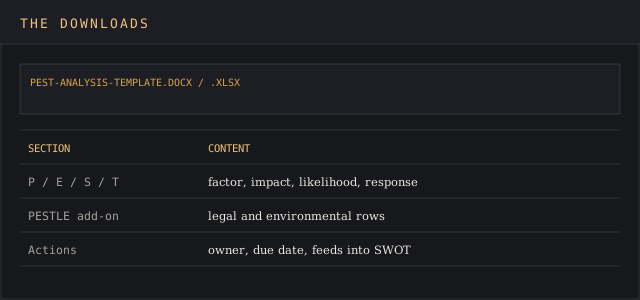
Download the PEST analysis template (XLSX)The same analysis as a grid, one row per factor, filterable by category.
Both templates carry our branding and a worked example row; a pest analysis template free of charge and free of lorem ipsum, since blank templates get abandoned and pre-filled templates get edited. Starting from scratch scares most teams off a template before they ever open it.
PEST Analysis Templates for Every Format
Templates are available in Word, Excel, and Google Docs formats, and the pest analysis templates above cover all three: the DOCX for the write-up, the XLSX grid for scoring, and either one imported into Google's tools for shared editing.
Free templates outnumber good templates, and the difference is columns. Templates that only list factors describe the weather; templates with impact and likelihood columns let a business analyze, evaluate, and decide what to do about it.
Larger companies keep one of these templates per business unit or per project, since the factors that influence a retail business rarely match the ones bearing on a software company.
The Four Elements of a PEST Analysis
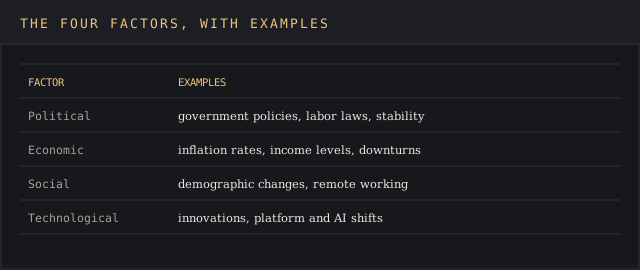
A PEST analysis template includes sections for political, economic, social, and technological factors, and each factor builds understanding of a different corner of the external environment.
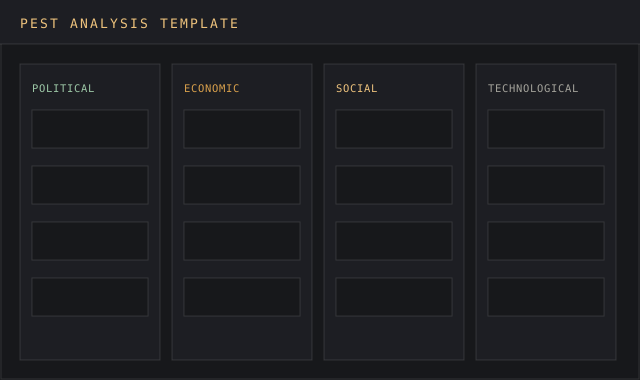
Political Factors
Political factors include government policies and labor laws, plus political stability, trade rules, and the direction of tax policy; the political environment moves slowly, then all at once.
Economic Factors
Economic factors involve inflation rates and consumer income levels, along with interest rates, exchange rates, and the risk of economic downturns; economic trends decide how much room the market gives any business strategy. Businesses that track these numbers stay ahead of the curve when the market shifts.
Social Factors
Social factors examine demographic changes and cultural trends: how customers live, work, and buy, with the shift to remote working as the decade's loudest example. Remote working rearranged commuting, office demand, software budgets, and businesses' hiring maps in under two years; customer demographics shift slowly, then suddenly, and that is exactly the shift a pest analysis exists to catch early.
Technological Factors
Technological factors focus on innovations and advancements in technology: platform shifts, automation, research and development direction, and adoption curves that reset what customers expect of every company. Technology moves the other three factors too, and technological factors age fastest, which is one reason the analysis needs a review date.
From PEST to PESTLE
PEST can be expanded to PESTLE or PESTEL by adding Legal and Environmental factors to the political, economic, social, and technological base, and the pestle analysis version earns its extra letters wherever regulation or climate touches the plan.
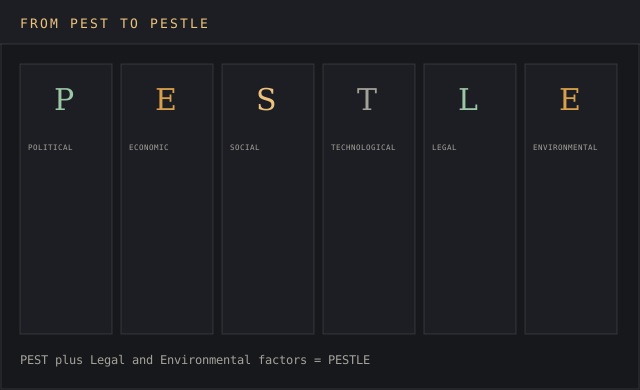
Legal factors cover compliance, labor regulation, and intellectual property; environmental factors cover climate rules, sustainability standards, and resource constraints. The templates ship with both rows, so a pest analysis becomes a pestle analysis by filling two more lines, and the pestle analysis stays one page either way.
Choosing between them is simple: run pestle analysis when legal and environmental factors could move the business outcome, and plain pest analysis when they cannot; a fintech business needs the legal row, a lemonade stand does not. Going the whole hog and adding both rows regardless just leaves two columns nobody fills in.
How to Create a PEST Analysis
Conducting a PEST analysis sharpens strategic planning and decision-making, and the analysis takes one structured meeting per company when the templates guide the steps in order.
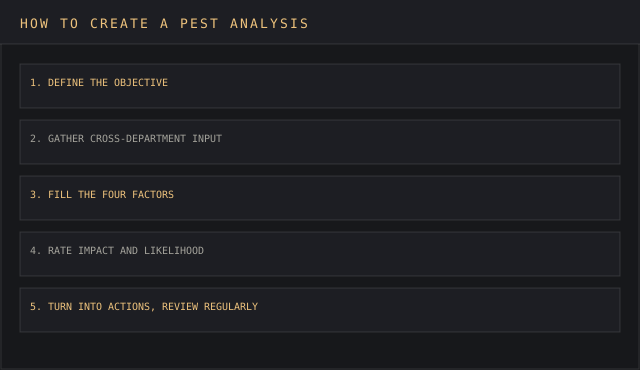
Define the objective first: the market, launch, or project the analysis serves. PEST analysis is often conducted before entering a new market or launching a product, and an objective-free analysis produces business trivia.
Gather input across departments next: PEST analysis requires collaboration across different departments for full insights, because legal is best at identifying the regulation coming, finance sees the economic trends, and sales sees customers' behavior shifts first, all worth knowing when developing the response, since each department brings something different to the table.
Then fill the four factors, analyze and rate each entry's potential impacts and likelihood, and convert the top-rated entries into actions with owners. A completed PEST analysis should address external forces that could affect success, and templates keep strategies aligned with external environmental factors.
Last, put a review date on it. A PEST analysis should be reviewed regularly to remain relevant; regular PEST analysis helps organizations adapt to external changes, and external realities do not wait for the annual offsite.
Rating What You Find
Filling the grid is half the analysis; identifying what matters is the other half, and the templates score nothing on their own. Assess each of the external factors twice, once for potential impact on operations and revenue, once for likelihood inside the planning window.
The scoring is what lets a company analyze trade-offs: a low-impact certainty and a high-impact maybe deserve different strategic decisions, opportunities and threats get sorted the same way, by influence on the plan, and the understanding of each key factor's significance only shows once both numbers exist. Scores also make future reviews comparable.
Assess the technological rows most often, evaluate the political rows before every market entry a company makes, and re-assess everything when a major shift arises; threats that arise between reviews hurt most, and the insights expire fastest there.
What PEST Analysis Is For
PEST analysis is a tool for understanding market dynamics and risks, and templates make the tool repeatable: it helps identify risks and opportunities for any business's strategic planning while there is still time to plan around them. Catching a problem early nips it in the bud before it turns into a costlier one.
PEST templates strengthen decision-making processes in organizations and businesses because the key factors shape decisions in a shape a company's leadership can compare quarter over quarter; strategic decisions built on facts age better than ones built on internal momentum, and the strategy inherits their shelf life.
The analysis also disciplines the future conversation: the team rates potential impacts and assigns responses, replacing the usual argument about predictions, which converts a business's anxiety about the future into a plan for it, and into development priorities and operations. Small businesses run the same analysis with smaller stakes: a one-page PEST for a local business beats none.
Our market intelligence process guide shows where the analysis slots into ongoing market intelligence work, and trend research tools keep the social and technological rows fed between reviews, with market research filling the gaps.
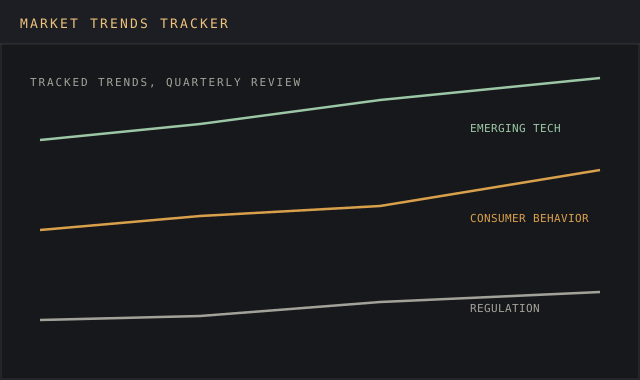
The habit pays through the future the analysis buys back: fewer surprises, earlier moves.
PEST and SWOT
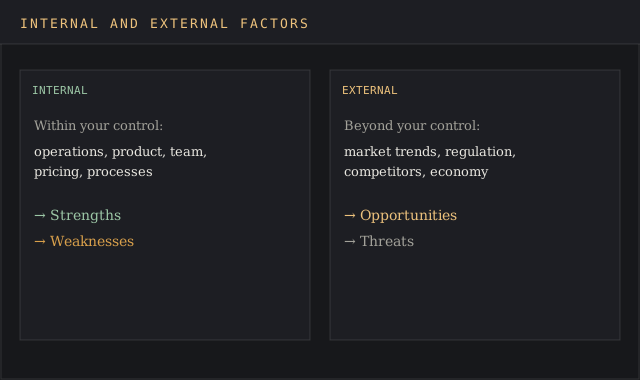
The two templates split the strategy work: PEST covers the external environment an organization cannot control, while SWOT weighs internal strengths and weaknesses against external opportunities and threats around one decision.
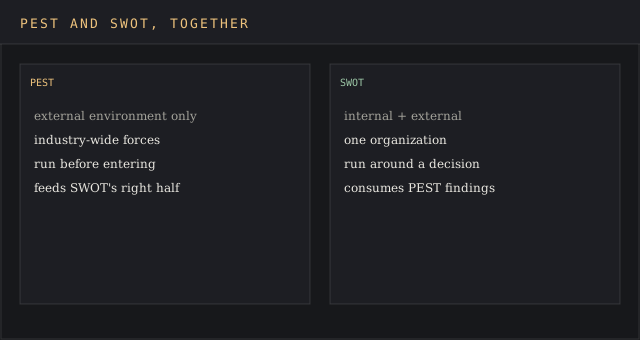
Run PEST first when developing a market-entry strategy; its findings feed the opportunities and threats half of the SWOT analysis template directly, while the organization's strengths and weaknesses fill the internal half. The pairing gives a view one tool alone cannot: the world as it is, and the company as it stands in it. Between them, a team gets the best of both worlds, external and internal.
FAQ
What are the four elements of a PEST Analysis?
Political, economic, social, and technological factors: government and policy, money and markets, people and demographics, and technology and innovation. The political economic social and technological grouping covers every external force a plan meets, with legal and environmental factors as the pestle analysis extension most templates include.
How to create a PEST Analysis?
Define the project or market, gather cross-department input, fill the political economic social and technological sections, rate impact and likelihood, convert the top entries into owned actions, and set a future review date. The free pest analysis templates above hold the structure for a full analysis.
Is SWOT better than PESTLE?
Different jobs: pestle analysis builds understanding of the external environment industry-wide, SWOT weighs one business around one decision. Teams developing strategy run PESTLE first and pour its findings into SWOT, so the honest answer is both tools, in that order.
What are common PEST Analysis mistakes?
Listing factors without assessing potential impacts, skipping the cross-department input, doing the analysis once and never reviewing it again, and filing internal weaknesses under external factors. The templates' likelihood column and review date exist to determine which entries deserve action and to keep the analysis alive as conditions affect the business plan.
Bottom Line
A pest analysis template turns the external environment from background noise into a rated, owned list: identifying the political shifts, economic trends, social changes, and technological advancements that will shape the business plan's future if anyone writes them down, leaving no stone unturned along the way.
Download the templates in Word or Excel, run the analysis before the next market entry or launch, and book the review; organizations that stay ahead of external shifts read them quarterly, understanding the outside world remains the cheapest risk management a business can buy, and the habit is what decides success.