Competitive Analysis Template
 By Jan Suski. I go deep on every review, checking every number against its source and digging up details other coverage misses, a habit from six years of SEO and link building for tech companies. Bylines at Surfer, Brand24, and Senuto. How the scoring works.
· Prefer this source on Google
This competitive analysis template puts every competitor in one grid: products, pricing, positioning, strengths, and weaknesses, side by side, so the company compares against its competition on facts. It is part of our market research template library, the download is free, and every company in the grid gets the same columns.
Most businesses meet their competitors in lost deals first. The template moves that meeting earlier.
A competitive analysis template identifies competitors' strengths and weaknesses, and doing the exercise well can clarify pricing strategies, operational advantages, and areas for improvement. A great product still loses to better-positioned competitors. The template exists so that surprise never happens twice.
Download the Free Template
Download the competitive analysis template (XLSX)A branded workbook with three sheets, a competitor grid, a feature comparison matrix, and perceptual map data, each with an example row to overwrite.
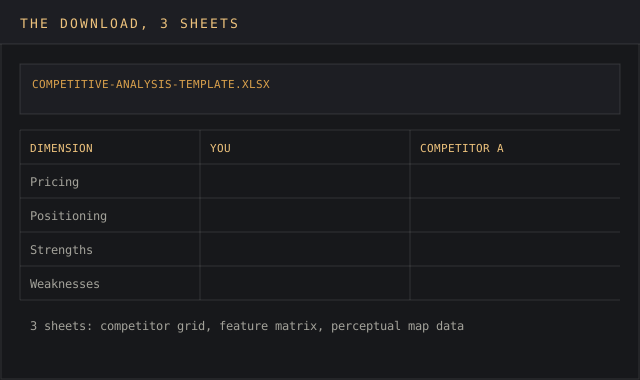
Both free templates organize the same grid, with an identical method behind each format, and Miro offers customizable competitive analysis templates if your team works on a whiteboard. The template turns private notes into a shared resource.
Download the CSV templateA plain text file that works in any spreadsheet.
What the Template Is For
Competitive analysis templates help identify market opportunities: the segments competitors ignore, the product parity gaps, the pricing space nobody occupies. They also gather information into a single location, so competitor notes stop living in five people's heads and start living in one document the whole team can read, everyone finally on the same page; a business runs sharper when its insights about the competition sit in one place.
Effective competitive analysis evaluates competitor profiles, product offerings, and marketing tactics together, because a company's strategy only makes sense as a whole.
A strategic view of the competition pays off, and the competitive advantage built this way compounds. Strategic planning templates help develop business strategies for the same reason: the structure forces the comparison.
Direct and Indirect Competitors
Direct analysis compares businesses selling similar products to the same customers. Indirect analysis focuses on businesses solving the same problem differently: indirect competitors offer different products to a similar audience, and they take revenue just the same. Both sets of competitors solve the same customer problem, so customers compare you against companies you never considered competition, a strategy blind spot.
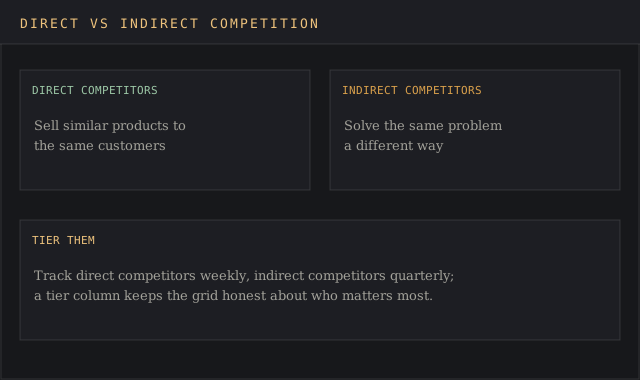
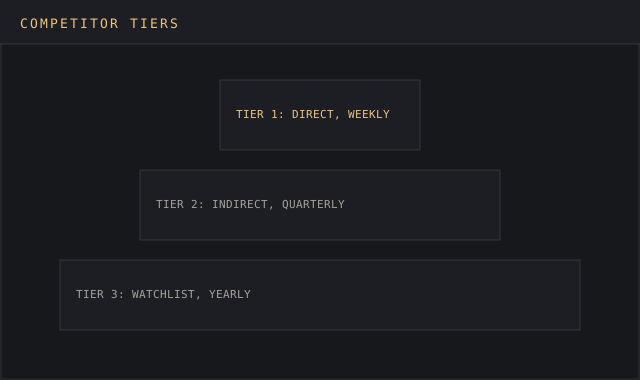
The template includes competitor tiers for exactly this reason: keep an eye on tier one competitors weekly, lower tiers get a quarterly check. Tiering keeps the focus where the money is; a small team covers a wide competitive set without drowning in updates.
The Competitor Grid
The first sheet is the classic analysis template: create one column per company and one row per dimension. Each competitor profile covers a competitor overview, business model, products and services, pricing, market positioning, value proposition statements, strengths, weaknesses, and social reach, down to how many followers each company's accounts carry.
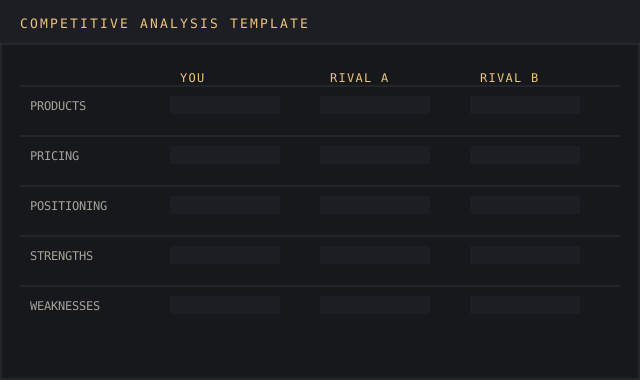
Fill it from sources you can name, straight from the horse's mouth: pricing pages, product changelogs, review sites, filings. Layering in third-party data cross-checks market share research and competitor profiles. The software services in our market intelligence tools ranking earn their fees here: Semrush covers competitors' search presence, and Similarweb estimates their traffic and revenue signals.
The Feature Comparison Matrix
Feature comparison matrices identify immediate product parity gaps: features listed down the side, companies across the top, a mark per cell. Product features get compared without adjectives, a spade called a spade in every row, and new features from any company land in the grid the month they ship, including the services competitors bundle around them.
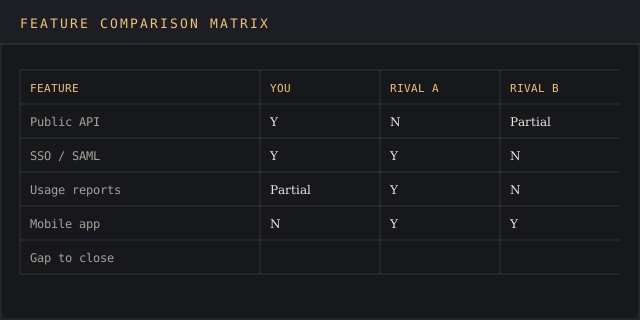
The matrix answers the specific needs question fast: when a prospect asks for a capability, sales teams see in one glance which competitors offer the features and which do not, a small piece of sales enablement the template gives away free.
The Perceptual Map
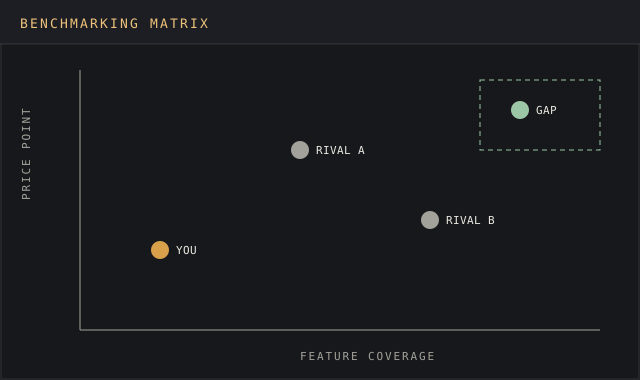
Perceptual maps visualize competitors on a 2x2 grid, usually price against breadth, and the empty space on the map is the finding: the market positioning no company claims. Templates can visualize competitors' market positions this way from two scores per company.
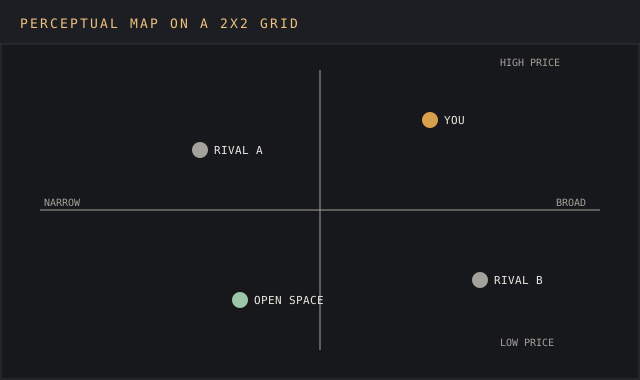
The third sheet holds the numbers for it; score each company, insert a scatter chart, and the map creates itself. Comparing where you sit against where customers think you sit produces insights on its own, and a value prop usually improves the day that gap becomes visible.
SWOT, per Competitor
The SWOT analysis is a common method used in competitive analysis templates: SWOT analysis evaluates strengths, weaknesses, opportunities, and threats, and running a compact one per major competitor turns flat competitor analysis into strategy.
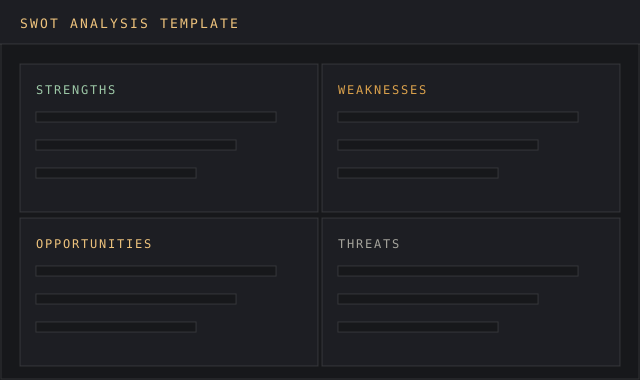
Competitive analysis informs strategic planning by revealing market opportunities. A competitive edge and a durable competitive advantage live in the strengths competitors cannot copy and the weaknesses they cannot quickly fix. Our SWOT analysis template covers the full method, including the TOWS step that turns quadrants into strategy.
Porter's Five Forces
Michael Porter's model of competitive analysis widens the focus from named rivals to market structure: Porter's Five Forces analyzes industry structural attractiveness through rivalry, new entrants, substitutes, supplier power, and buyer power.
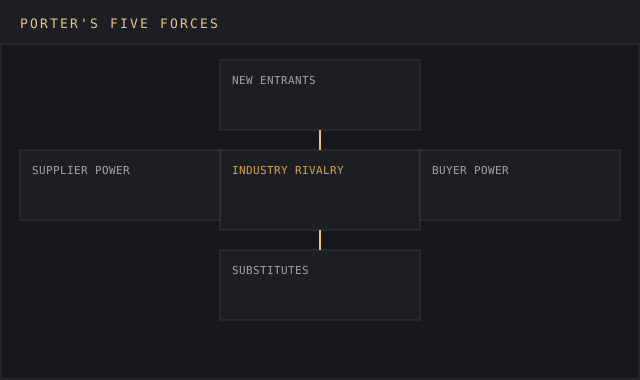
Use it before entering a market and the grid after: Porter tells you if the game is worth playing, the competitive analysis template tells you how the current players play, and a go to market strategy needs both answers.
Watching Competitors' Marketing
Analyzing marketing strategies includes assessing tactics like content marketing and social media usage: competitors' publishing cadence, campaign themes, and how many followers each channel moves. Marketing teams get their sharpest competitive research here, because messaging shifts before products do, and marketing teams that compare messaging monthly develop a feel for where the market heads.
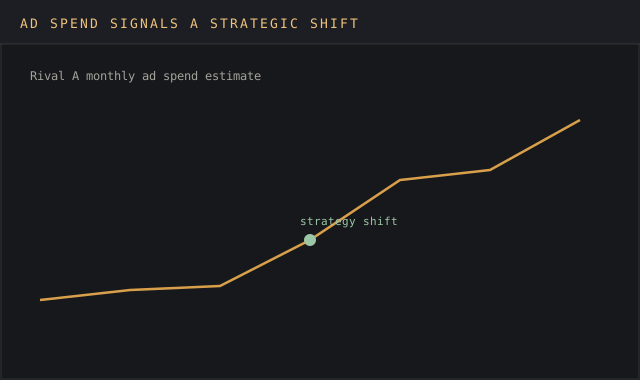
Tracking competitors' ad spend can indicate shifts in their strategy: mapping competitors' ad spend over time flags a strategic pivot months before a press release, and marketing campaigns that suddenly change audience tell you where a company's revenue plan moved. A row for spend estimates keeps the signal in the template.
Customer Sentiment
Customer sentiment analysis involves examining reviews and feedback to identify strengths and weaknesses, the cheapest intelligence in the exercise. Reviews of competing services are customer interviews someone else paid to run, and customers switch for reasons those reviews name plainly, hitting the nail on the head.
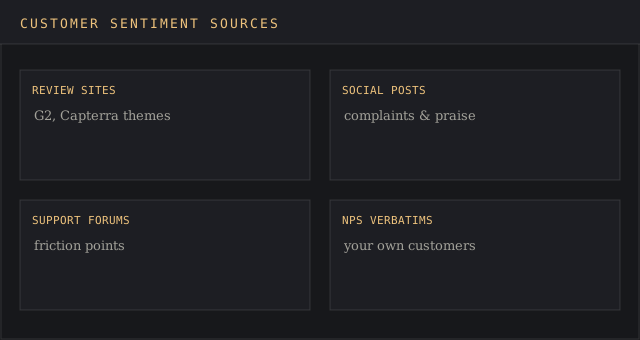
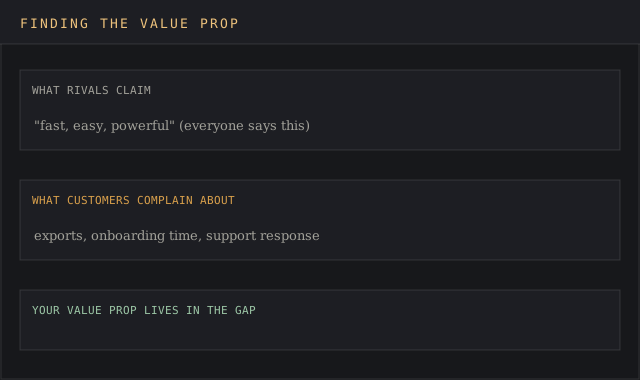
Identifying customer friction points reveals opportunities for your brand: customers' complaints about competitors' exports or onboarding are a roadmap for what to build, what to offer, and what to say. G2 reviews sort by theme, which makes the mining fast, and a develop-versus-respond decision gets easier when the friction repeats across dozens of customers, a signal stronger than any single loud complaint.
Keeping the Analysis Current
Regular competitive analysis matters because markets shift quickly: maintaining a competitive analysis involves consistent updates and revisions. Weekly for tier-one pricing and services, monthly for features, quarterly for the full grid; whichever business checks most recently gets the advantage.
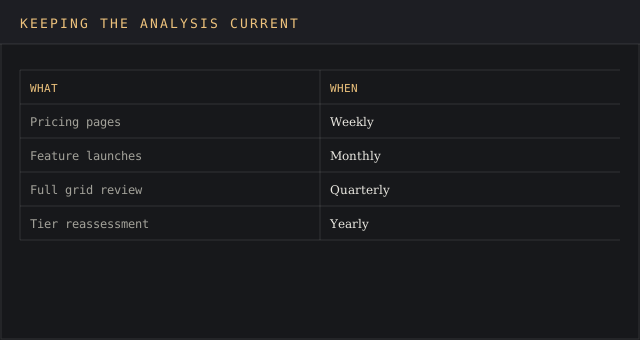
A full competitive analysis can highlight gaps in the market and strategic opportunities, but only while it is current; a stale grid is a history document, and weaknesses columns age fastest. Market trends show up in the grid before they show up in revenue. Innovation on any company's side resets the clock: date every cell, analyze and capture the changes, and let the oldest date set the next review; a stitch in time saves nine on a grid like this.
FAQ
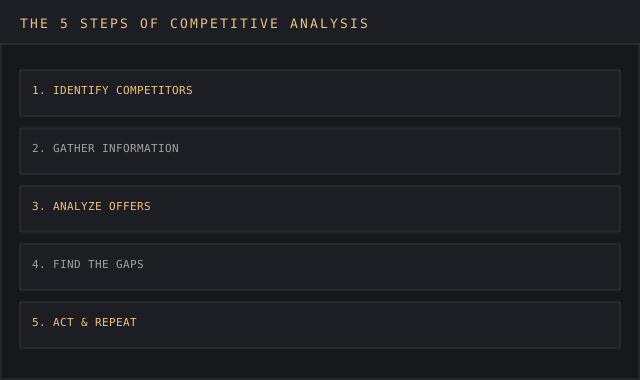
What are the 5 steps of a competitive analysis?
Identify competitors, gather information, analyze their offers, find the gaps, act and repeat. The template maps to the middle three. The first and last are habits, and a business's success depends more on the repeat than on any single pass.
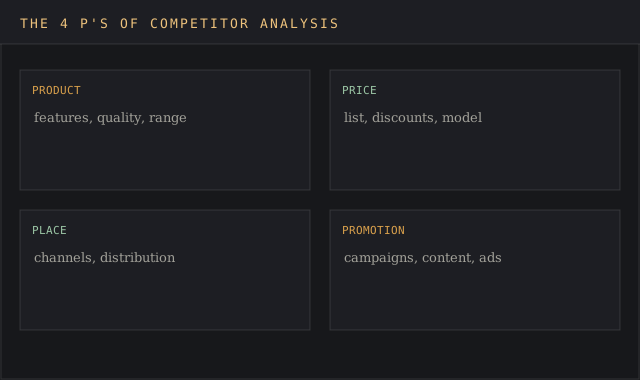
What are the 4 P's of competitor analysis?
The 4 P's are product (what each company sells), price (what it charges), place (where it distributes), and promotion (how it promotes). The grid's rows cover all four, so nothing in the classic framework escapes the template.
What is an example of competitive analysis?
A retailer tracking three rivals' delivery fees weekly, noticing one company dropped its free-shipping threshold, and matching it for its customers in the same quarter is competitive analysis at its simplest: observe, compare, decide. The example scales. The method does not.
What is Michael Porter's model of competitive analysis?
The Five Forces framework covers industry rivalry, threat of new entrants, threat of substitutes, supplier power, and buyer power, used for understanding if an industry's structure lets any company profit at all. It complements the template's strategy view.
Bottom Line
A competitive analysis template organizes scattered competitor notes into one strategic document, leaving no stone unturned across grid, matrix, and map, each answering a question the others cannot. Download the free template, fill it from sources you can name, determine the update cadence, and the competition stops being a rumor.
The payoff compounds. Understanding of the market accumulates version over version, strategy conversations start from insights, with numbers doing the work adjectives used to do, and the business develops a reflex for spotting competitors' moves early. Success in a crowded space is mostly this reflex, repeated.
Pair the spreadsheet with a competitor battlecard for the sales side, and the analysis starts winning deals as well as informing them.