Similarweb review
 By Jan Suski. I go deep on every review, checking every number against its source and digging up details other coverage misses, a habit from six years of SEO and link building for tech companies. Bylines at Surfer, Brand24, and Senuto. How the scoring works.
· Prefer this source on Google
Best for
Teams that need credible website-traffic estimation extended into SEO, AI-search visibility and Amazon shopper data, for their own site and competitors' alike.
Not for
Solo marketers on a tight budget: the entry tier isn't a full SEO toolkit, and the deeper packages price like enterprise software.
What it costs
Starter publishes at $199 a month. Team and Business packages run near $15,000 and $30,000 a year by report, against a $37,800 median in Vendr's contract data.
- Site coverage
- Over 1 billion websites and 8 million apps
- Keyword database
- Roughly 5 billion search terms, with real-time insights on them
- Traffic metrics
- Monthly visits, visit duration, pages per visit, bounce rate and device split
- Channel split
- Direct, email, referrals, social, organic search, paid search and display, per site
- Audience data
- Age, gender, geography and interests, plus audience-overlap reports
- Keyword markets
- Google, Amazon and YouTube under one login
- Rank tracking
- Daily against competitors; the $199 Starter plan doesn't include it
- Site audit
- Over 300 performance factors, with on-page recommendations and SEO exports
- Backlink data
- Thin across the product and absent entirely at entry level
- AI traffic
- Referrals from ChatGPT, Gemini, Perplexity and other assistants, split out as their own channel
- Brand visibility
- How often a brand appears in AI answers, with citation analysis naming the pages engines cite
- Shopper intelligence
- Amazon units sold, product views, conversion benchmarks and category demand by keyword
- App intelligence
- Downloads, usage and rankings across the app stores
- Stock intelligence
- Traffic-based KPI signals per ticker, backtested against reported quarters
- Starter
- $199 a month, or about $125 a month billed annually
- Team packages
- Reported near $15,000 a year
- Business tiers
- Reported near $30,000 a year
- Enterprise
- Custom, quoted above the business tier
- Vendr median
- $37,800
- Starter limits
- 1,000 keyword results per report, no backlink data, no rank tracker
- Add-on modules
- Six, itemised in the linked pricing breakdown
- Seats and API
- Seats, data access levels and API access all price separately
- Data sources
- Device panels, ISP and measurement partnerships, direct analytics connections and public web data, blended by modeling
- Accuracy limit
- Directional; small-site estimates deviate substantially from actual analytics, and figures lag reality by weeks
- History window
- 3 to 37 months, depending on tier
- Free version
- Basic traffic insights for one website, a handful of results per report, no signup wall
- Free trial
- 7 days, covering the paid features
- Chrome extension
- Free
- Support channels
- Live chat answering in minutes, email up to a day, plus a knowledge center
Semrush
Not forStrategy, insights and investor teams, who this page says pick Similarweb for the cross-site traffic and audience-overlap work Semrush approaches from the search side instead.
Datos
Not forA marketing or strategy team that wants an answer on screen this afternoon, since Datos ships a feed to build on and every deal starts with a sales conversation.
Pairs well with Similarweb
Which prices are published and which are reported contract values
The $199 Starter price, the $125 annual equivalent, the 7-day trial and the entry-plan caps come from Similarweb's published plans. The $15,000 team package, the $30,000 business tier and the $37,800 Vendr median are reported deal values, and the full ladder with all six add-on modules sits in the linked pricing breakdown.
The coverage figures, 1 billion websites, 8 million apps and 5 billion search terms, are Similarweb's own claims. Checked 6 August 2026.
Similarweb is a digital intelligence platform that estimates website traffic for any site on the internet: over 1 billion websites and 8 million apps, with real-time insights on 5 billion search terms. Forensic suites such as Cellebrite and PenLink use the same label for phone and computer evidence, and those are ranked in our digital intelligence platforms list.
Its core promise is competitive insight: seeing the website traffic, traffic sources, and keywords of sites you don't own, the data Google Analytics will never show you.
This Similarweb review covers where the traffic data comes from, the SEO and keyword research tools, the new AI traffic tracking, real pricing, and the accuracy limits every buyer should understand; it ranks fourth in our market intelligence tools top 10, scored on the same methodology as the rest.
What Kind of Company Is Similarweb?
Similarweb was founded in 2007 by Or Offer in Tel Aviv and listed on the NYSE in May 2021 under the ticker SMWB. The early bird catches the worm, and being one of the first movers in web-traffic estimation gave Similarweb a head start rivals are still chasing.
The business sells digital data subscriptions across five product lines: web intelligence, sales intelligence, shopper intelligence, stock intelligence, and app intelligence, with the traffic dataset underneath all of them.
Some users still write it as "Similar Web," a leftover from the early branding; the company, the website, and the product have been one word for years.
↑ FACT SHEETWhat Is Similarweb Used For?
The daily job is market research on competitors: how much website traffic a rival gets, which traffic sources feed it, which keywords bring visitors, and how audience demographics compare.
Digital marketing teams use it for competitive benchmarking, strategy teams size a digital market with it, and investors read between the lines of its numbers for early insight into company performance.
It is often considered a legitimate industry standard for benchmarking, which is why its estimates show up in earnings calls, pitch decks, and news reporting about the digital market.
Key Features at a Glance
Similarweb offers its tools in bundles, but the key features repeat across them, and understanding the list up front saves plan-comparison time.
- Website traffic analysis with engagement metrics, historical data, and traffic insights per channel.
- Keyword research tools spanning Google, Amazon, and YouTube, with search volume and keyword gaps.
- Competitive benchmarking dashboards comparing your websites against competitors on shared key metrics.
- AI traffic measurement and brand visibility tracking across assistants and AI search engines.
- Sales, shopper, app, and stock intelligence solutions built on the same underlying data.
- Alerts, custom dashboards, API access, and reporting tools for distributing insights beyond the tools' own interface.
Among Similarweb features, the benchmarking dashboards and the AI traffic reports are the two that most reliably justify the bill in user reviews.
One pattern to hold onto: the traffic data is the product, and every module is packaging around it. The web intelligence tools, the SEO tools, the keyword tools, and the vertical solutions all draw their insights from the same measurement layer, so testing the data once tests everything. Our competitive intelligence for SEO ranking places it sixth of ten on that traffic and app-download benchmarking.
That also means the insights degrade together: if the estimates run loose for your market, the SEO insights and sales insights inherit the same error, and when it rains, it pours across every module built on the same traffic data.
↑ FACT SHEETWhere the Numbers Come From
Similarweb aggregates data using a multi-dimensional approach: contributing device panels, partnerships with ISPs and measurement firms, direct measurement from sites that connect their analytics, and public web data, all blended by modeling.
No single source sees the whole internet, so the model calibrates the panel signals against the directly measured sites to keep the estimates honest.
That method is why accuracy improves with traffic volume: popular websites leave a bigger footprint across every source, while small sites leave too little signal to model precisely.
Website Traffic Analysis
Traffic and Engagement
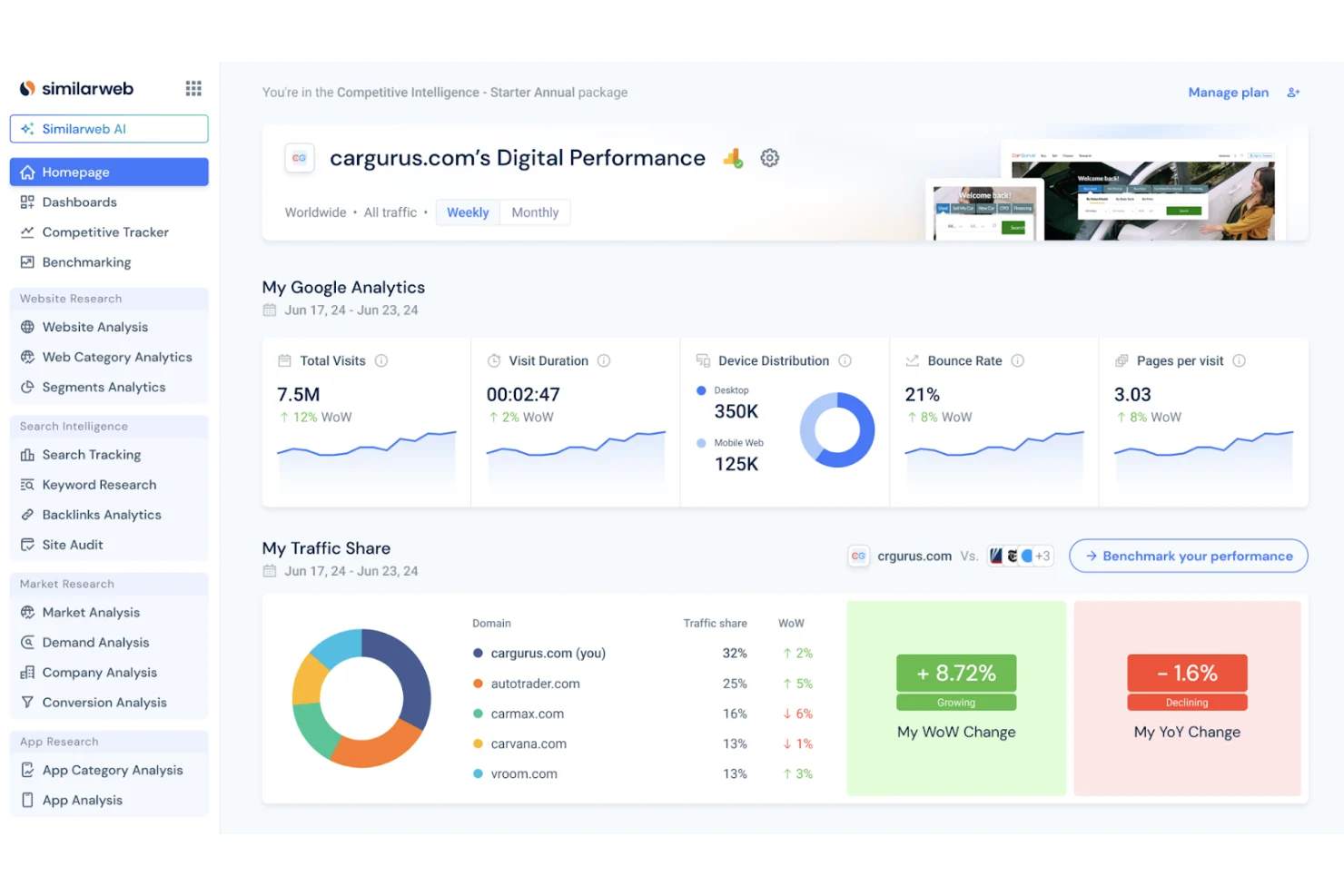
The core report answers the basics for any website: monthly visits, visit duration, pages per visit, bounce rate, and device split, benchmarked against competitors over time.
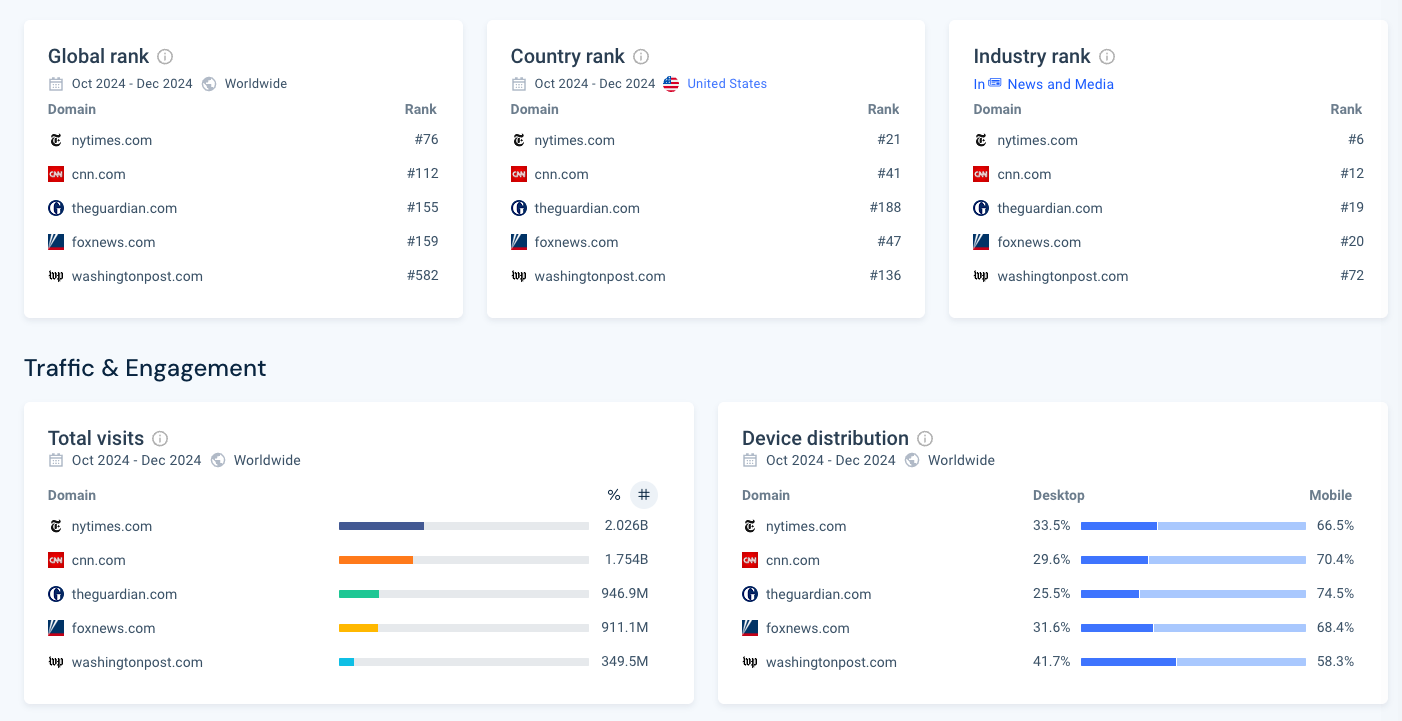
Historical data lets you replay a market: traffic trends across competitors show who's on a roll after an algorithm update or a product launch, and who has been leaking visits for a year.
Traffic Sources and Marketing Channels
Channel analysis breaks website traffic into direct, email, referrals, social, organic search, paid search, and display, per site.
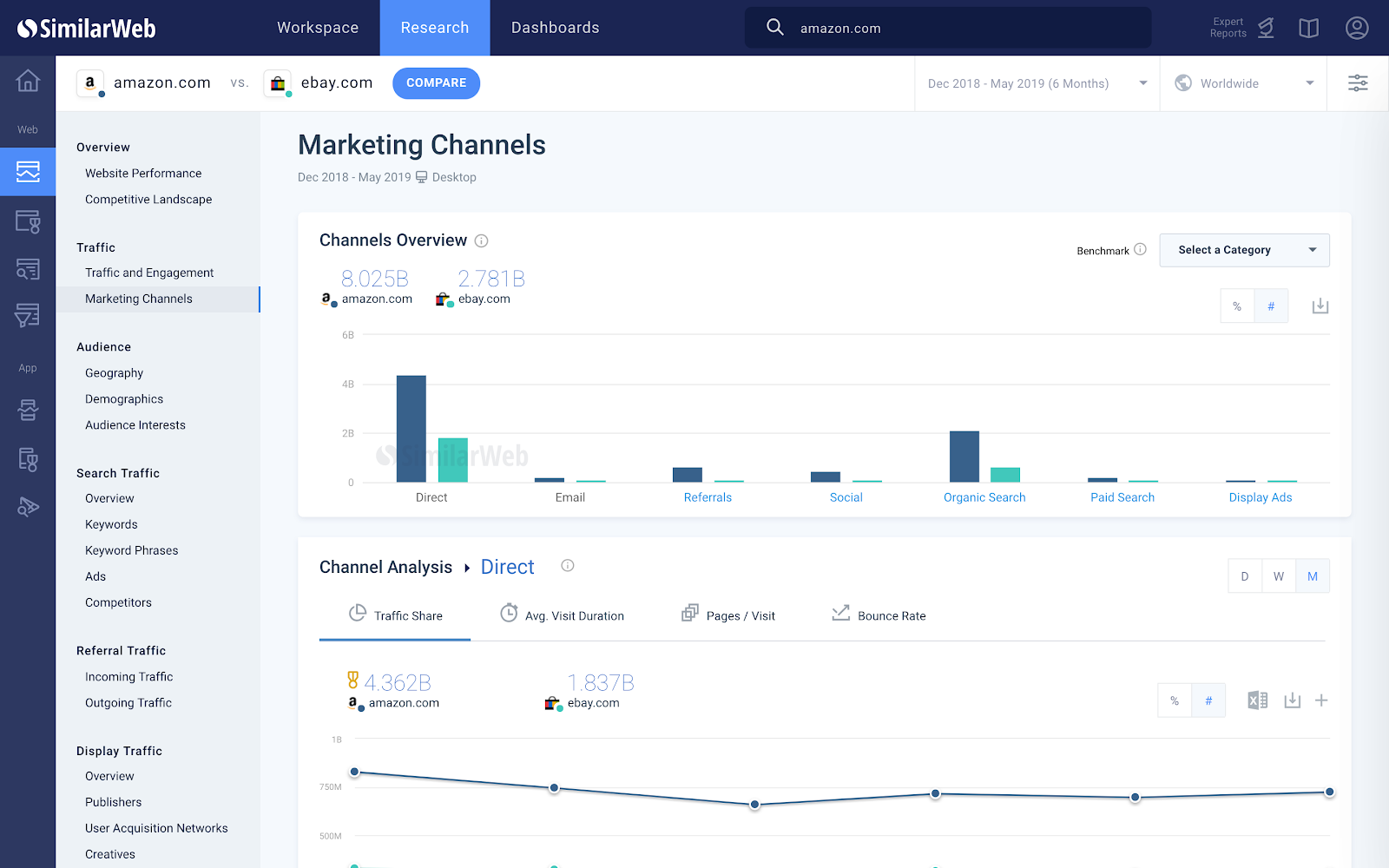
Channel-by-channel comparisons like this make competitor strategy visible: a rival whose paid search share doubles is telling you their unit economics tolerate higher acquisition costs, months before any public statement.
Audience Demographics and Overlap
Audience demographics cover age, gender, geography, and interests, and audience-overlap reports show which websites share your visitors, useful for partnership targets and media buying.
Using Similarweb for Market Research
The platform earns its place in a market research stack by answering questions surveys can't: what people do across websites, well past what they say.
Competitor analysis is the everyday workflow: pick five rivals, benchmark website traffic and engagement, and build an understanding of which competitor strategies are working; competitor performance over time is what to track.
Market research at category level works through industry views: total digital market size, market trends across quarters, and share shifts that flag growth opportunities before revenue data catches up.
The competitive intelligence value compounds when various elements combine: traffic, keywords, audience overlap, and channel mix together leave no stone unturned in a rival's funnel, giving the kind of understanding that turns into a competitive edge in planning.
Teams that formalize this produce genuinely valuable insights: a monthly competitive benchmarking report with actionable insights attached to each shift, feeding business reviews.
Search Intelligence and Keyword Research
The search intelligence side has grown into a serious keyword research suite. It's built on a keyword database of roughly 5 billion terms.
Keywords by Site and by Brand
For any website, the keywords report lists the keywords driving organic traffic and paid traffic, with search volume, traffic share, and position; keyword analysis by brand shows exactly which keywords carry a brand's visibility in Google search results.
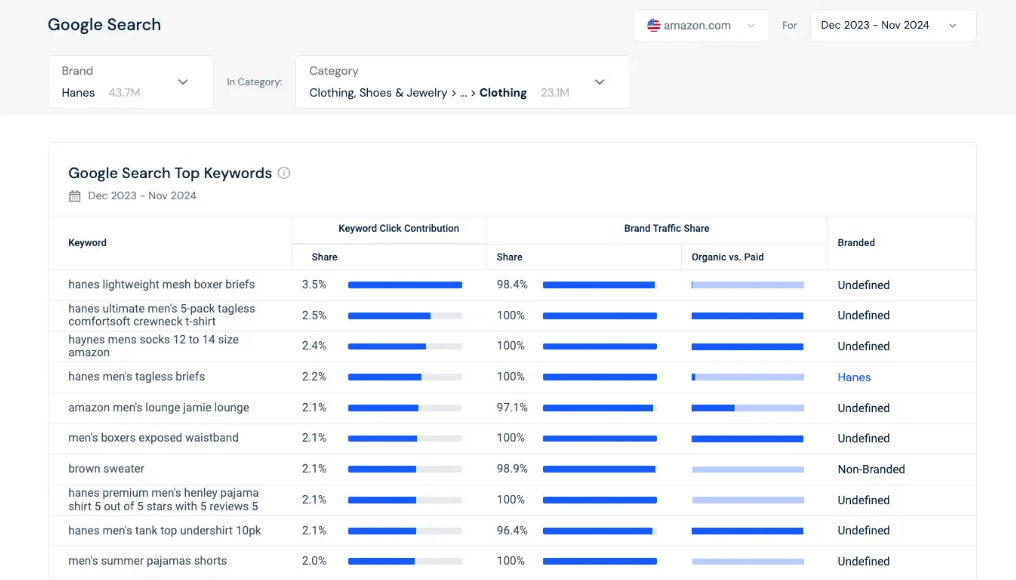
Keyword tools cover Google, Amazon, and YouTube, so the same keyword research workflow serves SEO teams mining Google keywords, sellers mining Amazon keywords, and channels mining YouTube keywords.
Rank Tracking and SEO Tools
Rank tracking follows your keywords daily against competitors, and the wider SEO tools include a site audit checking over 300 performance factors, on-page recommendations, and SEO data exports for reporting.
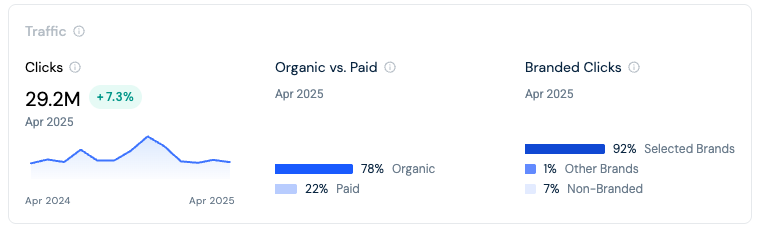
The gap against dedicated SEO tools sits in links: backlink analysis is thin, the entry plan lacks backlink data entirely, and serious link work still needs Semrush or Ahrefs alongside.
Content Strategy and SEO Workflows
For SEO teams, the practical loop starts with competitor analysis of top pages: which pages earn the most organic website traffic, which keywords those pages rank for in Google search results, and where your own site is absent.
That keyword data feeds content strategy directly: cluster the missing keywords, split branded keywords from generic keywords, check search volume and seasonality, and queue the pages that close the biggest SEO gaps first.
Get the ball rolling with the keywords that have both volume and a clear intent match, then work down the list.
SEO reporting then tracks the outcome: rank tracking on target keywords, site performance from the audit's 300 checks, and web traffic trends per page, an SEO scoreboard the whole business can read.
Where the SEO tools run out of depth, links, log files, fine-grained SERP features, dedicated SEO platforms take over; the framing that holds up is that Similarweb gives SEO teams an understanding of where to compete, and tools like Semrush handle the how; an SEO lead can hand the SEO gap report to writers as-is.
Marketplace SEO deserves a mention: Amazon keywords behave differently from Google keywords, and having both keyword research tools under one login is genuinely rare.
AI Traffic and Brand Visibility in the AI Era
The newest product line measures the AI era directly, and it has become Similarweb's loudest differentiator.
AI traffic reporting tracks referrals arriving from ChatGPT, Gemini, Perplexity, and other assistants, so a website can finally see AI traffic as its own channel next to organic search; Similarweb's public AI traffic trackers keep it ahead of the curve as the most-cited source on how assistant referrals grow, and AI traffic benchmarks per industry ship inside the platform.
Brand visibility tracking extends the same idea upstream: how often a brand appears in AI answers across emerging AI search engines, with citation analysis showing which pages the engines cite and which competitors get mentioned instead.
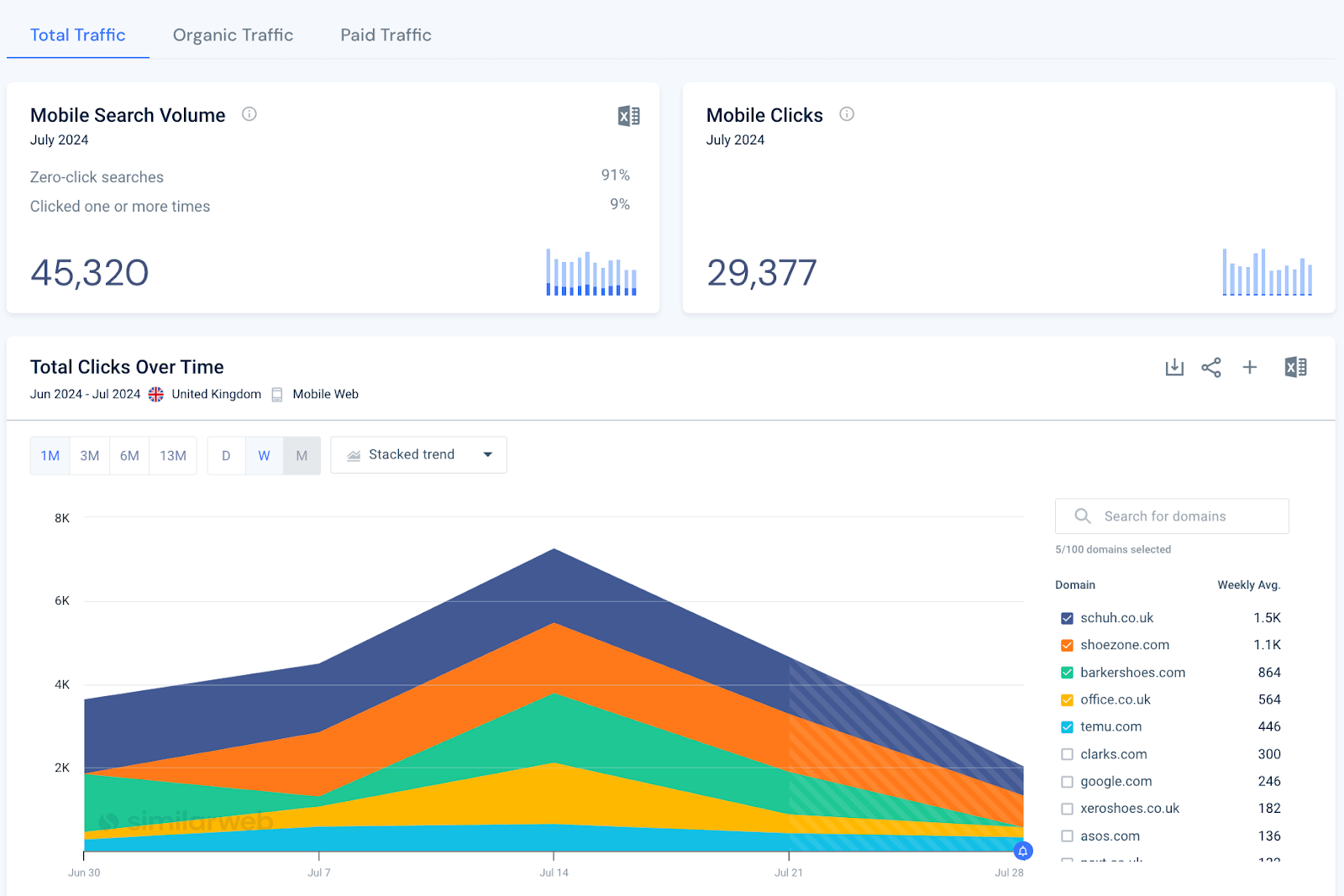
The strategic argument runs through zero-click data: when most searches end without a website visit, brand visibility inside answers, human or AI, becomes the metric, and citation analysis becomes the new rank tracking.
For teams building an AI market intelligence practice, this dataset is currently the closest thing to ground truth on AI referral behavior.
Sales Intelligence
Similarweb Sales Intelligence points the traffic dataset at prospecting: sales teams selling to websites, adtech, ecommerce services, logistics, filter the web by traffic volume, technology, and growth to build target lists.
An account executive can rank prospects by monthly visits and growth trend, then open each company's traffic profile before the first call; it competes less with ZoomInfo on contacts and more on knowing which prospects are winning online.
A rep who does this before dialing is on the ball compared to one who goes in cold.
Insights generators produce one-page summaries per prospect, which sales teams paste into outreach as proof they did the homework.
Shopper and App Intelligence
Shopper intelligence covers Amazon and marketplace behavior: units sold, product views, conversion benchmarks, and category demand by keyword.
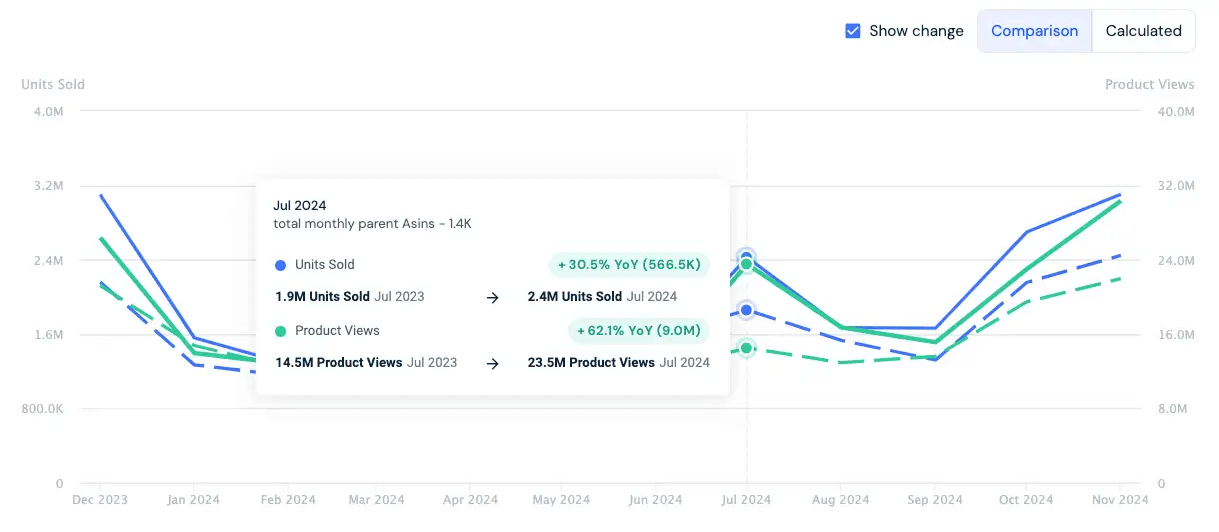
App intelligence benchmarks mobile apps on downloads, usage, and rankings across the app stores, giving a full view of web and app performance in one place, with category demand insights by keywords on the shopper side. For a dedicated app intelligence vendor, our Sensor Tower pricing report puts the median contract at $75,000 a year across 40 purchases.
Stock Intelligence
Stock intelligence packages the same digital data for investors: traffic-based KPI signals per ticker, backtested against reported results, with scorecards showing how well web activity predicted each company's quarter.
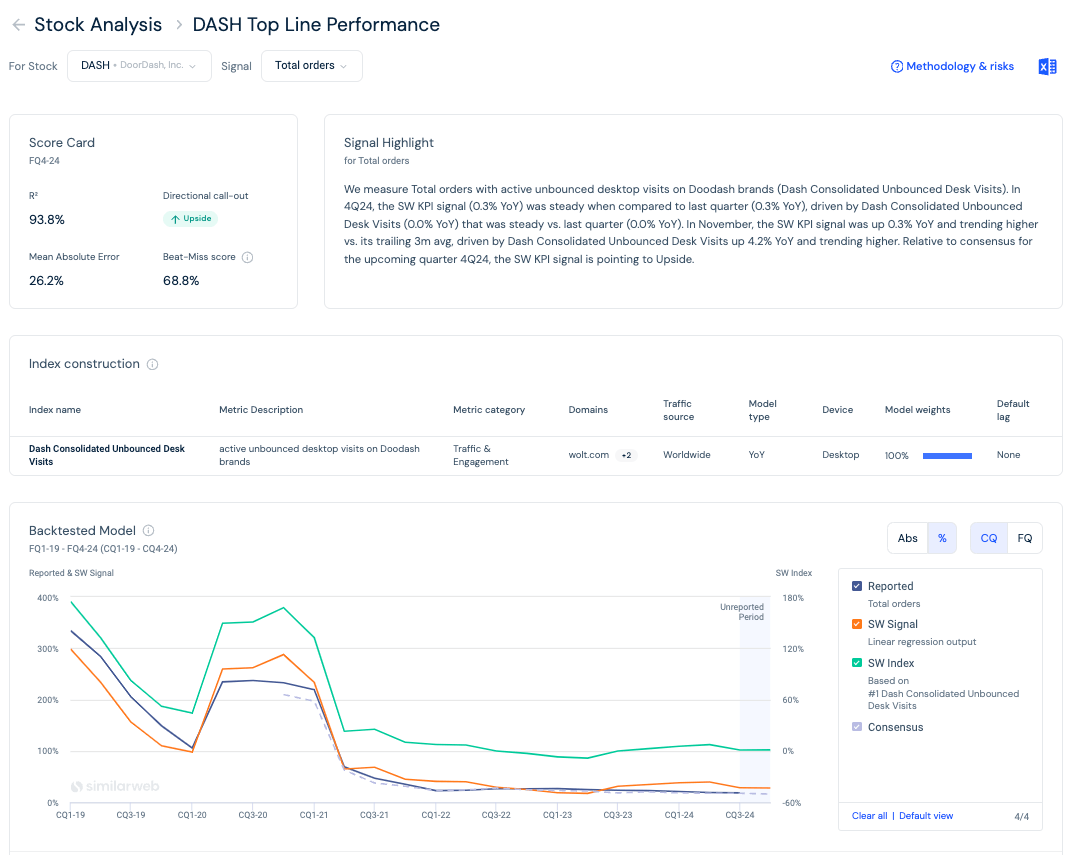
Hedge funds were among Similarweb's earliest heavy users, and this product formalizes what they were doing with raw exports.
The Similarweb Extension
The Similarweb extension for Google Chrome shows traffic, rank, and engagement for whatever website you are on, free, in one click. It's the most-installed piece of the product and the usual gateway: users start with the extension, hit its depth limits, and graduate to the platform.
↑ FACT SHEETPricing: Is Similarweb Free?
The Free Version
Yes, within limits. The free version covers basic traffic insights for any single website, a handful of results per report, and the extension; no signup wall hides the headline numbers.
For occasional curiosity, the free version plus the extension genuinely suffices, which is rare in this category.
Paid Plans
Web intelligence pricing starts at $199 per month for the Starter plan, or about $125 per month billed annually; reported team-level packages run near $15,000 per year, and business tiers near $30,000 annually, with enterprise custom above that. Our Similarweb pricing breakdown covers the full tier ladder, the six add-on modules, and the $37,800 Vendr median.
Team and business tiers cost an arm and a leg next to the Starter plan, so most buyers start small and expand only once the data proves itself.
Plan limits matter more than the sticker: the Starter tier caps keyword results at 1,000 per report, historical data runs from 3 to 37 months depending on tier, backlink data is absent at entry level, and the $199 plan lacks rank tracking.
A 7-day free trial covers the paid features, and the free trial is the right way for users to test if the estimates track their own known numbers before spending real money.
Plans, Access, and Team Rollout
Access control shapes the real cost: seats, data access levels, and API access all price separately, and users on cheaper tiers see fewer months of history and fewer rows per report.
Most teams start with two or three users on web intelligence, then add packaged solutions, sales intelligence for the revenue team, shopper intelligence for ecommerce, as other departments want access to the same insights.
That expansion path is where the money goes; budget owners should nip scope creep in the bud by deciding up front which teams get access and holding the line, because per-solution pricing accumulates faster than most software line items.
Enterprise rollouts get SSO, governance, and training resources; smaller users get self-serve onboarding and the knowledge center.
How Trustworthy Is Similarweb?
Trustworthy the way a good poll is trustworthy: directionally strong, precisely wrong.
Similarweb provides reliable estimates for top-tier competitors, and accuracy is heavily dependent on site volume; estimates for smaller websites can deviate substantially from actual analytics, and experts recommend treating it as a directional intelligence platform.
The practical calibration: users compare its estimate of their own website traffic against Google Analytics, note the deviation, and apply that correction when reading competitors of similar size; that understanding of the error bars is what separates good use from bad.
Used for market trends, shares, and rankings, the data holds up; used as gospel for a small niche site, it will mislead.
Which Is Better, Semrush or Similarweb?
Different jobs. Semrush is the deeper SEO workbench: keyword research at scale, backlink analysis, site audits, and content tools for running SEO campaigns end to end.
Similarweb is the better market lens: website traffic estimation, channel mix, audience overlap, shopper behavior, and AI traffic measurement that Semrush approaches from the search side instead.
SEO teams that must pick one usually pick Semrush; strategy, insights, and investor teams usually pick Similarweb; plenty of organizations run both and split the bill across departments, getting the best of both worlds without picking a side.
Is There a Free Website Like Similarweb?
Partially. Google Trends shows relative search interest for keywords, Google Search Console and Google Analytics measure your own site exactly, and the free Similarweb extension covers quick lookups. For a competitor's Google Ads history on a small budget, SpyFu starts at $29 a month billed annually.
Nothing free replicates cross-site traffic estimation at quality; the free lookalikes recycle thinner data, and for one-off questions the no-cost tier of Similarweb itself is usually the best option.
Who Is Similarweb Best For?
Digital marketing teams and competitive intelligence teams get the most value: benchmarking, channel strategy, and market share tracking are the natural daily uses, and it anchors our retail market intelligence pick for the same reason.
Strategy and business development teams use it to build an understanding of markets and screen acquisition targets by traffic trajectory; investors use it as alternative data, and SEO agencies use it in pitches, of all the tools in our ranking the one that turns up most often in slide decks.
Small-site owners are the poor fit, a fish out of water below meaningful traffic volume, where the estimates blur and the budget buys more elsewhere.
Weaknesses and Limitations
- Estimate-grade data: modeled traffic, weakest for small websites and niche markets.
- High pricing beyond the Starter tier, with the most useful features gated into sales-quoted packages.
- Entry-plan gaps: no backlink data, no rank tracker, 1,000 keywords per report.
- SEO depth trails dedicated SEO tools, so search-first teams end up paying for two sets of tools.
- Estimates lag reality by weeks, which blunts fast-moving competitive insight.
Customer Support
Support runs through live chat and email: chat typically responds within minutes, email can take up to a day, and a knowledge center covers the routine questions, though some users find its articles shallow on methodology.
Reviews on G2 rate the platform highly for competitive insight and dashboarding, with pricing and small-site accuracy as the recurring complaints.
FAQ
Is it Similarweb, Similar Web or SimilarWeb?
One word, capital S only: Similarweb. The company dropped the internal capital W in its 2021 rebrand, so older articles still write SimilarWeb. Searchers split it into two words as often as not, and the misspellings similiarweb, similairweb, simularweb and simliarweb all turn up in search data for this page.
What is a Similarweb?
A digital intelligence platform that estimates any website's traffic, sources, keywords, and audience, plus app, shopper, sales, and stock intelligence solutions built on the same data.
Is Similarweb free?
A limited free tier and the Chrome extension cost nothing; full access starts at $199 per month, with a 7-day free trial.
How trustworthy is Similarweb?
Reliable for large sites, trends, and comparisons; loose for small sites. Calibrate against your own analytics and read it directionally. This isn't rocket science, but skipping the calibration step is the most common mistake teams make.
Which is better, Semrush or Similarweb?
Semrush for hands-on SEO campaigns; Similarweb for traffic benchmarking, market analysis, and AI traffic measurement. They overlap less than their marketing suggests, and many SEO teams run both.
Is there a free website like Similarweb?
Not at equal quality; Google Trends plus the free Similarweb tier covers casual needs.
What key metrics does Similarweb show?
Monthly visits, engagement, bounce rate, traffic sources, keywords, audience overlap, and AI traffic, per website, benchmarked against competitors.
What kind of company is Similarweb?
A public Israeli-founded data business, founded 2007, on the NYSE since 2021 as SMWB; its customers span marketing, ecommerce, and investment business teams.
Bottom Line
Similarweb owns its niche: the most credible website traffic estimation available, extended into search intelligence, SEO measurement, shopper data, and the strongest AI traffic measurement on the market.
Its limits are structural, modeled data, entry-plan gaps, and enterprise pricing for the good parts, and none of them cancel the core value: seeing the digital market, competitors included, in numbers.
Actions speak louder than words. Run the free trial against your own known traffic, and if the deviation is tolerable for sites your size, it earns the shortlist; the strategic decision making it feeds tends to justify the bill quickly for teams competing in busy markets.