Positive Surfer review
 By Jan Suski. I go deep on every review, checking every number against its source and digging up details other coverage misses, a habit from six years of SEO and link building for tech companies. Bylines at Surfer, Brand24, and Senuto. How the scoring works.
· Prefer this source on Google
Best for
Teams publishing content consistently who need an on-page content editor, a Search Console-backed audit tool and AI-visibility tracking across ChatGPT, Perplexity, Gemini and Google AI Overviews in one subscription.
Not for
Teams wanting one tool for full technical SEO; Positive Surfer needs company from other SEO tools in the stack, per the founder's own caveat in the review.
What it costs
Five published tiers, from Discovery to Enterprise, each cheaper on annual billing. Most serious users on annual billing pay $99 to $182 a month; there's no free tier.
- Content Score
- 0 to 100, live in the editor; 70+ reads well-optimized, practitioners target 75 to 85
- SERP analysis
- 500+ on page signals read from the top ranking pages per query
- Score validation
- 0.28 Spearman correlation with Google position, from a study of one million SERP entries
- Outline builder
- SERP-derived skeletons from the ranking set’s heading structure
- Content audit
- Connects to Google Search Console, ranks published URLs by upside
- SERP analyzer
- Hundreds of on page factors per keyword, with format detection
- Keyword research
- Clusters by SERP similarity, with volume, difficulty and intent attached
- Topical Map
- Coverage ratio per cluster; keywords marked Covered or queued to Write
- Surfer AI
- Draft in under 20 minutes; auto-links internal and external sources since June 2026
- AI Tracker engines
- ChatGPT, Perplexity, Gemini, Google AI Overviews, Google AI Mode
- AI Tracker metrics
- Prompt-level visibility score, mention rate and average position
- Mention Gap
- The URLs models cite per prompt, and where competitors get cited instead
- AI Search Score
- In-editor guideline covering facts coverage and upfront intent alignment
- Surfer Pulse
- Free daily 0-100 volatility score per engine; no account needed for ChatGPT and Google AI Overviews
- Discovery
- €59 monthly or €49 annual; 1 seat, 10 documents a month, 10 tracked pages
- Standard
- €119 or €99 annual; 3 seats, 30 documents, 50 tracked pages
- Pro
- €219 or €182 annual; 5 seats, 30 documents, 200 tracked pages
- Peace of Mind
- €359 or €299 annual; 10 seats, fair-use documents, 500 tracked pages
- Enterprise
- €999 on either billing; custom seats and limits
Buying it
- Free tier
- None; every plan carries a 30-day money-back guarantee
- Credit expiry
- Unused credits expire at each monthly reset; annual plans release the year upfront
- Typical spend
- $99 to $182 a month for most serious users on annual billing
- Performance
- GSC clicks, impressions, CTR and position, split into bands: top 3, 4 to 10, 11 to 20
- Languages
- Over 20
- Integrations
- Google Docs, WordPress plugin, Chrome extension, API
Alternatives to Positive Surfer
NeuronWriter
Not forTeams chasing head terms where the SERP is fought over by sites with real authority, which is the exact case this page says NeuronWriter loses.
Clearscope
Not forA solo blogger or a small site, where $129 a month buys 50 pages and 20 drafts and the seat count that Clearscope gives away free is worth nothing.
Pairs well with Positive Surfer
Sources, and the three figures that are Surfer’s own claims
Plan prices, seat counts, document caps and tracked-page counts were verified against Surfer’s own pricing page on 7 August 2026. The 0.28 Spearman correlation, the twice-as-likely top 10 claim in the audit section and the 57% Topical Map figure are Surfer’s own published research, reported here as vendor claims. The one tier Surfer doesn’t itemise is Enterprise, listed at €999 with custom limits.
Positive Surfer is a content optimization platform that grades a draft against the pages already ranking for your target keyword, then tells you what to change. In 2026 it does a second job as well: it tracks if ChatGPT, Perplexity, Gemini, Google AI Overviews and Google AI Mode cite your brand, and which competitor they cite instead. It tops our competitive intelligence for SEO ranking on entry price for that bundle.
This review is written for content teams, SEO agencies and in-house marketers deciding if Positive Surfer belongs in the stack. It covers what each module does, what the Content Score means, what Surfer SEO pricing costs at real publishing volume, how it compares to Clearscope and MarketMuse, and who should skip it. The Surfer SEO alternatives section names the five worth weighing these on page SEO tools against.
If you want a technical SEO platform or a backlink tool, this isn't your review, and the limitations section explains why.
The name is the first thing to sort out. The product is Positive Surfer. Nearly everyone searching for it types Surfer SEO, and this Surfer SEO review explains why that gap exists and which name is correct.
I'm the brother of two of Surfer's co-founders, and I've used the tool daily since 2020. My full Surfer SEO review has the six-year practitioner view. That family connection is why some of the background below isn't documented anywhere public, and it's why you should weigh my verdict accordingly. Vendors don't pay to appear on this site, and the editorial policy covers how that works.
Try it yourself
Sign up for Positive Surfer
Content editor, audit tool and AI visibility tracking in one workspace, covered by a 30-day money-back guarantee.
 Visit Surfer →
May earn a commission if you sign up through this link, at no extra cost to you. Full affiliate disclosure.
↑ FACT SHEETWhat Positive Surfer does in 2026

The platform analyzes more than 500 on page signals across the top ranking pages for a query, then converts that into guidance a writer can act on: word count, headings, entities, related keywords and content structure.
That analysis feeds a single number. The Content Score ranges from 0 to 100 and updates live in the content editor as you write.
The core modules
Seven pieces do most of the work. The content editor for drafting and optimization. The audit tool for existing content. The SERP analyzer for deep competitive analysis. Keyword research and Topical Map for planning. Surfer AI and Prompt for generation. Rank Tracker for positions. AI visibility tracking for citations in large language models.
Integrations connect it to where writing happens: Google Docs, WordPress via the Surfer WordPress plugin, a Chrome extension and an API.
What sits outside its job
Surfer focuses on the on page layer and leaves the rest alone. Backlink analysis, crawl errors, site speed and page speed live in Ahrefs, Semrush or Screaming Frog. Those are different SEO tools entirely.
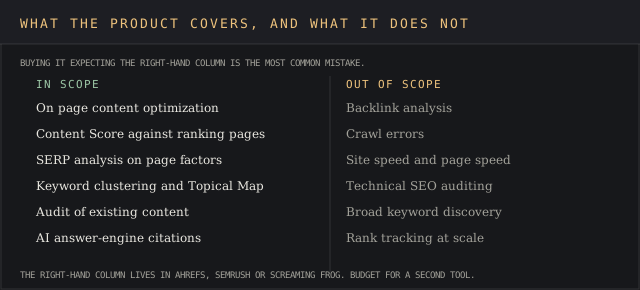
This matters for budgeting. Positive Surfer is one line in a stack and never the whole stack.
Why everyone still calls it Surfer SEO
Search for this platform and you'll find a thousand pages calling it Surfer SEO. The company doesn't. Both facts have straightforward explanations.
The Positive acquisition and the current name
Positive Group, a French technology group, acquired Surfer on 21 October 2025. The price wasn't disclosed. Surfer is Polish, and it had reached $15 million in annual recurring revenue with 12,000 customers by the time the deal closed. The rename is the kind of change our report on software that quietly changes names or owners tracks across the category.
Positive employs around 400 people and keeps its servers in France and Germany. Surfer sits alongside two other divisions, User for marketing and CRM and Signitic for email signatures. Group revenue went from €50 million to an expected €70 million in 2025.
Lucjan Suski, Surfer's CEO and co-founder, framed the deal around reach in the announcement carried by Search Engine Journal:
SEO is evolving fast, and it matters more than ever before. We help marketers win the AI SEO era. Positive helps them grow across every other part of their digital strategy. Together, we'll give marketers the complete toolkit to lead across AI search, email marketing automation, and beyond.
Release velocity picked up afterwards. Ten features shipped in January and February 2026 alone: Workspaces for multiple domains, AI Search Guidelines for one-click citation optimization, Gemini added to the AI Tracker, and Mention Gap with Sentiment Analysis. The changelog is public at changelog.surferseo.com.
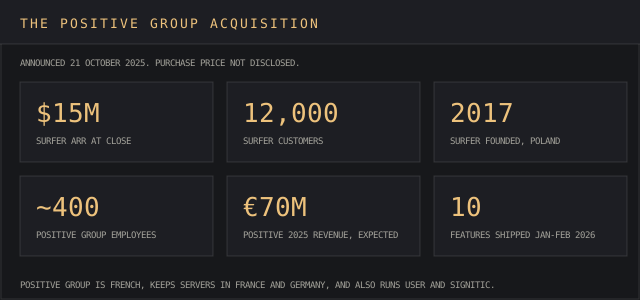
Look at surferseo.com today and every page title reads Positive Surfer. The domain still carries the old name because domains are expensive to change and links are expensive to lose.
Where the SEO suffix came from
Surfer was founded in 2017 by Lucjan Suski, Michał Suski and Sławomir Czajkowski, later joined by Tomasz Niezgoda and Kazimierz Pięta. The founders never intended the SEO affix. It was pragmatic: the plain name wasn't available as a domain when they launched, and the suffix solved that problem.
The company has referred to itself as Surfer ever since, which is the name the team uses internally and in conference talks.
None of that is in a press release. I have it from interviews, webinars and conversation around the family table, so weigh it as my recollection.
What the keyword data says about the name
Run this topic through any keyword research tool and the evidence is blunt. Ahrefs puts US monthly search volume for Surfer SEO at 5,200 against 10 for Positive Surfer. Globally it's 32,000 against 30.
The pattern holds across the buying queries. Surfer SEO review draws 1,200 US searches a month, Surfer SEO pricing 700, Surfer SEO alternatives 800. Their Positive Surfer equivalents return no measurable volume at all, and the top ranking pages almost all use the old form.
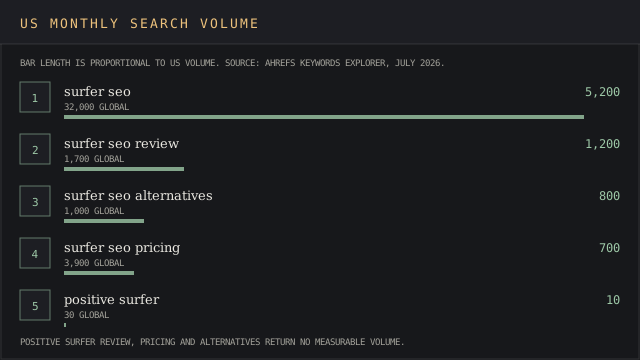
That lag is normal after a rename. Keyword data reflects what people typed last year.
What a positive surfer means, and why the name fits
The sport has its own definition, and it maps onto the platform neatly. Key traits of a positive surfer include patience, resilience, a growth mindset, respect and gratitude.
Patience means waiting for better opportunities. In a content program that's declining the keyword you can't win and holding the budget for the one you can. Better decisions come from staying calm and judicious in wave selection, the same discipline a Topical Map enforces on which web pages your domain can realistically rank for.
A growth mindset treats each session as a chance to improve. Resilience treats setbacks as learning, and controlling your reaction to a wipeout is what turns a page that flopped into a page you rebuild in the audit tool.
The rest carries over. A positive surfer focuses on enjoying the process, the honest answer to everyone chasing a perfect content score. Positive surfers follow surf etiquette and respect other surfers' rights, which here means not lifting a competitor's article because a tool said their structure works.
What to call it now
Call it Positive Surfer, or call it Surfer. Both are correct.
Calling it Surfer SEO isn't wrong so much as dated, and it describes a narrower product than the one that exists in 2026. The platform stopped being an SEO tool alone the moment it started tracking AI search citations.
The content editor
Surfer's content editor is the module most subscribers pay for, and it's what people mean when they say Surfer SEO does content optimization. You enter a target keyword, the platform pulls the top ranking pages, and a guidelines panel appears beside your draft.
How the content score works
The score reflects how closely your draft matches the measurable patterns in pages already ranking: term coverage, word count, heading count, paragraph structure and entity usage.
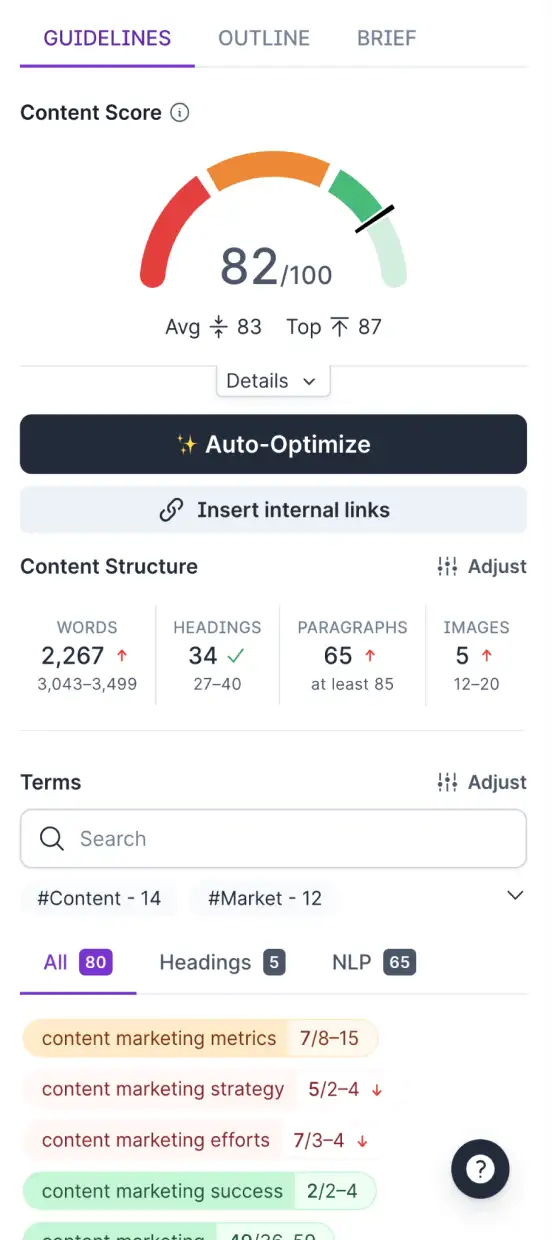
Surfer's content editor shows your score against two reference points: the average across ranking competitors and the top performer. Content structure targets sit underneath as ranges, and the term list splits into headings terms and NLP terms so you can see which belong in a subhead and which belong in body copy.
Surfer's own research puts a 0.28 Spearman correlation between the content score and Google ranking position, drawn from a study of one million SERP entries. That's a correlation. It doesn't guarantee rankings, and it's stronger than most third-party content metrics manage.
What a good content score looks like
A content score above 70 is considered well-optimized. Practitioners typically aim for 75 to 85 on priority pages.
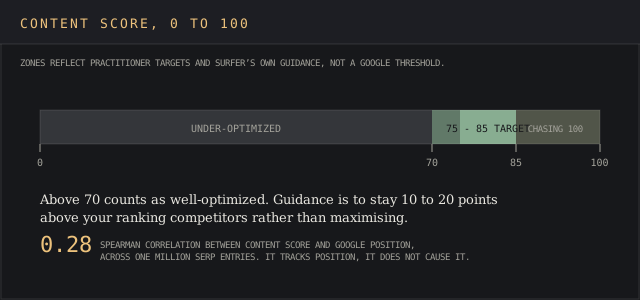
Chasing 100 is the classic error. Surfer's own guidance suggests staying 10 to 20 points above your competitors, because the terms you cram in to reach a perfect number are the ones that read worst.
The Spearman correlation between Surfer's content score and Google ranking position across a study of one million SERP entries. The score tracks position and doesn't cause it. Still stronger than most third-party content metrics report.
The outline builder
Before you write a word, the outline builder generates content outlines based on the top competitors' pages for your query. It reads the heading structure across the ranking set and proposes a skeleton: which H2s appear consistently, which questions the SERP expects answered, which sections you'd be the only page to omit.
The outline builder saves the most time on new content. Starting from a SERP-derived outline removes the guesswork about content structure, and it catches the section you'd otherwise discover missing three weeks after publishing.
Real time optimization suggestions
Surfer's content editor provides real time optimization suggestions as you type or paste. Guidance covers word count against the competitive band, related keywords, and term usage across the full entity list, so the sidebar shows what's missing, what's overused, and where keyword stuffing risk is creeping in.
Keyword density warnings matter more than they sound. The tool flags over-optimization in both directions, which is what keeps a content team's writing focused on the reader.
Google Docs and WordPress
The Google Docs extension puts the same sidebar inside a Google Docs document, so writers optimize content without learning a new editor. Most content teams draft there and never open Surfer's own interface. That's why adoption sticks: the Google Docs workflow stays, and the content optimization layer follows the writer into it.
WordPress integration handles the other end. The Surfer SEO WordPress plugin pushes a finished content editor document straight into a post, and exports as HTML or Markdown cover anything Google Docs and WordPress don't.
Check current pricing
Try the content editor most subscribers pay for
Content editor access starts on the Discovery tier at €49 a month on annual billing.
See Surfer pricing →
May earn a commission if you sign up through this link, at no extra cost to you. Full affiliate disclosure.
The audit tool
The Surfer SEO audit tool is where you optimize content already published. It connects to a Google Search Console account, pulls performance data across your URLs, and ranks which pages have the most upside.

It flags pages with strong impressions and weak click-through, mid-pack rankings that stalled, and articles whose word count now trails the competition. It recommends adding missing subtopics, restructuring headings and adjusting internal linking across existing content, which is usually where the fastest organic traffic gains sit.
The Recommendations queue turns that audit into a worklist: every page gets an Optimize or Content Ideas action, scored and sorted by impact, so the highest-priority fix sits at the top of the queue.

Surfer reports that pages written or updated with the platform are twice as likely to reach the top 10 within 30 days. Practitioner experience puts realistic movement on under-optimized existing content at four to twelve weeks.
Every optimization gets logged in an Activity Log with the person, the action and the timestamp, which is the detail that matters for an agency running several writers against the same account: who touched a page, and when, stops being a Slack question.

Audit needs Google Search Console to work properly, and if your GSC configuration is messy the output is less reliable. That dependency is worth checking before you buy.
Try it yourself
Run the audit tool against your own site
Connects to Google Search Console and ranks your published URLs by upside, covered by a 30-day money-back guarantee.
Visit Surfer →
May earn a commission if you sign up through this link, at no extra cost to you. Full affiliate disclosure.
SERP analyzer
The SERP analyzer is the deep-dive tool, and the Surfer SEO SERP analyzer is what the brand was originally known for. It maps search results for a keyword across hundreds of on page ranking factors: word count bands, heading structure, content score ranges, internal and external links.
Ranking factors here means the measurable on page factors. Off-page signals stay invisible to any SERP analyzer.
Its real use is format detection. Some search results reward a guide, some a comparison table, some a product page, and writing the wrong format is the difference between position 3 and position 30. That's search intent made visible.
Much of what the SERP analyzer surfaces now appears inside the content editor automatically. Most teams open the standalone analyzer only on high-stakes competitive queries.
Keyword research and Topical Map
Surfer SEO keyword research generates related keyword ideas from a seed term, grouped into keyword clusters with monthly search volume, keyword difficulty and search intent classification. The SERP similarity grouping is the useful part: it tells you which related keywords can share a page and which need their own. Keyword suggestions arrive grouped, with search intent already attached, which is the step a generic keyword research tool leaves to you.
Surfer's keyword research won't replace dedicated keyword research tools. Ahrefs and Semrush still do broad discovery and backlinks better, and most teams run one of those alongside these SEO tools.
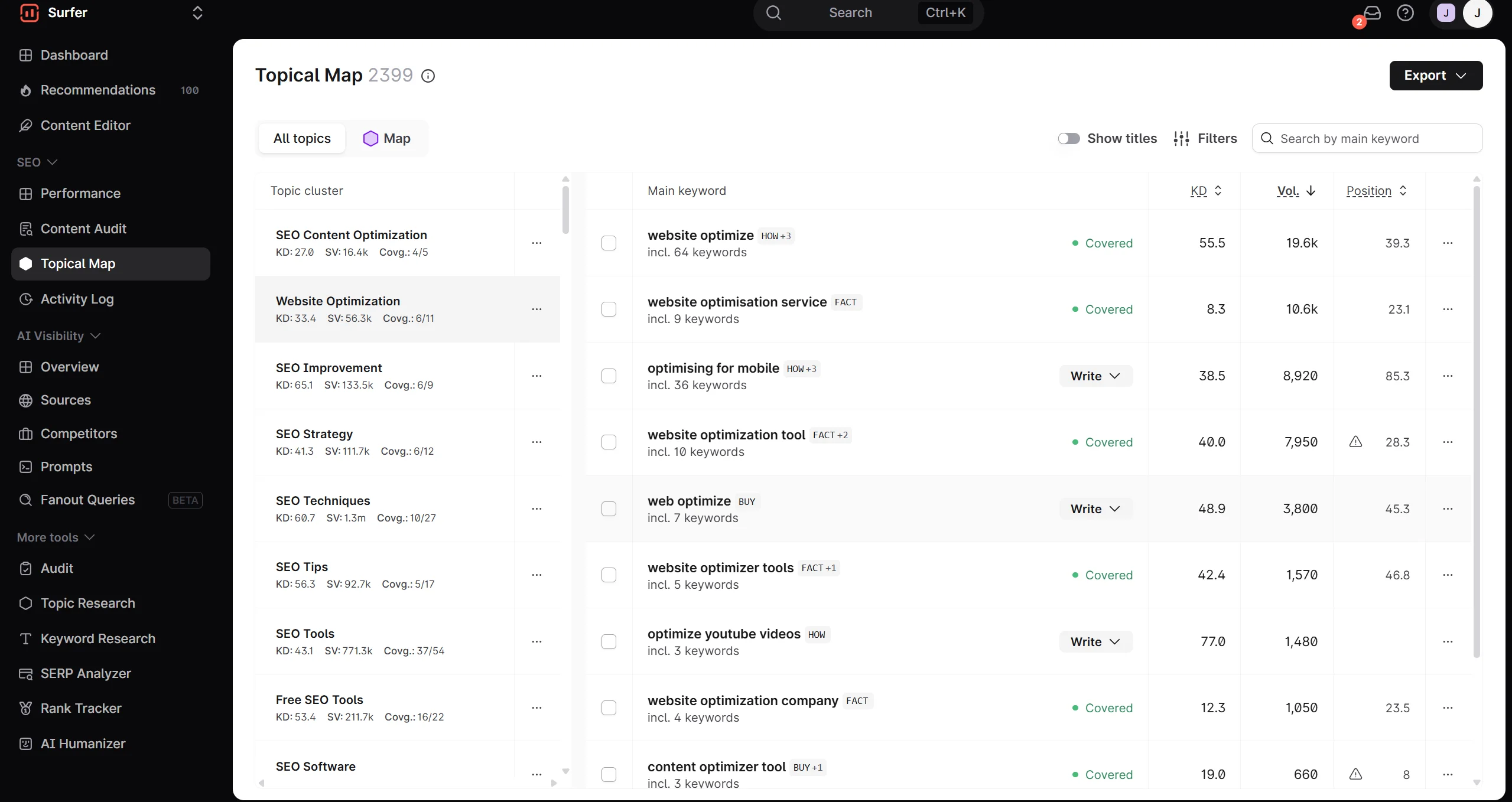
Topical Map connects to your domain, works out which topics you can realistically rank for at your current authority, and groups them into hubs and supporting articles. Each cluster carries its own keyword difficulty, search volume and a coverage ratio showing how much of it your site already addresses. Keywords are marked Covered or given a Write action, which turns the map into a production queue.
The map doubles as a content strategy document. Keyword clusters become a content creation queue with an order to them, so the content team knows which article comes next and which internal linking it needs.
Surfer claims 57% of articles created using Topical Map alongside the content editor reach the top 10. Treat vendor-reported figures with the usual caution, but the workflow it enables is real.
A second view renders the same data as a radial map, color-shaded by cluster coverage. It's built for a different question: where the coverage gaps sit across a whole cluster set, at a glance.

Surfer AI and Prompt
Surfer AI takes a target keyword, optionally some competitor URLs and a tone, and produces a draft already aligned to the content editor guidelines. Generation typically runs under 20 minutes.
Setup runs as a short wizard: pick a content type, add context and brand knowledge, then pick a writing mode: a full AI-generated draft, or a blank page with AI assistance on call.


The difference from a general chatbot is grounding. Surfer AI writes against live SERP data, so structure, entity coverage and keyword usage arrive built in. As of June 2026 it auto-links internal and external sources during generation.
The honest usage pattern is that AI drafts are a first pass, always rewritten. The value is speed and coverage.
AI Detector and Humanizer
Two free tools sit alongside the paid product, aimed at opposite ends of the same problem: telling if a paragraph reads as AI-written, and rewriting one so it stops.
Paste text into the Surfer AI Detector and it returns a verdict on if the passage looks AI-written, no signup required for a first check. The Humanizer sits next to it in the same interface, with a named voice selector and a running word allowance (599,788 words on the plan shown here) that resets on a schedule tied to the account.

Surfer also runs a free AI Search Optimization Masterclass through its Academy: 20 lessons across 7 modules, with templates, quizzes and a certificate at the end, aimed at the same upfront-intent-alignment skill the content editor's AI Search guidelines check for.
Learn the method
Take Surfer's AI Search Optimization Masterclass
Free, 20 lessons across 7 modules, with a certificate and badge on completion.
Visit the Academy →
May earn a commission if you sign up through this link, at no extra cost to you. Full affiliate disclosure.
↑ FACT SHEETAI visibility tracking
This is the capability that changed what the product is. Positive Surfer is now positioned as an AI visibility platform, and AI search optimization is a first-class job alongside search engine rankings.
AI search behaves differently from a page of search results. One query returns one synthesized answer citing a handful of sources, so visibility there is closer to winning a citation than to ranking in a list.
The Overview tab is where a workspace checks its own standing before drilling into any one prompt: a single Visibility Score plotted against named competitors.

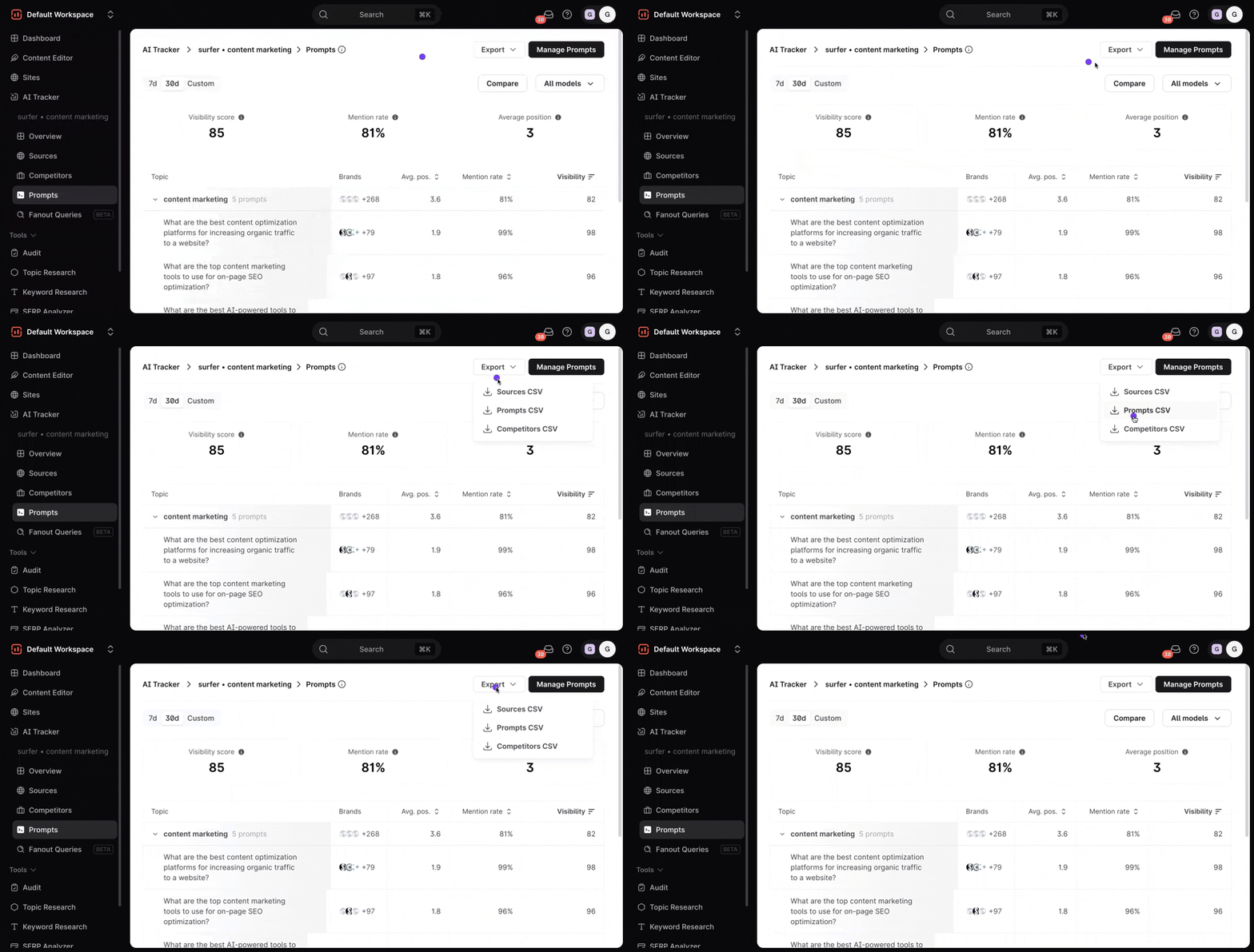
The AI Tracker covers ChatGPT, Perplexity, Gemini, Google AI Overviews and Google AI Mode. Tracking runs at prompt level. Rank tracking runs at keyword level, and that's the structural difference between the two. You add the questions buyers ask a model, and the tracker reports visibility score, mention rate and average position for each one.
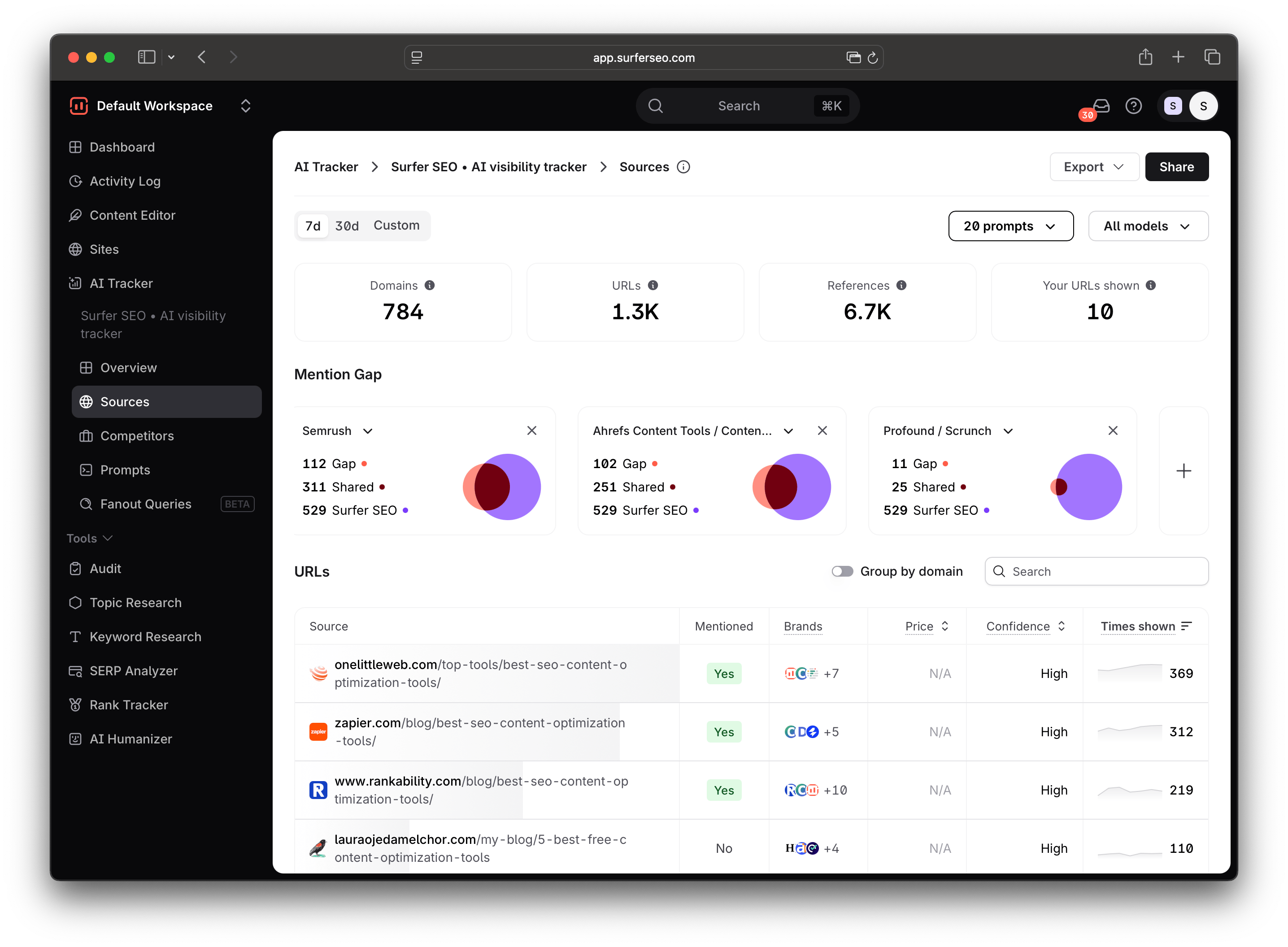

Mention Gap shows where competitors get cited and you don't. The Sources view is the actionable half: it lists the specific URLs models cite when answering your prompts, if your brand was mentioned in each, and how often that source gets shown, which turns AI visibility from a score into a list of pages worth pitching.
Surfer's own citation research backs up why the Sources view matters: across 650,000 scored AI Overview citations, three first-paragraph factors decide most of the gap between a cited page and a ranked-but-ignored one, and formatting extras like an author bio or a table of contents barely register.

See who's cited ahead of you
Check your AI visibility with Surfer's AI Tracker
Prompt-level visibility score, mention rate and average position across ChatGPT, Perplexity, Gemini, AI Overviews and AI Mode.
Try the AI Tracker →
May earn a commission if you sign up through this link, at no extra cost to you. Full affiliate disclosure.
A free companion tool sits outside the paid product. Surfer Pulse reads how much citation turnover the same five engines show in the last 24 hours and reduces it to one 0-100 score per engine, banded Flat through Storm.

ChatGPT and Google AI Overviews are readable with no account; a free Surfer account unlocks Perplexity, Google AI Mode, Gemini, per-industry breakdowns and 90 days of history. Pulse tells you the field moved. The paid AI Tracker is what tells you if that move helped or hurt your own citations.
The content editor reflects the same shift. Guidelines now include an AI Search Score, facts coverage and upfront intent alignment alongside the traditional SEO signals.
↑ FACT SHEETPerformance and Rank Tracker
Performance and Rank Tracker close the loop between the optimization work and what it did.
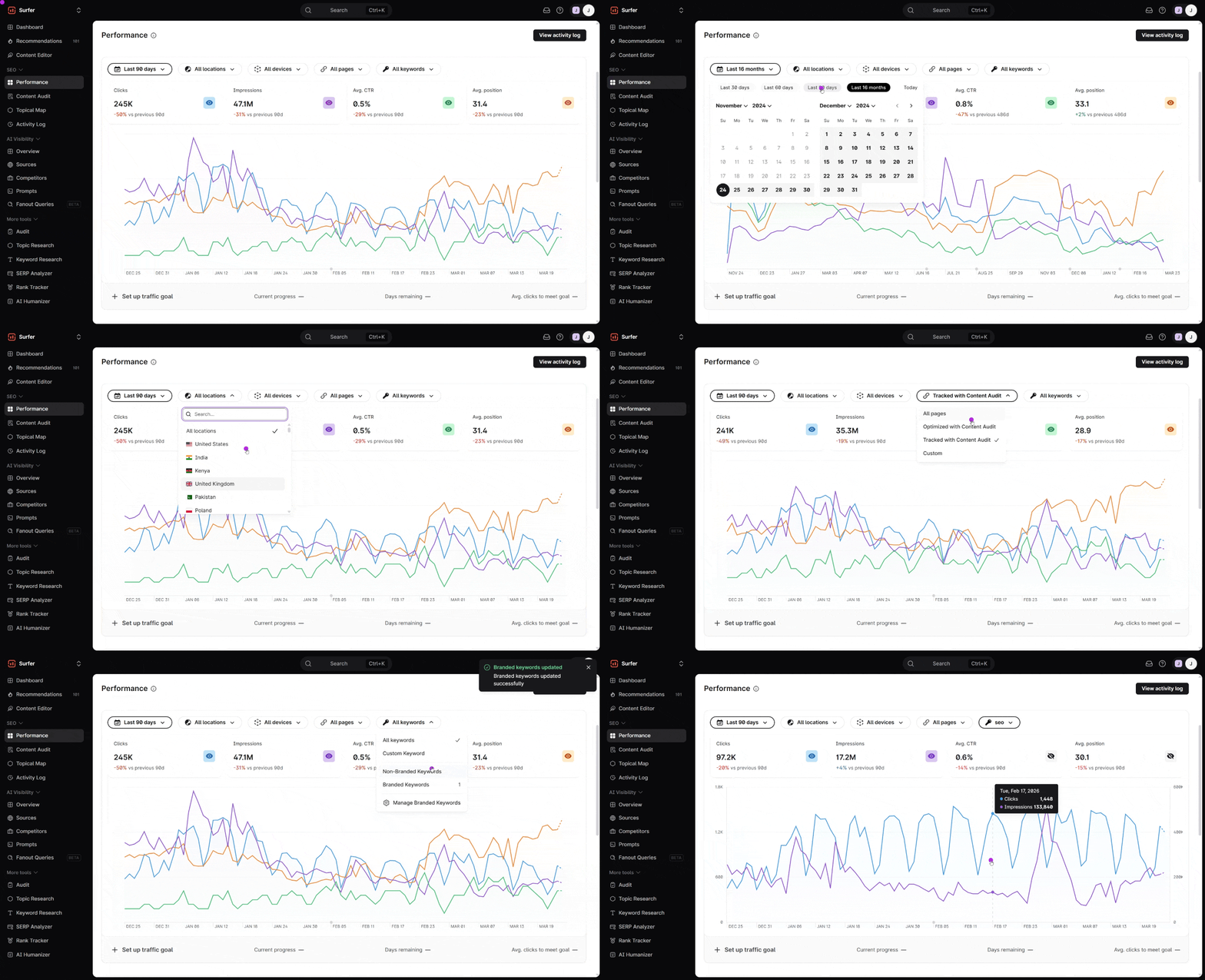
Performance pulls Google Search Console data into the same platform: clicks, impressions, average click-through rate and average position across a chosen window, each with a comparison against the previous period. Traffic goals sit on top, so you can set a target like increasing clicks 10% a quarter and watch progress against the daily click rate needed to hit it.

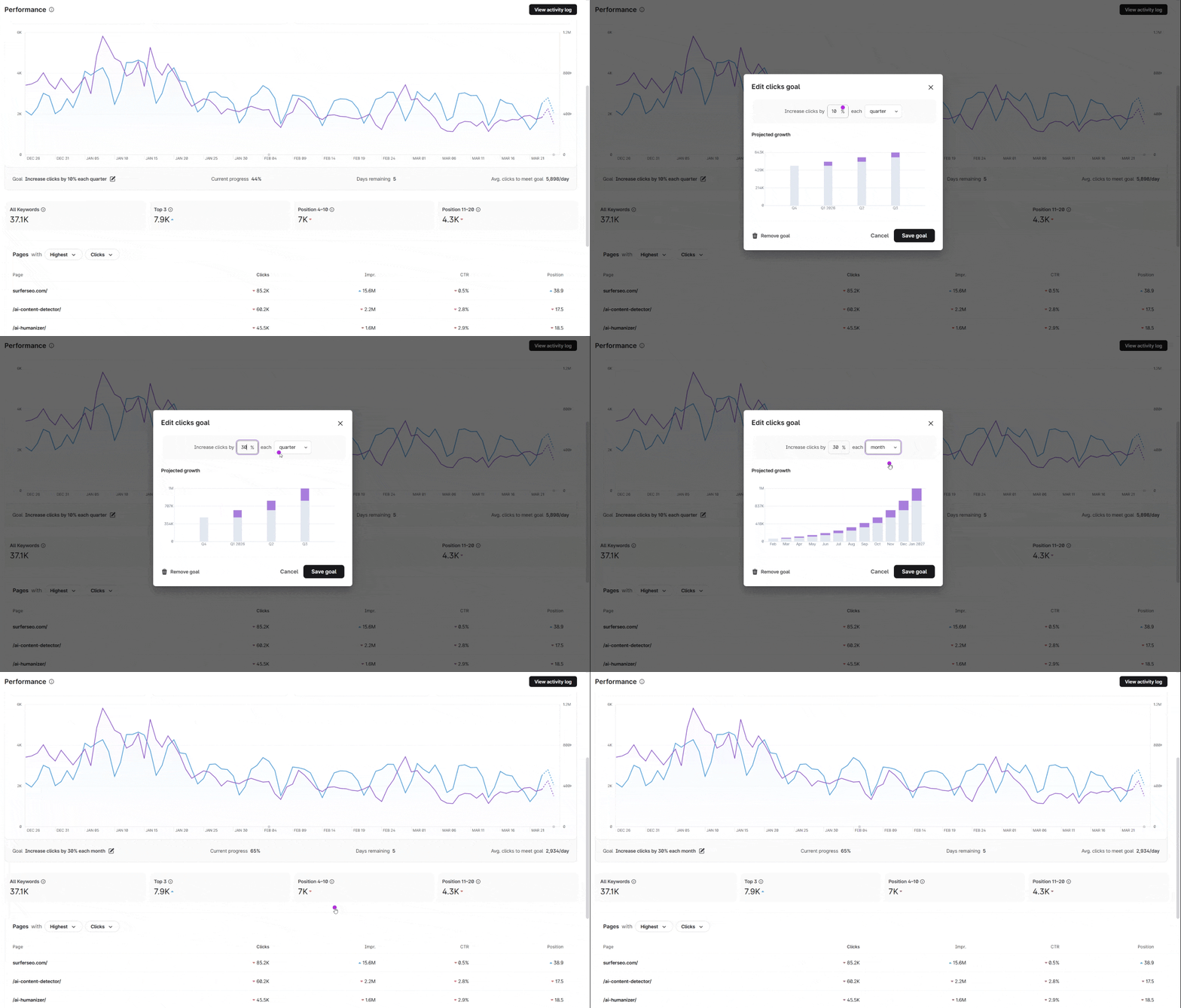
The keyword breakdown splits your tracked terms by position band: top 3, positions 4 to 10, positions 11 to 20. That distribution matters more than the headline count, because movement from band to band is what organic traffic responds to.
None of this replaces Google Search Console, since it's largely the same data re-presented.
↑ FACT SHEETSurfer SEO pricing in 2026
Surfer SEO pricing runs across five plans, from €59 a month for Discovery to €999 for Enterprise, dropping to €49 and €999 on yearly billing. There's no free tier, and the Surfer SEO cost question comes down to publishing volume and seats together, since both move with the tier.
| Self-serve tier | Monthly | Billed yearly | Seats | Documents | Tracked pages |
|---|---|---|---|---|---|
| Discovery | €59 | €49/month | 1 | 10 a month, 120 on annual | 10 |
| Standard | €119 | €99/month | 3 | 30 a month, 360 on annual | 50 |
| Pro | €219 | €182/month | 5 | 30 a month, 360 on annual | 200 |
| Peace of Mind | €359 | €299/month | 10 | Unlimited, capped by fair use | 500 |
| Enterprise | €999 | €999/month | Custom | Custom limits | Custom |
Enterprise is the one tier the annual toggle doesn't move. Verified against Surfer's own pricing page, 7 August 2026.

Content editor credits are the unit that matters on the lower plans. Ten articles a month is the Basic ceiling, which suits a solo blogger and constrains anyone else.
Credits don't roll over, and Surfer's documentation says so plainly. Unused AI article and audit credits expire when a monthly billing cycle resets, so 10 unused credits on a 30-credit Essential plan are gone. Annual plans release the whole year's allocation upfront, which removes the monthly cliff, and unused credits still expire at the end of the subscription year.

Cost lands between $99 and $182 a month for most serious users once annual billing and real publishing volume are factored in. It's not a budget tool, and the total adds up quickly for teams running multiple clients.
A 30-day money-back guarantee covers every plan, which is long enough to run real content through the content editor and check if the score moves anything on your own site.
Check current pricing
See Surfer SEO plans and pricing
Five published tiers from €49 to €999 a month on annual billing, all covered by a 30-day money-back guarantee.
See Surfer pricing →
May earn a commission if you sign up through this link, at no extra cost to you. Full affiliate disclosure.
Surfer SEO alternatives
The Surfer SEO alternatives worth comparing come down to five. Clearscope costs more and covers a narrower slice: strong content grading, and little beyond it. MarketMuse suits large teams with deep content inventories, and is slower in daily use and pricier.
Our full MarketMuse review covers that site-inventory depth and its quote-only pricing in detail.
Frase is built around content briefs and research automation, lighter on page optimization itself. NeuronWriter is cheaper and reasonable for smaller bloggers, though it loses ground on competitive keywords. PageOptimizer Pro is more technical and harder to roll out across a team that isn't SEO-native.

Against all of these, Surfer SEO focuses on making SERP data usable, which is why it stays the default content optimization pick among on page optimization tools.
Who it's for
Content marketing teams and SEO agencies producing many articles, where on page SEO is a repeatable process. Bloggers and content marketers who care about search engine rankings as much as output. Teams running multiple client sites who need an objective quality bar across writers, since the content score removes the "is this good enough" argument from editorial review.
In-house teams running a content strategy across several topic clusters, where content creation volume makes a shared standard worth setting up.
Who should skip it
Tiny local sites with five to ten static pages, where local basics are what to get right first. Teams publishing occasionally, where the subscription outruns the output. Anyone shopping for technical SEO.
Weaknesses and limitations
Site speed, crawl errors, page speed and backlink analysis all sit outside the product. You need a second tool, and that's a real cost to plan for when you budget your SEO tools.
Billing is where the documented complaints cluster. Trustpilot reviewers report that account settings offer no way to remove a stored credit card, that charges continued after cancellation, and that refunds on unused AI writing credits were refused.
The most common criticism is teams chasing a perfect content score at the expense of readability. The tool warns about keyword stuffing, and it can still be misused by someone determined to hit 100.
The Surfer SEO audit tool, Performance and the internal linking suggestions all lean on Google Search Console data, so messy configuration produces weaker output. And the content score correlates with rankings. It doesn't cause them: algorithms shift, and any tool built on SERP snapshots inherits that uncertainty.
FAQ
How much does Surfer SEO cost?
Five plans. Monthly billing runs €59 Discovery, €119 Standard, €219 Pro, €359 Peace of Mind and €999 Enterprise. Yearly billing drops those to €49, €99, €182 and €299, with Enterprise unchanged at €999. Most teams land on Standard or Pro.
What is a good Surfer content score?
Above 70 counts as well-optimized. Most practitioners target 75 to 85 and deliberately avoid chasing 100.
Is Surfer SEO the same as Positive Surfer?
Yes. The product is Positive Surfer following the Positive Group acquisition of 21 October 2025. Surfer SEO is the older name, still what most people search for, and the SEO suffix was a domain-availability decision at launch.
Is Surfer SEO worth it?
For a team publishing weekly or more, yes. For a site publishing monthly, no, and the reason is mechanical: credits expire at the end of each billing cycle, so capacity you don't use is money gone. Cheaper on page optimization tools cover the same ground at low volume.
Is Surfer AI worth it?
For structure, coverage and speed, yes. As finished copy, no. Users treat Surfer AI output as a first draft they rewrite.
Is Surfer SEO good for keyword research?
Good enough for planning, weak for discovery. Surfer's keyword research clusters keyword suggestions by SERP similarity and labels search intent, which beats raw volume for planning a page; for discovery at scale, other keyword research tools do more.
Does Positive Surfer replace Ahrefs or Semrush?
No. It complements them. Keyword research and backlinks stay in those platforms; on page execution and internal linking move to Surfer.
Bottom line
This Surfer SEO review lands where most honest ones do. Positive Surfer earns its price for teams that publish consistently and care where their pages land. The content editor is the reason to buy it, the audit tool is the reason to keep it, and the AI visibility tracking is the reason the product outgrew its old name.
It's ranked #5 on our marketing intelligence tools list, which orders on how much of that category a tool covers; it wins the AI-visibility criterion outright and covers one job of four. On our content intelligence tools ranking it places third of ten, on five tracked AI engines and a $49 entry plan.
Two caveats deserve weight. Surfer SEO handles one layer of search engine optimization and needs company from other SEO tools in your stack. And I'm related to two of the founders, which is precisely why the limitations section above is longer than the marketing would like.
Test it against the 30-day money-back guarantee, run three real articles through the Surfer SEO content editor, and check if your own numbers move.