Market Analysis Template
 By Jan Suski. I go deep on every review, checking every number against its source and digging up details other coverage misses, a habit from six years of SEO and link building for tech companies. Bylines at Surfer, Brand24, and Senuto. How the scoring works.
· Prefer this source on Google
A market analysis template helps study an industry, target buyers, and rivals in one structured document, so the study covers the whole market by design, on purpose from the start.
An effective market analysis produces strategic insights a company can act on: knowledge of the competition, patterns in demand, and the risks that could stall a launch. That shared understanding is the quiet payoff, because marketing efforts, product bets, and service decisions all draw from one document.
Success compounds from there: the structured approach and the methodology stay constant while the market moves, so every insight a team can develop feeds the next study, and different types of projects plug into the same blocks while the focus stays on the target market. The process is how a document becomes a competitive advantage.
This template for market analysis is part of our market intelligence templates library, and it downloads free as a branded DOCX built around seven building blocks.
Download the Free Market Analysis Template
Download the market analysis template (DOCX)Seven pre-structured blocks with prompts and worked examples in each field.
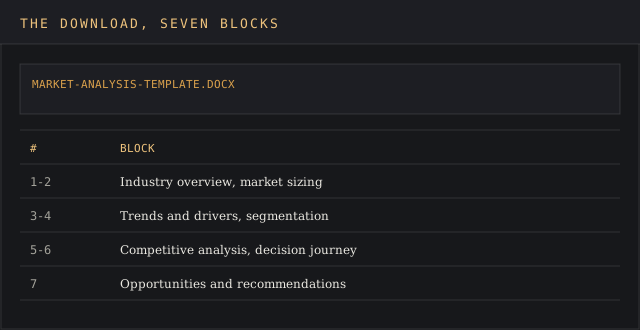
Market analysis templates simplify data gathering and analysis: the fields decide what to collect before collection starts, and templates help produce clear reports the whole team reads the same way. A free market analysis template plus sourced data beats an expensive one plus guesses.
Other formats exist if the deliverable demands them: Slideworks offers two market analysis templates with 312 and 458 slides for consulting-style decks, Miro's templates support collaborative workshops, and Craft.do's template provides a structured document approach. The method below works in any of them; template market analysis debates are format debates, and the blocks stay the same.
The Seven Building Blocks
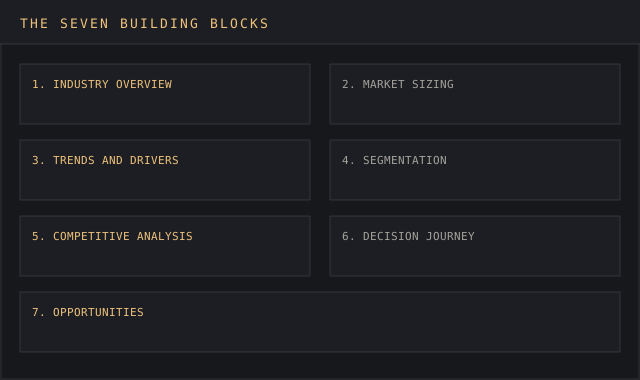
The Market Analysis Framework has seven core building blocks, and the template dedicates a section to each.
1. Industry Overview
An industry overview defines the current state, size, and growth rate of the industry, plus its maturity stage and the regulatory weather around it. Market analysis typically includes an industry outlook up front because everything later inherits its assumptions.
2. Market Sizing
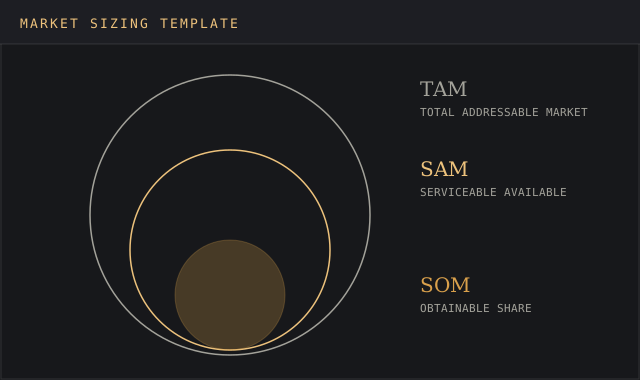
Market sizing includes TAM, SAM, and SOM definitions: the ceiling, the serviceable arena, and the share a plan can defend. Understanding market size is necessary for competitive positioning, and the market sizing template carries a working calculator for this block.
3. Market Trends and Drivers
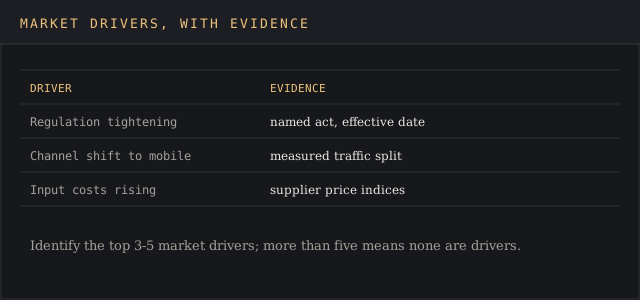
Market trends analyze consumer behavior, economic factors, and regulatory changes; identifying the top 3-5 market drivers is necessary for analysis, because more than five means none of them drive anything.
4. Customer Segmentation
Market segmentation helps identify distinct customer groups, and segmentation can be based on demographics, behaviors, or needs, with lifestyle and attitude splits as further options.
Each market segment gets a profile: the target audience inside it, its pain points, how many potential customers it holds, and the distribution channel it buys through.
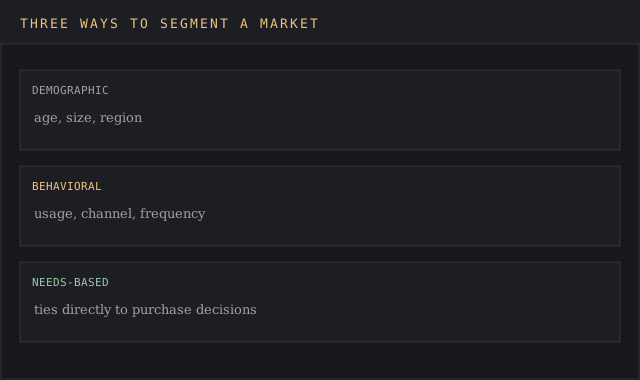
Needs-based segmentation ties directly to purchasing decisions, which makes it the sharpest of the three for strategy; profiling segments reveals their characteristics and potential, and effective segmentation leads to actionable marketing strategies.
5. Competitive Analysis
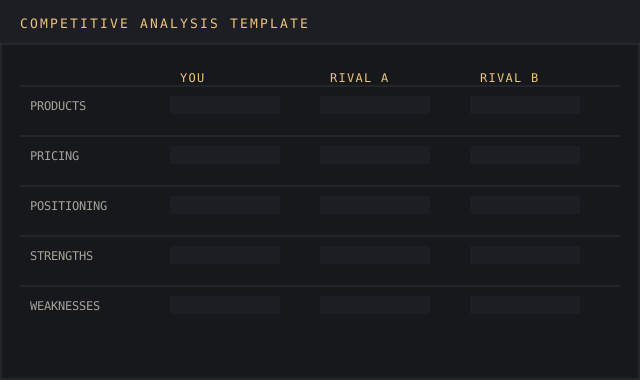
A competitive analysis evaluates direct and indirect rivals: who they are, what they charge, and where their weaknesses invite entry. The competitive analysis template holds the full grid, and SWOT analysis summarizes strengths, weaknesses, opportunities, and threats for a business in one glance; the SWOT analysis template covers that method.
6. Customer Decision Journey
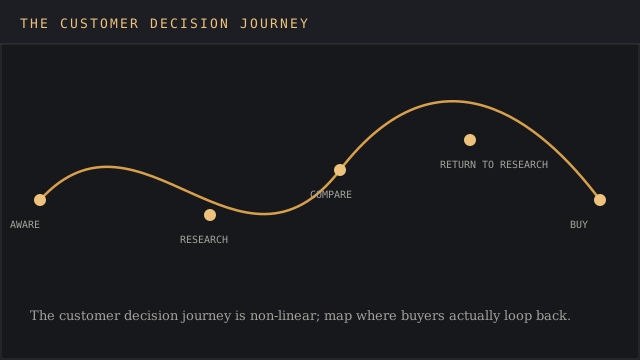
The customer's decision path is often non-linear and complex: buyers loop back to research after comparing, and the loops are where marketing either helps or loses them. Mapping that path as it happens beats assuming a funnel.
7. Opportunities and Recommendations
The last block turns the study into decisions: market analysis reveals genuine opportunities for customer acquisition, and in-depth analysis helps businesses gain market share confidently because the opening is measured.
The final step feeds the business plan: identify opportunities with evidence, tie each market opportunity to business goals, and present the recommendations with owners and dates.
Filling the Template With Real Data
Data should come from reliable sources like government statistics and industry reports; the template's fields each carry a source line, and an unsourced cell stays visibly empty, which is the design working.
Relevant market data beats abundant market data. Customer demographics come from the census, customer feedback and survey results from your own base, and competitor research on the key players fills the competitive analysis block; tools automate the rest.
Secondary sources cover the industry outlook and sizing blocks; your own surveys, interviews, and sales records fill segmentation and the decision journey. Our how to gather market intelligence guide maps the collection work, and the market intelligence tools ranking compares the platforms, Semrush and Similarweb among them, that automate the competitor and demand blocks.
Market analysis informs data-driven decision-making in businesses only while it is current, and the valuable insights age fast: regular updates are essential as market dynamics change, so date every figure and re-run the blocks that moved. Market analysis is an ongoing discipline.
How the Template Relates to Market Research
A market analysis is the outward-facing half of a research program: the industry, the buyers, the rivals. A market research report then packages what the analysis found for leadership, product, and go-to-market teams, and the market intelligence vs market research guide draws the wider boundary.
In practice the two templates chain: the analysis blocks become the report's middle sections, and the report's recommendations trace back to the analysis's evidence. Teams that keep both in the same folder stop rewriting the same findings twice.
FAQ
What should a market analysis include?
The seven blocks above: industry overview, market sizing, trends and drivers, segmentation, competitive analysis, the decision journey, and opportunities with recommendations. Cut a block only when it has nothing to say about your market.
Is there a free market analysis template?
Yes, the DOCX at the top of this page, free and rebrandable. Slideworks, Miro, and Craft.do publish alternatives in slide, whiteboard, and document formats respectively.
How often should a market analysis be updated?
Quarterly for the trend and competitor blocks, annually for the full framework, and immediately when a driver moves: a regulation lands, a rival exits, a segment's behavior shifts.
What is the difference between market analysis and competitive analysis?
Competitive analysis is one block of the larger study: it covers rivals, while market analysis also covers the industry, the buyers, and the demand. The competitive analysis template plugs into block five.
Bottom Line
A market analysis template earns its keep by making the whole market visible at once: the industry's direction, the segments that buy, the rivals in the way, and the openings between them, distilled into key insights a reader can create decisions from.
Download the template, fill the seven blocks from sources you can name, and re-run it on a schedule; the businesses that treat market analysis as a discipline are the ones that see the shift while it is still an opportunity.