Market Research Report Template
 By Jan Suski. I go deep on every review, checking every number against its source and digging up details other coverage misses, a habit from six years of SEO and link building for tech companies. Bylines at Surfer, Brand24, and Senuto. How the scoring works.
· Prefer this source on Google
This market research report template turns raw information into a document executives and department heads understand and act on. Part of our market research template library, it comes as a free branded DOCX alongside a second file: the brief that should exist first.
Download the Templates
Two free market research template files for Word or Google Docs.
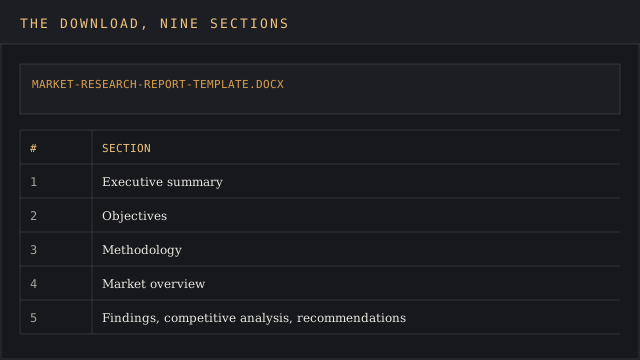
Download the market research report template (DOCX)Nine ready-to-fill parts with prompts for the information each needs.
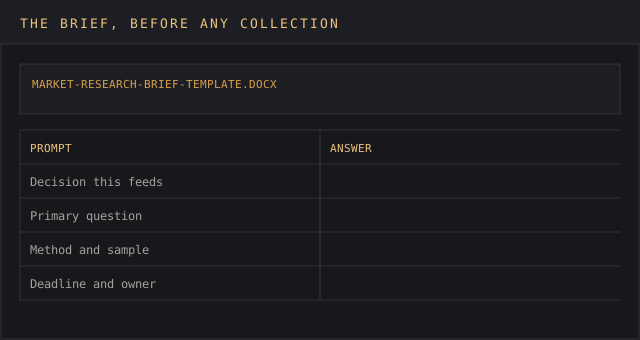
Download the market research brief template (DOCX)Create this one first; it defines the market research project before data collection starts.
A free market research template beats a blank page, saving you from starting from scratch: the layout is settled, so time goes into findings.
What Is Inside the Files
The report file holds the nine sections below; the brief fits on one page: objectives, research design, method, sample, deadline, owner. Both market research template files suit rebranding.
What Should a Market Research Report Include?
A market research report typically includes an executive summary, objectives, methodology, market overview, target audience analysis, competitive analysis, findings, recommendations, and appendices. Nine parts, each with a job.
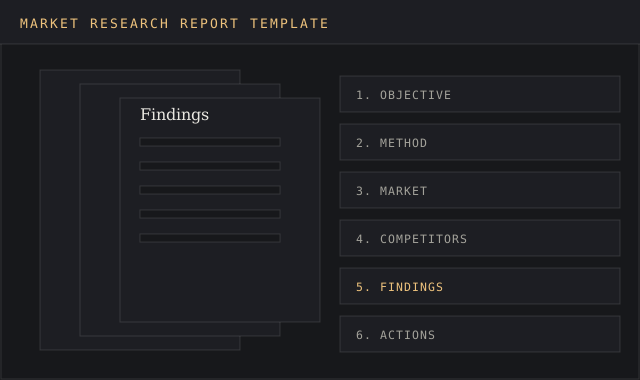
The executive summary provides a short recap of core goals and main data; write it last, place it first. Objectives state the problem the market research project tackles, plus the assumptions the study is testing. Methodology explains how data was collected and surveyed, with sample details; important, because skeptics check the results.
The market overview covers current industry size, growth rates, and big-picture trends. Target audience analysis describes customer demographics and buying behavior, including the ideal customer. Competitive analysis evaluates rival brands' strengths, weaknesses, pricing, and positioning, one column each; our competitor grid plugs in here.
Findings and analysis present data through text, graphs, and charts. Recommendations translate insights into practical actions and marketing strategies. Appendices hold supporting information: survey questionnaires, raw data, interview notes, and sources.
What Market Size and Major Players Look Like in a Real Industry Analysis
A market overview borrows its shape from the industry analysis reports covered in our reports library. Specifically, an almond market report's detailed analysis puts market size at a 4.51% CAGR toward USD 39,288.85 million by 2035, with California growing over 80% of the world's almond supply and the global almond supply climbing 23% in 2025, according to Market Research Future.
A computer monitor market report values the same industry at USD 45.1 billion in 2024, forecast to USD 76.74 billion by 2032, per Verified Market Research. Every one of these reports denominates market size in USD billion figures, whichever vertical it covers.
A business process services report names its major players and key players by vertical, ties market growth to automation, cost effectiveness, and operational effectiveness gains from cloud adoption, and calls North America and the Asia Pacific region the fastest-expanding markets on a 6.3% CAGR through 2035, according to Business Research Insights.
The Middle East and other emerging markets show up as smaller line items in the same regional breakdown. That density gives "market size," "competitive landscape," and "competitive edge" concrete meaning once a template placeholder gets filled in: a market share number attached to named companies hits the nail on the head.
The Order of the Sections
The order follows the reader: executives read page one, the research team reads the rest.
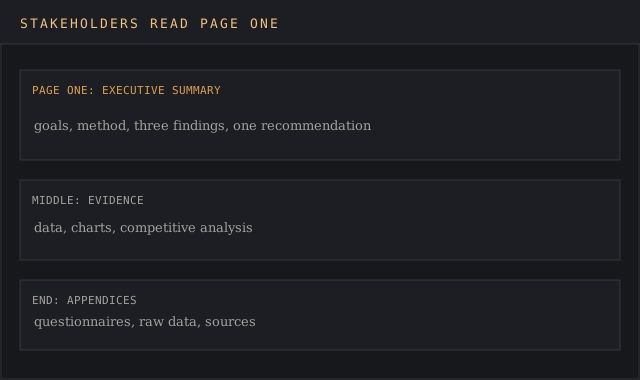
A clear logical structure gets executives to a decision fast: lead with the three results that matter, keep the evidence in the middle, and push raw details to the appendices. That market research report format holds at any project size.
Best practices for reporting include distinguishing factual findings from interpretations, calling a spade a spade in the process. For example, "42% of customers churned within 90 days" is a finding; "onboarding is the problem" is an interpretation; label each.
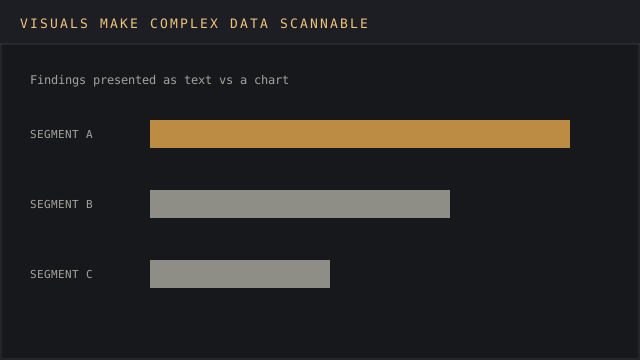
Using visuals makes complex data easier to understand at a glance, a chart shows what a paragraph buries; design every chart to compare two things. Market conditions move, so a refresh cadence matters: stale reports describe markets that no longer exist.
How to Write a Market Research Report, Step by Step
Step one: create the brief. Research design starts with the decision the work feeds; a market research project without a defined goal produces a report nobody asked for.
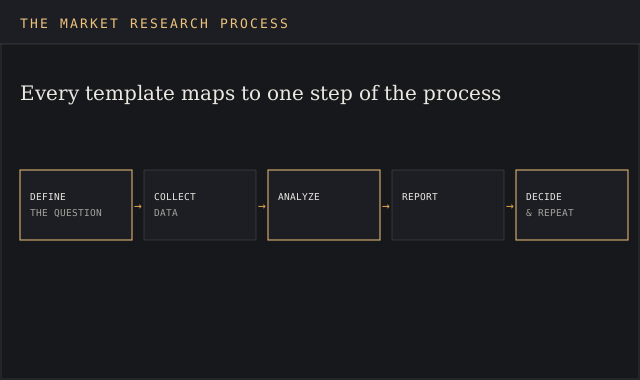
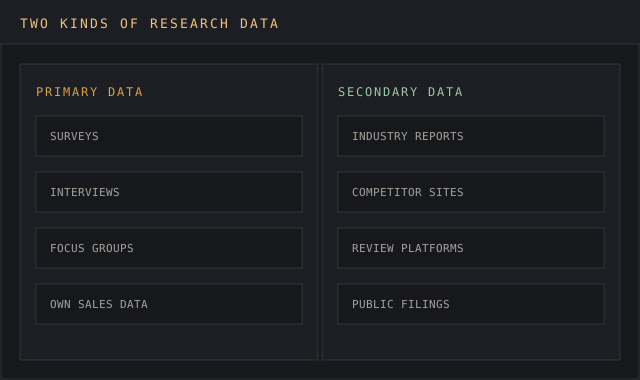
Step two: collect. The market research process splits gathering information into primary work, surveys and interviews with customers, and secondary sources on competitors and the market. Either alone gives half the story; together they give a complete picture.
Step three: organize findings inside the market research template sections as they arrive; the process stays efficient and the report builds itself while the study runs. A market research analysis template covers the middle parts at finer grain.
Step four: write recommendations before polishing anything. Findings that change no strategies, budget, or plan amount to a summary; research changes something.
Step five: share it. Share the draft with the team and file the notes where the next market research project can find them. Repeat the process quarterly: patterns among customers emerge, and the early bird catches the worm; identifying trends early is a benefit no single report delivers.
Fit the Template to the Project
Market research templates suit different jobs at different sizes. A pricing study for one set of customers might need five parts; entry into three target markets, all nine. Cut parts that say nothing; match the template to the problem, since identifying what to cut benefits the reader.
Voice shifts with the audience: for instance, a marketing report for executives keeps the focus on revenue and compresses methodology to two sentences; a technical readout leads with the data. Same research, same insights; the template stands for both.
FAQ
How to create a market research report?
Define the market research project's goal and assumptions in a brief, gather primary and secondary sources, organize findings into the nine parts above, and write the executive summary last; the free template download above gives the frame to build in.
What are the 7 major parts of a research report?
Title page, executive summary, introduction and objectives, methodology, results, discussion, references. Business use adds recommendations and appendices, which is how this market research template reaches nine.
Can ChatGPT do market research?
It drafts sections, summarizes sources you provide, and helps explore and understand a problem quickly; artificial intelligence cannot supply verified market information on its own. The ChatGPT for market research guide covers the boundary.
Where can I get market research reports for free?
Government sources carry the most weight. The U.S. Census Bureau runs economic censuses and demographic surveys, the Bureau of Labor Statistics tracks labor market activity and price data, and SEC filings hold disclosures for every publicly traded company in a sector, straight from the horse's mouth.
Pew Research Center covers public opinion and current trends free of charge, Google Trends tracks consumer interest in real time through search volume, and Statista's free tier carries selected statistics and infographics alongside free tiers of tools like Similarweb.
Trade associations publish free member research, and most public and university libraries carry free access to subscription market research databases a cardholder could not otherwise afford.
Free reports run incomplete or outdated more often than paid ones, so treat any single number as a drop in the bucket and confirm it against a second source before it drives a decision. Free resources are enough to learn the market overview; insights about your own customers still need your own study.
How to structure a market research report?
Executive summary first, evidence in the middle, appendices last. For example, lead each part with its conclusion, then support it.
How to write a market research report?
Create it piece by piece as the research runs, with the template holding the shape. Label facts as facts and interpretations as interpretations, design charts where numbers compare, and keep the executive summary clear, one page.
Bottom Line
A market research report earns its budget when someone changes a plan because of it; actions speak louder than words here. The market research report template above keeps formatting out of the way, the brief keeps the project honest, and both market research templates are free downloads.
Build them from real sources and let findings set strategies. Our market intelligence tools ranking covers the software and services side, and the market intelligence vs market research guide explains where your problem belongs.