Customer Intelligence Template
 By Jan Suski. I go deep on every review, checking every number against its source and digging up details other coverage misses, a habit from six years of SEO and link building for tech companies. Bylines at Surfer, Brand24, and Senuto. How the scoring works.
· Prefer this source on Google
A customer intelligence template is designed to collect, analyze, and organize buyer data: who your customers are, how customers behave, and which customers deserve the next hour of the team's attention.
Customer intelligence helps improve business strategy because it replaces the averaged customer with real ones; a customer intelligence template helps improve business strategy by making that data routine.
The template is part of our market intelligence templates library, and it downloads free in two pieces.
Download the Templates
Download the customer intelligence profile (DOCX)One profile per account or segment, spanning all four data layers plus feedback metrics.
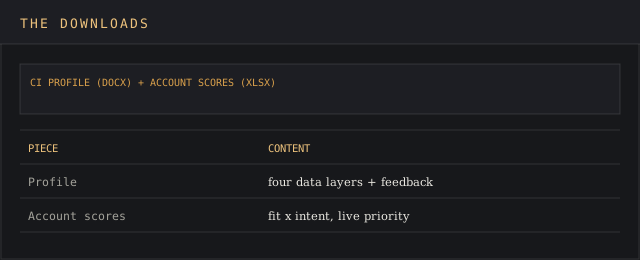
Download the account scoring sheet (XLSX)Customers scored on fit and intent, with a live priority formula per row.
Both carry our branding and worked examples; teams typically start with ten customers in the sheet and one profile per key segment, and the process grows from there.
What Is Customer Intelligence?
Customer intelligence is the discipline of turning customer data into decisions: collecting what customers do, say, and buy, then acting on the patterns customers leave behind.
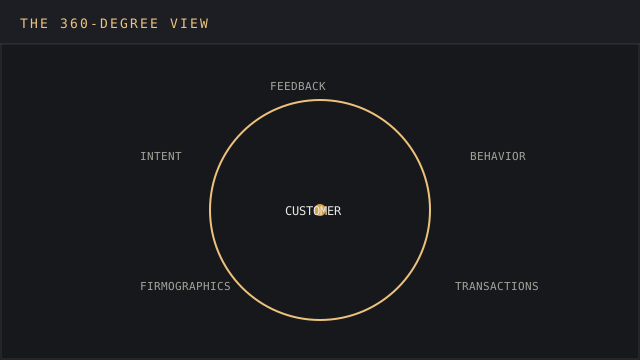
Customer intelligence provides a 360-degree view of customers: the same account seen through behavior, transactions, feedback, and firmographics at once, replacing four teams each holding a quarter of the picture.
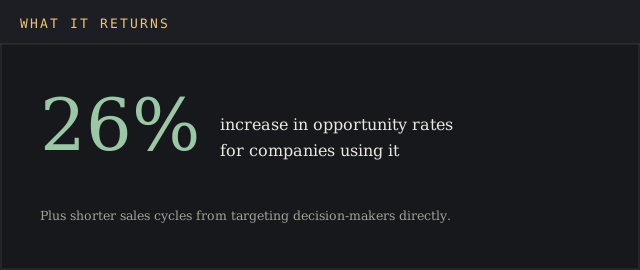
The business case is measured: companies using customer intelligence see a 26% increase in opportunity rates, and customer intelligence reduces sales cycles by targeting decision-makers directly.
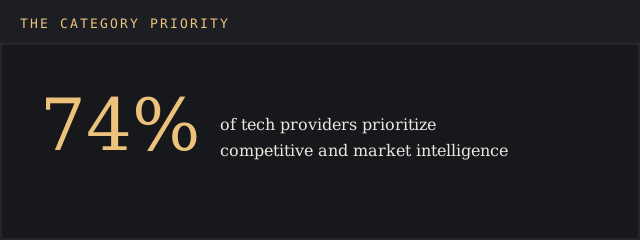
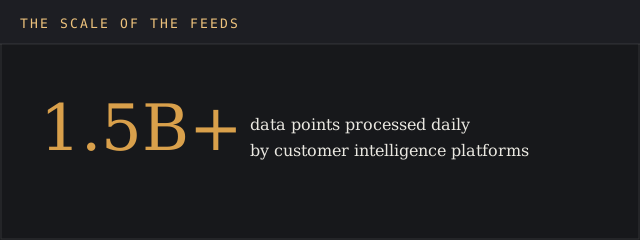
The category has momentum too, with 74% of tech providers prioritizing competitive and market intelligence and customer intelligence platforms processing over 1.5 billion data points daily.
The Four Data Layers
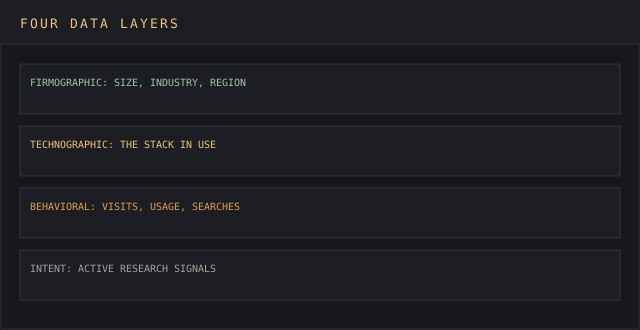
Customer intelligence includes firmographic, technographic, and intent data, with behavioral data as the fourth layer, and the customer intelligence template gives each layer its own section.
Firmographic and Demographic Data
Demographic and firmographic profiles include age, gender, income, and occupation on the consumer side, and company size, industry, and region for business customers; this is the layer that says who.
Technographic Data
For business customers, the stack in use predicts fit: technology choices reveal budget, sophistication, and integration needs before a single call.
Behavioral Data
Behavioral data includes website visit frequency, search history, and product usage: the layer that says what customers do, as against what they report.
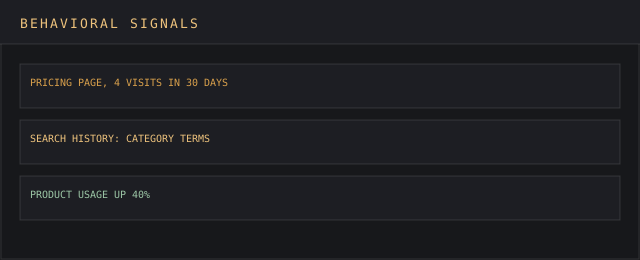
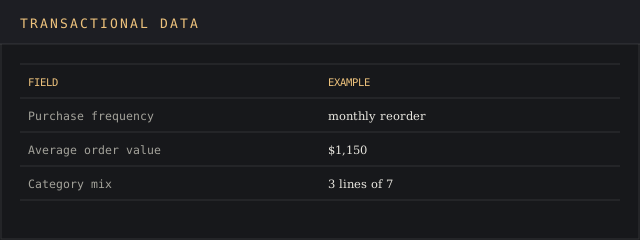
Transactional data completes the behavioral picture: transactional data includes purchase frequency and average order value, the receipts behind the clicks.
Intent Data
Intent data reveals which accounts are actively researching solutions, and behavioral signals help prioritize accounts showing buying readiness; intent is the layer that says when.
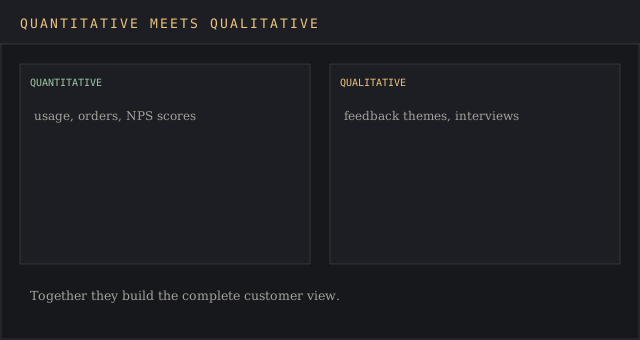
Quantitative and qualitative data build a complete customer view together: the numbers say how much, and customer feedback says why. Combining diverse data presents a complete picture of consumer behavior no single layer can.
Feedback and Satisfaction Metrics
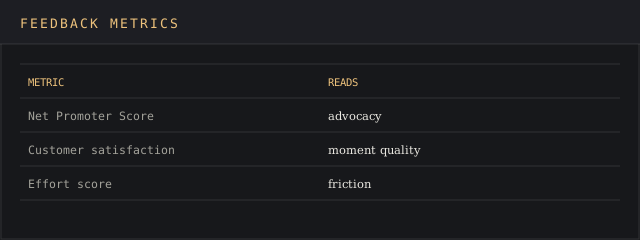
Customer feedback includes metrics like Net Promoter Score and customer satisfaction, and the template's feedback block records both, plus the themes behind the numbers; customer satisfaction trends per segment are the earliest customer experience warning most companies own.
Identifying customer pain points guides product improvements and messaging, so the feedback block keeps a themes line; customer satisfaction scores trend, but pain points explain.
Psychographic data provides insights into customer motivations, values, and interests where the business case supports collecting it: consumer brands lean on it, infrastructure vendors rarely need it.
Templates should capture customer profiles, behavior patterns, and feedback metrics in one place, which is exactly the profile document's three-block shape.
Where the Data Comes From
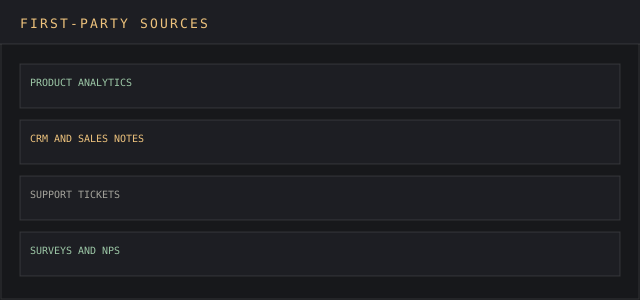
Customer intelligence can be collected from first-party sources first: your own product, CRM, support desk, and surveys already hold most of the picture.
The best methods for collecting customer intelligence split four ways: ask, observe, buy, and listen.
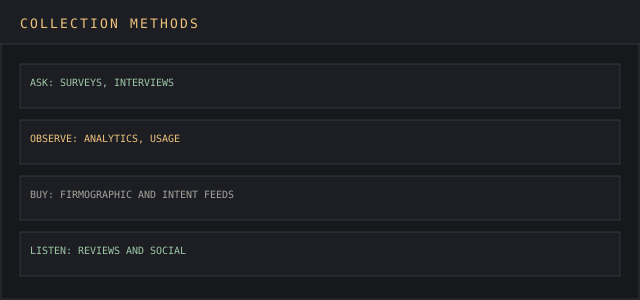
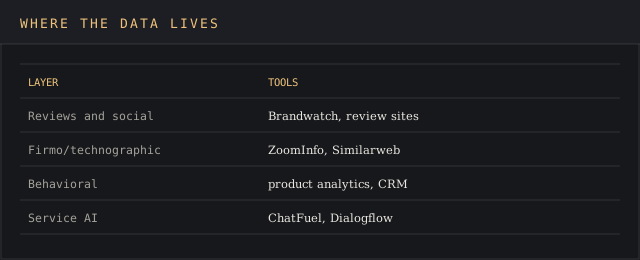
Ask through surveys and interviews; observe through analytics; buy firmographic and intent feeds from the platforms in our market intelligence tools ranking, ZoomInfo for company data especially; and listen through reviews and social analytics, where Brandwatch reads sentiment at scale, the customer intelligence Brandwatch built its consumer research business on.
Consumers meet the collection halfway when the trade is honest: 83% of consumers share data for personalized experiences with transparency about the use, which makes transparency a data strategy.
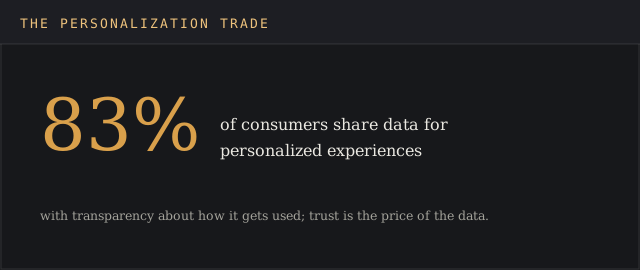
Consent frames all of it: collect what the relationship justifies, store it where regulation allows, and delete what the fields no longer need. The transparency that earns the 83% works both directions, and a privacy note in the profile footer costs nothing while the fine for skipping one is a budget line.
Real-time data earns its cost at the decision layer: real-time data helps businesses act quickly and stay ahead, and a signal that arrives a quarter late is trivia. The customer intelligence guide covers the discipline; this template is its working end.
Scoring Accounts: Fit Times Intent
The XLSX turns the four layers into a queue: score each account 1-5 on firmographic fit, technographic fit, behavioral signals, and intent, and the priority column averages them live.
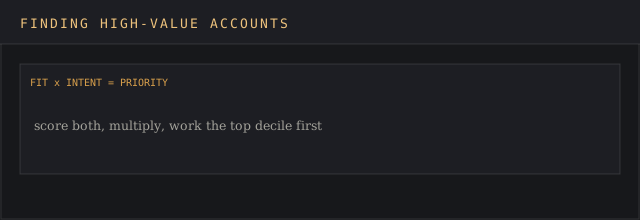
Customer intelligence helps identify high-value accounts for better ROI, and customer intelligence analytics answers which accounts to target this quarter.
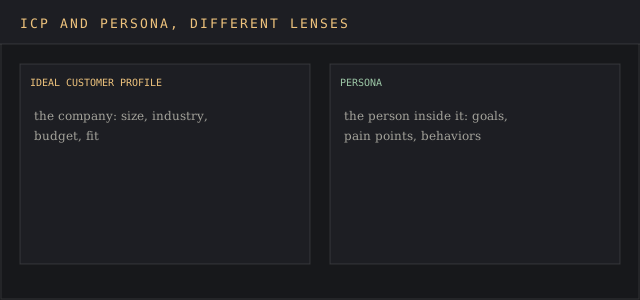
High value shows up as agreement between layers: strong fit, live intent, and rising usage in the same row; decision makers at those accounts get the next call, and the ideal customer profile gets updated from what the winners share.
Sales teams work the queue top-down, marketing teams build segments from the score bands, and GTM teams reconcile the two in one sheet, cutting three meetings to one; lead generation stops being alphabetical.
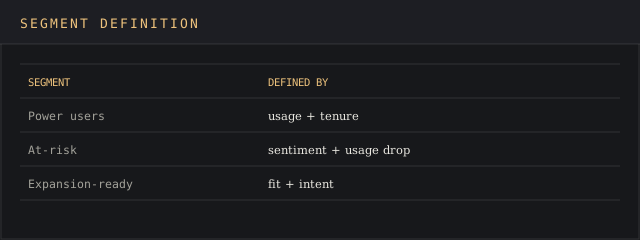
Segment definition helps identify distinct customer personas or segments from the same scores: power users, at-risk accounts, and expansion-ready customers each get a band and a play. The user persona template turns the recurring segments into named characters.
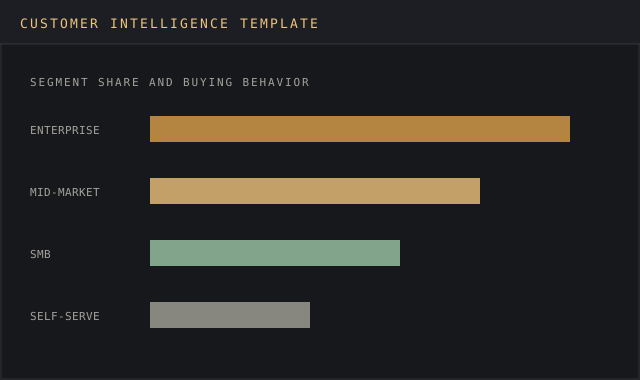
A customer segmentation template scores those same accounts by RFM and plots them by size against revenue.Patterns Across the Customer Journey
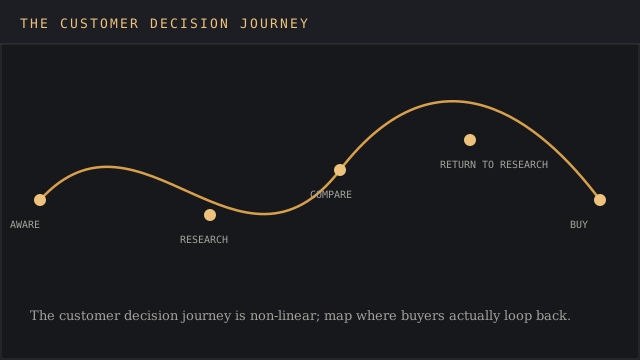
Templates help identify patterns across the full customer lifecycle, and mapping that path shows the route from initial awareness to retention: which touches move customers forward, and where the path leaks.
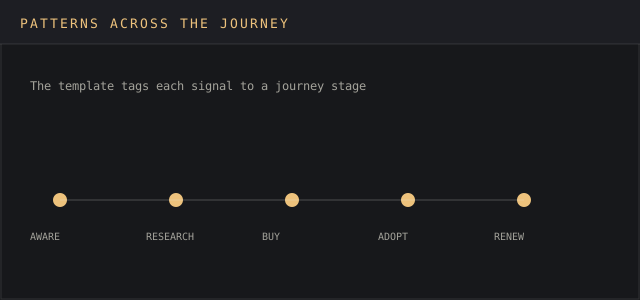
The template tags each signal to a lifecycle stage, so patterns surface per stage: pricing page visits cluster before purchase, support sentiment moves before renewal, and a structured template helps in recognizing patterns for personalized experiences at each step.
Churn is the highest-stakes pattern in that lifecycle: customer intelligence assists in identifying signs that customers may leave, and AI-driven customer intelligence can predict churn before it occurs by reading the same signals faster.
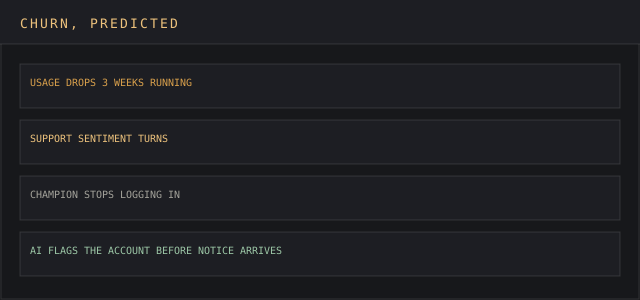
Customer success owns that column: a churn flag with a named owner and a next step is retention work; a churn flag in an unread dashboard is a eulogy, and the next step field exists so the flag never lacks one.
Strategic Pricing From Customer Intelligence
Pricing is where customer intelligence pays most directly: strategic pricing can improve revenue based on customer intelligence, and strategical pricing debates end faster when the customer data sits in the room.
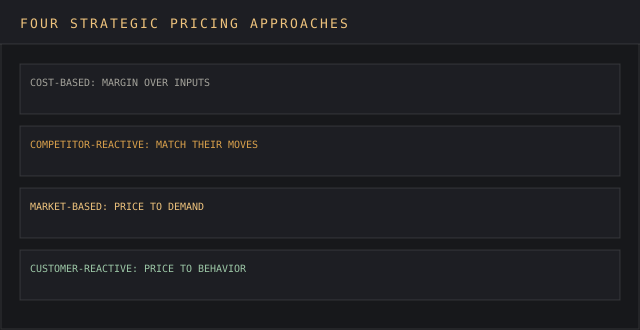
Cost-Based Pricing is one of four strategic pricing approaches: margin over inputs, simple and blind to demand. Competitor-Reactive Pricing adjusts based on competitor actions, which outsources your strategical pricing to rivals.
Market-Based Pricing aligns prices with market demand and trends, and Customer-Reactive Pricing responds to customer feedback and behavior: the two approaches that consume the template's data, and the reason strategical pricing belongs downstream of customer intelligence.
The practical read: price against what high-value customers do, sanity-check against the market trends, and let cost set the floor. Our pricing intelligence rankings cover the tools on the competitor side.
AI in Customer Intelligence
Artificial intelligence moved customer intelligence from descriptive to predictive: AI improves customer intelligence by providing predictive insights, churn and expansion called before they happen.
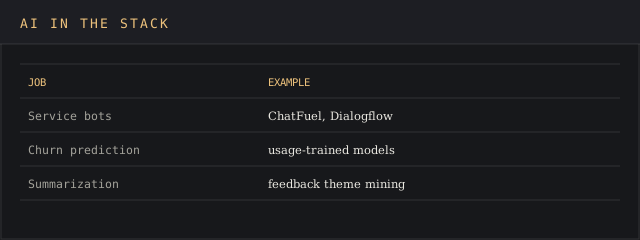
The service layer of artificial intelligence came first: AI tools like ChatFuel and Dialogflow improve customer service efficiency, answering routine customers so people handle the exceptional, and marketing automation runs the same pattern on campaigns.
The analysis layer matters more for this template: artificial intelligence reads feedback at volumes no team can, sentiment analysis turns reviews into trend lines, and AI powered scoring keeps the account sheet current without a weekly manual pass.
Artificial intelligence still needs the structure this template provides: AI tools trained on organized customer intelligence data outperform the same artificial intelligence pointed at a data swamp, and the critical insights survive audit because the source fields are named. Our AI market intelligence guide covers the boundary between AI speed and human judgment.
Customer Intelligence for Marketing
Marketing consumes more customer intelligence than any other function, because marketing decisions are bets on what customers will do next.
From Segments to Campaigns
Score bands become audiences: high-fit customers get the expansion campaign, at-risk customers get the retention sequence, and new customers get onboarding content, three marketing motions from one sheet, and the marketing calendar stops guessing.
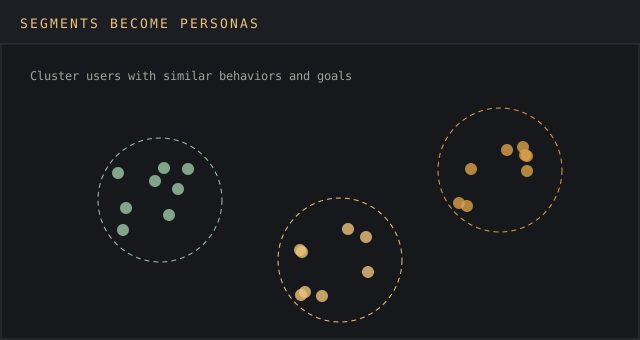
Marketing teams that build campaigns per segment stop paying to interrupt the wrong customers, the audience data explains why each message exists, and marketing reviews argue from insights the data backs up.
Personalization Customers Accept
Personalized experiences work because customers asked for them: the 83% who share data expect the marketing to reflect it, and generic messages to well-profiled customers read as neglect; the insights sit unused while the audience wonders why it shared anything.
The customer experience improves when personalization stays useful: recommendations customers recognize themselves in, renewal reminders timed to usage, and offers matched to the services customers already lean on.
Measuring the Marketing Loop
Performance metrics close the loop: campaigns tagged by segment show which customers responded, conversion rates per band grade the scoring itself, and marketing spend follows the evidence; the insights per campaign accumulate into marketing's own intelligence layer.
One example makes it concrete: a SaaS company that split onboarding emails by customer segment saw its power-user segment activate faster while at-risk customers surfaced sooner, one template feeding both wins.
Customer Intelligence for Sales and Service
Sales works the queue and service works the flags, and both teams read the same customers; marketing already met them upstream, so the story stays continuous.
Sales
Sales teams open with the pain the data names: customers whose behavior shows live intent get called this week, and the customer insight opens the sales conversation.
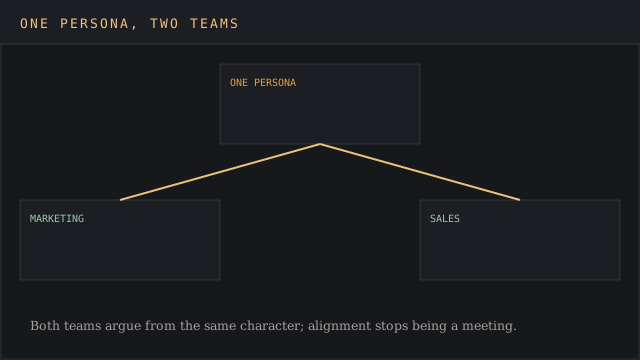
Each customer insight travels: a note logged by sales enriches the profile marketing reads, and the next team inherits context, carrying the relationship forward.
Service and Success
Services teams see customers at their most honest: support tickets carry the friction, and success calls carry the goals. Both belong in the template, because services data predicts renewal better than any survey.
Customer success turns the churn flags into saves, and the services layer feeds the loop back: every resolved issue is a customer insight about what nearly broke.
Competitive and Customer Intelligence Together
Competitive and customer intelligence run best as one motion: competitors explain the market your customers choose within, and customers explain which competitors threaten you.
What Competitors Reveal About Customers
Competitors' reviews are customer intelligence about the customers you lost: read what their customers praise and complain about, and the competitive intelligence doubles as a preview of switchers' expectations.
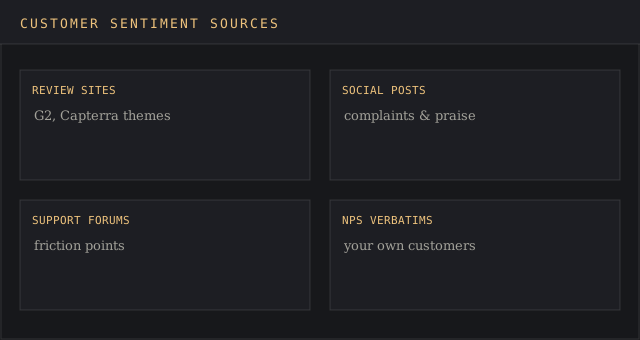
Track which competitors your customers evaluated before choosing you, and which competitors current customers mention at renewal; the competitive threat ranked by customers beats the one ranked by feature counts.
Where the Two Templates Meet
The competitive intelligence side lives in the competitor grid, the customer side in this template, and win-loss findings feed both: the win-loss analysis template is the junction where competitors and customers explain each other.
A CI program that runs both templates answers the whole question: which customers to win, from which competitors, with which message; competitive intelligence alone answers a third of it.
Working With Customer Intelligence Data
Customer intelligence data is only as good as the data collection behind it, so the working habits matter as much as the template.
Collection Habits
Data collection runs on a continuous cadence: customer analytics feeds arrive weekly, surveys quarterly, and intent feeds daily, each into its own field so the layers stay comparable.
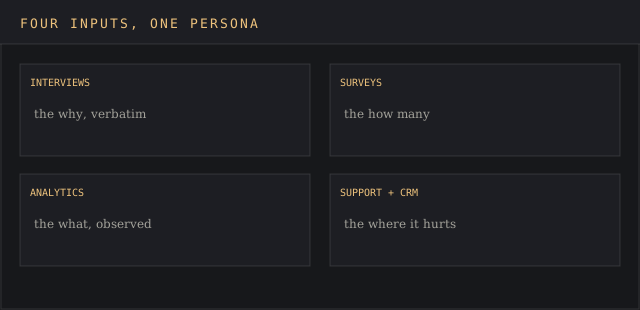
Multiple sources beat one big one: customer intelligence data cross-checked across multiple sources catches the errors single feeds hide, and customer behavior confirmed twice is worth acting on.
Hygiene
Date every field, name every source, and archive what goes stale; customer analytics built on last year's customers produce last year's strategy.
Internal operations set the ceiling: the cleanest data collection fails if profiles live in five tools, so the template's job is being the one place the customer intelligence data agrees with itself.
From Data to Decisions
Valuable insights come from reading the layers together: market insights explain the demand backdrop, trend tracking flags the shifts, and the customer rows say who moves first.
Strategic decisions inherit the quality of that reading: identify the pattern, name the evidence, assign the next step, and the customer intelligence data has done its job.
Examples in Practice
Three compressed examples show the template earning its keep across company sizes, with the marketing and revenue outcomes attached.
A 30-person B2B company scored 50 customers on fit and intent: the top ten included three customers sales had never called, and two closed within the quarter; companies this size get the fastest wins because the queue was previously alphabetical.
A mid-market retailer combined purchase frequency with sentiment: customers with rising order values but falling satisfaction got a save play before churn, and the example turned into a standing playbook.
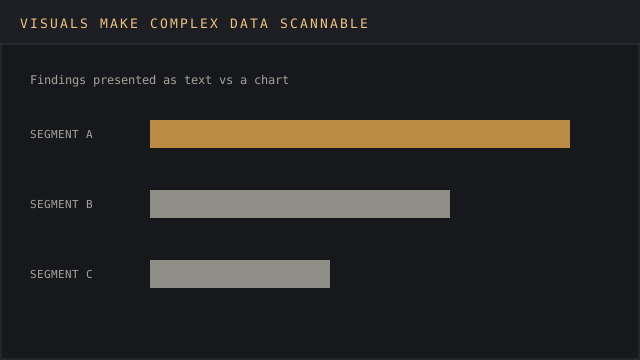
An enterprise software company pointed artificial intelligence at five years of support tickets: the model surfaced a churn signature humans had missed, and artificial intelligence now scores every account weekly while analysts read the exceptions; companies at this scale buy the automation and keep the judgment.
Different companies, same loop: collect, score, act, measure, and every example started with one template and ten customers.
Customer Intelligence and Its Neighbors
Three disciplines share the same office and get confused for each other, so the template stays honest about which is which.
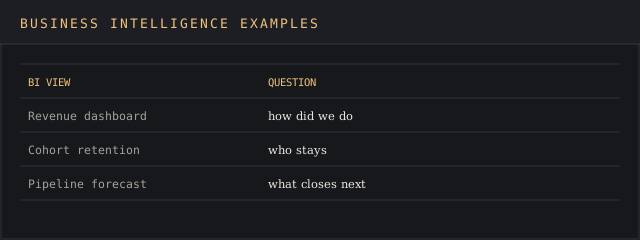
Business intelligence looks inward: what are some examples of business intelligence? Revenue dashboards, cohort retention, and pipeline forecasts, your own operations measured.
Competitive intelligence looks sideways at rivals, and competitive and customer intelligence meet constantly: win-loss findings feed both, and a CI program that tracks competitors without tracking customers is built for the wrong audience. The competitive analysis template holds the competitive intelligence side.
Customer intelligence looks at buyers, the wider discipline wraps all three, and the market intelligence vs business intelligence guide draws the full map; enterprise teams usually run competitive and customer intelligence as one motion with two templates.
Building the Customer Intelligence Report
Customer intelligence reports analyze customer behavior and preferences for the people who missed the data: leadership, adjacent teams, and next quarter's planning.
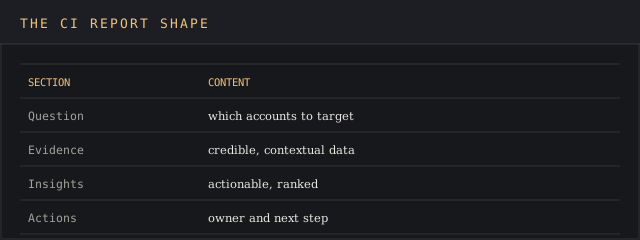
Effective reports require credible, contextual data for insights: every number sourced, every trend dated, every anomaly explained by a context note; reports should highlight actionable insights and strategic recommendations, and leadership reads the actionable insights first.
A working shape: one question, the evidence, the key insights ranked, and the follow up actions with owners. How to create a competitive intelligence report? The same shape pointed sideways: rival moves as evidence, response options as actions; funding rounds and expert interviews feed the competitive version where public data thins.
Measure impact per report cycle: which recommendations shipped, which moved conversion rates or retention, and which insights died in the deck. Reports that change decisions earn their next edition; marketing work that cites the report's segments converts better, and ad spend follows the accounts the scores rank, from search campaigns to Google Ads audiences.
Choosing Customer Intelligence Tools
The template runs fine on spreadsheets; tools earn their fees when the customers number in the thousands and the manual process breaks.
What the Tools Do
Customer intelligence tools automate the four layers: enrichment tools fill firmographics, analytics tools stream behavior, intent tools watch research signals, and listening tools read what customers say in public.
AI tools sit on top: artificial intelligence summarizes the feedback, scores the customers, and flags the exceptions, and the best tools show their evidence so the insights survive challenge.
Picking From the Field
Match tools to the layer that hurts: teams starving for company data buy enrichment, teams drowning in feedback buy analysis, and teams guessing at timing buy intent; buying all the tools at once buys a stack nobody runs.
Our buyer feedback intelligence rankings cover the listening side, and the tools reviews name prices where vendors publish them; free tiers cover more customers than most teams expect.
Making the Stack Serve the Template
Whatever tools win, the template stays the meeting point: tools feed fields, the process reads them, and the marketing, sales, and services teams consume one agreed picture of the customers, replacing the five tool-shaped ones each function used to keep.
Tools change; the fields barely do. A business that switches platforms keeps its customer intelligence when the template holds the structure and the tools do not.
A 30-Day Rollout
The process fits in a month, and the first loop teaches more than any planning cycle.
Week one: create the account sheet, score ten customers, and identify the three fields your systems can fill automatically; the process starts small on purpose.
Week two: create one profile per key segment, and interview two customers per segment; the qualitative layer arrives fastest through conversations, and each conversation yields a customer insight the fields alone missed.
Week three: read the patterns. Identify the highest-priority customers, note which competitors appear in their evaluations, and draft the first report for the audience that funds the work.
Week four: act once and measure. Marketing sends one segment-matched campaign, sales calls the top five customers, services checks on the flagged ones, and one pricing hypothesis, market based pricing against the demand the data shows, gets a small test.
Then review: what did the customers do, which insights held, and what does the process need next month? The example set by a working first loop recruits the rest of the business faster than any mandate, and the customer experience improvements make the case in the customers' own renewals; competitors running on averages will wonder what changed.
Running It as a Practice
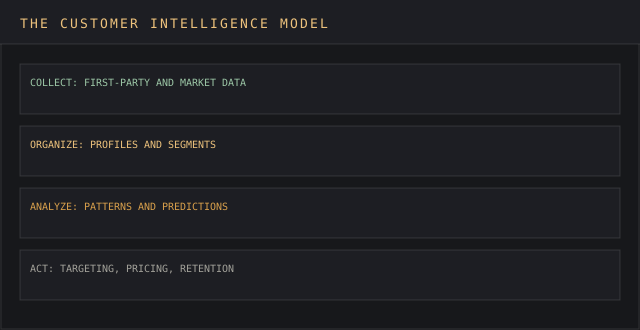
The customer intelligence model runs as a loop: collect from first party data and market sources, organize into the template, analyze for patterns, act, and measure.
Small signals compound in the loop: a support theme plus a usage dip plus a champion gone quiet is a churn story no single system tells; the template is where the small signals meet.
Many teams start with customer orientation as a value and no system behind it; the template is the system, and the next step is always the same: ten customers scored, one profile drafted, one report shipped to marketing and leadership.
Enterprise teams scale the same loop with platforms and social analytics feeds; the technology changes, the customer orientation and the process do not, and businesses that keep the loop running stay ahead of the churn they used to autopsy.
Customer Intelligence Across the Lifecycle
Customers change jobs across their own lifecycle, and the intelligence changes with them: prospects, new customers, established customers, and renewing customers each answer different questions.
Prospects supply intent and fit; the marketing question is if to spend the next campaign on them, and the insights come from behavior before any relationship exists. Treat prospect rows lightly: thin fields, wide error bars, and no personalization beyond what public signals justify.
New customers supply onboarding signals: which customers activate, where customers stall, and what the services team hears in the first month; marketing hands the audience to success here, and the handoff quality shows in the ninety-day numbers.
Established customers carry the richest data: usage patterns, expansion signals, and the referrals that create new pipeline; these customers also name competitors most credibly, because these customers just re-evaluated the market and stayed.
Renewing customers close the loop: the renewal conversation confirms or corrects everything the fields predicted, and customers who renew against cheaper competitors tell you what the price buys.
Marketing to each stage differently is the payoff: one audience becomes four, the insights per stage sharpen the messages, and the services calendar aligns with where customers are. Insights that travel the lifecycle create compounding value; insights trapped in one stage create dashboards.
Competitors run the same lifecycle on the same customers from the other side, which is the final argument for the habit: the marketing and services moves you skip are the openings competitors get, and customers notice who knew them better.
FAQ
What is the customer intelligence model?
Collect, organize, analyze, act: customer data gathered from first-party and market sources, structured into profiles and scores, mined for patterns, and turned into targeting, pricing, and retention decisions, then measured.
What are the best methods for collecting customer intelligence?
Ask (surveys, interviews), observe (product analytics, website behavior), buy (firmographic and intent feeds), and listen (reviews, social analytics); first-party sources come first because they are free and truthful.
How to create a competitive intelligence report?
One question, sourced evidence on rivals' moves, ranked insights, and response actions with owners; the same report shape as the customer version, pointed at the competition, refreshed on a fixed cycle.
What are some examples of business intelligence?
Revenue dashboards, cohort retention curves, sales pipeline forecasts, and operational KPIs: your own company's data analyzed for internal decisions, the inward-facing sibling of customer intelligence.
Bottom Line
Customer intelligence is the difference between marketing to an average and serving actual customers: the template collects the layers, the sheet ranks the accounts, and the report moves the decisions.
Download both files, score ten customers this week, and run one loop end to end before buying anything; the 26% opportunity lift belongs to businesses that made customer data a habit, and the habit starts smaller than most teams expect.