Vendor Evaluation Scorecard
 By Jan Suski. I go deep on every review, checking every number against its source and digging up details other coverage misses, a habit from six years of SEO and link building for tech companies. Bylines at Surfer, Brand24, and Senuto. How the scoring works.
· Prefer this source on Google
This vendor evaluation scorecard turns supplier management from anecdotes into numbers: weighted KPIs, quarterly scores, and a trend line per supplier.
A vendor scorecard measures supplier performance against defined KPIs, and vendor scorecards standardize supplier performance evaluations across organizations, so two buyers stop grading the same supplier on different curves.
Many buyers apply these same weighted criteria earlier too, scoring finalists during vendor selection in a bid comparison template before performance tracking even starts; our RFP response template covers the request side of that same evaluation.
The scorecard template is part of our market intelligence templates library, and it downloads free with live formulas.
Download the Scorecard Template
Download the vendor scorecard template (XLSX)Weighted KPIs with a computed total, plus a supplier profile sheet for renewals, owners, and score history.
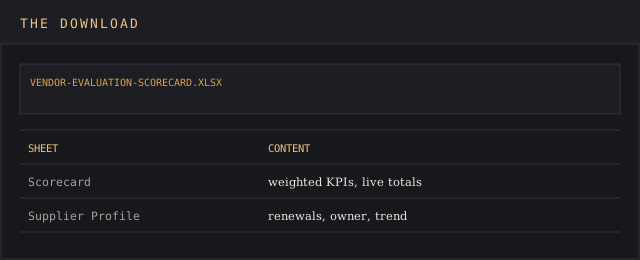
The scorecard template ships pre-weighted with the standard bands and an example supplier scored; duplicate one copy of the scorecard template per vendor, and the workbook becomes the vendor management system's memory.
Everything is editable: weights, KPIs, and bands all bend to your business priorities, and the totals recalculate as you type. The example row shows the expected format, so the first real supplier takes five minutes to score.
What Is a Vendor Scorecard?
A vendor scorecard is a structured tool for evaluating vendors on the same key dimensions every review period: quality, delivery, cost, compliance, and collaboration.
A supplier scorecard provides continuous visibility into supplier performance trends, which is the difference between managing suppliers and merely paying them.
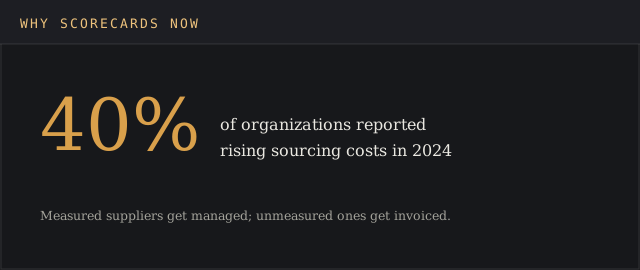
The timing argument is cost: 40% of organizations reported rising sourcing costs in 2024, and a procurement team that cannot show supplier performance data in writing negotiates renewals on memory.
The risk argument is quieter: a structured scorecard mitigates supply chain risks by providing early warnings, because supplier trends bend before they break.
The Five Evaluation Criteria
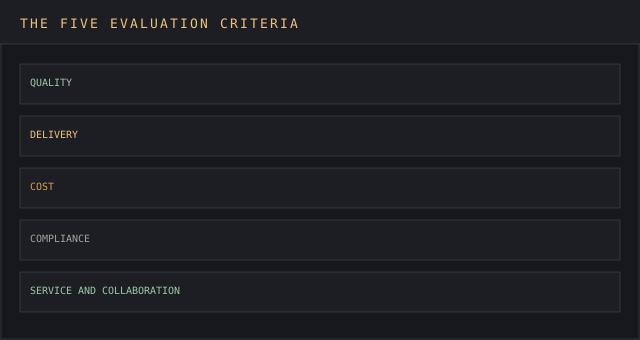
The five key supplier evaluation criteria repeat across industries: quality, delivery, cost, compliance, and service, and the scorecard template dedicates a weighted row to each.
Quality
Common quality metrics include defect rates and adherence to technical specifications; product quality metrics should account for 25-30% of the scorecard weight, and quality control data feeds the row directly.
Delivery
Delivery metrics assess on-time delivery percentages and order accuracy, with delivery performance weighing 20-25% in evaluations. An on time delivery rate at 95%+ rates as green; delivery timeliness below that starts the conversation.
Cost
Cost metrics assess overall value beyond initial purchase price: total cost of ownership, invoice accuracy, and price competitiveness together, since a cheap unit price with expensive exceptions is not cost effectiveness, and cost competitiveness only counts when the total cost stays honest.
Compliance
Compliance metrics track adherence to safety regulations and required certifications, plus the service level agreement itself; regulatory compliance failures carry the kind of tail risk that justifies the row's weight on any supplier performance scorecard.
Service and Collaboration
The softest row still gets scored: responsiveness, escalation behavior, and if the supplier engages with scorecard results or argues with them.
Weighted Scoring, Explained
Weighted scoring assigns higher percentages to metrics of greater importance: score each KPI 1-5, multiply by its weight, and sum. Common KPIs include quality, delivery timeliness, and cost competitiveness, and the weights encode your business objectives.
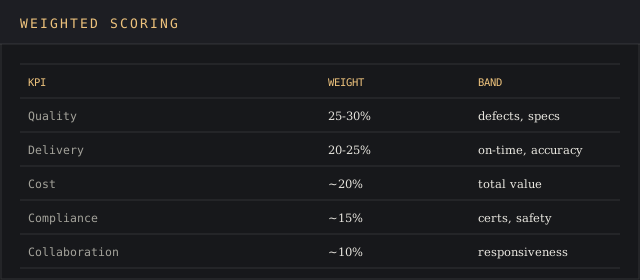
Direct materials suppliers usually earn heavier quality weights; services vendors shift weight toward responsiveness and the SLA. The vendor scorecard reflects what the relationship is for, which is why a single universal weighting is a smell.
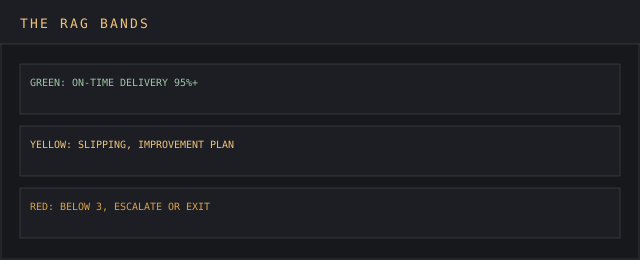
Bands make the scores legible at a glance: green for 4 and above, yellow where an improvement plan applies, red below 3, where escalation or exit planning starts. A balanced scorecard reads in ten seconds and argues for itself.
Vendor Scorecard or Supplier Scorecard?
The names split by department, the instrument does not: procurement says supplier scorecard, IT and finance say vendor scorecard, and both mean the same weighted grid.
What matters is consistency: one supplier scorecard format across the whole company means vendor performance in logistics is comparable with vendor performance in packaging.
The supplier scorecard also survives arguments better than intuition, because every vendor scorecard entry names its evidence.
Whichever word your organization uses, the supplier performance scorecard should live in one shared place; a scorecard nobody can find measures nothing.
A Worked Example
Take a packaging supplier: quality scores 4 (0.4% defect rate), delivery 5 (97% on-time), cost 3 (4% above market), compliance 4, collaboration 4.
Weighted, the composite score lands at 4.05: green overall, with cost flagged yellow and a note to test the market before renewal.
The composite score is the headline, and the rows are the conversation; vendor performance improves when the supplier sees exactly which row moved.
Run the same math next quarter and supplier performance becomes a trend line. The scorecard starts predicting where next quarter's score lands.
Reading the Results
Scores mean nothing until someone reads them the same way twice, so agree the reading rules up front.
Measure performance against the bands: performance data compared with defined thresholds produces actionable insights, while performance data compared with feelings produces meetings.
Watch three reads. A high composite score with one red row is a targeted fix; a slow slide across rows is a relationship problem; and a supplier whose supplier performance jumps after every review then decays is managing the scorecard. The underlying work never moves.
Informed decisions come from the third read especially: supplier performance that only improves under observation tells the procurement team what unsupervised quarters look like.
How to Make a Vendor Scorecard
Define objectives before selecting metrics for the scorecard; supplier management fails most often at this step, when a procurement team measures whatever the ERP already tracks and the metric that predicts vendor risk never makes the sheet.
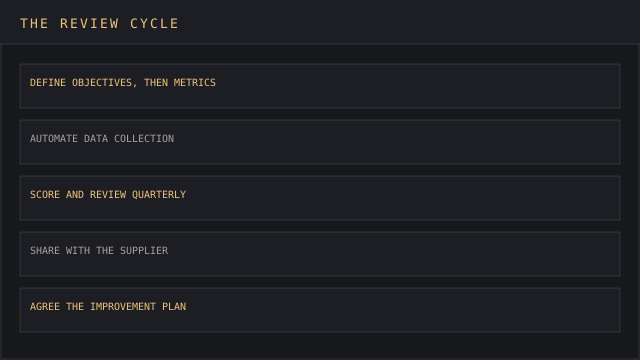
Pick key metrics per criterion next, then automate data collection where systems allow: ERP delivery logs, invoice accuracy from AP, defect rates from quality control. Process intelligence software can read those ERP logs directly. Automated feeds give the vendor scorecard real-time visibility. The manual alternative ran on quarter-old memory.
Score on a schedule. Scorecards should be reviewed regularly to track performance trends, and regularly scheduled evaluations improve supplier management and compliance tracking; quarterly fits most supplier relationships, monthly fits strategic suppliers.
Then share it. Engage suppliers in the scorecard process to encourage collaboration: a supplier scorecard shown to the supplier changes behavior, one kept private changes nothing, and involving finance, quality, and operations leads on your own side keeps the weights honest.
Close each review with an improvement plan for every yellow and red row: named actions, owners, dates. That loop is what turns measurement into driving continuous improvement.
What the Scorecard Changes
Vendor scorecards shift supplier engagement from reactive to proactive: the procurement team watches performance trends bend and acts before a failure forces an escalation.
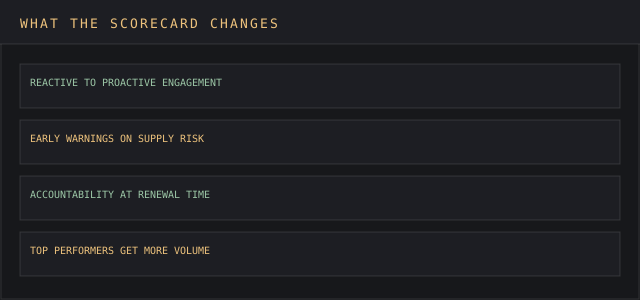
Scorecards help identify inefficiencies early in supplier performance, identify top-performing suppliers who deserve more volume, and address underperformance with a documented score; a well-designed scorecard improves supplier accountability and collaboration at the same time.
Standardized scorecards improve decision-making in supplier management too: contract renewals stop being memory contests, and informed decisions replace loudest-voice decisions. Embedding scorecards into procurement workflows puts supplier accountability on the calendar every quarter.
The supply chain payoff compounds: continuous visibility into supplier performance means performance gaps surface as warnings, which is risk management and risk mitigation in one habit; effective supplier management is mostly this loop, repeated. Our procurement and supply chain pages cover the tools that automate workflows around it.
Rolling It Out Across the Supplier Base
Start with the vendors of greatest strategic importance; ten suppliers scored well beat a hundred scored once.
Ad hoc reviews are the habit being replaced: evaluating vendors only when something breaks guarantees the evaluation happens angry.
Review vendor scorecards on the calendar instead, and the supply chain management rhythm changes: the procurement team walks into every quarterly business review holding supplier data the supplier has already seen.
Tie the weights to business objectives and business goals explicitly: if the year's priority is resilience, compliance and delivery gain weight; if it is margin, cost and overall cost effectiveness gain instead.
Product quality disputes get easier too, because the supplier performance scorecard timestamps when defects rose and what the improvement plan promised.
The endgame is a supply chain where continuous improvement is contractual: scorecard results feed renewals, volumes shift toward green suppliers, and supply chain risks get priced while they are still cheap.
Scoring the Vendors Who Sell You Data
One reflexive use: point the scorecard at your own software vendors. Our methodology already scores market intelligence platforms on four weighted pillars, and the same vendor evaluation logic applies to any subscription in the stack; the market intelligence tools ranking shows what the filled-in version looks like at publication scale.
Supplier profiles in the second sheet hold the rest: renewal dates, owners, and score history, so vendor management survives staff turnover, and every supplier's data stays where the next reviewer can find it. Potential risks get a note the quarter they appear, well ahead of the quarter they bite; that early-warning habit is what encourages suppliers to raise problems before you find them.
Keeping the Habit Alive
The first quarter of a supplier scorecard program is easy; the fourth is where the supplier scorecard habit usually dies, so make the reviews small and the calendar sacred.
Rotate attention: strategic suppliers get the full supplier scorecard every quarter, and the supplier scorecard for the long tail stays light: an annual pass, with new vendors scored at 90 days while onboarding is fresh.
Keep the history visible. A scorecard with four quarters of trend answers questions a single snapshot cannot: if the promised fixes worked, if the dip was seasonal, and if the relationship is aging well. The trend also tells procurement which suppliers deserve longer contracts, and which deserve a second source waiting warm.
And resist metric creep: five weighted rows reviewed every quarter beat fifteen reviewed once, the same lesson every measurement habit teaches. When a new metric earns a place, an old one gives its seat up.
FAQ
What is a vendor scorecard?
A structured tool that scores vendor performance against defined key performance indicators, quality, delivery, cost, compliance, and service, on a fixed schedule, producing comparable numbers per supplier per quarter.
How to make a vendor scorecard?
Define objectives, choose KPIs per criterion, set weights that sum to 100%, automate data collection where possible, score quarterly, share results with the supplier, and attach an improvement plan to every weak row. The free scorecard template above arrives with the structure built.
What are the 5 key supplier evaluation criteria?
Quality, delivery, cost, compliance, and service. Weight them to your business priorities: quality typically 25-30%, delivery 20-25%, with the remainder split by what the relationship is for.
What are the criteria for vendor evaluation?
The five above, measured through concrete key performance indicators: defect rates, on time delivery percentage, order accuracy, total cost of ownership, invoice accuracy, certifications, and responsiveness; strategic alignment with your roadmap earns a bonus row for strategic suppliers.
Bottom Line
A vendor scorecard replaces the renewal-time argument with a year of evidence: which suppliers performed, where vendor performance slipped, and what the improvement plan already achieved.
Download the scorecard template, weight it to your supply chain management realities, and put the first review on the calendar; cost savings follow measurement more reliably than they follow negotiation, and measure supplier performance for two quarters and the negotiation writes itself. Track supplier performance long enough and the scorecard becomes the supplier relationships' shared language.