FactSet review: financial data, pricing and the Bloomberg comparison
 By Jan Suski. I go deep on every review, checking every number against its source and digging up details other coverage misses, a habit from six years of SEO and link building for tech companies. Bylines at Surfer, Brand24, and Senuto. How the scoring works.
· Prefer this source on Google
Best for
Investment banks, asset managers and research teams that need equity, fixed income and portfolio analytics together on one screen.
Not for
Teams that need a self-serve trial or a published per-seat price; every evaluation runs through a sales-led scoped demonstration instead.
What it costs
Entry starts at $12,000 a year, but real seats run $14,000 to $22,000 depending on modules and data feeds, all negotiated.
- Data sources
- Over 800 sources, pulled from over 317 independent providers
- Delivery
- The Workstation, over 300 data feeds and products, and a Microsoft Excel add in
- Workstation
- Company data, market data and news on one screen, no reconciling three vendors first
- Historical depth
- Extensive history, which is what the long-run equity comparisons run on
- Screening
- One engine across equity securities, fixed income and commodities
- Customization
- Layouts tailored per role; the same flexibility that lengthens onboarding
- Portfolio analytics
- Performance attribution across a mixed equity and fixed income book in one place
- Risk tools
- Risk modeling and scenario analysis for testing a position before taking it
- Reporting
- Holdings, exposure and attribution reports on a schedule, with change tracking between dates
- Excel add in
- Live data into a model the analyst already built, skipping a rebuild in a terminal
- Research management
- Proprietary notes searchable next to vendor content
- AI tools
- AI-assisted research aimed at summarizing and retrieval
- Learning curve
- Complex and steep, the most consistent complaint about the platform
- Company
- Founded 1978, based in Connecticut, listed on the NYSE as FDS
- Scale
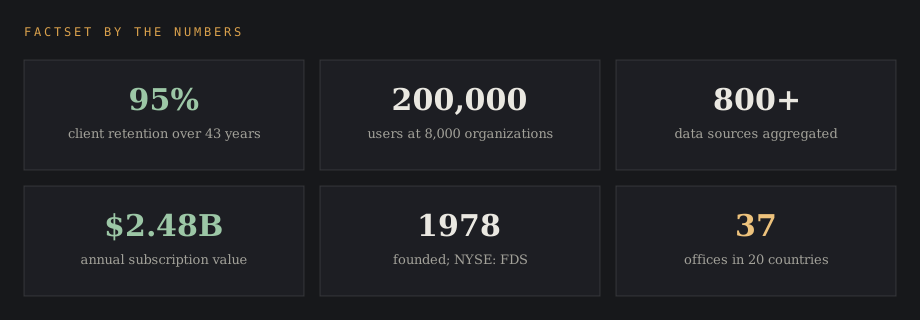
- 37 offices in 20 countries, over 200,000 users across 8,000 organizations
- Client retention
- 95% over 43 years
- Leadership
- Sanoke Viswanathan, chief executive since 8 September 2025, from JPMorgan
- Technology headcount
- Roughly 10% being cut alongside the AI push
- Entry floor
- $12,000 per year
- Realistic per seat
- $14,000 to $22,000 per seat per year, per aggregated buyer data
- Pricing model
- Modular; it scales with seats, data feeds and modules
- Rate card
- None self-serve; what a firm spends comes out of a negotiation
- Free trial
- None; evaluations run through sales as a scoped demonstration
- Bloomberg at list
- Roughly $31,980 a year per seat, the benchmark buyers compare against
- Bloomberg negotiated
- $18,000 to $24,000 per seat at large banks, which narrows the gap
Which cost figures come from buyer data, and which from FactSet's own disclosures
The $12,000 floor and the $14,000 to $22,000 per-seat range come from aggregated buyer data, because FactSet publishes no rate card. Annual Subscription Value, the fiscal 2026 revenue guidance and the technology headcount reduction come from the company's public disclosures as an NYSE-listed business.
The 95% retention figure, the 200,000-user count and the 800-source count are FactSet's own claims. Bloomberg's list and negotiated seat prices come from reported figures, so the saving is an estimate.
FactSet is a financial data and analytics platform, founded in 1978 and located in Connecticut. It runs 37 offices in 20 countries and serves over 200,000 users across 8,000 organizations, and it is a public company trading on the New York Stock Exchange as FDS.
This FactSet review covers what the platform does, what it costs, who runs it, and where users say it hurts.
One number frames the rest. In enterprise finance software, retention that high is the number worth trusting. Firms that buy it keep renewing it.
What FactSet does with financial data
FactSet aggregates financial data and wraps analysis tools around it. The platform provides access to over 800 data sources and pulls from over 317 independent providers, then resells that combined data through the FactSet Workstation, over 300 data feeds and products, and a Microsoft Excel add in.
It primarily serves investment professionals. Equity research teams are the heaviest users, alongside asset managers, hedge funds, and the advisors who build and monitor clients portfolios.
If your job is financial analysis that ends in a recommendation, you're in the target market. If you need a quote and a chart twice a week, you aren't. Tools built for that job are a dime a dozen, and FactSet's depth would go to waste.
↑ FACT SHEETThe FactSet Workstation
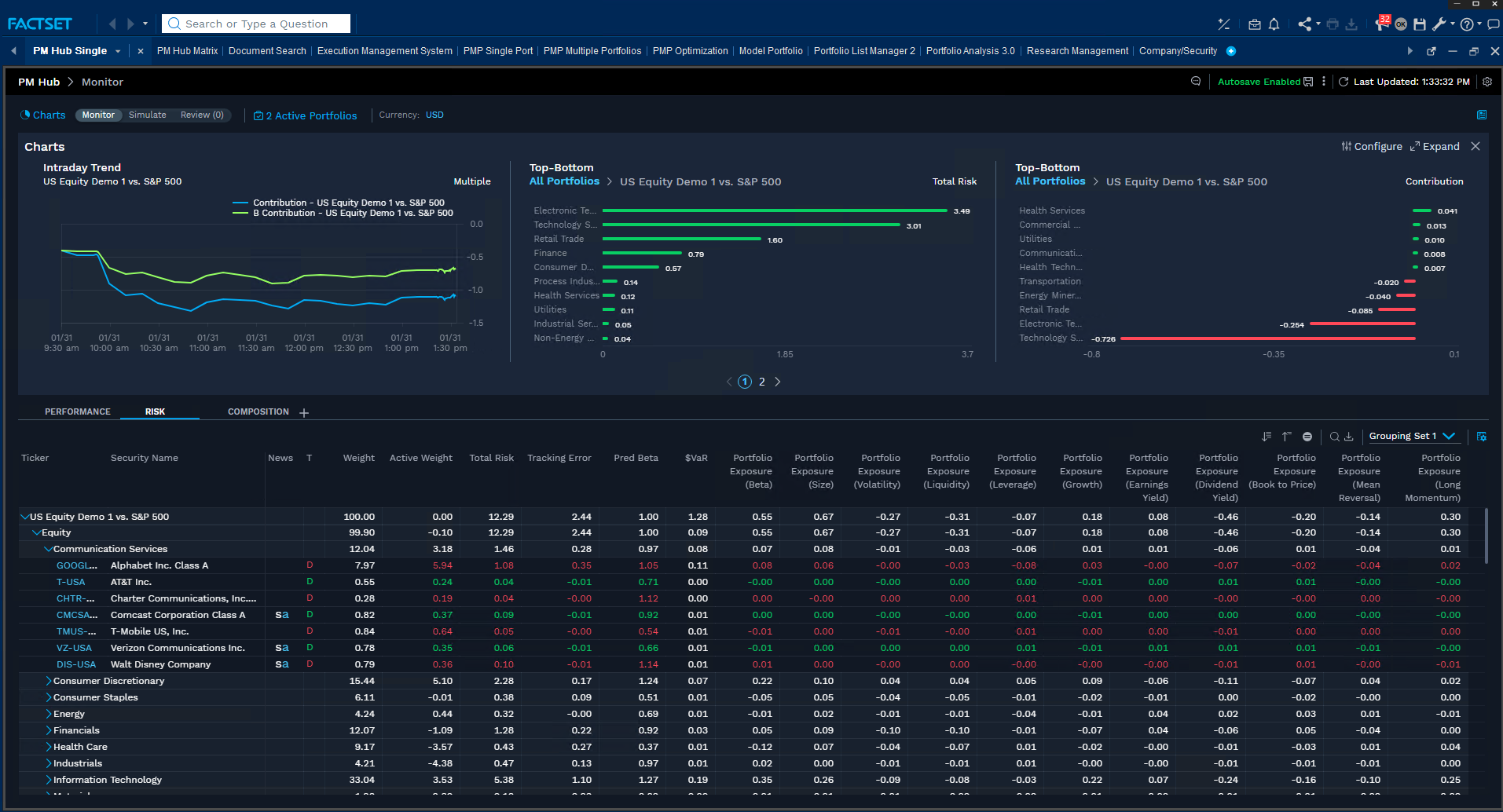
The FactSet Workstation is the desk product, the window most users spend their day inside. It pulls company data, market data, and news into a single platform so an analyst doesn't reconcile three vendors before starting the work.
One screen carries all the essential information a research call needs, so the analyst spends the hour on the argument.
Coverage runs deep on history. FactSet provides extensive historical financial data, which makes the FactSet Workstation useful for the long-run comparisons equity research runs on.
Screening sits on top of it. Users appreciate FactSet's equity screening, and the same engine reaches across equity securities, fixed income, and commodities. An analyst can screen the full universe of equities or drill to a single security.
The interface design is flexible and customizable. Customization in the FactSet Workstation allows workflows to be tailored to roles, so a portfolio manager's layout doesn't have to match a credit analyst's. The Workstation is something of a jack of all trades that way. That flexibility is also part of why the platform is hard to learn.
Portfolio analysis and reporting
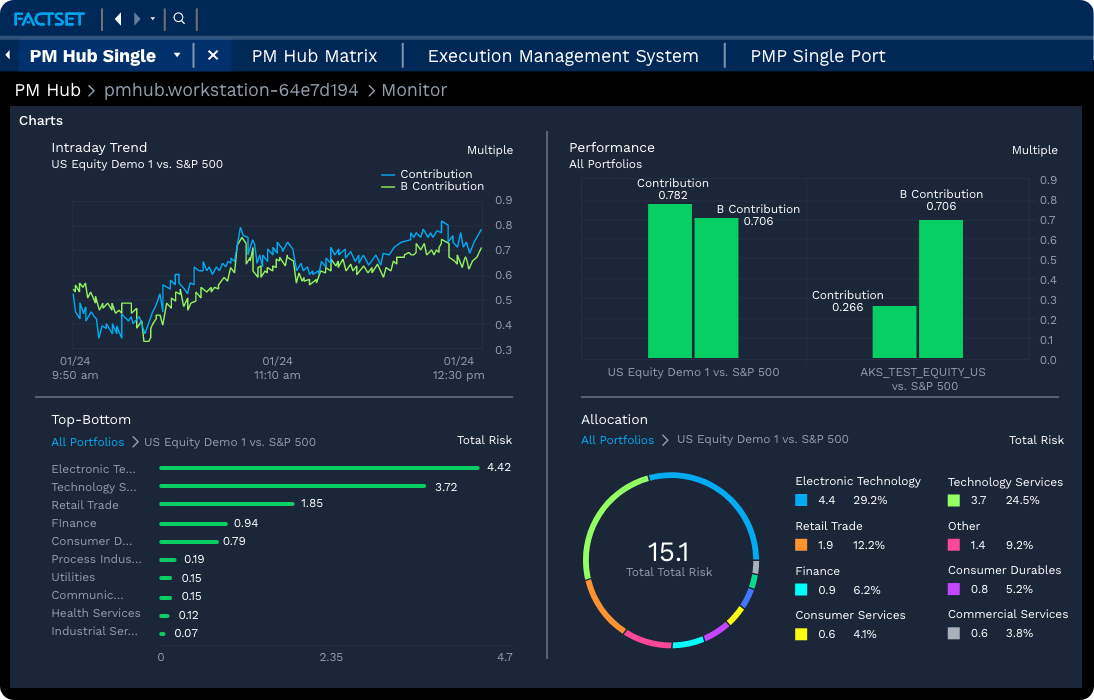
Portfolio analytics tools in FactSet include performance attribution, which answers the question a client asks first: where did the return come from? FactSet integrates multiple asset portfolio analysis, consolidating a mixed book of equities and fixed income into a single report.
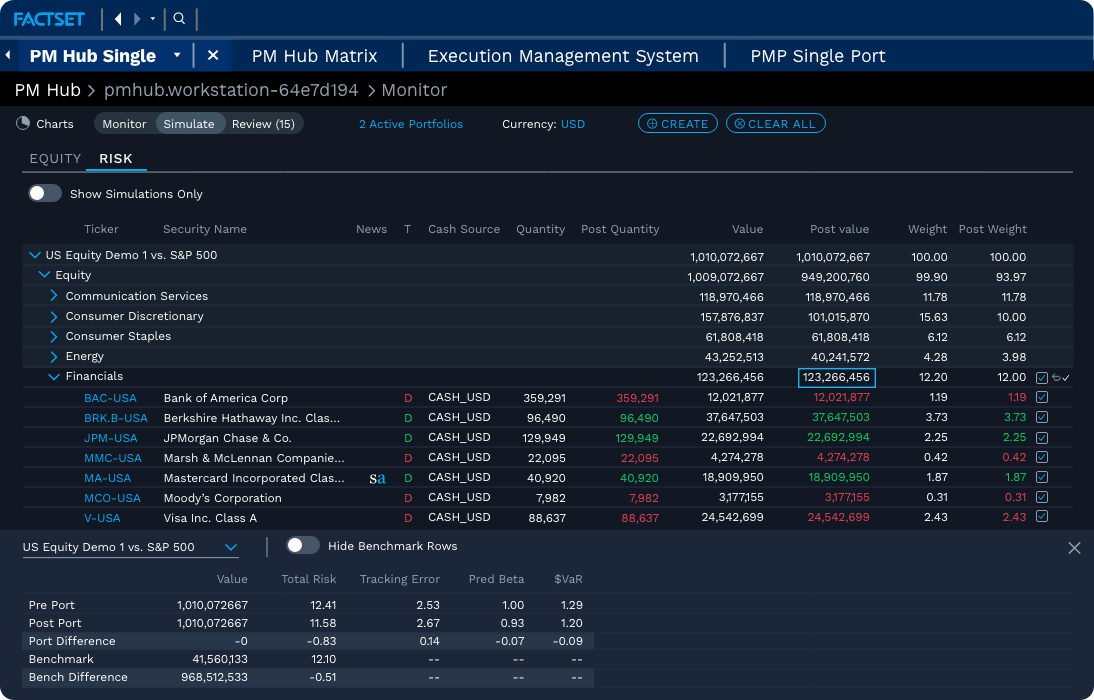
Risk sits alongside it. FactSet features include risk modeling and scenario analysis, plus advanced modeling and portfolio analysis tools for testing a position before taking it.
Reporting turns that into something a client reads. Teams use it to conduct detailed reports on company holdings, exposure, and attribution on a schedule, and to monitor changes between one reporting date and the next.
Reporting quality matters for advisors. Detailed reports go out with the firm's name on them, so accurate figures matter, and transparency about where a number came from matters as much as the number. Check what source is provided alongside each figure.
The Excel add in
FactSet has a deep Microsoft Excel integration, and for a lot of users the Excel add in is the actual product. Analysts build models in Excel already, and pulling live financial data into an existing model beats rebuilding that model inside a vendor's terminal. It kills two birds with one stone, keeping the model an analyst already trusts fed by data they didn't have to reformat by hand.
An analyst who refreshes a model skips rekeying it and spends the saved hours on analysis. That productivity gain is the difference between data entry and expertise.
Research management, financial analysis and AI
FactSet offers research management solutions for proprietary research, which matters for firms that generate their own notes and need them searchable next to vendor content. FactSet also includes features for AI-assisted research tools, aimed at the summarizing and retrieval work that used to eat an afternoon.
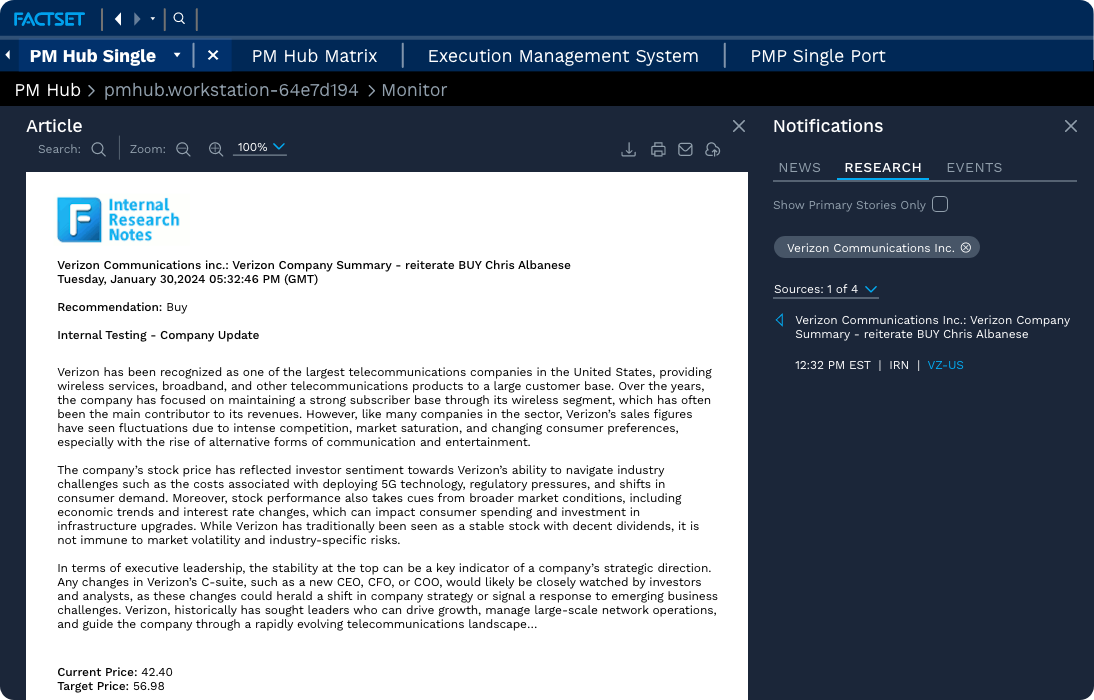
The platform provides tools for financial analysis of statements and company data. Analysts use it to explore a sector, identify the outliers, and create the comparison set the note is built on.
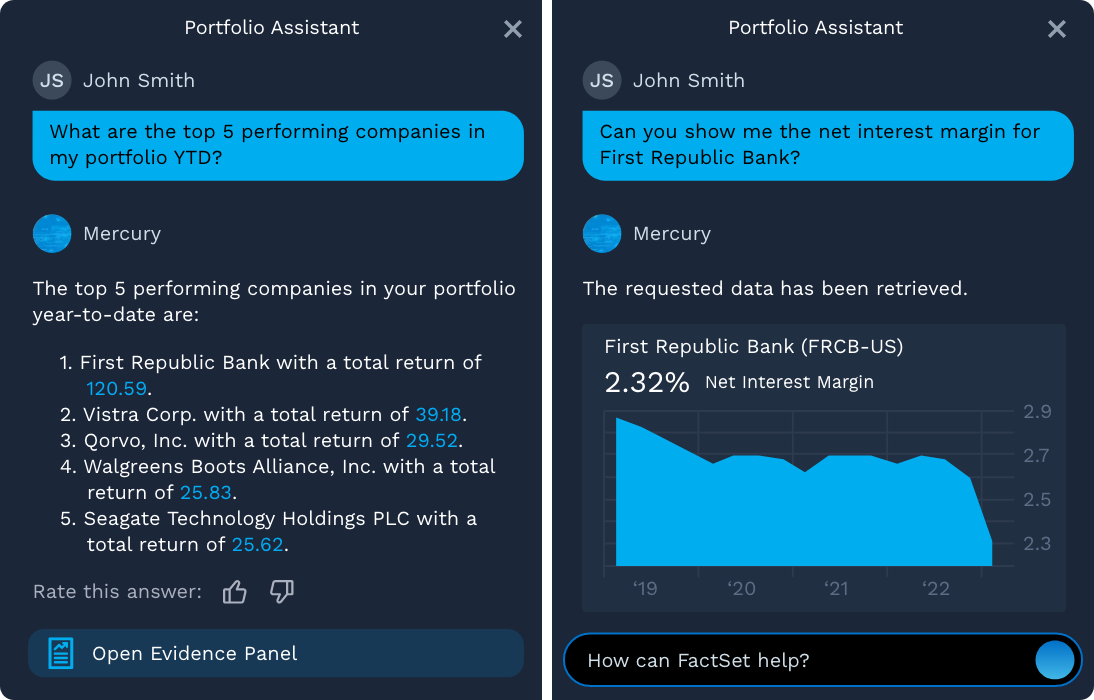
Timely insights are the deliverable. A team that reads a filing three days late is providing history, and investors don't pay for history.
↑ FACT SHEETWho runs FactSet, and how the business is performing
Sanoke Viswanathan became chief executive on 8 September 2025, arriving from JPMorgan where he ran International Consumer and Wealth. The change matters to a buyer because the strategy attached to it is explicit: FactSet is pushing AI through the product line while cutting roughly 10% of its technology workforce. FactSet is biting the bullet on that cut, betting the AI investment pays off faster than the headcount reduction stings.
The numbers behind that are public, which is one advantage of buying from a listed vendor. Annual Subscription Value grew 7.1% to $2.48 billion across regions and client types, and the company guided to revenue of $2.423 billion to $2.448 billion for fiscal 2026.
A 10% technology headcount reduction alongside an AI push is the kind of detail worth raising in a renewal conversation. Ask which product lines the reduction touched and what the support model looks like on the modules you license.
↑ FACT SHEETFactSet pricing
FactSet pricing starts at $12,000 per year. That's the floor, and it scales with seats, data feeds, and modules, so a research desk with add-ons pays a multiple of it.
In practice most seats land higher, and a fully loaded seat can cost an arm and a leg before the negotiation even starts. Aggregated buyer data puts FactSet at roughly $14,000 to $22,000 per seat per year once a working combination of users, data and analytics is priced up. FactSet doesn't sell tiers in the SaaS sense. Pricing is modular, so two firms of similar size can pay different numbers.
There's no self-serve rate card, so what a firm spends comes out of a negotiation. FactSet offers competitive pricing relative to its competitors, which is the polite version of the real pitch: it undercuts the alternative.
↑ FACT SHEETFactSet vs Bloomberg
FactSet is often viewed as a cost-effective alternative to the Bloomberg Terminal. That's the comparison the market makes, and it's the one that decides most deals.
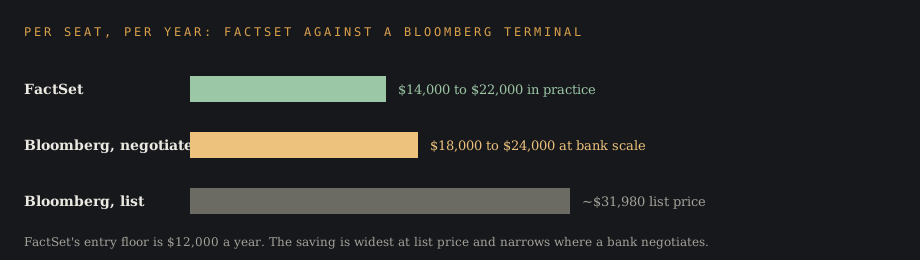
The gap is measurable. A Bloomberg Terminal runs roughly $31,980 a year per seat at list, with large banks reported paying $18,000 to $24,000 per seat once enterprise agreements are applied. Against FactSet's $14,000 to $22,000, the saving is real at list price and narrows considerably at the scale where a bank negotiates.
The two are not the same product. Bloomberg's strength is breadth of markets coverage, news, and the messaging community that keeps traders on it. FactSet's strength is analysis: portfolio analysis, attribution, screening, and reporting built for research and asset management workflows.
Which one wins depends on the job. A trading desk that lives on real-time markets news is a poor fit for a research-first platform, and traders are the population most likely to find FactSet frustrating for exactly that reason.
An equity research team building models and client reporting is the fit FactSet was designed around. It hits the nail on the head for exactly that job. Its competitors include Morningstar, S&P Global, and Bloomberg, and Bloomberg is the one it gets benchmarked against most often.
Where FactSet frustrates people
Users describe FactSet as complex with a steep learning curve. This is the most consistent complaint about the platform, and it's a direct cost of the customization: a system with a layout for every role has a lot of surface for a new user to learn.
The harshest criticism is worth reading in context. A widely-viewed thread on the Bloomberg subreddit carries the title "FactSet is terrible," and complaints in that register almost always come from people comparing it against a Bloomberg Terminal for markets and news work. The same platform draws consistently strong reviews from buy-side equity analysts on TrustRadius. Both groups are describing the product accurately for their own job.
Budget for onboarding time. A new analyst is not productive on day one, and firms that skip structured training use a fraction of what they're paying for.
Support is the second theme. Users report mixed experiences with FactSet's customer support, which is worth raising in a renewal conversation. Actions speak louder than words when a team just lost 10% of its technology staff, so ask for named coverage and response times in writing, and ask specifically how the technology headcount reduction affects the team covering your account.
Who should buy it: asset managers, hedge funds and advisors
FactSet fits enterprise finance teams whose work is research and reporting. Equity research groups, asset managers, hedge funds, and advisory firms running clients portfolios get the most out of the analysis tools & the Excel workflow.
It fits poorly for anyone who needs a cheap terminal for occasional lookups. At a $12,000 per year floor, a $14,000 to $22,000 realistic per-seat cost and a real learning curve attached, light users don't recover the spend.
Financial professionals evaluating it should pull the data, build the model, and produce the client report before signing. The demo will look fine. You're paying for the workflow.
Common questions
Does FactSet have a free trial?
FactSet doesn't sell on a public sign-up page. Pricing starts at $12,000 per year and evaluations run through FactSet's sales team, which usually means a scoped demonstration.
How much does FactSet cost per seat?
Roughly $14,000 to $22,000 per seat per year in practice, against a $12,000 entry floor. Pricing is modular, so the figure moves with the combination of users, data feeds and analytics a firm licenses.
Is FactSet cheaper than Bloomberg?
Usually. A Bloomberg Terminal lists around $31,980 a year per seat against FactSet's $14,000 to $22,000. The gap narrows at enterprise scale, where large banks are reported to pay $18,000 to $24,000 per Bloomberg seat.
Who is the CEO of FactSet?
Sanoke Viswanathan, appointed 8 September 2025. He joined from JPMorgan, where he led International Consumer and Wealth.
Is FactSet hard to use?
Yes. Users describe the platform as complex with a steep learning curve, and it comes down to no pain, no gain: the same depth that makes it hard to learn also drives the analysis.
Why do some people say FactSet is terrible?
Almost always because they wanted a Bloomberg Terminal. The loudest criticism comes from traders judging FactSet on real-time markets data, news and messaging, which is Bloomberg's territory. Buy-side equity analysts rating the same product on research workflows score it well.
Who is FactSet's biggest competitor?
Bloomberg. Morningstar and S&P Global compete on parts of the product, but the head-to-head comparison buyers run is against the Bloomberg Terminal.
Is FactSet a reputable company?
Founded in 1978, a public company listed on the NYSE as FDS, 200,000 users, 8,000 organizations, 95% retention over 43 years, and $2.48 billion in annual subscription value. That's a long operating history with high renewal, and it's the strongest available evidence of the company's standing in the industry.
What exactly does FactSet do?
It collects financial data from over 800 sources, verifies and normalizes it, then attaches screening, modeling, portfolio analysis, and reporting. FactSet verifies each feed before it reaches a client workstation.
To explain it in one line: FactSet sells investors an understanding of a company faster than they could assemble it themselves. It earns its cost to the degree it keeps a team ahead of the curve, spotting opportunities before the market has finished reading the filing.