Ookla review
 By Jan Suski. I go deep on every review, checking every number against its source and digging up details other coverage misses, a habit from six years of SEO and link building for tech companies. Bylines at Surfer, Brand24, and Senuto. How the scoring works.
· Prefer this source on Google
Best for
Anyone who wants a fast, free speed-test result with no signup: home users checking an ISP's advertised speed, or IT staff ruling out Wi-Fi with a wired Ethernet run.
Not for
Enterprise buyers who need to license the underlying network data; that's the Speedtest Intelligence and Global Index product Accenture now owns.
What it costs
Free for unlimited tests with ads. $0.99 removes ads once; $4.99 a month adds unlimited VPN data. Enterprise network data pricing runs separately through Speedtest Intelligence.
- Server network
- More than 15,000 servers worldwide
- Tests completed
- Over 55 billion since launch
- Metrics per run
- Download speed, upload speed, latency, jitter and packet loss, all in one pass
- Server selection
- Chosen automatically by distance and current load, overridable by hand in the app
- Test duration
- 39.6 seconds average with a consistent 11 ms ping in one independent comparison
- Platforms
- Android, iOS, Windows and Mac, plus a browser version at Speedtest.net that needs no download
- Desktop version
- Native Mac App Store listing; a wired Ethernet run rules out Wi-Fi before anyone calls the ISP
- Video test
- 4K streaming check on sustained throughput
- Downdetector
- ISP-wide outage status inside the same app
- Test history
- Saved for signed-in users, which is how a slow trend shows up over months
- Browser engine
- HTML5 since December 2015, when Ookla dropped the Adobe Flash build
- Enterprise feeds
- Speedtest Global Index and Speedtest Intelligence, bought by carriers and governments
- Free
- $0 for unlimited speed tests, with ads between runs and saved history on an account
- Ad removal
- $0.99 one-time; removes ads, changes nothing else
- VPN Premium
- $4.99 a month; ad removal plus unlimited VPN data, bundled together
- Browser test
- Free at Speedtest.net, with no download and no account
- Revenue model
- Advertising, the enterprise Speedtest Intelligence data business, and the small paid tier in the app
- Enterprise data
- Speedtest Intelligence and the Global Index sell to carriers and governments, separate from the consumer tiers
- Support
- Help center articles for the free tier, and the same in-app channels for VPN Premium subscribers
- Cross-tool variance
- 10 to 15 percent apart between two services is common; no shared reference methodology exists
- Regulatory bar
- The FCC defines broadband as at least 100 Mbps download, which is the number a result gets read against
- Sister products
- Downdetector, RootMetrics and Ekahau under the same owner
- Owner
- Accenture, since the purchase from Ziff Davis closed June 17, 2026
- Company revenue
- $231 million in 2025, about 16 percent of Ziff Davis's sales that year
- Sale price
- $1.2 billion in cash, announced March 3, 2026 and closed June 17, 2026
Opensignal
Not forA user who wants one instant, live number. Opensignal's core value comes from passive background data gathered over time; a single manual run only samples one moment in it.
Fast.com
Not forA network engineer chasing packet loss or jitter on a flaky connection. Fast.com's default view stops at one download number.
Pairs well with Ookla
What Ookla reports about itself, and what independent testing found
The 15,000-server network and the 55 billion completed tests are Ookla's own reported figures. The 39.6-second average duration and the 11 ms ping come from one independent comparison, and the 10 to 15 percent spread between tools exists because no speed test publishes against a shared reference standard.
The three consumer prices are the published in-app tiers; the $1.2 billion sale price, the June 17, 2026 close and the $231 million 2025 revenue come from the Ziff Davis announcement. Figures current as of this review's update on 6 August 2026.
Ookla runs Speedtest, the internet speed test most people have run at least once to check a download number against what an ISP advertised. The company also owns Downdetector, RootMetrics, and Ekahau, and in 2026 it changed hands again: Accenture completed a $1.2 billion purchase of Ookla from Ziff Davis on June 17, 2026.
A renter deciding if a new provider is worth the switch, a remote worker troubleshooting a dropped video call, or an IT support desk determined to find out why one laptop lags on a network that otherwise tests fine. The real number matters because it's the evidence behind an ISP dispute, a refund request, or a router replacement decision, grounded in an actual measurement.
This review covers how the Speedtest internet speed test works, what it measures, what it costs beyond the free app, how its numbers compare with rivals like Fast.com and other online speed tests, and where the ownership change leaves the product going into the rest of 2026.
↑ FACT SHEETCompany history and the Accenture deal

Mike Apgar and Doug Suttles founded Ookla in 2006 in Seattle after Apgar left Speakeasy, the ISP where an early speed test started as an internal tool for auditing vendor connections. Suttles picked the name because he already owned the Ookla.com domain, registered years earlier for a pet cat named after a character on Thundarr the Barbarian.
Speedtest Mobile shipped in 2008, extending the browser speed test to phones. The Speedtest website originally ran on Adobe Flash, until Ookla rebuilt it in HTML5 in December 2015 and dropped the plugin Flash required. That HTML5 rebuild put Ookla ahead of the curve; Adobe didn't kill Flash entirely until December 2020, five years after Ookla had already moved on.
Ziff Davis announced on March 3, 2026 that it would sell the Connectivity division, including Ookla, Downdetector, RootMetrics, and Ekahau, to Accenture for $1.2 billion in cash. The deal closed June 17, 2026. Ookla brought in $231 million in revenue for 2025, about 16 percent of Ziff Davis's total sales that year.
Who owns Ookla now?
Accenture owns Ookla today; the Ziff Davis era ended when the deal closed. The consulting firm folded Ookla into its network intelligence practice, framing the purchase around enterprise data and AI services for carriers.
Ookla's Speedtest Global Index and Speedtest Intelligence products, the paid data feeds carriers and governments buy to benchmark network performance, sit closer to what Accenture is after than the free app millions of people open to test their home internet connection.
↑ FACT SHEETHow the Speedtest internet speed test works
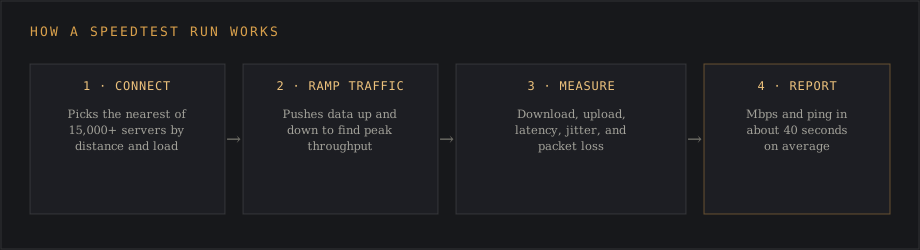
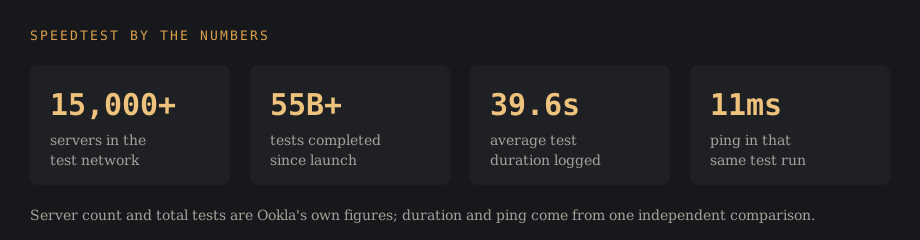
Ookla runs Speedtest on a network of more than 15,000 servers worldwide and reports the platform has completed over 55 billion speed tests since launch.
A Speedtest run measures download speed, upload speed, latency, jitter, and packet loss, the core metrics behind every result, in one pass, using that server network to keep each test close to the user's actual internet connection. Which server a given test uses is determined automatically by distance and current load, though the app lets a user override that choice manually.
Most speed tests follow that same automatic-selection default, though few let a user override the pick as easily as Speedtest does.
Test duration and methodology
A test connects to a nearby server, ramps traffic up and down to find peak throughput, and after cycling through several phases finally reports the result in Mbps alongside ping in milliseconds. One independent comparison logged an average test duration of 39.6 seconds with a consistent 11 ms ping, in line with what a wired connection on a healthy network should return.
That response lands fast enough that most users never notice the several phases cycling underneath it.
Platforms and the desktop version
The app runs on Android, iOS, Windows, and Mac, plus a browser version at the Speedtest.net website that needs no download. The Speedtest.net browser version loads at the drop of a hat, with no signup and no download standing between a click and a result. A Mac App Store listing gives Mac users a native desktop version, and running an Ookla speed test over that wired Ethernet connection rules out Wi-Fi as a variable before anyone calls their ISP.
Extra features
Beyond the core speed test, Speedtest adds three things most rival tools don't:
- A video-specific speed test for 4K streaming, to check if a connection can sustain the throughput a streaming service needs.
- Downdetector status data inside the same app, so a slow test result can be checked against an ISP-wide outage before anyone assumes their own Wi-Fi is the problem.
- A saved speed test history for signed-in users, useful for spotting a slow trend over months.
Reading your results against the advertised speed
A speed test only means something next to the number an ISP advertised on the plan. If a provider promises 300 Mbps and a test consistently returns 180 Mbps on a wired connection, that gap is worth a call to the ISP.
Test over both Wi-Fi and a wired connection to separate a router problem from an actual bandwidth shortfall; IT staff who bite the bullet and run the wired test first skip the guesswork Wi-Fi adds. A wired connection that hits the advertised speed while Wi-Fi lags points at the router or its placement.
A weak Wi-Fi signal often clears up just by moving the laptop or phone closer to the router, and upgrading to a mesh router closes a whole-home coverage gap that repositioning a single router can't fix.
A mobile speed test complicates the picture further, since a weak cellular signal in one room reflects local conditions alongside the carrier's own network performance. Speeds fluctuate throughout the day as neighborhood load shifts, which is why one test from one moment never tells the whole story.
Download and upload speeds matter for different jobs. A household mostly streaming and browsing leans on download speed, while anyone uploading video, backing up files, or on frequent video calls needs upload speed to hold up too, and a plan advertised on download speed alone can leave upload thin by comparison.
Running multiple tests on a few different devices, and at a few different times of day, gives a more reliable read on a home internet connection than one test alone provides.
Speedtest versus Fast.com and other speed tests
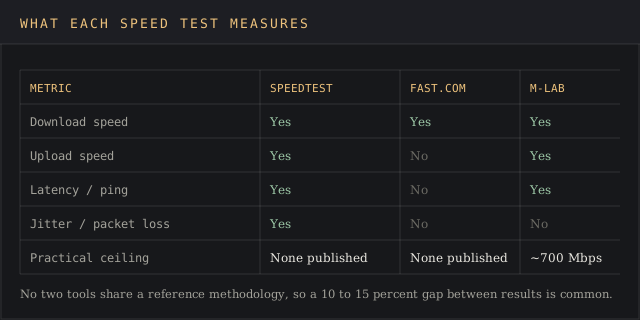
Fast.com, Netflix's speed test, measures download speed only, built around the one number that matters for streaming. Speedtest tests both directions plus latency and packet loss, information a gamer or a remote worker on video calls needs and a Netflix subscriber generally doesn't. Typing internet speed test into Google surfaces a built-in test powered by M-Lab too, a lighter alternative that skips opening a separate app or website.
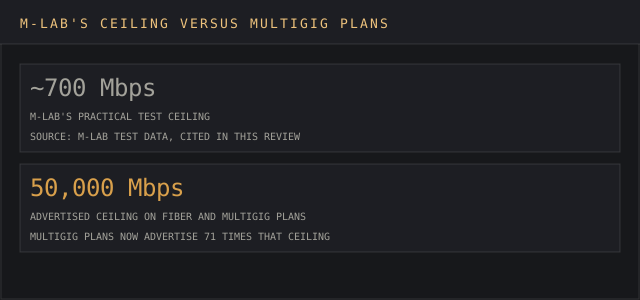
Independent comparisons show Speedtest reporting higher throughput than some rival tools in the same test window, and the gap traces to differences in server selection and connection handling. M-Lab's test caps out around 700 Mbps, a ceiling that matters more each year as gigabit plans become common; Speedof.me instead emphasizes letting a user compare their own past results over time.
Fiber and multigig providers now advertise plans reaching 50,000 Mbps, a ceiling that makes M-Lab's 700 Mbps cap look small and shows how server-side bandwidth shapes how high a result can go, on top of the app itself.
None of the major speed test tools share a single reference methodology. A result 10 to 15 percent apart between two services is par for the course, a byproduct of that same gap in method.
↑ FACT SHEETWhat does Speedtest cost?
The core app and browser test are free, and Ookla makes money instead from advertising, the enterprise Speedtest Intelligence data business, and a small paid tier inside the consumer app.
The $0.99 ad-removal fee and the $4.99 VPN Premium subscription are a drop in the bucket next to the $1.2 billion Accenture paid for the whole company; the consumer app funds a sliver of the business the enterprise data side now carries.
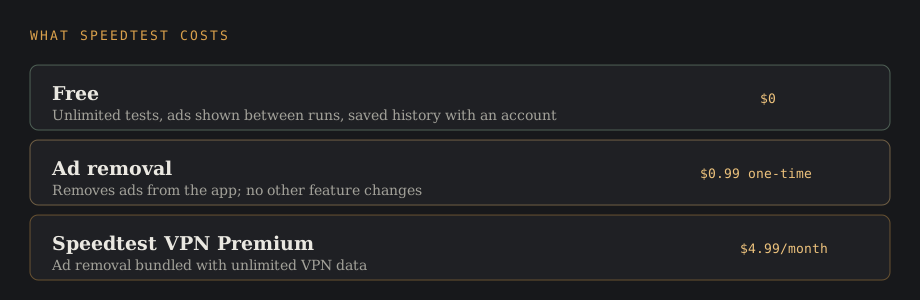
| Tier | Price | What you get |
|---|---|---|
| Free | $0 | Unlimited speed tests, ads shown between runs, saved history with an account |
| Ad removal | $0.99 one-time | Removes ads from the app; no other change to features |
| Speedtest VPN Premium | $4.99/month | Ad removal plus unlimited VPN data, bundled together |
↑ FACT SHEETIs Speedtest accurate and trustworthy?
Speedtest is widely treated as the industry standard for measuring internet speed, and its scale, more than 15,000 servers and 55 billion completed tests, backs its reputation for accuracy better than any single review can. The FCC defines broadband as at least 100 Mbps download, and a Speedtest result is the number most ISPs and regulators cite when that threshold comes up in a dispute over a connection's real speed.
App Store reviewers regularly praise the interface, test speed, and overall reliability, calling it a great tool for the price and saying the free tier alone delivers their money's worth before any premium purchase. Enough return across version updates to count as big fans of the app.
Support runs through help center articles for the free tier. VPN Premium subscribers use those same in-app support channels; neither tier gets a dedicated line.
How Speedtest Experience Ratings score real-world performance
Ookla shows how a connection performs against everyday tasks in a separate report called Speedtest Experience Ratings. The report scores how often a network delivers good-enough quality for video streaming, video conferencing, gaming, and web browsing across repeated measurements.
A Zoom call and a Netflix stream tax a connection differently, for example: video conferencing needs steady upload speed and low jitter in both directions, while video streaming leans almost entirely on download and upload speeds moving one way. Web browsing asks less of all three.
Packet loss and latency matter more to gaming and video conferencing, where a dropped packet freezes a video frame. Web browsing shows a slow page load as its main symptom. Two connections with identical peak download numbers can still show different real world performance during ordinary daily use.
Trust has limits worth naming. A test measures conditions at that moment: server load, local network congestion, and even which device runs the test can shift a result by a meaningful margin. Reviewers on Quora and elsewhere note that ping times under 20 ms read as excellent for gaming, but a single test showing that number doesn't guarantee it holds an hour later during a video call.
Running a speed test at different times of day, and confirming a surprising result against a second tool, catches the cases a single Speedtest run would miss, and keeps the accuracy question grounded in more than one data point.
Ookla and other mobile market intelligence tools
Ookla focuses on one job: measuring real-world network performance through consumer-run and passive tests. Three other names cover adjacent ground in the same mobile market intelligence category, and buyers researching one often need to know how they differ.
- Opensignal measures similar real-world network performance but leans on passive, crowdsourced data collected in the background.
- GSMA Intelligence and Omdia analyze carrier and device market data, subscriber counts, spectrum, and technology adoption.
- Counterpoint Research covers device and technology market analysis with its own research methodology, a different job from benchmarking one connection.
A team needing network performance evidence for one connection wants Ookla or Opensignal; a team needing carrier-level market sizing wants GSMA Intelligence, Omdia, or Counterpoint Research instead.
Weaknesses and limitations
- A single speed test is a snapshot: results shift with server load, Wi-Fi congestion, and time of day.
- Speedtest's numbers don't always match what other tools report for the same internet connection, since no shared industry benchmark exists to arbitrate between them.
- The free app carries ads unless a user pays the $0.99 removal fee or subscribes to VPN Premium.
- The free app also collects location and device data alongside every test result, a data-collection practice privacy-focused reviewers flag when weighing Speedtest against ad-free alternatives.
- The Accenture acquisition points company priorities toward enterprise network-intelligence data. Nothing announced so far changes the free tool, but a $1.2 billion price tag reflects the data business more than the consumer app bundled with it. Speedtest Intelligence and the Global Index operate largely under the radar of the app's everyday users, which is the imbalance the sale price reflects.
Is Ookla a good company to work for?
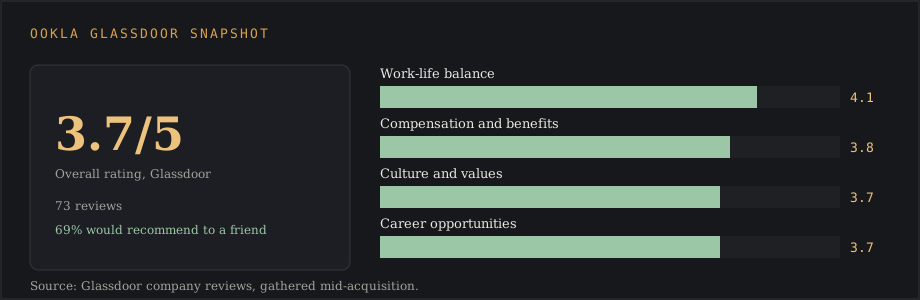
73 reviews, 69 percent of reviewers would recommend working there to a friend. Work-life balance rates highest at 4.1, with culture and values, and career opportunities, both at 3.7, and compensation and benefits at 3.8.
Positive reviews cite unlimited PTO and strong benefits. Reading between the lines of recent reviews shows leadership friction since the founders left the company, with staff saying feedback gets collected but rarely acted on. That pattern, collected mid-acquisition, is worth reading against the timing: any company changing owners twice in twelve years draws some of that commentary regardless of how the product itself performs.
Is Speedtest worth using?
For checking if an ISP delivers the internet speed on the bill, yes: Speedtest is free, fast, and the result most providers and regulators already recognize as accurate enough to settle a dispute. It remains the most recognized name in the speed test market, and anyone who wants deeper diagnostics, jitter, packet loss, a saved test history, and an ad-free run gets that for under five dollars a month through VPN Premium.
The tool works less well as a single source of truth. A buyer comparing ISPs, or a network engineer chasing an intermittent problem with an internet connection, should treat one Speedtest result as a data point, run it at different times, and check a second tool like Fast.com when a number looks off before assuming the connection itself is the problem.
FAQ
How is Ookla spelled?
Ookla: two Os at the front, one at the end. Oookla, with three Os up front, shows up in search data often enough to be worth stating. The name is Alkoo, the founders' original project, spelled backwards.
Who owns Ookla?
Accenture, since completing a $1.2 billion acquisition of Ookla from Ziff Davis on June 17, 2026.
What is the most reliable speed test site?
Speedtest by Ookla is the most widely used and cited among online speed tests, backed by a 15,000-plus server network and more than 55 billion completed tests, though no speed test tool publishes results against one shared reference standard.
Which is more accurate, Fast.com or Ookla?
Fast.com and Speedtest measure different things, so the better tool depends on the number that matters most: download alone, or the fuller profile Speedtest adds with upload, latency, jitter, and packet loss.
Is Speedtest trustworthy?
Yes, for what it measures at the moment a test runs. Results shift with server load and local network conditions, so a single speed test is a snapshot.
Does Speedtest cost money?
The core test is free. Removing ads costs $0.99 once, or $4.99 a month through Speedtest VPN Premium, which also includes unlimited VPN data.
Who founded Ookla?
Mike Apgar and Doug Suttles founded Ookla in Seattle in 2006, after Apgar left the ISP Speakeasy, where an early speed test began as an internal vendor-auditing tool.
Bottom line
Speedtest earned its place as the default internet speed test through scale: 15,000-plus servers, over 55 billion tests run, and name recognition strong enough that ISPs and regulators cite its numbers in speed disputes. The free app, the $0.99 ad removal, and the $4.99 VPN Premium tier cover most individual needs well.
Ownership is the bigger story heading into the rest of 2026. Accenture paid $1.2 billion for a business that generated 16 percent of Ziff Davis's revenue in 2025, and that price reflects the enterprise network-intelligence data Ookla sells to carriers and governments more than the free app millions of people open to check their home internet connection.
Nothing has changed for anyone running a speed test today, but the product's direction over the next few years now depends on decisions Accenture hasn't made public yet.