Construction market intelligence
 By Jan Suski. I go deep on every review, checking every number against its source and digging up details other coverage misses, a habit from six years of SEO and link building for tech companies. Bylines at Surfer, Brand24, and Senuto. How the scoring works.
· Prefer this source on Google
Construction market intelligence is the systematic process of collecting and analyzing construction industry data, then turning raw data into decisions on which projects to bid and where cost heads. For contractors and suppliers, it converts scattered signals into market intelligence you can act on.
The U.S. construction market in numbers
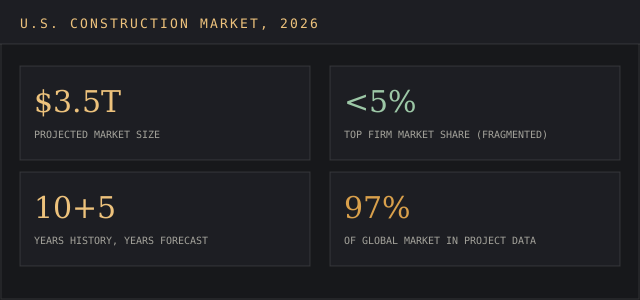
The U.S. construction market size is projected at $3.5 trillion in 2026, according to IBISWorld. The construction industry in the United States is highly fragmented; no company holds more than 5% market share, so competition across the industry is broad.
IBISWorld splits the construction sector across residential, non-residential, and civil engineering projects. Market sizing read by geography and year is where analysis begins.
A regional contractor competes across a few states; a national firm across the United States. State-level demand, forecasts, and outlook must match that geography, because construction activity in one state can rise while another falls. Understanding that spread is the first job.
What construction intelligence tracks
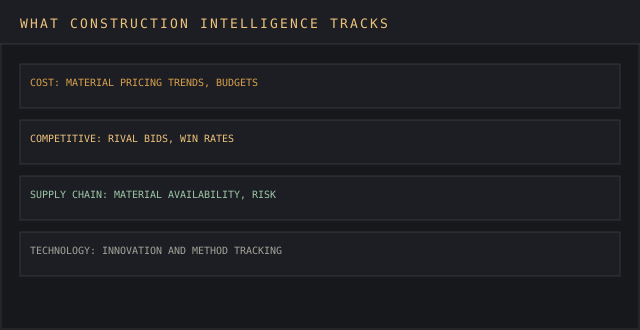
Four components carry most of the value:
- Cost intelligence. Material pricing trends drive project economics; reading them lets teams anticipate price changes and budget before construction cost inflation bites. Historical data flags if a spike is a real trend or early volatility.
- Competitive intelligence. Analysis of rival companies and their bids refines strategy: which firms win which construction projects, in which regions, at what price.
- Supply chain analysis. Assessing material availability and procurement risk keeps construction activity moving; supply risk warns of schedule slips.
- Technology tracking. Monitoring innovation and new construction methods shows where productivity and competition are shifting. Jobsite software that checks 360 photos and drone scans against the schedule is scored in our construction intelligence platforms ranking.
Together these turn market data into insights. In addition, firms track infrastructure and new products that reshape the construction industry.
Where the data and forecasts come from
Good analysis rests on primary and secondary research: primary gathers data from contractors, suppliers, and project owners through surveys. Secondary research draws on industry reports; quantitative research reads market trends and construction costs from numerical data. Combined, they give a full picture of the construction industry.
Published sources anchor it:
- Dodge MarketShare. Its construction forecasts and reports include 10 years of historical data plus 5 years ahead, so contractors see where construction activity is heading.
- ACA national forecast. The U.S. national construction forecast, published in a report three times a year, guides corporate planning and policy across states; its cement projections track construction dollar spending.
- GlobalData. It tracks construction projects over $25 million by sector and stage across 97% of the global construction market, a full benchmark for companies to compare against the world.
These feeds supply economic indicators, market trends, project pipelines, insights, forecasts, and an outlook teams can defend with numbers.
How contractors and firms use it
It helps identify growth opportunities and adjust procurement plans; the insights land in a few recurring decisions:
- Bid selection. Chase early, high-margin opportunities and rank which sector and regions deserve the team's time.
- Cost control. Read pricing trends and cost factors so budgets hold when the industry moves.
- Competitive position. Track which companies win, and where a construction business can differentiate its services and products.
- Business development. Turn a market report into a shortlist of clients and projects; suppliers size demand for products and services.
Firms that build resilience treat this as a standing capability: map the market, match data sources to your geography, and review pipeline status so a strong strategy adjusts as the economy shifts. Evidence-driven decisions and steady innovation beat guesswork; teams that understand their construction industry across states keep the work they win.
FAQ
Is construction slowing down in 2026?
Segments can cool while the overall U.S. construction market stays near its projected $3.5 trillion 2026 size per IBISWorld. National activity and a single state can diverge in one year; several factors and local challenges shift the market at once, so segment-level industry analysis beats a headline number.
What data feeds construction market intelligence?
Combine market sizing, forecasts, and project pipelines with your bid history, then layer competitive and cost intelligence on top for a full summary of the market a construction business can plan against, with intelligence solutions matched to your state, sector, and national outlook.