Thomasnet review: the industrial sourcing platform and Thomas Marketing Services
 By Jan Suski. I go deep on every review, checking every number against its source and digging up details other coverage misses, a habit from six years of SEO and link building for tech companies. Bylines at Surfer, Brand24, and Senuto. How the scoring works.
· Prefer this source on Google
Best for
Industrial buyers sourcing manufacturers and distributors for free, and suppliers who can commit $7,000 to $50,000 a year for premium listings in North America.
Not for
Buyers sourcing suppliers outside North America, or suppliers who expect an account manager to follow up after the contract starts.
What it costs
Free for buyers to search, view profiles and send RFQs. Suppliers pay $7,000 to $50,000 a year for premium listings, plus separate fees for placement and analytics.
- Supplier database
- Over 500,000 detailed profiles spanning manufacturers, distributors and service companies
- Search filters
- Certifications, location, diversity status and capabilities
- RFQ and RFI
- Sent to suppliers inside the platform, where first contact happens
- Technical data
- A library of CAD drawings and extensive technical data, free to buyers
- AI tools
- An RFQ Summarizer among the tools that speed the sourcing process
- Buyer access
- $0: search, profiles, CAD data, RFQs and RFIs all cost nothing
- Basic supplier listing
- Free to create
- Premium listings
- $7,000 to $50,000 a year
- Top placement
- Additional fees on top, to outbid competitors in the same category
- WebTrax analytics
- A separate fee for detailed profile-visitor reporting
- Placement bidding
- Top listings require additional fees to outbid competitors in the same category
- Marketing services
- SEO, content and website work priced above the listing, tailored per client
- Contract shape
- Annual, with the tier set in a sales conversation
- Reported low end
- Some users pay $400 monthly for services and report no measurable return
- Allied Sinterings
- 41.7% conversion rate increase, with 40% of new contacts coming from ThomasNet
- Reported RFQ volume
- 10 to 15 a week for some users, against zero qualified leads after months for others
- Support reports
- Customer service often described as unresponsive, with no follow-up after the contract is signed
- Owner
- Xometry, Nasdaq XMTR, North Bethesda, Maryland, since December 8, 2021
- Product categories
- More than 76,000
- Active buyers
- Over 1.4 million
- Registered base
- More than 1.3 million users at the 2021 acquisition, including 93 percent of the Fortune 1000
- Buyer traffic
- Recognized for high-intent buyer traffic compared with general web searches
- Geographic coverage
- Strongest in North America, less effective for sourcing international suppliers
- Listing completeness
- Varies by supplier; users recommend verifying supplier information independently
Alibaba.com
Not forUS manufacturers who need a domestic supplier with verified certifications and process capability, which is the job Thomasnet is built for.
IEEE GlobalSpec (Engineering360)
Not forSuppliers who want to know the listing cost before a sales call, because GlobalSpec publishes no rate card either.
Pairs well with Thomasnet
Which counts are Thomas’s own, and which come from user reviews
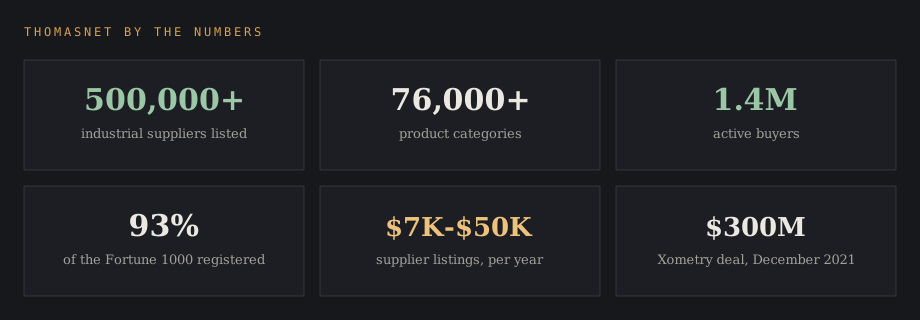
The 500,000 suppliers, 76,000 categories, 1.4 million active buyers and the $7,000 to $50,000 listing range are Thomas’s own published counts.
The 41.7% conversion lift and the Allied Sinterings results come from Thomas’s own case study reporting, not an independent audit, and the 900 to 17,000 contact growth sits in the same set. The zero-lead reports, the $400 monthly spend and the unresponsive-support complaints come from user reviews, and the $300 million acquisition split of roughly $198.5 million cash and $101.5 million stock comes from Xometry’s disclosure of the December 2021 deal.
This Thomasnet review covers both sides of the platform: the free sourcing database industrial buyers use to find suppliers, and the paid listings and Thomas Marketing Services that suppliers pay for. The database includes over 500,000 industrial suppliers across more than 76,000 product categories, and ThomasNet connects suppliers with over 1.4 million active buyers.
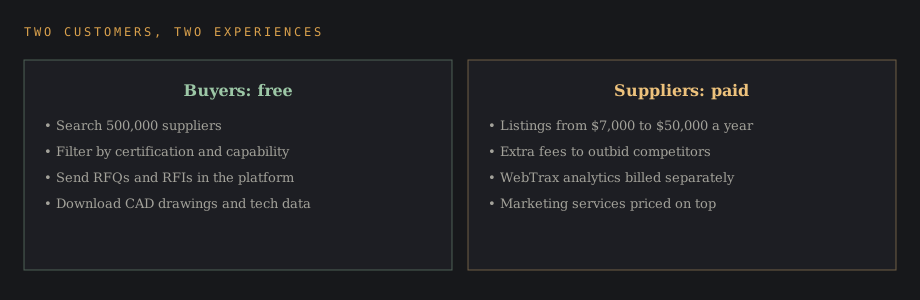
The split matters because the two sets of customers report different experiences. Buyers get a free, specialized search engine for the industrial sector; suppliers get an advertising and marketing services bill that runs from $7,000 to $50,000 a year for listings, with mixed reviews on what comes back.
↑ FACT SHEETWhat is Thomasnet: the industrial suppliers search engine
Thomasnet is a product sourcing platform for the industrial sector: a searchable database where procurement professionals, engineers and industrial buyers find suppliers, compare capabilities and send inquiries. Users can browse over 500,000 detailed profiles of industrial suppliers, often verified, spanning manufacturers, distributors and service companies.
The Thomas platform has built a reputation with buyers over the years, and it earns that standing on specificity. The platform is known for its specialized search capabilities for MRO and OEM sourcing, a search a general search engine handles poorly: the buyer needs a certified process, a material grade or a tolerance.
Coverage skews to one market. The platform is less effective for sourcing international suppliers compared to North American ones, so a buyer sourcing from Asia or Europe treats Thomasnet as one input.
↑ FACT SHEETHow procurement professionals find suppliers
Buyers search, filter and inquire without paying, from a free account. Thomasnet provides advanced search filters for evaluating suppliers based on specific criteria, certifications, location, diversity status, capabilities, and Thomasnet allows industrial buyers to send RFQs and RFIs directly through its platform, making first contact happen inside the platform.
The workflow extras are the reason engineers keep accounts and create saved searches around them. The platform offers access to a library of CAD drawings and extensive technical data, and the platform features AI tools that speed up the procurement process, such as an RFQ Summarizer. Thomasnet is praised for saving time by consolidating supplier information in one platform.
Many users recommend verifying supplier information independently due to varying listing completeness, and a profile's detail level signals how actively a company maintains its presence.
Thomasnet has been recognized for its high-intent buyer traffic compared to general web searches, which is the statistic that matters most to the other side of the marketplace: the suppliers deciding what a listing is worth.
↑ FACT SHEETWhat suppliers pay for: listings, advertising and online visibility
Suppliers create a free listing, and Thomasnet typically charges suppliers for premium listings and advertising services above it.
ThomasNet's annual listing costs range from $7,000 to $50,000, and top listings require additional fees to outbid competitors in the same category.
The advertising side sells online visibility to those in market buyers: better placement in category results, built to connect industrial suppliers with the buyers already searching their categories. Thomasnet provides advertising solutions to help manufacturers improve their online visibility and digital presence, and ThomasNet's WebTrax analytics require a fee for detailed reporting on who visited a profile and from where.
The cost structure rewards suppliers in categories with steady buyer search volume, where the same spend can create more leads and more account activity. A niche-category company should ask for search volume data before signing, since the same $7,000 buys a different number of impressions in a busy category than a quiet one. Our ThomasNet pricing report breaks that range down by tier, with the real monthly invoices suppliers report paying.
Thomas Marketing Services: digital marketing for manufacturers
Thomas Marketing Services is the agency arm: Thomas offers SEO, content marketing, and website design services for industrial companies, alongside email marketing, social media marketing and PPC campaign management, with Google Ads work sitting under the PPC line. Over 5,000 websites have been built by Thomas for clients, and Thomas provides digital marketing strategies tailored to client needs.
The agency positions itself as a partner, shaping each marketing strategy around a client's categories.
The pitch is expertise in a narrow market. An SEO campaign for a contract manufacturer targets search terms, and SEO rankings, a generalist digital marketing agency rarely knows exist, and the marketing strategy work leans on the search behavior data Thomas sees across its own platform.
For a manufacturer with no in-house marketing team, buying search engine optimization and website work from the company that also runs the industry's sourcing platform is the convenience being sold.
Clients have seen a 41.7% increase in conversion rates since 2020, per Thomas's own reporting, and some clients report clear increases in website traffic after using ThomasNet. Those are the vendor's numbers; the review sections below carry what customers say without a case-study team involved, and the value customers report varies far more than the case studies suggest.
The Allied Sinterings case study: a marketing strategy that worked
Thomas's flagship example is Allied Sinterings, a case study with numbers attached. Allied Sinterings saw a 41.7% increase in conversion rate, and 40% of new contacts came from ThomasNet.
The scale story runs alongside: ThomasNet has helped suppliers grow their database from 900 to over 17,000 contacts, and some users report receiving 10 to 15 RFQs per week through the platform. Read those as the success stories a marketing team chose to publish, fronted by a customer vice president on record, and weigh them against the zero-lead reports below.
↑ FACT SHEETWhat reviews say about qualified leads, quality and support
User feedback on Thomasnet is mixed between buyers and suppliers regarding effectiveness and ROI, and the split is sharp. Some suppliers report receiving high quality leads while others experience low return on investment from the same platform and comparable spend, and customers on both ends describe the same onboarding.
Some users report zero valid leads from ThomasNet services, with some reporting zero qualified leads after months of service. Users may pay $400 monthly for services with no measurable return, and some clients report high costs without measurable returns on investment.
Support is the second cluster. ThomasNet's customer service is often described as unresponsive, and clients report a lack of follow-up support from ThomasNet after the contract is signed.
The pattern reads like most pay-for-visibility marketplaces: results track the category's buyer volume and the quality of the supplier's own profile, and the suppliers who treat a listing as a website replacement report the worst returns.
A supplier weighing the spend should ask for category-level performance data in writing and set a lead quality bar with the sales team before the annual contract starts, then judge the value quarterly against the leads that closed. Leads that merely arrived don't count toward that number.
↑ FACT SHEETWho owns Thomasnet, and where Thomas Insights sits
Xometry acquired Thomas on December 8, 2021, in a $300 million deal paid roughly $198.5 million in cash and $101.5 million in Xometry Class A stock. The buyer is the manufacturing marketplace company headquartered in North Bethesda, Maryland, trading on Nasdaq as XMTR.
At the acquisition, Thomasnet.com counted more than 1.3 million registered users, including 93 percent of the Fortune 1000. The deal folded a 120-year-old industrial directory brand, the old Thomas Register, into a company built on on-demand manufacturing.
The parent's numbers are public and worth reading before a supplier signs an annual contract. Xometry describes itself as an AI-native marketplace with Thomasnet inside it, and reported first-quarter 2026 revenue of $205.14 million, up 35.9% year over year, with earnings of $0.12 a share against a $0.07 estimate. Second-quarter results are due on August 4, 2026.
Thomas careers now route through Xometry, and the North Bethesda careers hub is where all of it posts: the careers listings for the platform, the marketing services team and the Thomas Insights editorial side. Thomas Insights remains the content arm, publishing industry coverage alongside the sourcing platform, and the North Bethesda careers page is the fastest read on which parts of the business are being staffed.
Thomasnet against Alibaba and general search
The comparison buyers ask about most is Alibaba, and the two serve different jobs. Alibaba's strength is global consumer and light-industrial sourcing at volume price points; Thomasnet's strength is North American industrial sourcing where certifications, materials and process capabilities decide the shortlist.
For a US manufacturing company that needs a domestic supplier with verified capabilities, Thomasnet is the better starting point, and its high-intent traffic is the reason suppliers keep paying for placement, and why buyers connect with suppliers here at higher rates than through general search. For offshore volume sourcing, Alibaba wins, and the two coexist in most procurement teams' bookmarks, each a sourcing partner for a different job.
Bottom line: does Thomasnet help a business grow
For industrial buyers, Thomasnet is free, specialized and worth an account: 500,000 industrial suppliers, 76,000 categories, CAD data and direct RFQs beat a general search for MRO and OEM sourcing, as long as listing details get verified independently. The buyer side of this Thomasnet review is the easy call: free access, real value.
The supplier side is a spend decision with a wide outcome range, and customers' growth stories and wasted money both trace to how well a category matches the platform's buyer traffic. The $7,000 to $50,000 annual cost buys access to real, high-intent buyer traffic, and the published case studies are real companies with real numbers; the zero-lead complaints and unresponsive service reports are just as real.
Ask for category search volume, define what qualified leads mean in the contract, and treat the SEO and marketing services retainer as an agency hire, measured quarterly.
Frequently asked questions
How much does ThomasNet cost?
Free for buyers, and the value scales with usage. For suppliers, annual listing costs range from $7,000 to $50,000, top placements carry additional fees to outbid competitors, WebTrax analytics reporting costs extra, and Thomas Marketing Services work like SEO and website design is priced on top.
Is ThomasNet free to use?
Yes for sourcing: searching suppliers, browsing profiles on the website, accessing CAD data and sending RFQs costs nothing for buyers. Suppliers pay for premium listings and advertising.
What is ThomasNet used for?
Industrial product sourcing and supplier discovery: procurement professionals and engineers use it to find suppliers, compare capabilities across 76,000 categories, download technical data and send RFQs and RFIs, mostly for North American manufacturing.
Who uses ThomasNet?
Over 1.4 million active buyers, spanning procurement professionals, engineers and MRO teams, plus more than 500,000 supplier customers from manufacturers to distributors. At the 2021 acquisition, registered users included 93 percent of the Fortune 1000.
Is ThomasNet a reliable source?
The platform verifies many supplier profiles and has a long track record with buyers, though listing completeness varies and users recommend verifying supplier information independently before contracting.
Who owns ThomasNet now?
Xometry, the Nasdaq-listed manufacturing marketplace headquartered in North Bethesda, Maryland, which bought Thomas for $300 million in December 2021 and reported $205.14 million of revenue in the first quarter of 2026.
What is better than Alibaba?
For North American industrial sourcing with certifications and process requirements, Thomasnet. For global volume sourcing at low price points, Alibaba keeps the edge; the platforms serve different jobs.
Do you have to pay for ThomasNet?
Buyers don't. Suppliers pay for anything beyond a basic listing: premium placement, advertising, analytics and marketing services.
How do I get listed on ThomasNet?
Suppliers create a free company listing through the platform's website, then choose paid tiers for placement and promotion, with the annual contract set in a sales conversation.
Is Thomas and company legit?
Yes. Thomas is a 120-year-old industrial data brand, acquired by Xometry, a Nasdaq-listed company headquartered in North Bethesda, Maryland, for $300 million in December 2021.
What kind of products are on ThomasNet?
Industrial and commercial products across more than 76,000 categories: machined parts, raw materials, MRO supplies, custom manufacturing services and OEM components.