JATO Dynamics review: automotive market intelligence since 1984
 By Jan Suski. I go deep on every review, checking every number against its source and digging up details other coverage misses, a habit from six years of SEO and link building for tech companies. Bylines at Surfer, Brand24, and Senuto. How the scoring works.
· Prefer this source on Google
Best for
Automakers, dealer groups, leasing companies and marketplaces buying standardized specs and pricing across many markets at once.
Not for
Anyone who needs vehicle history or supplier mapping, or who wants to buy without a sales call.
What it costs
Every quote comes out of a scoping call about which markets and vehicle segments you need. Sold as subscriptions and API access.
- Core database
- Vehicle specifications, pricing and sales data normalized the same way in every country
- Version granularity
- Catches the 30 to 50% of vehicle versions that draw fewer than one registration a month
- Monthly Payments
- Finance-based comparison data delivered through a Unified API
- Custom Scenarios
- Analysis run on a company's own finance assumptions, replacing the platform's market defaults
- APIs
- Push specifications and pricing into digital marketplaces and dealer websites
- Competitive intelligence
- Product and pricing analysis for benchmarking and trend spotting
- JATO Advisory
- Consulting layer plus published reports on EV adoption and market trends
- Infrastructure
- Microsoft Azure for data analytics
- Account portal
- Standard sign-in with a Google continue option; API customers skip it entirely
- Additional products
- VANFinder, Price Tracker, Volumes with Nowcasting, WLTP Link and Incentives round out the specifications suite
- Evaluation route
- A sales conversation, since the company publishes little beyond its product pages
- Scoping inputs
- Which markets and which vehicle segments the decision depends on
- Contract risk
- No listed parent and no investor cycle, against Mobility Global reporting quarterly under MBGL
- Founded
- 1984 by Jake Shafran; headquartered in Uxbridge, west London
- Ownership
- Independent, no parent group and no announced sale process
- CEO
- Andy Rothery, promoted after two years as chief operating officer
- Headcount
- Over 800 experts by the company's count; independent trackers put it close to 790
- Buyer types
- Automakers, dealers, leasing companies and digital marketplaces
- Rivals
- Mobility Global (NYSE: MBGL) on lifecycle breadth, MarkLines on supplier and production data
- Recent expansion
- Added Colombia, Singapore, Kazakhstan and Uzbekistan coverage as of August 2026
- Rate card
- None. Access starts from the contact page
- What's sold
- Subscriptions and API integrations scoped to a customer's markets
- Market coverage
- 50 countries, with a data collection team in each market feeding the central database
- Reported shift
- Chinese brands from 50,000 registrations in 2020 to 700,000 in 2025
- Powertrain mix
- Electrified powertrains at around 65% of registrations
S&P Global Mobility
Not forA pricing or product-planning team that needs version-level specifications and monthly payment data standardized across 50 markets.
MarkLines
Not forA marketplace or leasing company wiring specifications and monthly payments into its own site through an API.
Pairs well with JATO Dynamics
Which JATO figures come from its own reporting, and what the pricing side can't carry
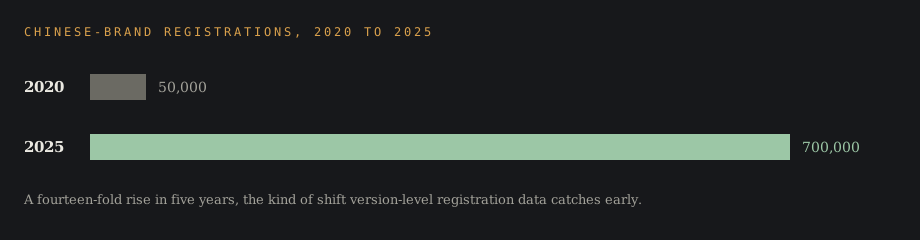
The 800-expert count, the 50-country coverage and the 30 to 50% version-level long tail are JATO's own statements; independent trackers put headcount closer to 790. Chinese-brand growth from 50,000 registrations in 2020 to 700,000 in 2025, and the roughly 65% electrified share, come out of JATO's published reports, which means the vendor is measuring the market it sells data on.
The pricing side carries no figure because JATO publishes none, and every deal is scoped to the markets a customer asks for.
This JATO Dynamics review covers what the automotive data company sells, who founded and runs it, how its Monthly Payments product works, and where it sits against competitors like Mobility Global and MarkLines. JATO Dynamics has provided automotive market intelligence since 1984 and employs over 800 experts in 50 countries.
What is JATO Dynamics
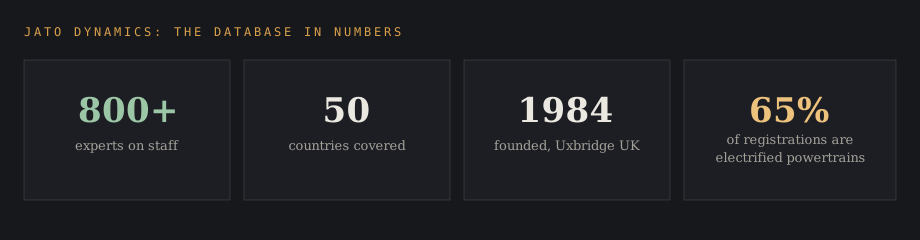
JATO Dynamics is an automotive market intelligence company founded in 1984 by Jake Shafran and headquartered in Uxbridge, west London. It maintains one of the industry's largest automotive databases, built for one job: giving businesses in the automotive industry a transparent view of a complex market. Independent trackers put current headcount close to 790, in line with the company's own stated figure of over 800.
The core asset is standardized data. Vehicle specifications, pricing and sales information get normalized the same way in every country JATO covers, allowing comparisons across multiple markets that a national registry or a single importer's records can't support.
That standardization is what the company built its reputation on. Automotive News maintains a dedicated resource page for JATO Dynamics, citing its figures in coverage of market trends and vehicle registrations across the industry.
The technology side runs on Microsoft Azure for data analytics, and JATO offers APIs that push its data into digital marketplaces and dealer websites. A dealer site can quote specifications and pricing from the same database an automaker's product planning team uses.
↑ FACT SHEETWho runs JATO Dynamics
Andy Rothery is the chief executive, promoted to the role after two years as chief operating officer. The company he runs spans those 800-plus people working across 50 countries, structured around data collection teams in each market feeding the central database.
JATO remains independent, with no parent group above it, which separates it from both of its main competitors.
↑ FACT SHEETJATO Dynamics products
Vehicle specifications and pricing data
The foundational product is the specifications and pricing database covering the entire automotive lifecycle, from product development and market positioning through to what a customer pays at the end. Product planners use it to benchmark a future model against every competitor version on sale.
30 to 50 percent of vehicle versions generate fewer than one registration per month, and only a database this granular catches demand shifting between them.
Monthly Payments
Monthly Payments is JATO's answer to how cars are bought today: on finance, compared by monthly cost. List price used to be the number buyers compared; now it's the monthly payment. The data can be integrated via a Unified API, and Custom Scenarios let a company run analysis on its own finance assumptions, replacing the platform's market defaults.

A leasing company can model its own rates against the market's advertised deals in the same view, and a marketplace can show a shopper real monthly payments. Nobody pays the list price anyway.
Competitive intelligence and market analysis
JATO provides competitive intelligence on products and pricing, and its analysis helps identify market trends and competitor strategies before they show up in annual results. The data supports decisions in product planning, competitive benchmarking, and market analysis, and customers use the same insights for pricing trends and market performance tracking.
The numbers in JATO's own reporting show why that matters right now. Chinese brands grew from 50,000 registrations in 2020 to 700,000 in 2025, and electrified powertrains account for around 65% of registrations. Pricing strategies set before either shift would be wrong twice over by now.
JATO Advisory and reports
JATO Advisory is the consulting layer on top of the data, and the company publishes regular reports on topics like electric vehicle adoption and market trends. The reports are where those registration and powertrain figures come from, and they give teams without an in-house analysis function a way to use the data without building one.
Who uses JATO Dynamics
The services are designed for businesses in the automotive industry: automakers, dealers, leasing companies and digital marketplaces. Automakers use the data for product planning and competitive benchmarking, working from the same standardized specifications their rivals are measured by. Marketplaces and dealer websites pull the data through APIs so shoppers see accurate specifications, pricing and monthly payments while browsing.
The common thread is decisions. Whichever team is buying, the sales pitch is the same: better information in, better decisions and business results out, and the growth opportunities that follow from spotting demand before competitors do.
↑ FACT SHEETAccess, accounts and getting started
Getting access to JATO data starts from the contact page, since the products sell as subscriptions and API integrations scoped to a customer's markets. The account portal sits behind a standard sign-in page, with a Google continue option next to email login, and API customers wire the data straight into their own dealer systems and marketplaces, skipping the portal entirely.
Buyers who want to understand the products before that first contact can learn the scope from the Monthly Payments and specifications documentation, then bring their own use case to the conversation. The information that matters going in is which markets and which vehicle segments the decision depends on.
People and jobs behind the database
JATO runs on people more than on algorithms: over 800 experts working in 50 countries, collecting and normalizing vehicle data in the markets where it originates. Jobs at the company cluster around that structure, local data teams handling the challenges of normalizing 50 markets' registration and pricing sources, plus the technology teams keeping the Azure platform running.
For buyers, the headcount is a freshness signal. Standardized data stays reliable over time because people maintain it market by market, and JATO has staffed that way for more than 40 years, adding markets over the years as customer demand grew.
When businesses grow into new markets, coverage follows the same route: hire people who understand the local market, and the insights the database delivers today stay current tomorrow.
JATO Dynamics competitors
JATO's main competitors are Mobility Global, the automotive data business spun off from S&P Global in July 2026, and MarkLines, the Japanese automotive portal. Mobility Global competes on breadth across the vehicle lifecycle with brands like CARFAX under its roof; MarkLines competes on supplier and production data.
| Tool | Where it competes | Ownership |
|---|---|---|
| JATO Dynamics | Standardized specs, pricing and monthly payments across 50 markets | Independent, no parent group |
| Mobility Global | Vehicle lifecycle breadth: history, dealer software, forecasting | Public company, NYSE: MBGL |
| MarkLines | Supplier and production data | Japanese automotive portal |
Ownership is part of the comparison. Mobility Global now answers to public shareholders under the MBGL ticker and reports quarterly; JATO has no listed parent and no announced sale process, so its product roadmap isn't exposed to either an investor cycle or a change of control. For a buyer signing a multi-year data contract, that stability has a value the feature list doesn't capture.
JATO's edge on capability is the standardized cross-market specifications and pricing layer, and Monthly Payments has no direct equivalent in either rival's catalog. Buyers weighing the three should start from the job: transaction-level pricing and finance data points to JATO, vehicle history and dealer software to Mobility Global, supplier mapping to MarkLines.
Bottom line
JATO Dynamics earns its place on specifications, pricing and finance data that's standardized across 50 countries, with 800 experts maintaining it and four decades of history behind it. The company doesn't publish much about itself beyond the product pages, so a buyer's evaluation runs through a sales conversation.
For automakers, leasing companies and marketplaces that need version-level pricing or Monthly Payments data, it's the specialist option in the category. For supplier mapping or vehicle history, one of the competitors above is the better starting point, and people evaluating the whole category should weigh all three against the specific decisions they need the data to support.
FAQ
What exactly does JATO Dynamics do?
JATO Dynamics collects, standardizes and sells automotive data: vehicle specifications, pricing, registrations and finance information across 50 countries. It also provides analysis and advisory services on top of that data, covering the entire automotive lifecycle from product development to retail.
Who founded JATO Dynamics?
Jake Shafran founded the company in 1984. It is headquartered in Uxbridge, west London, and remains independent.
Who is the CEO of JATO Dynamics?
Andy Rothery is the CEO of JATO Dynamics, appointed after two years as the company's chief operating officer.
Is JATO Dynamics a reliable source?
JATO has provided automotive market intelligence since 1984 and employs over 800 experts in 50 countries. Its standardized methodology is why outlets such as Automotive News cite its figures in cross-market comparisons.
Is JATO Dynamics used by automakers?
Yes. Automakers use JATO's data for product planning, competitive benchmarking and pricing decisions, alongside dealers, leasing companies and digital marketplaces that access the same database through APIs.
Who are JATO Dynamics' main competitors?
Mobility Global (formerly S&P Global Mobility) and MarkLines are the closest competitors. Mobility Global covers the vehicle lifecycle with brands like CARFAX; MarkLines focuses on supplier and production data; JATO differentiates on standardized specifications, pricing and monthly payments data.