Sprinklr review: the AI native platform for Unified CXM
 By Jan Suski. I go deep on every review, checking every number against its source and digging up details other coverage misses, a habit from six years of SEO and link building for tech companies. Bylines at Surfer, Brand24, and Senuto. How the scoring works.
· Prefer this source on Google
Best for
Large enterprises running high-volume social, service and listening operations that want one contract replacing four separate platforms.
Not for
Solo marketers, small teams, or anyone who wants to test the product hands-on before committing to an annual contract.
What it costs
No published price page. Annual contracts run $27,600 to more than $486,000, median around $129,000, priced by which of the 30-plus products and how many seats.
- Product suites
- Four: Sprinklr Marketing, Service, Social and Insights, under one login that replaces four contracts
- Product count
- More than 30 products in 100+ languages inside the platform
- AI models
- More than 1,250 domain-specific models in Sprinklr AI+
- Channels
- More than 30 networks published to, and more than 30 digital channels monitored
- Listening queries
- More than 7,500 pre-built, runnable without building a search from scratch
- Sentiment analysis
- AI-driven listening across billions of conversations, tracking a brand page and competitors
- Predictive CSAT
- Satisfaction scores flagging which customers need attention before a complaint goes public
- Trend reports
- Daily AI-generated comment trend reports for managers
- Governance
- Role-based permissions controlling which team can create, comment or reply per channel
- Routing
- Segments built from listening data, sending high-value customers to senior agents
- Service automation
- Conversation workflows and post-call summaries, with a bot fielding simple questions first
- Leadership
- Rory Read became CEO in November 2024; founder Ragy Thomas is now chairman
- Self-service
- None: no self-service sign-up and no free trials
- Free trial
- None, and self-service sign-up was withdrawn too
- Support services
- Enterprise contracts only, so a buyer factors them into the quote before setting a budget
- Pricing model
- Custom quotes for enterprise customers, with no published price page
- Contract floor
- $27,600 a year at the low end of observed annual contract values
- Contract ceiling
- More than $486,000 a year at the top end
- Median contract
- Around $129,000 a year
- Contract terms
- Price moves with which product tools and how many seats a company buys; monthly pricing isn't published, Sprinklr quotes annually
- Implementation
- Complex configurations and lengthy implementation, extended further by integrating existing systems
- Time to productive
- Most agents within days; full admin setup and integration work runs longer
- Customer base
- More than 1,600 businesses, including Microsoft, P&G and Samsung, plus many Fortune 100 clients
- Competitors
- Hootsuite, Khoros and Brandwatch; NiCE, Genesys and Five9; Adobe Experience Cloud and Salesforce Service Cloud
Brandwatch
Not forA care team that needs mentions routed to agents, since buying Brandwatch without an analyst is the standard way this purchase fails.
Sprout Social
Not forA global brand that needs approval workflow and governance across dozens of business units.
Pairs well with Sprinklr
Where the contract range comes from, and which counts are Sprinklr’s own
Sprinklr publishes no price page, so the $27,600 floor, the $486,000 top and the $129,000 median are observed annual contract values, and a quote is the only way to get a real number. The 1,250 AI models, 100 languages, 30 channels, 7,500 pre-built queries and 1,600 businesses are Sprinklr’s own product claims.
Revenue of $857 million and first-quarter revenue of $219.5 million against a $215.91 million consensus describe a company listed on the NYSE as CXM, where the numbers are reported financial results.
This Sprinklr review covers what the AI native platform does for customers, how steep the learning curve is, what an enterprise contract costs, and where the company sits after two years of turnaround.
Sprinklr describes itself as "the definitive, AI-native platform for Unified Customer Experience Management (Unified-CXM)," built to "deliver extraordinary experiences at scale" for every customer facing team, spanning social media management, Sprinklr Marketing, customer feedback and contact center services.
As an AI native platform, Sprinklr builds machine learning into every suite it sells.
↑ FACT SHEETWhat does Sprinklr do: an AI native platform for Unified CXM
Sprinklr is an enterprise-grade Unified Customer Experience Management platform, or Unified CXM. More than 1,600 businesses, including Microsoft, P&G and Samsung, run parts of their customer experience management through Sprinklr, and the company counts many Fortune 100 clients.
Sprinklr offers features beyond scheduling and publishing to a brand page, and Sprinklr Insights teams use that data and analytics to understand how customers respond and which need a reply.
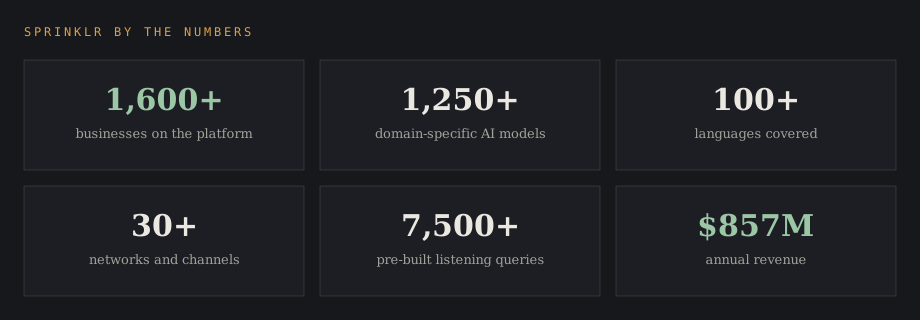
AI-driven listening and sentiment analysis sit at the center of that platform, turning conversation data into action. Sprinklr's AI analyzes billions of conversations for insights, and Sprinklr AI+ includes more than 1,250 domain-specific AI models across more than 100 languages, letting a brand track a comment or public post in any language.
Sprinklr integrates AI for predictive customer satisfaction scores, giving support teams a heads-up on which customers need attention before one bad comment becomes public, with daily AI-generated comment trend reports for managers.
Sprinklr Marketing, Sprinklr Insights and the social media suites
Sprinklr offers omni-channel capabilities across more than 30 networks and monitors more than 30 digital channels for social listening, backed by more than 7,500 pre-built queries a team can run without building a search from scratch. That listening layer tracks comment volume across a brand page and competitors' pages, giving teams a way to check what the public is saying and connect a single comment back to the customer.
A brand's social team can create a saved view so every comment from customers gets a fast reply, and repeat customers notice when they're heard.
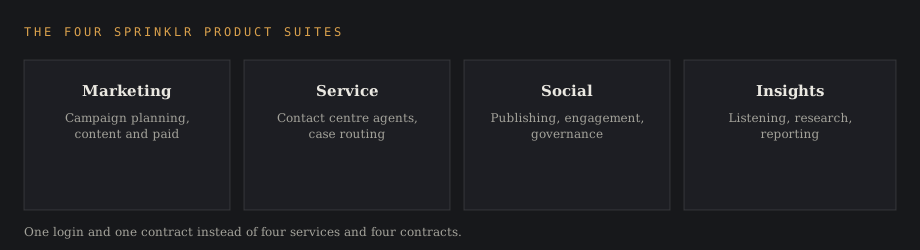
Sprinklr's platform includes four product suites, Sprinklr Marketing, Sprinklr Service, Sprinklr Social and Sprinklr Insights, covering social media, research, customer care and reporting under one login that replaces four services and four contracts. Sprinklr Marketing handles campaign planning and paid work; Sprinklr Insights handles listening and reporting.
Marketing teams use that data to create segments and route high-value customers to senior agents, so every customer gets heard once the queue gets long. Sprinklr automates conversation workflows and summaries for a support team, cutting manual work after every contact center call, and a bot can field simple questions first.
Sprinklr includes role-based permissions, governance tools and support services, which matter most for enterprises running dozens of brand pages, controlling which team can create, comment or reply on each channel.
↑ FACT SHEETPlatform complexity and the social media learning curve
Sprinklr has more than 30 products in its platform. Reviews consistently flag a learning curve, since a new team has to learn workflows across social media, contact center support and reporting. Complex configurations and lengthy implementation mean Sprinklr's complexity can overwhelm teams without support, and integrating with existing systems extends the integration timeline.
Most agents become productive within days of getting started, though full setup takes an admin team longer. Reviewers describe the automation as a promising solution once a team clears that setup period, and reviews from businesses managing multiple brands say Sprinklr saves time by replacing several point tools with one platform built to scale customer service for every product launch.
↑ FACT SHEETSprinklr pricing
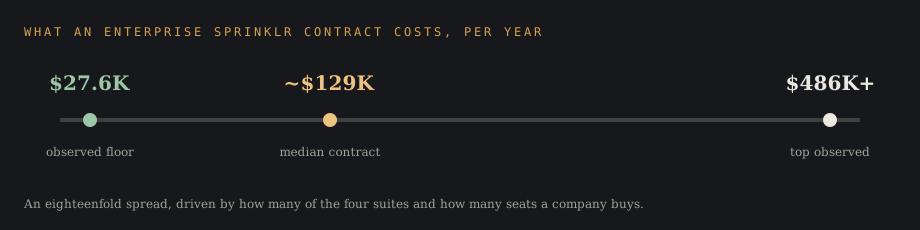
Sprinklr's pricing is based on custom quotes for enterprise customers, and Sprinklr no longer offers self-service sign-up or free trials. Annual contract values range from $27,600 to more than $486,000, with a median around $129,000, a spread that depends on which product tools and how many seats a company buys.
Support services come only with enterprise contracts, so a buyer should factor those services into the quote before setting a team's budget.
Sprinklr competitors in social media and CXM
Sprinklr fights on three fronts at once, and the rival list is different in each. In social media management and insights it runs against Hootsuite, Khoros and Brandwatch. On the contact center side it competes with the CCaaS incumbents: NiCE, Genesys and Five9. In enterprise customer experience management more broadly, Adobe Experience Cloud and Salesforce Service Cloud are the suite-scale alternatives.
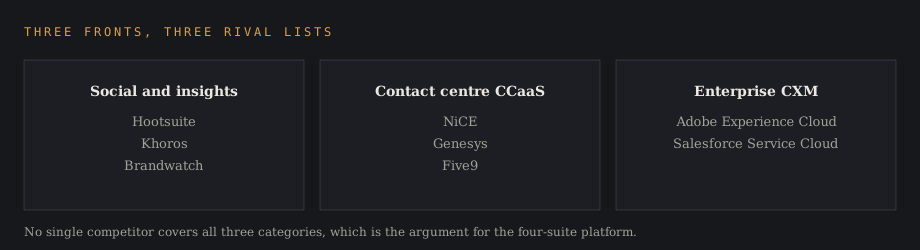
No single competitor covers all three categories, which is the whole argument for the four-suite platform and also the source of its learning curve. A buyer who only needs one of the three is usually better served by the specialist, and a buyer who needs all three is choosing between Sprinklr and a stack of separate contracts.
Who Sprinklr is built for
Sprinklr suits large enterprises with dedicated marketing and customer care teams. Large brands with millions of customers get more value per seat than a company with a handful of customers to manage. Sprinklr's approach can improve reply times and turn mentions into a kind of single feed, and it gives centralized control for managing multiple social platforms and brand pages at scale.
Mixed reviews show varying experiences with customer support, a theme once an account needs several tickets running at once. That's worth weighing, along with how well Sprinklr's platform can deliver extraordinary experiences for a specific team's customers, before signing a multi-year contract.
↑ FACT SHEETThe company behind the platform
Sprinklr trades on the New York Stock Exchange as CXM. Rory Read became president and chief executive in November 2024, arriving from a career that included chief operating executive roles at Dell and the chief executive job at Virtustream; founder Ragy Thomas moved to an advisory role and continues as chairman.
Read is running a multi-year, three-phase turnaround, and the company has described itself as still working through phase two, with the acceleration phase framed as an FY2028 story. Revenue reached $857 million, and first-quarter revenue of $219.5 million came in ahead of the $215.91 million consensus. Market capitalisation sat near $1.6 billion at the end of July 2026.
For a buyer, the turnaround matters in one specific way: a vendor mid-turnaround is a vendor whose roadmap priorities can move. Ask which suite the current phase is funding before committing a multi-year budget to a module that isn't it.
Frequently asked questions
What are Sprinklr's key features?
Key features include AI-driven listening, sentiment tracking, monitoring across more than 30 networks, more than 7,500 pre-built queries, automated summaries and role-based permissions across four suites for enterprise customers.
What does Sprinklr do?
Sprinklr, also called Unified CXM, is a platform combining social media management, marketing, customer care and research so businesses manage every conversation, comment and page from one place and deliver extraordinary experiences for their customers.
What are the benefits of using Sprinklr?
Benefits include centralized control across brands and channels, AI models that analyze conversations for insights, automation that cuts manual work for agents, and enough depth to replace several services with one contract.
How much does Sprinklr cost per month?
Sprinklr doesn't publish monthly pricing. Annual contracts range from $27,600 to more than $486,000, with a median around $129,000, priced by custom quote based on suites and seats.
What does Sprinklr do beyond scheduling?
Beyond scheduling and publishing, Sprinklr does AI-driven listening, sentiment scoring, predictive satisfaction tracking, automated call-note summaries and governance across every channel a brand's customers use.
Is Sprinklr hard to learn?
Users report a real learning curve given more than 30 products, though agents become productive within days.
How to use Sprinklr?
Most teams build a rollout with the suite they need, then build out other suites as their customer base grows, leaning on Sprinklr's onboarding and dedicated support.
Is Sprinklr a good company?
Sprinklr is an established, publicly traded company used by more than 1,600 businesses, including customers like Microsoft, P&G and Samsung, with annual revenue of $857 million, though reviews of support are mixed.
How much does Sprinklr cost?
Cost is set by custom quote, with contract values from $27,600 to more than $486,000 and a median near $129,000.
Why is Sprinklr stock falling?
Sprinklr is two years into a multi-year turnaround under Rory Read, structured in three phases, and the company has described itself as still working through phase two with the acceleration phase framed as an FY2028 story. That gap between current results and the promised inflection is what the share price reflects; recent quarters have beaten consensus, with Q1 revenue of $219.5 million against a $215.91 million estimate.
A software buyer should weigh product fit and roadmap funding.
Who are Sprinklr's competitors?
Hootsuite, Khoros and Brandwatch in social media management and insights; NiCE, Genesys and Five9 in the contact center; Adobe Experience Cloud and Salesforce Service Cloud in enterprise customer experience management. Sprout Social competes at the smaller end of the social suite.
Is Sprinklr a unicorn?
Sprinklr reached unicorn status as a private company before its public listing, and remains an established public company serving enterprise customers, trading on the NYSE as CXM.
Is Sprinklr a CRM system?
Sprinklr isn't a traditional CRM; it's a Unified Customer Experience Management platform focused on social channels, customer care and marketing.
Is Sprinklr similar to Sprout Social?
Both cover social media, but Sprinklr targets large enterprises with a broader unified customer experience management platform, while Sprout Social suits smaller businesses.
Who is Sprinklr owned by?
Sprinklr is a publicly traded company on the NYSE under the ticker CXM. Ragy Thomas, who founded the company, serves as chairman, and Rory Read has served as president and chief executive officer since November 2024.