Influencer marketing platform pricing in 2026: rate cards, quotes and Vendr medians
 By Jan Suski. I go deep on every review, checking every number against its source and digging up details other coverage misses, a habit from six years of SEO and link building for tech companies. Bylines at Surfer, Brand24, and Senuto. How the scoring works.
The numbers Influencer marketing platforms, checked 1 October 2026
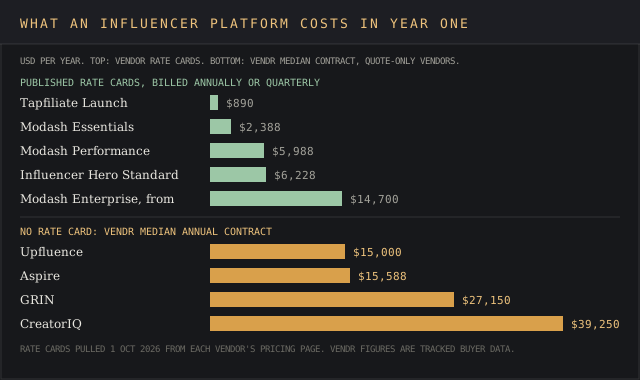
Every self-serve rate card above costs less per year than the cheapest Vendr median for a quote-only influencer marketing platform.
The quote-only tier's own spread is wide: CreatorIQ's median runs 2.6 times Upfluence's.
A 3-month minimum on Influencer Hero and yearly billing on Modash mean the advertised monthly figure is never the full commitment: $1,947 on Influencer Hero Standard, $2,388 up front on Modash Essentials.
Brands can start running influencer campaigns on published software for $890 a year, and the quote-only enterprise suites land between $15,000 and $39,250 a year at the median contract Vendr tracks. That spread is the first finding of this report. The second is that many of the prices repeated across the web for these tools are out of date: Storyclash's "$870 a month" and Favikon's "$99 Starter" both describe rate cards the vendors no longer show.
The figures come from each vendor's own pricing page, rendered in a browser on 1 October 2026, and from Vendr's marketplace data where a vendor publishes no rate card. The page covers how each influencer marketing platform prices, what each published plan buys, what the quote-only tools cost in practice, and the fees that sit outside the software bill.
It's written for marketers, small businesses and agencies setting a first-year budget for influencer marketing. Software is the smaller line in most programs, because the fees paid to influencers, gifted products and paid media come on top, so a wrong platform estimate compounds into a wrong campaign budget.
How each influencer marketing platform prices its software
Influencer marketing platforms sell the same handful of meters, packaged into different pricing structures. Read the plan grid as a list of caps, because the cap you hit first sets your real price. Five pricing models show up across the influencer marketing platforms in this report, and most platforms combine two or three of them:
- Flat subscription fees by tier. Influencer Hero, Modash & Favikon all sell three or four fixed tiers, priced by the number of influencers you can search, contact and track.
- Usage quotas inside each tier. Favikon meters search in credits (500 a month on Core, 1,000 on Pro) and caps active campaigns at 1 or 5; Influencer Hero meters outreach to influencers at 1,000, 5,000 or 10,000 reach-outs a month.
- Seats. Influencer Hero includes 1, 3 or 8 seats; Modash includes 2 or 5 team members, so agencies managing influencers for several brands pay for headcount.
- Payout and conversion volume. Influencer Hero caps payouts to influencers at 20, 200 or 500 a month; Tapfiliate charges $15 per extra 1,000 conversions on its Launch plan.
- Annual contracts with a negotiated fee. Upfluence, Aspire, GRIN and CreatorIQ publish no prices and sell through sales calls.
Usage-based pricing is where budgets drift. Four influencer campaigns a quarter that each contact 400 influencers need 1,600 reach-outs in a busy month, past the 1,000-a-month cap on Influencer Hero Standard. The devil's in the details, and the details are the quota rows below the headline price.
Contract terms move the total as much as the sticker. Influencer Hero discounts quarterly billing by 20% and yearly billing by 30%, against a 3-month minimum on every plan. Modash's yearly billing cuts 25% off Essentials and 14% off Performance.
Brands that pick monthly billing to keep their options open pay the highest effective rate in the category. That's par for the course in software. The same split between published tiers and quote-only contracts runs through market intelligence platform pricing and competitive intelligence pricing.
Influencer marketing platforms with a published rate card
Four vendors in this report publish a full plan grid without a sales call. They cluster at the lower end of the influencer marketing platform market, and they suit small businesses and brands testing influencer marketing with a few dozen influencers before committing a five-figure budget to it.
Influencer Hero
Influencer Hero's pricing page lists Standard at $649, Pro at $1,049 and Business at $2,490 a month at the monthly rate, with Enterprise quoted. Quarterly billing drops Standard to $519 a month, billed $1,557 a quarter, and yearly billing takes 30% off, about $454 a month. Every plan carries a 3-month minimum.
The tiers gate volume more than features. The key features every plan shares are fake follower analysis, audience analytics, lookalikes, Shopify & Klaviyo integrations, affiliate links and discount codes. What changes is how many influencers you can search, contact and pay:
- Standard: 8,000 searches for influencers, 350 reports on influencers, 1,000 reach-outs to influencers a month, 20 payouts to influencers, 200 tracked UGC posts, 3 campaigns, 1 seat.
- Pro: 35,000 searches for influencers, 550 reports, 5,000 reach-outs to influencers, 200 payouts, 500 tracked posts, 20 campaigns, 3 seats.
- Business plan: the whole nine yards for a larger team, with 100,000 searches for influencers, 1,500 reports, 10,000 reach-outs to influencers a month, 500 payouts to influencers, 1,500 tracked posts, unlimited campaigns, 8 seats and custom API integrations.
The 10,000-influencers-a-month outreach ceiling quoted around the web is the Business plan's limit, at $2,490 a month. A business on Standard can contact a tenth as many influencers.
Modash
Modash sells Essentials from $199 a month billed yearly ($2,388), Performance from $499 a month billed yearly ($5,988), and Enterprise from $14,700 a year for campaigns above 250 influencers.
Its database covers every public Instagram, TikTok and YouTube profile above 1,000 followers, which Modash puts at 350M+ creators, searchable by location, niche and audience demographics. That's how Modash surfaces suitable creators for small brands: zero in on a niche first, then open profiles of the influencers that pass.
Essentials includes 2 team members, 300 opened profiles a month, 150 unlocked emails and tracking of influencer content for 100 influencers. Performance raises that to 5 team members and 800 opened profiles. The opened-profile meter is the one to watch: vetting potential influencers burns it before outreach to the right influencers starts.
Favikon
Favikon prices Core at €199 and Pro at €299 a month on monthly billing, with Enterprise quoted. Its comparison table further down prints Core "From $159 /mo" and Pro "From $239 /mo" in dollars. Favikon covers 9 social media platforms, LinkedIn included, which makes it the pick for brands in a B2B niche that need relevant influencers outside Instagram and TikTok.
Core includes 500 credits a month, 3,000 contacts, 1 active campaign and 100 tracked influencers. Pro adds the advanced features: double the credits, 5 active campaigns, 300 tracked influencers, direct messages to influencers on social media and a GA4 integration. Enterprise adds API access, onboarding and a dedicated success manager.
Tapfiliate, for tracking only
Brands that already know their influencers can skip software for finding influencers and pay for tracking alone. Tapfiliate charges $89 a month or $890 a year on Launch (50 affiliates, 5,000 clicks and 500 conversions a month) and $179 a month or $1,790 a year on Scale (unlimited affiliates, 100,000 clicks, 10,000 conversions). It lists 30+ integrations, Shopify, WooCommerce, BigCommerce and Stripe among them.
| Influencer marketing platform and plan | Price | Influencers covered | Seats | Billing |
|---|---|---|---|---|
| Influencer Hero Standard | $649/mo | 1,000 reach-outs to influencers a month, 20 payouts | 1 | 3-month minimum |
| Influencer Hero Pro | $1,049/mo | 5,000 reach-outs to influencers a month, 200 payouts | 3 | 3-month minimum |
| Influencer Hero Business | $2,490/mo | 10,000 reach-outs to influencers a month, 500 payouts | 8 | 3-month minimum |
| Modash Essentials | $2,388/yr | Content tracking for 100 influencers | 2 | Yearly |
| Modash Performance | $5,988/yr | 800 opened profiles of influencers a month | 5 | Yearly |
| Modash Enterprise | From $14,700/yr | Campaigns above 250 influencers | Custom | Yearly |
| Favikon Core | €199*/mo | 100 tracked influencers | n/a | Monthly |
| Favikon Pro | €299*/mo | 300 tracked influencers | n/a | Monthly |
| Tapfiliate Launch | $890/yr | 50 affiliates or influencers | 1 | Yearly or $89/mo |
| Tapfiliate Scale | $1,790/yr | Unlimited affiliates and influencers | 5 | Yearly or $179/mo |
Prices from each vendor's pricing page, 1 October 2026. *Favikon prices in euros on monthly billing. At the European Central Bank reference rate of 1 EUR = 1.1403 USD, published 25 September 2026 and refreshed weekly, EUR 199 is about $227 and EUR 299 is about $341.
What one influencer costs on each plan
Dividing each plan's price by the influencers it covers gives a unit cost that compares across vendors. The cheapest plan per month is rarely the cheapest per influencer:
| Plan | Price a month | Influencers included a month | Cost per influencer |
|---|---|---|---|
| Influencer Hero Standard | $649 | 1,000 influencers contacted | $0.65 |
| Influencer Hero Pro | $1,049 | 5,000 influencers contacted | $0.21 |
| Influencer Hero Business | $2,490 | 10,000 influencers contacted | $0.25 |
| Modash Essentials | $199 | 100 influencers tracked | $1.99 |
| Favikon Core | €199 | 100 influencers tracked | €1.99 |
| Favikon Pro | €299 | 300 influencers tracked | €1.00 |
Influencer Hero at the monthly rate; Modash at its yearly-billed monthly rate; Favikon on monthly billing. Contacts and tracked influencers are different meters, so compare within each column type.
Influencer Hero's Pro plan costs less per influencer contacted than Business, because Business pays for 8 seats, UGC tracking of 1,500 posts and API access. Brands that only need outreach volume to influencers get the best influencer unit price on Pro.
Quote-only influencer marketing platforms: what Vendr's buyer data shows
The enterprise suites publish no prices, so the numbers below are Vendr's anonymized buyer data, the header figures on each Vendr marketplace page. They describe contracts that closed, which makes them the best reference for informed decisions before the first sales call. They're medians, so half the brands paid more.
| Platform | Vendr median a year | Tracked low | Tracked high | Owner or status |
|---|---|---|---|---|
| Upfluence | $15,000 | $9,259 | $26,922 | Modular, custom-quoted |
| Aspire | $15,588 | $11,139 | $36,599 | No public pricing page |
| GRIN | $27,150 | $16,828 | $32,808 | Quote-only |
| CreatorIQ | $39,250 | $30,000 | $59,500 | Pricing via sales call |
Vendr marketplace pages for Upfluence, Aspire, GRIN and CreatorIQ, read 1 October 2026.
Upfluence
Upfluence's pricing page calls its pricing "modular and custom-quoted" across three packages: Find Creators, Scale Creator Programs and an Auto-pilot plan. Vendr's median Upfluence contract is $15,000 a year.
Scale Creator Programs adds campaign management with Jaice AI campaign creation. The two upper packages add e-commerce integrations with Shopify, WooCommerce, Magento, BigCommerce and Amazon, plus sales tracking with "zero fees on tracked sales." The top package adds bulk global payouts in local currencies, allowing brands to pay influencers abroad from a single account. That suits brands with influencer campaigns in several countries.
CreatorIQ
CreatorIQ's pricing page offers a call with a platform specialist and nothing else. Vendr's tracked range starts at $30,000 a year, with a $39,250 median and a $59,500 high, the highest of the four. At the median, one CreatorIQ contract costs as much as 16 years of Modash Essentials, so it can cost an arm and a leg next to the self-serve tier.
Captiv8 and Storyclash
Two platforms changed hands since May 2025, and neither publishes a rate card. Publicis Groupe bought Captiv8 on 21 May 2025, citing a network of 15 million creators; captiv8.io/pricing now returns a "Page not found."
Captiv8's product pages advertise 500+ search filters for finding influencers and a report builder with reporting templates. The one public price comes from a competitor: Influencer Hero's comparison post puts Captiv8 at $25,000 a year plus a $3,000 onboarding fee.
Kolsquare acquired Storyclash, announced 22 January 2026. Storyclash's pricing page now says pricing "is tailored to your goals," while its own FAQ still names Starter at €499, Growth at €999 and Scale at €1,899. The same FAQ sells Instagram Stories archiving for up to 12 months, so posts by influencers stay reviewable after they expire.
Two social suites also sell influencer marketing modules. Sprout Social paid $140 million in cash for Tagger Media in August 2023, and Meltwater folded Klear's influencer tooling into its suite, covered in our report on the Meltwater acquisition.
Sprout's base seat prices are in our Sprout Social pricing breakdown. Teams that only need to see which influencers and accounts mention them can start with a listening tool: our social listening rankings compare those, and the Brand24 pricing report covers all five of its plans.
Why published prices for the same influencer marketing tool disagree
Roundups and AI answers repeat prices that vendors retired months ago. Five common claims, checked against the vendor's own page or Vendr on 1 October 2026, show the size of the gap:
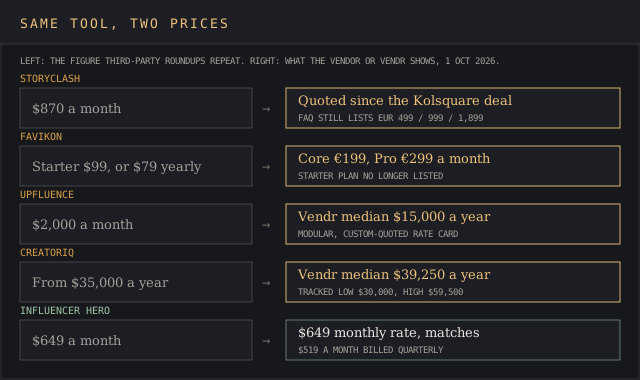
- Storyclash at $870 a month. Retired. The current page sends every buyer to a demo after the Kolsquare deal.
- Favikon from $79 or $99 a month. Retired. The Starter plan is gone; Core starts at €199 on monthly billing.
- Upfluence from $2,000 a month. That's $24,000 a year, against a $15,000 Vendr median and a $9,259 tracked low.
- CreatorIQ from $35,000 a year. Vendr tracks contracts from $30,000, and the median sits at $39,250.
- Influencer Hero at $649 a month. Correct, at the monthly rate.
The mechanism is a circle. A competitor's comparison post prints a price, lists of the best influencer platforms copy it, and AI engines cite the lists. Influencer Hero's Storyclash-alternatives post, updated 20 September 2026, still carries the Storyclash, Favikon, Upfluence and CreatorIQ figures above. Third-party price lists are a dime a dozen, and most copy each other. Our software pricing errors report traces the same chain in other categories.
The fix takes two tabs. Read the vendor's own page, then check Vendr; those two sources are the inputs for informed decisions on price. Our social listening pricing report found the same pattern for Brandwatch, Sprinklr and Meltwater, which sell to the same marketers. Watching rivals' rate cards this way is small-scale pricing intelligence.
Key criteria to compare before you buy
Six key criteria separate a $2,388 contract from a $39,250 one, and each maps to a row in the plan grids above. Score every vendor on the same six so the quotes compare cleanly and informed decisions come out of the comparison:
- Search depth to identify influencers. The right influencers have to be in the database before a filter can find them. Influencer Hero's search quota runs from 8,000 to 100,000 lookups by tier; Modash covers 350M+ profiles on every plan and meters opened profiles.
- Filters for suitable influencers. Captiv8 advertises 500+ search filters for suitable influencers; Influencer Hero adds conversion-enhancing filters from Pro up.
- Campaign management. The tools to manage campaigns differ most by tier. Influencer Hero allows 3 campaigns on Standard and unlimited on Business; Favikon allows 1 active campaign on Core and 5 on Pro.
- Analytics tools for performance tracking. Influencer Hero opens aggregated campaign data from Pro; Captiv8 sells a report builder with reporting templates.
- Integrations and API access. Influencer Hero reserves custom API integrations for Business; Favikon reserves its API for Enterprise.
- Customer support and success management. Covered below, because it changes most between tiers.
An intuitive interface is worth testing in a trial, but it never shows up on the invoice. The advanced features that do show up are the quotas: a program with 30 influencers a quarter and one marketer fits the bottom tier, while brands running hundreds of influencers across three markets need the top one. A team that already reports in analytics tools like GA4 can use Favikon Pro's GA4 integration and skip a reporting upgrade.
Customer support by plan
Customer support climbs with the tier on both self-serve platforms. Influencer Hero gives Standard consultation and training, adds a dedicated account manager and a Slack channel on Pro, and keeps both on Business.
Favikon adds priority customer support on Pro and a dedicated customer success manager on Enterprise, the tier it pitches at agencies or brands running influencer marketing at a large scale. If a team plans to work closely with a vendor during its first month of influencer marketing outreach, that's a Pro-tier decision on both, and it keeps brands and the vendor on the same page.
Costs outside the platform fee
For most brands the platform fee is a drop in the bucket next to what they pay the influencers themselves. Software doesn't include fees to influencers, and the vendors in this report price creator pay outside their subscription fees. A full influencer marketing strategy budgets four more lines:
- Fees to influencers. Flat per-post rates, performance-based commissions through coupon codes and tracking links, or hybrid deals mixing a fixed fee with a sales bonus.
- Product gifting. Influencer Hero and Upfluence both ship products to influencers from inside the platform; the product and postage are yours.
- Whitelisted ads. Running a post by one of your influencers as an ad from their handle bills to your paid social budget.
- Onboarding and minimum terms. Favikon includes onboarding on Enterprise; Influencer Hero locks every plan for 3 months.
Total cost of ownership is the platform fee plus every payment to influencers, gifted product and boosted post for the year. Payout handling is its own meter: Influencer Hero allows 20 payouts to influencers a month on Standard and 500 on Business, so brands paying 60 influencers a month outgrow Standard on payouts alone.
Our CPM calculator turns the fee your influencers quote and expected views into a cost per thousand impressions, which puts a sponsored post by one of your influencers and a boosted ad on the same scale.
Free tools and free trials
Free influencer marketing tools cover the basics with no money down: profile lookups, a few searches, a manual shortlist of influencers. Their databases are smaller and refresh less often than paid ones, so they suit localized or niche campaigns with a handful of influencers.
HypeAuditor lets brands start with free media plans and campaign management, plus demo versions of its paid features. Brands that cut corners with free influencer marketing tools pay later in manual vetting.
Free trials are the better test of a paid influencer marketing platform. Favikon offers a 7-day trial on Core and Pro, Modash lets buyers try before paying & Tapfiliate runs free trials of 7 days on Launch, 14 on Scale and 30 on Enterprise.
A trial is a race against time, so line up 20 potential influencers before day one, then run the real workflow: search, vet for fake followers, contact, send follow-ups, track. Judge the trial's success on one number: how many of the 20 influencers replied.
Tracking sales and campaign performance
Paid influencer marketing platforms earn their fee on tracking, because sales data ties campaign performance to revenue. Tracking links and per-influencer coupon codes attribute each order from your campaigns to the influencers who drove it.
That attribution needs an e-commerce integration. Brands on Shopify get one on every Influencer Hero plan; Upfluence connects to Shopify, WooCommerce, Magento, BigCommerce and Amazon, and Tapfiliate to 30+ platforms.
Engagement metrics come second. Engagement rates and follower count show reach, and engagement metrics without sales attached are vanity metrics. Tracking performance at the order level needs the paid tiers: Influencer Hero's Shopify integration and Upfluence's sales tracking both sit on paid plans.
Track three key performance metrics per influencer (cost per acquisition, revenue per post, engagement rate on sponsored content) and the campaign outcomes tell you which influencers to rebook for future campaigns. Revenue per influencer is what the next influencer marketing strategy gets built on.
Measure success in orders: a post with high engagement and zero sales is a cost. Vanity metrics like likes per post belong in the appendix of the report on influencer campaigns, with success measured above them in revenue.
Consumer trust is the case for the channel. In a May 2020 survey of 1,000+ US consumers by Matter Communications, 61% said they were likely to trust a recommendation from a friend, family member or influencer on social platforms, against 38% for a brand.
Influencer marketing strategies and the plan each one needs
The right plan follows from the influencer marketing strategy. This report groups the programs brands run into five influencer marketing strategies, and each one stresses a different meter, so the same brand can overpay on one platform and hit a wall on another.
Gifting to micro-influencers
An influencer marketing campaign built on product gifting to micro-influencers pays in product, so the software has to handle volume: search, outreach with follow-ups and post detection to log each post's engagement. Influencer Hero's Standard plan covers 1,000 reach-outs and 200 tracked UGC posts a month, and Modash Essentials tracks content from 100 influencers for $2,388 a year.
Brands gifting to 40 niche influencers a month across two or three campaigns fit either.
Affiliate and coupon-code programs
An affiliate marketing strategy pays influencers on sales, so tracking matters more than discovery. Tapfiliate's Scale plan handles unlimited affiliates and 10,000 conversions a month for $1,790 a year, and Influencer Hero puts affiliate links, discount codes and a creator dashboard on every plan. Effective influencer marketing at this tier is counted in orders, and driving conversions is the whole brief.
The sales data these programs produce is what lets marketers make informed decisions on which influencers to renew. Kill two birds with one stone here: the same coupon codes that set each influencer's commission also attribute revenue to each influencer marketing campaign.
Campaigns to drive brand awareness
Awareness campaigns buy reach with social media influencers whose followers match the target audience, then measure views and engagement rates. They lean on audience analytics and fake follower checks, both standard on every Influencer Hero plan. Brands that drive brand awareness this way judge each influencer marketing campaign on cost per thousand views, and Modash's audience demographics on 350M+ profiles help pick social media influencers whose followers match it.
Always-on ambassador programs
Ambassador programs turn one-off influencer collaboration into long-term influencer relationships, with the same influencers posting every month. They stress the CRM: Influencer Hero's Business plan allows unlimited campaigns, 30 email flows and 500 payouts a month, and Favikon Pro allows 5 active campaigns and 300 tracked influencers.
Many brands start an ambassador influencer strategy with people who already buy from them. Influencer Hero's "find influential customers" quota (6,000, 30,000 or 100,000 by tier) looks for influencers who are already real customers, and Modash Essentials finds up to 3,000 influencers a month who already follow a brand's account. Each influencer collaboration that starts this way skips the cold pitch.
Celebrity influencers and multi-market programs
Of the five influencer marketing strategies, this is the one with the highest software bill. Programs that sign celebrity influencers and run campaigns in several markets end up on the enterprise suites to manage campaigns across markets, with annual contracts and multi-currency payouts.
CreatorIQ, at a $39,250 Vendr median, and Upfluence's top package, with payouts to influencers in local currencies, are priced for it. Bite the bullet on the annual contract at this tier, because Influencer Hero's top self-serve plan stops at 8 seats.
How to budget for an influencer marketing platform
Write down the marketing strategy before the first demo: how many influencers, how many campaigns a quarter, which social media platforms. The best influencer marketing platform for a program is the cheapest one whose quotas fit that plan. Here's how the numbers in this report sort by business size:
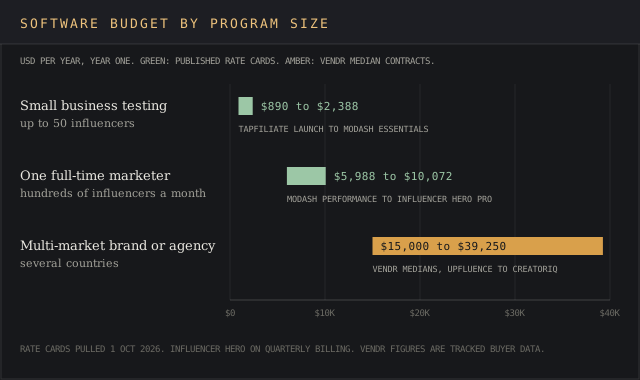
- Small businesses testing the channel with up to 50 influencers: Tapfiliate at $890 a year for tracking, or Modash Essentials at $2,388 a year with discovery included.
- Brands with one full-time marketer contacting hundreds of influencers a month: Influencer Hero Standard or Pro, $6,228 to $10,072 a year on quarterly billing, or Modash Performance at $5,988.
- Multi-market brands and agencies managing influencers in several countries: budget $15,000 to $40,000 a year and get quotes from Upfluence, Aspire, GRIN and CreatorIQ against the Vendr medians.
Get quotes from three vendors before signing anything, because a 3-month minimum or an annual contract puts all your eggs in one basket, and score them on one sheet with our vendor evaluation scorecard.
Ask each vendor for its seat price, its search and outreach quotas for influencers, its payout cap and its renewal terms in writing. Different influencer marketing strategies weight those rows differently, so a gifting program and an affiliate program can pick different winners from the same three quotes.
Frequently asked questions
How much should I pay for influencer marketing?
For the software, $890 to $14,700 a year on a published rate card, and $15,000 to $39,250 a year at the Vendr median for quote-only enterprise suites. Fees to influencers, gifting and paid media for your campaigns come on top of that.
Which platform is best for influencer marketing?
The best influencer marketing tool is the cheapest one whose quotas fit your program. Modash suits brands searching Instagram, TikTok and YouTube for the right influencers; Favikon suits B2B brands that need LinkedIn; Influencer Hero suits brands that want outreach, payouts and Shopify tracking in one platform; CreatorIQ suits brands with a $30,000+ budget.
What is the best influencer marketing platform for small businesses?
For small businesses aiming to test the channel on under $3,000 a year, Modash Essentials at $2,388 with discovery included, or Tapfiliate Launch at $890 for tracking alone. Small businesses that want outreach to influencers automated as well should price Influencer Hero Standard at $519 a month on quarterly billing.
What are the primary advantages of an influencer marketing platform?
Scale and attribution. The primary advantages are search across millions of influencers (Modash covers 350M+ profiles), outreach automation with follow-ups, and tracking performance down to the order through Shopify, WooCommerce or Amazon integrations.
Do influencer marketing platforms offer free trials?
The self-serve ones do. Favikon offers 7-day free trials on Core and Pro, and Tapfiliate offers free trials of 7, 14 and 30 days by plan. The quote-only suites sell through demos. Use either to contact real influencers from your own shortlist.
Why don't Upfluence, GRIN and CreatorIQ publish prices?
Each sells custom contracts through a sales call, and Upfluence describes its pricing as modular and custom-quoted. Vendr's tracked medians are $15,000, $27,150 and $39,250 a year.
Bottom line
Influencer marketing software splits into two markets. Published rate cards run $890 to $14,700 a year and suit small businesses and single-marketer teams working with dozens of influencers. Quote-only suites run $15,000 to $39,250 a year at the Vendr median and suit brands managing hundreds of influencers.
Settle the influencer marketing strategy first, then check every price against the vendor's page before budgeting, because Storyclash, Favikon, Upfluence and CreatorIQ all circulate with figures their sources no longer support.
Sources, and the influencer platform prices no vendor prints
Every rate card on this page was read on the vendor's own pricing page on 1 October 2026, and each source is linked where it's first cited.
Sources in order of first use are vendr.com, influencer-hero.com, modash.io, favikon.com, tapfiliate.com, upfluence.com, creatoriq.com, globenewswire.com (21 May 2025), captiv8.io, schoenherr.eu (22 January 2026), storyclash.com, investors.sproutsocial.com (August 2023), hypeauditor.com and businesswire.com (26 May 2020).
Tracked-contract figures are the header stat blocks on vendr.com/marketplace for Upfluence, Aspire, GRIN and CreatorIQ. The Captiv8 figure is a competitor's published estimate, attributed to Influencer Hero in the text.
Upfluence, Aspire, GRIN, CreatorIQ and Captiv8 publish no dollar figure, and Storyclash's pricing page prints none since the Kolsquare deal.