Ahrefs vs Semrush
 By Jan Suski. I go deep on every review, checking every number against its source and digging up details other coverage misses, a habit from six years of SEO and link building for tech companies. Bylines at Surfer, Brand24, and Senuto. How the scoring works.
| WHAT EACH ONE DOES | AHREFS | SEMRUSH |
|---|---|---|
| Core job | Backlinks & keywords | SEO+PPC+local suite |
| Keyword database | 28.7B, 217 locations | 28.8B, 142 databases |
| Rank updates | Weekly, all plans | Daily, all plans |
| Site audit checks | 170+ issues | 140+ checks |
| Crawl rate | 5M pages/min | ~10B pages/day |
| Local SEO | No local toolkit | $30-$60 per location |
| Paid search | Paid keywords, CPC | Ads history, PPC tool |
| Content tools | Content Explorer | Content Toolkit $60 |
| AI visibility | Brand Radar from $199 | AI toolkit $99/mo |
| Outreach | Export to email tool | Link Building Tool |
| Skip it if | You need local or PPC | You want API on budget |
| WHAT YOU GET | AHREFS | SEMRUSH |
|---|---|---|
| Entry price | $29 Starter | $139 SEO plan |
| Cheapest full plan | $129 Lite | $139 SEO |
| Top self-serve tier | $449 Advanced | Custom (was $549) |
| Three seats, entry | $209/mo on Lite | From $229/mo on SEO |
| Extra seat | $40-$100/mo | From $45/mo |
| Tracked keywords | 750 on Lite, weekly | 500 on SEO, daily |
| API access | Every main plan | Advanced only |
| Free trial | None on main plans | 7 days, card needed |
| Refunds | Generally none | Annual subs, 7 days |
| Enterprise | $1,499/mo, annual | Quote via demo |
| Owner | Bootstrapped since 2011 | Adobe since Apr 2026 |
StrongerWeakerNo edge
Thirty-five further documented limits sit behind the button below: credit meters, crawl and API quotas, prompt packages, Local toolkit credits and the scope of Semrush’s money-back guarantee. Test scenario: one to three seats on self-serve plans, no add-ons unless named, billed monthly. Every figure comes from ahrefs.com or semrush.com, read 17 October 2026, and is sourced in the section its row links to.
| Ahrefs | WHAT IT DOCUMENTS |
|---|---|
| Credits, Lite | 1,000 per user a month |
| Credits, Standard and up | Unlimited per user |
| Crawl credits | 100K / 500K / 1.5M / 5M+ a month |
| API rows per request | 100 / 250 / 500 / unlimited |
| Connect API units | 200K / 800K / 2M / 4M a month |
| MCP server | Every main plan |
| Report Builder | $99/mo, 50 reports, 500 widgets |
| Project Boost | Pro $20, Max $200 per project/mo |
| Pay-as-you-go expiry | 3 billing months |
| Prompt packages | $50 / $100 / $250 for 2.5K / 7K / 25K checks |
| Claude prompt checks | 8 checks per update |
| Brand Radar platforms | 6 in the Index, 7 with Claude on custom prompts |
| Pages in index | 494B |
| Content Explorer | 20.3B* pages |
| Portfolios | 1,000 URLs from 10 domains |
| Keyword categories | 25+ |
| Free Web Analytics | Up to 1M events per project |
| Payment methods | Visa, MC, Amex, UnionPay; wire on Enterprise |
| Semrush | WHAT IT DOCUMENTS |
|---|---|
| AI visibility reports, Starter | 300 a day |
| Free plan | 10 reports a day, 1 demo project |
| Share of Voice | Advanced only |
| MCP access | From Starter |
| Historical SEO data | Pro+ and up |
| White-label reports | Base $10/mo, Pro $20/mo |
| Lead Generation listing | $90/mo |
| Websites monitored | 5 / 15 / 40 (Starter, Pro+, Advanced) |
| AI Search checks, toolkit | Up to 100 pages |
| Map Rank Tracker credits | 375 Base, 1,225 Pro |
| Listing distribution | 70+ directories, Local Pro |
| Competitor review reports | 10 a month, 10 competitors each |
| Google review refresh | Hourly |
| Local custom tier | 20+ locations |
| Raw traffic data | 500TB |
| AI sentiment refresh | Weekly; prompts daily |
| Money-back scope | Initial 12-month+ subs, card, online |
*A marked figure is one Ahrefs states two ways on its own domain. The 35 trillion backlink count reads “External backlinks history” on ahrefs.com/big-data and “The world’s largest index of live backlinks” on ahrefs.com/vs/semrush; the big data label is used because that’s Ahrefs’ data-methodology page. Content Explorer holds 20.3B pages on the Semrush comparison page and 23B content pages on the big data page. Semrush’s own pages carry no figure stated two ways.
Where each row was read, and three more Ahrefs figures it prints twice
Every Ahrefs number comes from ahrefs.com and every Semrush number from semrush.com, read on 17 October 2026. Ahrefs plan prices, seats, credits, API limits and add-ons come from ahrefs.com/pricing; index sizes from ahrefs.com/big-data; the Semrush comparison claims from ahrefs.com/vs/semrush; audit, keyword and AI figures from the Site Audit, Keywords Explorer and Brand Radar pages; free-tier limits from the Webmaster Tools page.
Semrush plan prices and limits come from semrush.com/pricing/seo-ai-search/; database sizes from knowledge base article 998; audit, Local and Content limits from articles 1493, 1611 and 1536; refund terms from the Cancellation and Refund Policy, last updated 20 August 2025.
The other Ahrefs figures that drift between its own pages:
- The big data page says the backlink index takes fresh data every 15 to 30 minutes; the Semrush comparison page says Ahrefs updates referring domains and backlinks daily, which may describe metric recalculation.
- The Brand Radar page shows 481M+ prompts in its body and 475M+ in its meta description, and the big data page shows 486M monthly AI prompts. This page uses 481M+, the figure a buyer reads next to the price.
- The pricing page says annual billing saves up to 17% and its meta description says 20%. The 17% figure matches the purchasable prices: $1,290 against $1,548 a year on Lite.
Neither vendor publishes an independent accuracy audit of its index. Ahrefs publishes no live backlink count, and Semrush publishes no Advanced list price, no live/dead split of its 43 trillion backlinks and no figure about Ahrefs on its own comparison page, so no row claims one.
Ahrefs vs Semrush comes down to one trade. Ahrefs is the cheaper way into deep backlink analysis and keyword research for one person, starting at $29 a month, while Semrush costs more per seat and bundles local SEO, paid search, content and daily rank tracking under one login. Both list prices below come from each vendor's pricing page, checked 17 October 2026.
This Semrush vs Ahrefs comparison is for an SEO specialist, an in-house marketer or an agency lead who has already narrowed the shortlist to these two SEO tools. It covers what a seat costs on each, what each index claims and who says so, how the site audit, rank tracking and AI visibility tracking differ, and what it costs to leave.
The stakes are real money. A three-person team pays $209 a month on Ahrefs Lite and at least $229 on the Semrush SEO plan before any add-on, and the gap widens or flips depending on which limit the team hits first. Semrush also changed owners on 28 April 2026, when Adobe closed its purchase. Ahrefs has stayed founder-owned.
The short version for anyone in a hurry: choose Ahrefs if link building and competitor SEO research are the job, and buy Semrush if the same person also runs PPC campaigns, local listings or a content calendar. For the single-tool view, our Semrush review covers every plan limit and the refund record in detail.
↑ COMPARISONAhrefs vs Semrush pricing, tier by tier
Both vendors publish a self-serve rate card, and both bill per seat. That's where the similarity ends. Ahrefs pricing starts lower and climbs in bigger steps; Semrush starts at $139 and moved its top self-serve tier to a sales quote this autumn.
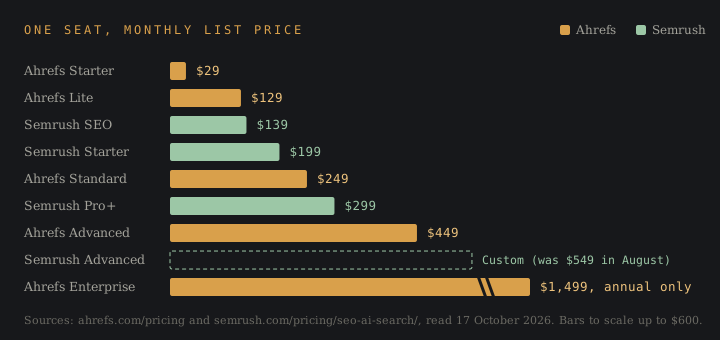
Ahrefs pricing in October 2026
Ahrefs sells four main plans plus a $29 Starter tier and a free account, per the Ahrefs pricing page, checked 17 October 2026. Every main plan includes one user, and extra seats bill on top.
| Ahrefs plan | Monthly | Annual (per year) | Tracked keywords | Projects (unverified) | Historical data | Extra user |
|---|---|---|---|---|---|---|
| Starter | $29 | Monthly only | Rank Tracker access | Not sold | Not stated | Not sold |
| Lite | $129 | $1,290 | 750 | 5 | 6 months | $40/mo, max 2 |
| Standard | $249 | $2,490 | 2,000 | 20 | 2 years | $60/mo, max 5 |
| Advanced | $449 | $4,490 | 5,000 | 50 | 5 years | $80/mo, max 10 |
| Enterprise | $1,499 | $14,990, annual only | From 10,000 | 100 | Unlimited | $100/mo |
Verified projects are unlimited on every main plan. The meter that bites is the credit: Lite carries 1,000 credits per user each month, and reports draw them down, while Standard and above carry unlimited credits per user. Pay-as-you-go credits expire after three billing months, per the same page.
The Starter plan is the $29 entry point AI answers keep quoting. It carries 200 credits a month, opens Keywords Explorer and Rank Tracker, and can't take extra users or add-ons; our Ahrefs pricing report walks through each Starter limit and the post-checkout costs. Lite at $129 is the cheapest full plan.
Semrush pricing in October 2026
Semrush offers four Semrush One tiers on its SEO and AI search pricing page, checked 17 October 2026. Each tier bundles classic SEO tracking with daily AI prompt tracking.
| Semrush plan | Monthly | Annual (per month) | Websites | Keywords tracked daily | AI prompts a day |
|---|---|---|---|---|---|
| SEO | $139 | $117.33 | 5 | 500 | Custom prompts |
| Starter | $199 | $165.17 | 5 | 500 | 50 |
| Pro+ | $299 | $248.17 | 15 | 1,500 | 100 |
| Advanced | Custom, via demo | Custom | 40+ | 5,000+ | Unlimited |
| Free | $0 | $0 | 1 demo project | Not listed | Limited |
Advanced listed at $549 a month on 11 August 2026, when our Semrush pricing breakdown last read the page. On 17 October the same card read "Custom" with a demo button. Anyone budgeting from an older comparison that quotes $549 should get a written quote first.
Additional users start at $45 a month. Annual billing saves up to 17%, the same ceiling Ahrefs advertises. Guides that still quote Pro and Guru prices are working from an older version of this page. Semrush's pricing FAQ named both plans when we captured it in August; on 17 October the same question reads "Which would be better for me, SEO, Starter or Pro+?"
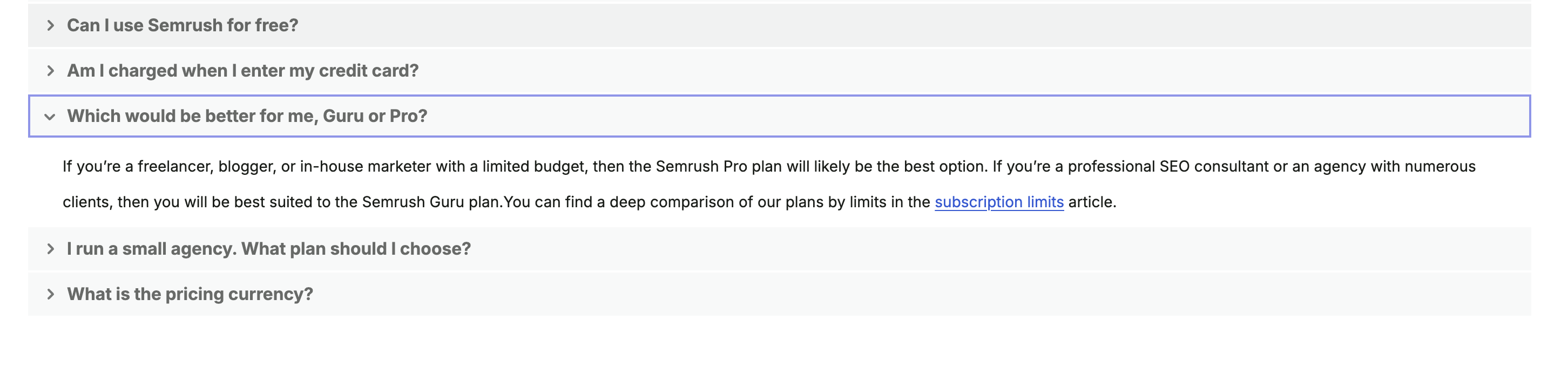
What three seats cost on each
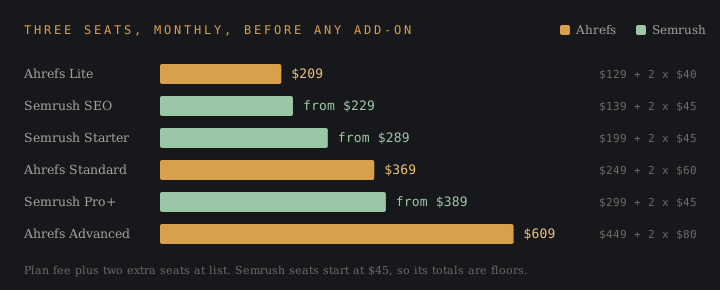
Seat math moves the bill faster than tier choice, and it's where most team budgets miss the mark. Here's the monthly list cost for three people, before any add-on, from the two pricing pages above.
| Team of three | Plan fee | Two extra seats | Monthly total |
|---|---|---|---|
| Ahrefs Lite | $129 | $80 | $209 |
| Ahrefs Standard | $249 | $120 | $369 |
| Ahrefs Advanced | $449 | $160 | $609 |
| Semrush SEO | $139 | From $90 | From $229 |
| Semrush Starter | $199 | From $90 | From $289 |
| Semrush Pro+ | $299 | From $90 | From $389 |
Ahrefs offers better value at entry level for a solo user, and the credit meter on Lite is the price of that. Semrush's per-seat add-on starts cheaper than Ahrefs Standard's $60, so a five-person team on Semrush Pro+ lands closer to Ahrefs Standard than the headline prices suggest.
Why Semrush costs more at the bottom
Semrush is more expensive at entry because the $139 SEO plan already includes daily position tracking for 500 keywords, a site audit across 5 websites and AI search performance tracking. Ahrefs Lite at $129 tracks 750 keywords, but updates them weekly. The two cheapest full plans sit $10 apart, and the cadence is where the money goes.
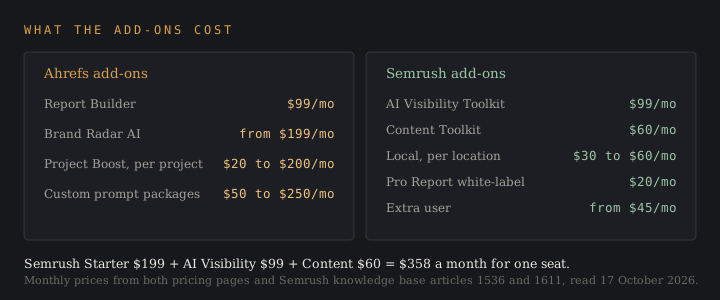
Add-ons push both bills up. On Ahrefs, Report Builder costs $99 a month, Brand Radar AI starts at $199, and Project Boost runs $20 to $200 a month per project. On Semrush, the AI Visibility Toolkit costs $99 a month, Local runs $30 to $60 per location, and white-label reporting is a $20 Pro Report add-on. The devil's in the details: a buyer who adds two toolkits to Semrush Starter is paying north of $350 a month for one seat.
↑ COMPARISONWhat each vendor publishes about the other
Ahrefs runs a comparison page aimed at Semrush. Semrush runs one aimed at Ahrefs. Only one of them puts numbers on it.
Ahrefs' page, read 17 October 2026, makes these checkable claims, with crawler data marked "as of July, 2026". Semrush's page, read the same day, offers a seven-day free trial and two taglines, and publishes no figure about Ahrefs at all.
| Ahrefs' claim on ahrefs.com/vs/semrush | What Semrush publishes on its own domain |
|---|---|
| Ahrefs: 35 trillion live backlinks. Semrush: 43 trillion "live & dead backlinks" | 43 trillion backlinks, no live/dead split stated |
| Ahrefs: 28.7B keywords, filtered from 110B. Semrush: 26.7B | 28.8 billion keywords across 142 geographic databases |
| Ahrefs: 481M+ monthly AI prompts. Semrush: 239M+ | 317 million AI prompts |
| Backlink API endpoints: Ahrefs 77, Semrush 22 | No endpoint count published |
| AhrefsBot #1 in Cloudflare Radar's SEO bot category, SemrushBot #2 | About 10 billion pages crawled daily by the backlink crawler |
| "Bootstrapped since 2011"; "Semrush got acquired by Adobe" | "Semrush, an Adobe company" since 28 April 2026 |
Two of Ahrefs' numbers about Semrush don't match what Semrush says about itself. Semrush's data-sources knowledge base article, dated "As of 2026", lists 28.8 billion keywords where Ahrefs credits it with 26.7 billion, and 317 million AI prompts where Ahrefs says 239 million. Read the whole Ahrefs table as one vendor's marketing about a rival.
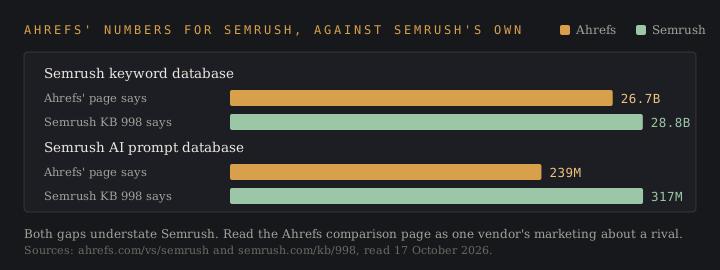
Ahrefs' page also says marketers at 44% of the Fortune 500 use Ahrefs. That's an Ahrefs claim with no named method behind it, and it sits next to a joke column ("CMO who recreates memes", "Will upsell you Photoshop") that reads as a jab at Adobe. Semrush has chosen to leave the ball in Ahrefs' court and answer none of it.
↑ COMPARISONIndex sizes, from each vendor's own pages
The raw backlink count is the number every Semrush Ahrefs comparison leads with, and both vendors label theirs differently. The table puts each figure next to the page it came from. Every row was read on 17 October 2026.
| Metric | Ahrefs | Semrush |
|---|---|---|
| Backlinks | 35 trillion*, labelled "External backlinks history" on ahrefs.com/big-data | 43 trillion backlinks |
| Domains | 286M "Domains (post-vetting)" | 808M domains |
| Keywords | 28.7B, filtered from 110B ever seen | 28.8B keywords |
| Keyword locations | 217 | 142 geographic databases |
| Crawl rate | 5M pages a minute | About 10B pages a day |
| Index refresh | Fresh data every 15 to 30 minutes* | Keyword data daily to monthly, by popularity |
| AI prompt database | 481M+* (Brand Radar) | 317M |
Five million pages a minute works out to 7.2 billion a day, so Semrush's stated crawl volume is the larger of the two. Ahrefs' figures come from its big data page; Semrush's come from the knowledge base article linked above.
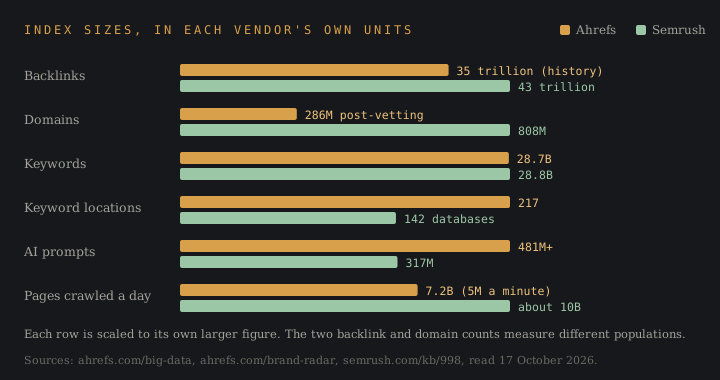
Ahrefs labels the same 35 trillion figure two ways on its own domain. The big data page calls it "External backlinks history" with "Records" underneath, and the vs page calls it "The world's largest index of live backlinks". A history of every link ever seen and a count of links live today are two different measurements, and Ahrefs uses one number for both.
Raw backlink count tells a buyer little on its own. Semrush counts 808 million domains and Ahrefs counts 286 million after vetting spam domains out, so the two figures measure different populations. Neither vendor publishes the pre-filter figure for the other method, so the domain counts aren't comparable like for like.
Which is the most accurate SEO tool
Nobody publishes an independent accuracy audit of both indexes against ground truth. The test that works is your own site: connect Google Search Console, export the referring domains it reports, and check how many each tool found. Google's own data is the only free, first-party list of links to a verified site.
For keyword data, Search Console impressions beat both tools' modelled search volume on your own pages. Our competitive intelligence SEO tools ranking compares ten SEO tools on coverage, and neither of these two is the most accurate SEO tool on every metric. Backlink depth favours Ahrefs on freshness; keyword breadth is a dead heat at 28.7 billion against 28.8 billion.
↑ COMPARISONKeyword research: Keywords Explorer against the Keyword Magic Tool
Keyword research is where SEO professionals spend most of their hours, and the two keyword research tools approach it from different ends. Both pull data from Google as the main search engine, and Ahrefs also runs separate free keyword research tools for YouTube and Amazon as a second search engine source. Ahrefs Keywords Explorer starts from Google search data and clicks. Semrush's Keyword Magic Tool starts from a seed and fans out into folders.
Ahrefs Keywords Explorer
Keywords Explorer covers 28.7 billion keywords across 217 locations, per the Keywords Explorer page. Each keyword row shows search volume, keyword difficulty, clicks and clicks per search, which tells you how many searches end in a click on any organic search result at all.
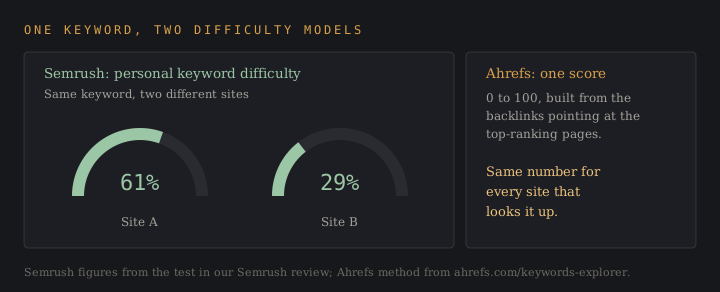
Ahrefs scores keyword difficulty from the backlinks pointing at the top-ranking pages, on a 0 to 100 scale. Grouping by Parent Topic takes seconds. In practice, check that the grouped target keywords share ranking URLs before merging them into one page, because Parent Topic is a starting point for clustering and SERP URL overlap is the test.
AI seed brainstorming turns a topic into keyword ideas, and AI SERP analysis labels search intent. Ahrefs also gives global volume when surfacing keyword suggestions, which helps a site selling into several countries.
Semrush's Keyword Magic Tool
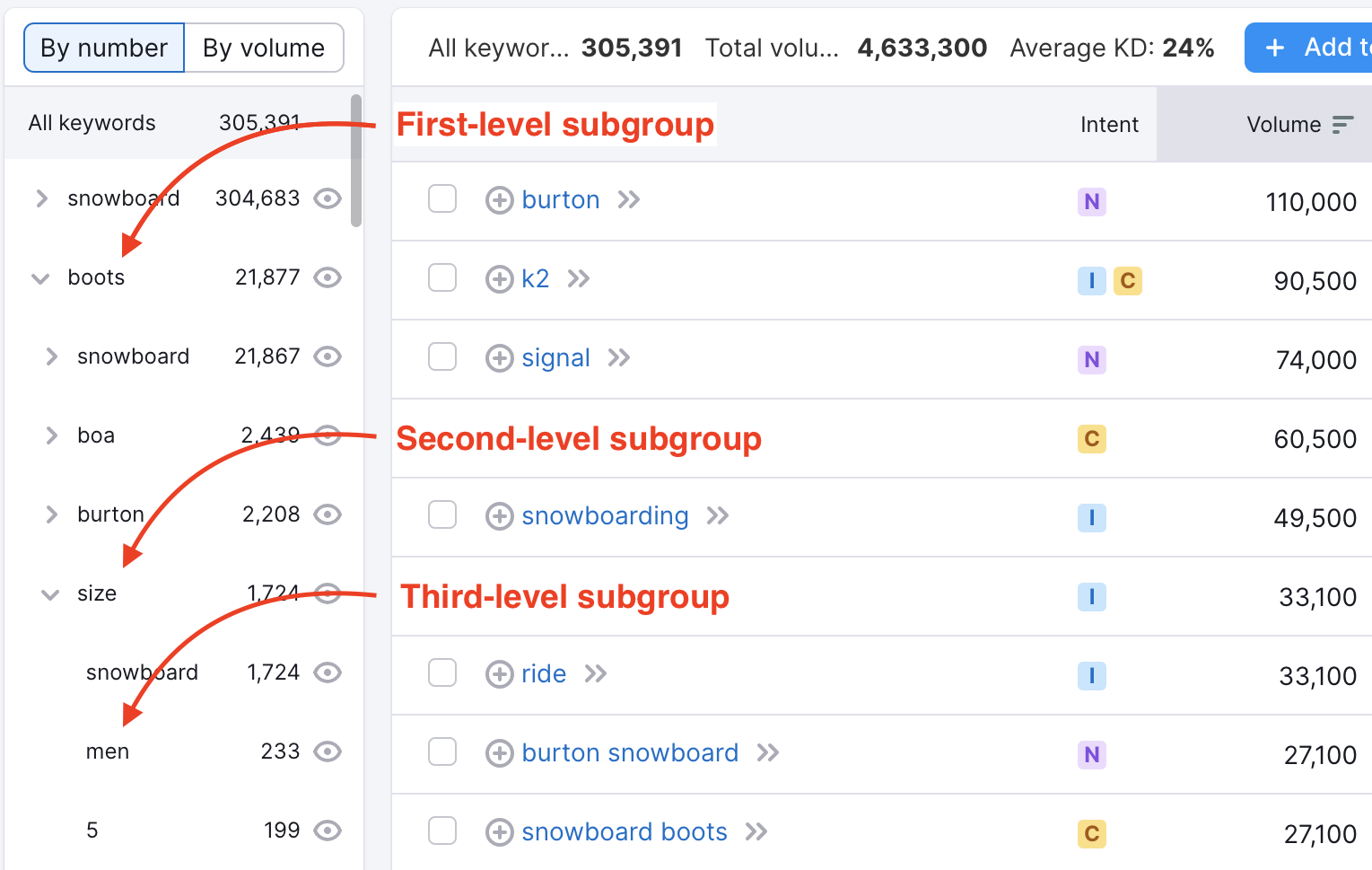
Semrush's Keyword Magic Tool expands one seed into hundreds of thousands of keyword ideas, grouped into subgroups you open like folders. The Semrush review on this site shows one seed returning 305,391 suggestions. Filters cover volume, intent, keyword difficulty and CPC, so a 300,000-row list comes down to 300 workable target keywords in a few clicks. Without those filters it's a needle in a haystack.
Semrush personalises keyword difficulty to the domain. The same keyword read 61% for one site and 29% for another in our Semrush review, because Semrush adjusts for the site's authority and topical relevance. Ahrefs' score is the same for everyone.
Semrush keyword research runs on 28.8 billion keywords in 142 geographic databases. That's 75 fewer locations than Ahrefs, which matters for local keyword research outside the larger markets. In total, the two keyword databases are the same size to within 100 million.
Which keyword research tool to pick
Search volume on both is a modelled monthly average, and the two rarely agree on a long-tail term. Pull search volume for 20 of your own target keywords from each tool and compare it with Search Console impressions before trusting either one for forecasting.
Pick Keywords Explorer if clicks per search and a clean, fast table matter more than volume of ideas. Pick Semrush's Keyword Magic Tool if the job is content clustering across hundreds of terms and you want intent filters on every row. Keyword data from either one is close enough that the workflow, and the price of the seat it sits in, decides it.
↑ COMPARISONBacklink analysis and link building
Semrush vs Ahrefs on backlink analysis is the oldest argument in SEO tools, and the index table above already settles the size question in Semrush's favour. Freshness, filtering and the link building workflow decide the rest.
Ahrefs built its name on backlink research, and its Site Explorer is still the report most link builders open first. Backlinks get the lion's share of Ahrefs' own comparison page too: the 35 trillion-backlink index, 77 backlink API endpoints and a 77-signal link filter. Ahrefs backlink analysis shows referring domains, anchors, Domain Rating, new and lost links, and that Best Links filter.
Ahrefs says it updates referring domains and backlinks daily, and its big data page says the index takes fresh data every 15 to 30 minutes. For link building, that freshness means a link built on Monday shows in Site Explorer the same week. Domain Rating runs 0 to 100 and is the metric most link sellers quote back to you.
Semrush's backlink database is the bigger raw number at 43 trillion. Its Backlink Analytics report shows referring domains, Authority Score, anchors and new and lost links; Backlink Gap compares up to five domains; and the Backlink Audit tool connects to Google Search Console to flag toxic links for a disavow file.
Referring domains against raw links
Count referring domains before raw links in any backlink analysis. A sitewide footer link on a 10,000-page site counts as 10,000 backlinks from one domain, so referring domains is the number that tracks rankings, and both tools report it on the first screen of Site Explorer and Backlink Analytics.
For competitor analysis on links, the backlink database matters less than the filter. Ahrefs lets you filter a rival's links by Domain Rating, traffic and dofollow status in one table; Semrush offers the same filters with its Authority Score. Either one turns backlink data into a prospect list in under ten minutes.
Backlink gap analysis and link quality
Both run backlink gap analysis. Ahrefs calls it Link Intersect and Semrush calls it Backlink Gap, and both list sites linking to competitors but not to you. Ahrefs' Portfolios feature groups up to 1,000 URLs from 10 domains, which suits agencies tracking a client's whole site cluster.
Link quality scoring differs. Ahrefs' filters are built around Domain Rating, traffic and its 77-signal Best Links sort. Semrush's toxicity score in Backlink Audit is built for clean-up work. For research and link building prospecting, most link builders prefer Ahrefs' data; for auditing a site with a spam history, Semrush's audit workflow goes further.
Semrush's Link Building Tool turns prospects into an outreach queue with a connected mailbox. Ahrefs has no built-in outreach tool, so link builders on Ahrefs export prospects to a separate email tool. Ahrefs also offers a free Broken Link Checker, which finds dead links on any site for broken link building pitches.
↑ COMPARISONSite audit and technical SEO
A technical SEO audit is the one job both vendors give away in part. That makes it the easiest feature to test before paying for either.
Both platforms run solid technical audits on every paid plan, and both now add AI crawler checks. The differences are crawl speed, check counts and what a free account gets.
Ahrefs Site Audit
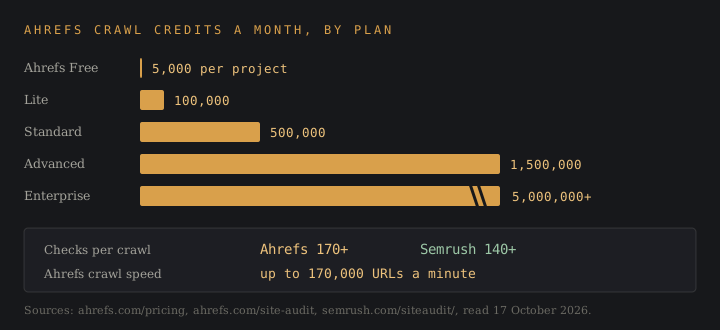
The Ahrefs Site Audit scans for 170+ issues and crawls up to 170,000 URLs a minute, per the Site Audit page. It measures Core Web Vitals from CrUX and Lighthouse data, and it offers always-on audits that crawl a site around the clock to catch technical SEO issues early.
Crawl credits set the ceiling: 100,000 a month on Lite, 500,000 on Standard and 1.5 million on Advanced. A free Ahrefs account audits verified sites with 5,000 crawl credits per project per month and the same 170+ checks, which makes the Ahrefs site audit the best free technical SEO crawl from either vendor, with no strings attached beyond proving you own the site.
Semrush Site Audit
Semrush's Site Audit runs 140+ technical and on-page checks, per its Site Audit page. It sorts issues into Errors, Warnings and Notices and rolls them into a Site Health score from 0 to 100. Each issue carries a why-and-how-to-fix note, and Semrush One adds prioritized tasks and worklists on top.
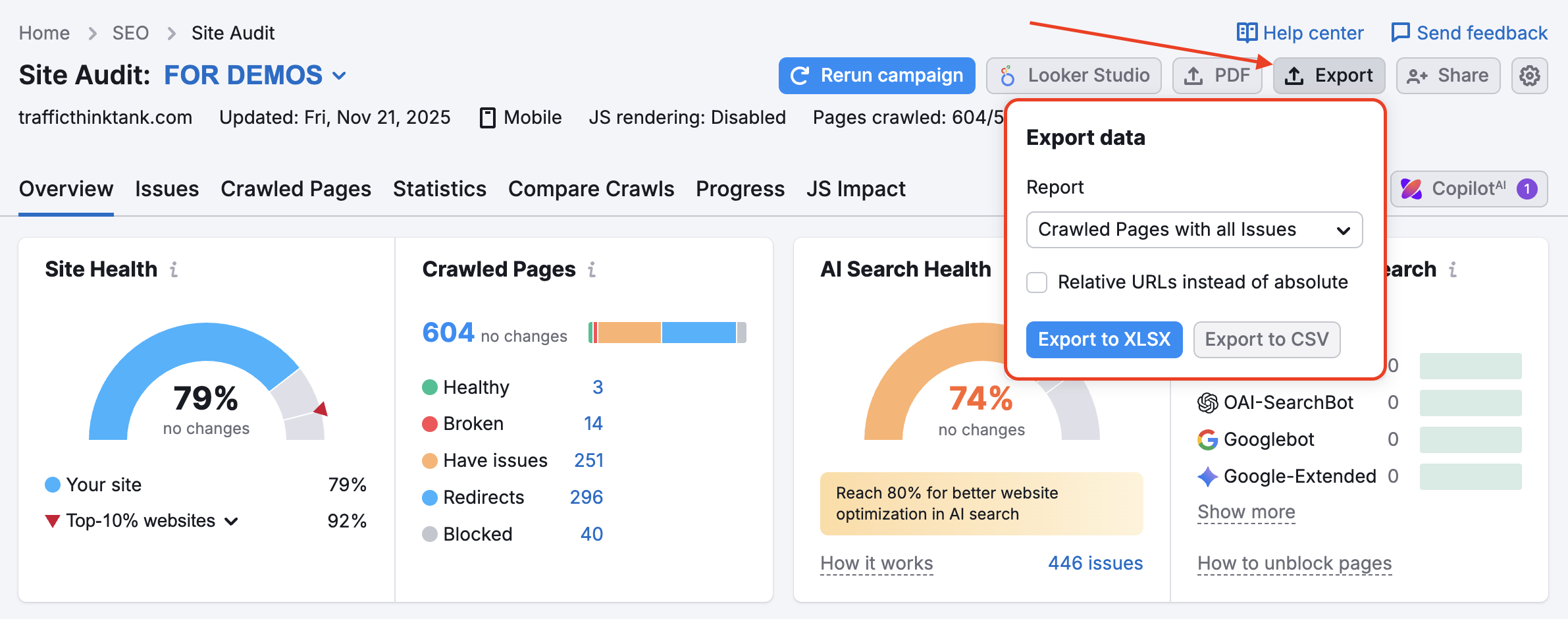
The newer AI Search Health score flags blocked AI crawlers such as ChatGPT-User, OAI-SearchBot and Google-Extended, per Semrush's Site Audit knowledge base article. The AI search health score sits beside Site Health as its own gauge. Standalone AI Visibility Toolkit buyers get AI Search Checks on up to 100 pages.
Semrush also connects the audit to Google Analytics and Search Console, and it pushes issues to Trello as tasks. For a team that runs SEO tasks through a project board, that's one less export. Both tools cover the basics of search engine optimization audits; Ahrefs crawls faster and checks more issues, while Semrush explains each fix in more depth.
↑ COMPARISONRank tracking: weekly against daily
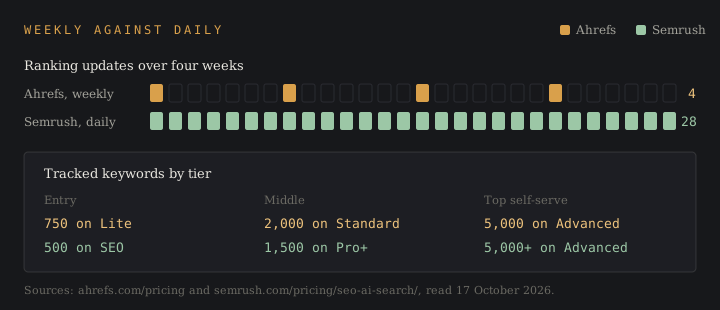
This is the row that decides it for many buyers. Ahrefs' Rank Tracker updates weekly on every main plan, per the Ahrefs pricing page. Semrush's Position Tracking updates daily on every plan, starting with the $139 SEO tier.
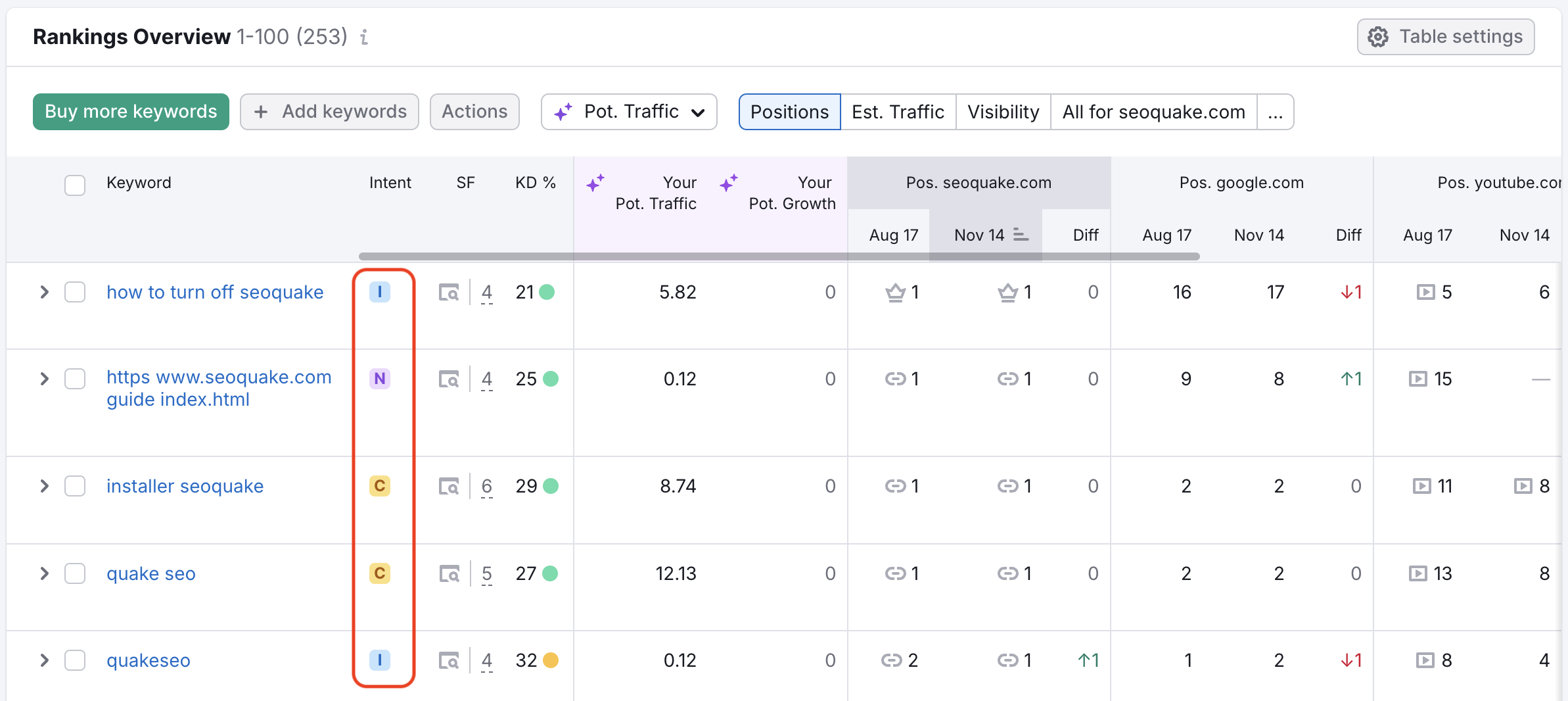
Weekly updates are par for the course on a blog checking a 750-keyword set. They're a problem for an agency reporting to a client who saw a drop on Tuesday. Semrush's position tracking also flags SERP features such as featured snippets, AI Overviews and local packs, and reports share of voice against named competitors on Advanced.
Ahrefs' Rank Tracker reports SERP features too, along with traffic and position history going back as far as the plan's historical data window. Tracked keyword caps run 750, 2,000 and 5,000 on Ahrefs Lite, Standard and Advanced, against 500, 1,500 and 5,000+ on Semrush SEO, Pro+ and Advanced. Ahrefs gives more keywords per dollar; Semrush refreshes them seven times as often.
↑ COMPARISONLocal SEO features
Semrush offers a dedicated Local toolkit; Ahrefs doesn't sell one. That single fact settles local SEO for most multi-location businesses.
Semrush Local costs $30 a month per location on Local Base and $60 on Local Pro, with custom pricing for 20+ locations, per Semrush's Local toolkit pricing article. Local Pro distributes listings to 70+ directories, and the Map Rank Tracker runs on credits: 375 on Base and 1,225 on Pro.
Review management sits in Local Pro too. It pulls reviews into one dashboard, sends alerts for negative Google Business Profile reviews, refreshes Google reviews hourly, drafts AI replies and runs competitor review analytics on up to 10 competitors per report. A dental group with 12 offices pays $720 a month on Local Pro before the core plan.
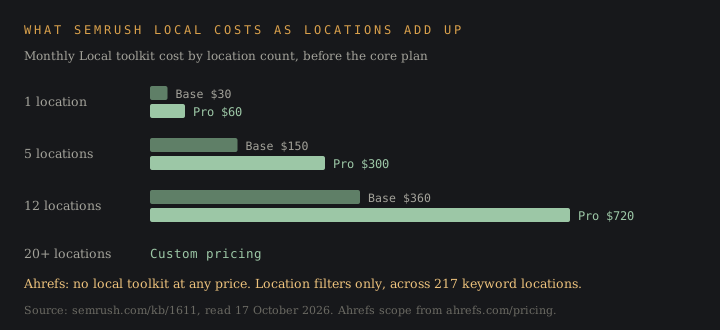
Ahrefs covers local SEO through location filters in Keywords Explorer and Rank Tracker across its 217 keyword locations. There's no listings management, no map grid and no review inbox. A local agency that picks Ahrefs needs a second tool for those three jobs, which is a bitter pill to swallow on top of $129 a month.
↑ COMPARISONContent marketing tools
Content marketing is where the two products diverge most in 2026. Semrush sells a content marketing workflow from topic to published draft; Ahrefs sells research that feeds one.
Semrush's content marketing tools are broader, and its keyword research feeds straight into them. Its Content Toolkit includes Topic Research for ideation, the SEO Content Template and the SEO Writing Assistant for content optimization, and Semrush prices it separately at $60 a month, per its Content Toolkit limits article.
The SEO Content Template builds a brief from the top 10 results for a target keyword: recommended word count, semantically related words, backlink targets and readability. The SEO Writing Assistant scores a draft against that brief inside Google Docs, WordPress or Microsoft Word, so a writer never leaves the editor.
Ahrefs' content side is Content Explorer, a database Ahrefs says holds 20.3 billion pages, searchable by topic and sorted by organic traffic or referring domains. It finds the top-performing articles on a subject and the sites that link to them. The AI Content Helper gives one free document a month on a free account, and a Content Kit add-on from $99 a month is marked "Soon" on the pricing page.
For a content marketing team, Semrush's content marketing tools cover the brief-to-draft loop and Ahrefs covers research and link prospecting. Teams that write at volume often pair either one with a dedicated editor; our Positive Surfer vs Semrush comparison covers how Positive Surfer's Content Score stacks up against the SEO Writing Assistant.
↑ COMPARISONAI visibility tracking: Brand Radar against the AI Visibility Toolkit
Both vendors now sell AI visibility tools that track how often a brand appears in ChatGPT, Gemini, Perplexity and Google's AI answers. This is the fastest-moving part of either product, and the pricing models differ. AI visibility tracking also shows up inside Semrush's rank reports as SERP features, where AI Overviews sit next to featured snippets.
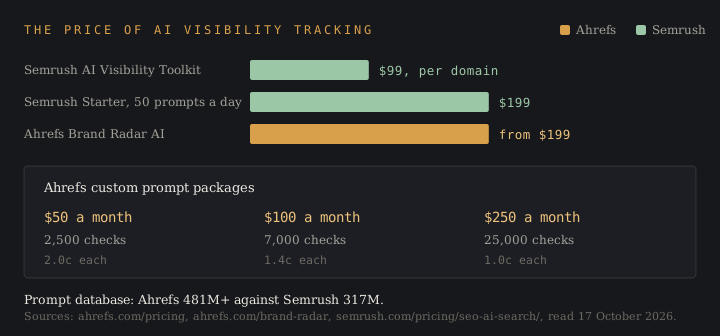
Ahrefs Brand Radar tracks AI Overviews, AI Mode, ChatGPT, Perplexity, Gemini and Copilot in its AI Visibility Index, with Claude added for custom prompts, per the Brand Radar page. The index holds 481 million+ prompts modelled from real searches. Brand Radar AI starts at $199 a month on the pricing page, and custom prompt packages run $50 to $250 a month with overage of $0.010 to $0.020 per check.
Custom Prompts come free with every paid Ahrefs plan from Lite up, and YouTube, TikTok and Reddit data is free to Ahrefs customers while in beta. Each check uses one credit per platform, location and update, and a Claude check costs 8 credits per update.
Semrush tracks brand visibility across AI assistants like ChatGPT on every Semrush One tier: 50 prompts a day on Starter, 100 on Pro+ and unlimited on Advanced. The standalone AI Visibility Toolkit costs $99 a month per domain. Semrush's AI search database holds 317 million prompts, and AI brand sentiment data refreshes weekly while prompt-level tracking refreshes daily.
The cheapest serious AI visibility tracking is Semrush at $99 a month standalone or bundled into Starter at $199. Ahrefs' Brand Radar index is the bigger database, at 481 million against 317 million prompts, and it costs more to open. Our Reddit AI visibility study used tracked prompts like these to measure which sources AI answers cite.
↑ COMPARISONPaid search and advertising research
Semrush calls the shots on paid search. Advertising Research shows a competitor's Google Ads keywords, ad copy history and Google Shopping visibility, and the PPC Keyword Tool groups keywords for PPC campaigns before they're exported to Google Ads.
Ahrefs shows paid keywords and ad history in Site Explorer, and Keywords Explorer reports CPC. There's no campaign-building tool. A team spending $20,000 a month on Google Ads will get more from Semrush's advertising research, and Semrush's dashboard runs SEO and PPC strategies side by side under one login.
Semrush also sells social media management through its Social toolkit, covering scheduling and tracking. Ahrefs added a Social Media Manager in beta on its free plan. For multi-channel marketing teams that want SEO, PPC, local and social on one invoice, Semrush is the only one of the two that covers all four.
↑ COMPARISONAdobe bought Semrush; Ahrefs stayed independent
Ownership is the corporate-risk row most comparisons skip. Adobe announced on 19 November 2025 that it would acquire Semrush for $12.00 a share in cash, a total equity value of about $1.9 billion, per Semrush's own announcement. The deal closed on 28 April 2026, per Adobe's newsroom.
Adobe says Semrush customers "can expect continued investment and an expanded product roadmap as Adobe and Semrush fully integrate", and it names Adobe Experience Manager, Adobe LLM Optimizer and Adobe Brand Concierge as the products Semrush data will feed.
Bill Wagner has run Semrush as CEO since March 2025, with co-founder Oleg Shchegolev as CTO. Six months after the close, the jury's still out on pricing. Our Adobe Semrush acquisition report tracks what has changed for subscribers since the close.
Ahrefs was founded by Dmytro Gerasymenko and describes itself as "Bootstrapped since 2011". It takes no outside investors, which means no acquirer roadmap. It also means no public filings, so Ahrefs' revenue and customer count are whatever Ahrefs chooses to say.
| Date | Event |
|---|---|
| March 2021 | Semrush lists on the NYSE as SEMR |
| March 2025 | Bill Wagner becomes Semrush CEO; Oleg Shchegolev moves to CTO |
| 19 November 2025 | Adobe agrees to buy Semrush at $12.00 a share |
| 28 April 2026 | Adobe completes the acquisition |
| October 2026 | Semrush Advanced moves from $549 a month to custom pricing |
↑ COMPARISONContracts, refunds and leaving
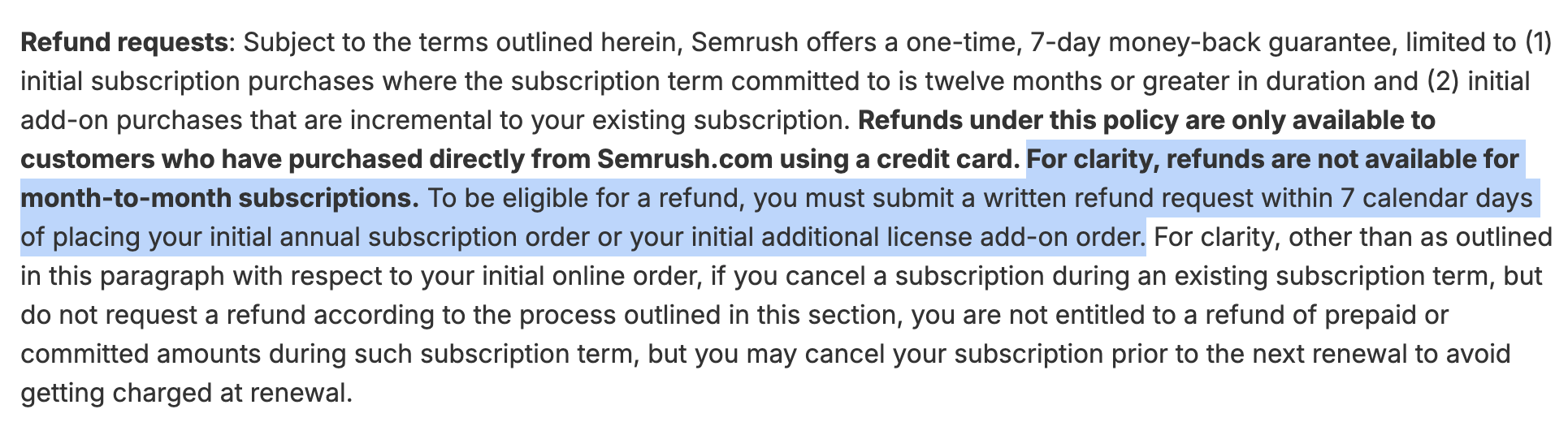
Neither vendor makes leaving cheap, and the refund rules are the fine print buyers miss. Semrush's Cancellation and Refund Policy, last updated 20 August 2025, offers a one-time 7-day money-back guarantee only on initial subscriptions with a term of twelve months or more, plus initial add-ons. It states that "refunds are not available for month-to-month subscriptions."
Semrush's 7-day free trial needs a card and converts to a paid plan unless cancelled. Read between the lines on Ahrefs too: it offers no trial on its main plans and says it generally doesn't issue refunds; a monthly subscriber can ask if the account hasn't been used, and Ahrefs may decline where there's material account activity. Ahrefs' pricing page also says "We never run discounts."
Moving to annual billing on Ahrefs takes an email to support. Enterprise at $1,499 a month is annual-only, so a $14,990 commitment is the price of uncapped API access. Semrush's Advanced tier is now quoted through sales, which usually means an annual contract too.
Switching cost is mostly history. Ahrefs keeps 6 months of historical data on Lite and 5 years on Advanced; Semrush includes historical SEO data from Pro+. Rank tracking history doesn't transfer between the two, so a team that moves loses its trend lines and starts tracking from scratch on the new tool.
↑ COMPARISONAPI access and integrations
Ahrefs includes API access on every main plan, which is unusual. Lite gets 100 rows per request and 200,000 Ahrefs Connect API units a month, Standard 250 rows and 800,000 units, Advanced 500 rows and 2 million units, and Enterprise unlimited rows and 4 million units, per the Ahrefs pricing page. An MCP server is included on all of them.
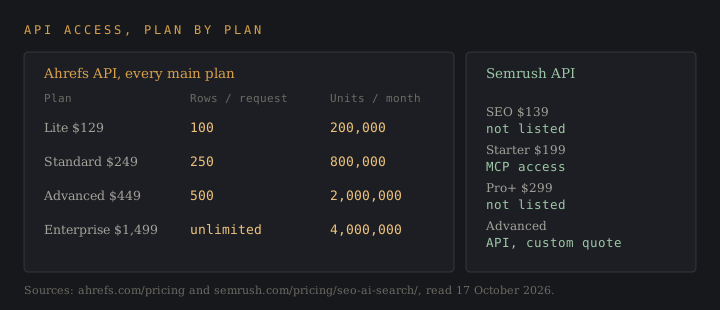
Semrush gates API data integration to Advanced, which is now a custom quote. Starter includes MCP access. For a team piping keyword data into Looker Studio or a warehouse, Ahrefs kills two birds with one stone: API access and the full toolset at $129, against a Semrush sales call.
Integrations run the other way too. Semrush connects to Google Analytics, Google Search Console, Looker Studio, Trello and Google Docs. Ahrefs connects Search Console to verified projects, and its SEO Toolbar shows metrics for any page while browsing. Ahrefs Free users and Semrush free accounts can both test the integrations before paying, and API data integration is the one place where Ahrefs' cheapest full plan beats Semrush's dearest self-serve one.
Support, training and free tiers
Semrush's paid plans get product support through an online form, per its customer support terms, and Enterprise adds 24/7 support under an SLA. Its Help Center is open to anyone without a login. Semrush Academy gets new hires up to speed with free courses with certificates and a webinar calendar, with instructors including Brian Dean and Andy Crestodina.
Ahrefs' help center at help.ahrefs.com is readable without a login too, and its pricing page sends billing changes to support@ahrefs.com, with no phone line listed on either vendor's pricing page. It makes up for it with education: Ahrefs Academy courses, a YouTube channel and a blog that walks through each feature with its own data. Ahrefs also says it shipped 200+ features in 2025.
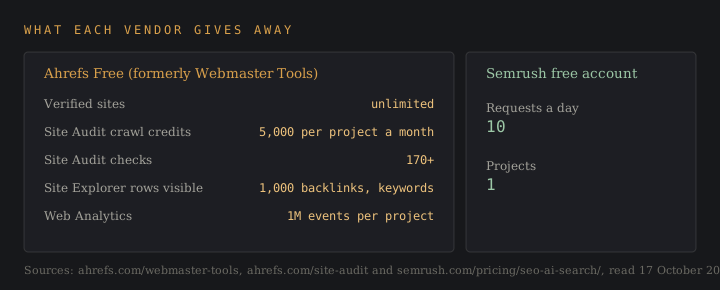
The free tiers differ. Ahrefs Webmaster Tools, now called Ahrefs Free, gives unlimited verified sites Site Audit, Site Explorer with 1,000 backlinks and keywords visible, and Web Analytics up to 1 million events per project. Semrush's free account allows 10 requests a day and one project. For a site owner who only audits their own domain, Ahrefs Free is the stronger free option by a wide margin.
Semrush vs Ahrefs for competitor analysis
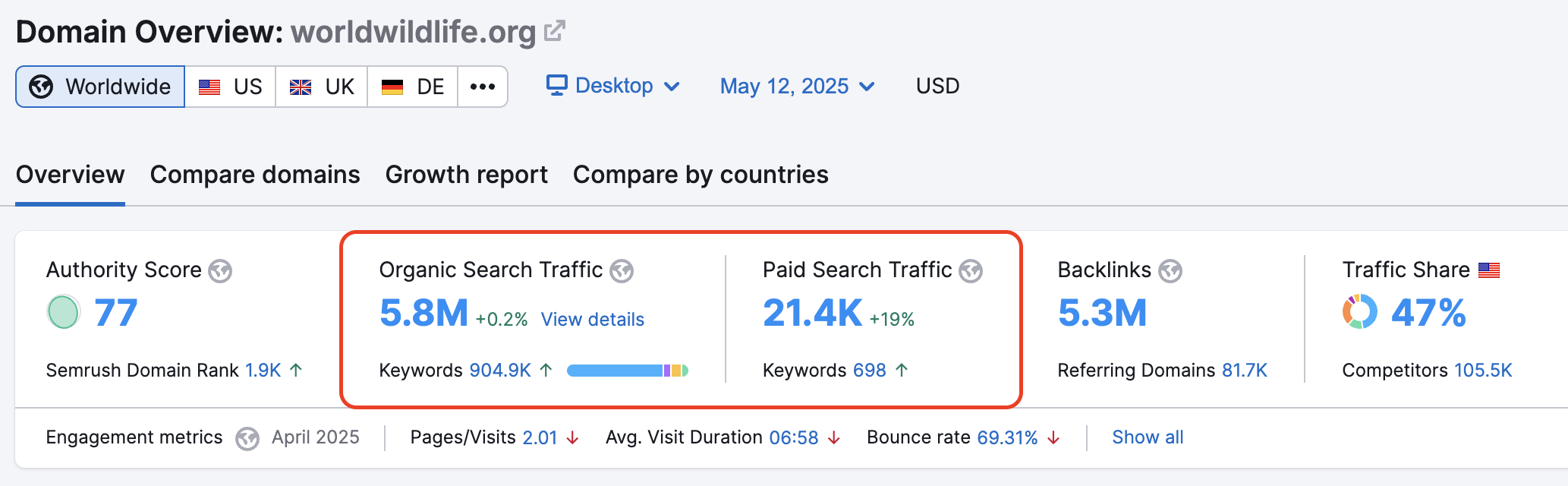
Competitor analysis is the second job most buyers want from these SEO tools, after keyword research. Both open with a domain overview: estimated organic search traffic, ranking keywords, referring domains and the top pages that earn the traffic. The numbers are modelled on both sides, so treat any traffic estimate as a direction of travel.
Semrush vs Ahrefs on this job splits along channels. Semrush's Domain Overview adds paid search keywords, display ads and a traffic-channel split from its Traffic Analytics data, which makes it the broader competitive analysis view. Ahrefs' Site Explorer centres on organic search and backlink data, and goes deeper on both.
For keyword gaps, Semrush's Keyword Gap compares up to five domains and sorts terms into missing, weak and untapped. Ahrefs' Content Gap takes up to 10 competitors, per Ahrefs' Content Gap help article, against five in Semrush's Keyword Gap. SEO specialists auditing a crowded niche get twice the competitor set on Ahrefs.
Ahrefs' Site Explorer also keeps a site's pages and traffic over time, so you can see which URLs a rival pruned and when. Semrush's Organic Research shows the same history with AI Overviews broken out as their own SERP features layer. For competitor SEO in 2026, that AI Overviews layer is the newer and rarer view.
Semrush vs Ahrefs on a typical week of SEO tasks
Feature lists flatten the difference. A week of ordinary work on a 200-page B2B site shows where each tool saves time and where it costs a credit or a second subscription. Every step below maps to a feature and limit documented earlier on this page.
- Monday, keyword research: pull keyword ideas for a new product page. Semrush's Keyword Magic Tool returns grouped subfolders with intent labels; Ahrefs Keywords Explorer returns search volume with clicks per search. On Ahrefs Lite each report view spends credits.
- Tuesday, rank check: a client asks why a page dropped. Semrush's Position Tracking shows yesterday's position; Ahrefs Rank Tracker shows last week's.
- Wednesday, technical SEO: run a crawl. Ahrefs checks 170+ issues at up to 170,000 URLs a minute, including Core Web Vitals; Semrush checks 140+ and adds AI Search Health.
- Thursday, link building: find 50 prospects. Ahrefs' backlink database and Link Intersect are faster to filter; Semrush can send the outreach from its Link Building Tool.
- Friday, reporting: Semrush's $20 Pro Report white-labels a PDF; Ahrefs' $99 Report Builder schedules 50 reports.
Semrush vs Ahrefs on that week comes out three days to two. Semrush wins the rank check, the outreach and the cheaper report; Ahrefs wins the crawl and the link research. A team whose week is mostly Thursday should choose Ahrefs.
↑ COMPARISONWhere each one wins, by buyer type
Ahrefs vs Semrush splits five ways, depending on who's buying. Here's how the facts above sort by team.
- Solo SEO consultant on a budget: Ahrefs Starter at $29 for keyword research, or Lite at $129 with API access and 750 weekly-tracked keywords.
- Link building agency: Ahrefs Standard at $249 for unlimited credits, fresher backlink data and Portfolios.
- Local agency or multi-location brand: Semrush plus Local Pro at $60 per location, since Ahrefs has no listings or review tools.
- In-house marketer running SEO and PPC: Semrush Starter or Pro+, for daily position tracking and advertising research on one invoice.
- Content team: Semrush with the $60 Content Toolkit for briefs and the SEO Writing Assistant in Google Docs.
- Data team piping SEO data into dashboards: Ahrefs, because API access starts at $129 a month.
SEO professionals who choose Ahrefs usually do it for backlink analysis and the free audit. Those who choose Semrush do it because one subscription replaces three tools. Both camps are right about their own job, which is why our search intelligence platforms ranking lists both.
Running both, or picking a third tool
The question most SEO tools comparisons skip is if one subscription is enough. For a team that needs both deep backlink data and daily rankings, the answer is often no.
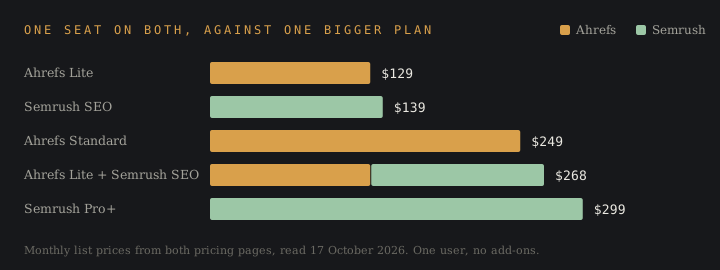
Plenty of agencies pay for both Ahrefs and Semrush. Ahrefs Lite plus Semrush SEO costs $268 a month for one person, which buys Ahrefs' link data and Semrush's daily rank tracking and local SEO. That's the best of both worlds for $268 if the budget allows it, and it avoids putting all your eggs in one basket while Adobe settles its Semrush roadmap.
For a cheaper alternative to Semrush, Ahrefs Starter at $29 covers keyword research and rank tracking, and Google Search Console is free for your own site. Our SEO tools pricing report compares list prices for SE Ranking, Moz and SpyFu against both.
Semrush's biggest competitors are Ahrefs, Similarweb, Moz and SE Ranking. Similarweb is built for traffic and market-share estimates, with a thinner SEO platform on top; our Semrush vs Similarweb comparison covers where that line falls. Ahrefs vs Moz accuracy debates come down to the same test as this page: check each index against the links Search Console reports for your own site.
Frequently asked questions
Semrush vs Ahrefs: which has better backlink analysis?
Ahrefs, for most link builders. Its backlink analysis refreshes every 15 to 30 minutes, filters links by 77 signals and shows Domain Rating on every referring domain. Semrush's backlink analysis draws on the bigger raw index, 43 trillion links, and adds a toxic-link audit.
Semrush vs Ahrefs: which is better for keyword research?
Semrush for idea volume and intent filters, Ahrefs for clicks data and global search volume. Keyword research results from the two keyword databases differ by 100 million terms out of 28.8 billion, so the interface decides it more than the data.
Semrush vs Ahrefs: which is better for content marketing?
Semrush. Its Content Toolkit covers topic research, briefs and content optimization in Google Docs for $60 a month. Ahrefs' Content Explorer is the stronger content marketing research tool for finding pages that earned links.
Semrush vs Ahrefs for technical SEO?
Ahrefs crawls faster and checks 170+ technical SEO issues, and its free tier audits verified sites. Semrush checks 140+ issues and adds AI crawler checks. Both report Core Web Vitals.
Is Semrush better than Ahrefs?
Semrush is better for teams that need local SEO, paid search, content and daily rank tracking in one subscription. Ahrefs is better for backlink research, technical SEO audits on a free account, and API access from $129 a month.
How much does Ahrefs cost per month?
Ahrefs costs $29 a month on Starter, $129 on Lite, $249 on Standard, $449 on Advanced and $1,499 on Enterprise, which is sold on an annual commitment only. Annual billing on Lite is $1,290 a year. Prices from ahrefs.com/pricing, 17 October 2026.
Ahrefs or Semrush for a beginner?
Ahrefs or Semrush both take weeks to learn. Ahrefs' clean interface is built around SEO tasks only, so a beginner focused on organic SEO can hit the ground running. Semrush's 55+ tools cover more, with Semrush Academy's free courses to help.
Why is Semrush so expensive?
Semrush's $139 entry tier bundles daily rank tracking, site audits across 5 websites and AI search tracking. Toolkits for Local, Content and AI visibility cost $30 to $99 each on top, and extra users start at $45 a month.
Can Semrush be trusted?
Semrush has been an Adobe company since 28 April 2026 and was NYSE-listed from 2021 until the close. Its data is modelled, like Ahrefs'. Read the refund policy before buying: monthly plans carry no refund.
Who is the CEO of Semrush?
Bill Wagner has been Semrush's CEO since March 2025. Co-founder Oleg Shchegolev is CTO.
Is there a free alternative to Ahrefs?
Ahrefs Free, formerly Ahrefs Webmaster Tools, audits and analyses your own verified sites at no cost. Google Search Console covers your own links and queries. Neither shows competitor data.
What are the cons of Ahrefs?
Weekly rank tracking on every main plan, a 1,000-credit meter on Lite, no local SEO toolkit, no PPC campaign tools, no free trial and a no-refund default.
What are the top 3 SEO tools?
Ahrefs, Semrush and Google Search Console cover most professional stacks: two paid SEO platforms for competitor data and one free tool for first-party data.
Is Ahrefs vs Semrush pricing different on annual billing?
Both cap the annual saving at 17%. Ahrefs Lite drops to $108 a month equivalent and Semrush SEO to $117.33.
Which one to buy
Choose Ahrefs if backlink depth, a fresh link index and a cheap seat with API access are the priorities. Its $29 Starter and $129 Lite undercut Semrush's $139 entry, Ahrefs Free gives away the best free site audit of the two, and its index refreshes every 15 to 30 minutes.
Choose Semrush if one subscription has to cover SEO, local SEO, paid search and content marketing. Daily position tracking on every plan, the Local toolkit, the SEO Content Template and advertising research are things Ahrefs doesn't sell. Budget for seats and toolkits, and note that Advanced is now a sales quote.
The deciding row for most buyers of these SEO tools is rank tracking cadence: weekly on Ahrefs, daily on Semrush. If clients or managers read a rank report more than once a week, that settles it in Semrush's favour. If they don't, Ahrefs costs less for the same keyword research, backlink analysis and audit data, and those are the SEO tools most teams open every day.
Sources: Ahrefs figures from ahrefs.com/pricing, /big-data, /vs/semrush, /keywords-explorer, /site-audit, /brand-radar and /webmaster-tools; Semrush figures from semrush.com/pricing/seo-ai-search/, its knowledge base, refund policy and newsroom; Adobe's close date from news.adobe.com. All read 17 October 2026.