Woodpecker review: cold email pricing by the contacted prospect, not the seat
 By Jan Suski. I go deep on every review, checking every number against its source and digging up details other coverage misses, a habit from six years of SEO and link building for tech companies. Bylines at Surfer, Brand24, and Senuto. How the scoring works.
· Prefer this source on Google
Best for
Founders, small sales teams and lead-gen agencies running cold email and LinkedIn outreach, paying $7 per 100 contacted prospects, with no flat per-seat fee attached.
Not for
Buyers who want a shared contact database, a built-in dialer or a single enterprise contract covering data and sequencing; Apollo and Cognism sell that instead.
What it costs
Free up to 16,000 emails and 4,000 stored prospects, then $7 per 100 contacted prospects with unlimited free seats and email accounts; LinkedIn and API access cost extra.
- Sequence branching
- Condition-based campaigns branch on what a prospect did: opened, clicked or replied
- Reply detection
- Prospects who respond are pulled out of the sequence automatically
- Personalization
- Spintax and dynamic snippets, with a custom field swapping a sentence per prospect
- Adaptive sending
- Randomizes timing and phrasing per send across every connected domain
- Centralized inbox
- Every mailbox in one screen, replies tagged interested, not interested or needs follow-up
- A/B tests
- Up to five versions, listed under the Automation feature set
- Native integrations
- Zapier, Hubspot, Pipedrive, Calendly, Google Sheets, Clay, Persana
- API and MCP
- API access, webhooks, the MCP server and the CLI sit behind a paid add-on, not the base plan
- LinkedIn add-on
- Email steps, LinkedIn touchpoints and manual call tasks through Aircall in one sequence
- Deliverability claim
- Up to 99%, Woodpecker's own LinkedIn figure, against mixed warm-up reports below
- Contacted prospects
- $7 per 100, pay-as-you-go, with no seat charge and no cap on stored prospects
- Entry usage tier
- $0, covering 16,000 emails, 4,000 stored prospects, 4 warm-up slots, 100 Lead Finder credits
- Team seats
- Unlimited team members, free at every usage level
- Email accounts
- Unlimited email accounts, free at every usage level
- LinkedIn outreach
- $29 a month per connected account
- Integrations add-on
- $20 a month for API access, webhooks, the MCP server and the CLI
- Extra warm-up slots
- $5 a month per email account beyond the four included
- Mailbox add-on
- $6 a month for Google or Microsoft, $4 a month for Maildoso or Mailforge
- New domains
- Roughly $1 a month each when billed annually
- Dedicated server
- Infraforge sending server at $59 a month
- Agency Panel
- $27 a month per active client, plus $5 a month per client for white-labeling
- Outbound workshop
- $2,000 for four two-hour sessions, $500 for each additional session
- Retired tiers
- The flat $20 cold email and $33 agency plans, replaced on June 18, 2026
Buying it
- Free trial
- 14 days or 100 cold emails, whichever comes first, no credit card required
- Review scores
- 4.5/5 on G2 (105 reviews), 4.5/5 on Capterra (33), 8.1/10 on TrustRadius (8)
- Domain audit
- Checks SPF and DKIM records before a new sending domain goes live
- Warm-up engine
- Mailivery, 4 email accounts free, inbox rotation across connected mailboxes
- Email verification
- Unlimited catch-all verification on every plan, no per-check charge
- Onboarding
- Four steps: domains and inboxes, warm up, find B2B emails, write and send
- Entry allotment
- 16,000 emails a month, 4,000 stored prospects, 4 warm-up slots, 100 Lead Finder credits
- Compliance
- GDPR and CCPA, ISO-certified infrastructure, CASA Tier 2, 2FA, Google OAuth 2 partner
Instantly.ai
Not forA team sending 16,000 emails a month gets no benefit from 500,000-email tiers and pays for catch-all verification Woodpecker includes free.
Apollo.io
Not forA team that already buys contact data pays twice, since Apollo's per-seat floor charges for a database it doesn't need.
Not forA founder paying $7 per 100 contacted prospects has no path to a $600 monthly floor locked for twelve months.
Pairs well with Woodpecker
Which prices came from the pricing page, and which number is Woodpecker's own claim
Every price above was checked against Woodpecker's own pricing page on 9 August 2026, after the June 18, 2026 rewrite that replaced the flat tiers third-party roundups still quote. The up to 99% deliverability figure is Woodpecker's marketing claim on its LinkedIn company page, and the review scores come from G2, Capterra and TrustRadius as cited in the sections below.
Woodpecker is B2B cold email and LinkedIn outreach software built by Woodpecker.co S.A., based in Wrocław, Poland.
On June 18, 2026, the company rewrote its pricing page around a single usage unit: $7 per 100 contacted prospects, with unlimited seats and unlimited email accounts thrown in free. That's a real shift from the flat monthly tiers most existing write-ups still describe, and it changes who the tool is cheap for.
This review covers what the cold email and LinkedIn outreach tool does, what its warm-up and deliverability record looks like under real use, where its support reputation splits between five-star and one-star reviews, and how its pricing compares against Apollo.io, Cognism, Lusha, and Instantly.ai. Every figure below traces to Woodpecker's own site or to a named review platform.
The tool fits a narrow lane well: a founder, a small sales team, or a lead-gen agency running one or two cold email and LinkedIn channels who wants to pay by the prospect contacted. It fits less well the moment a buyer wants a dialer, a shared contact database, or a five-figure enterprise contract, none of which Woodpecker sells.
↑ FACT SHEETWhat Woodpecker does for cold email and LinkedIn outreach
The feature set splits into three jobs: deliverability, automation, and personalization. Woodpecker sends and manages cold email campaigns and, through an add-on, LinkedIn outreach.
Three mechanics do most of the work:
- Condition-based campaigns branch a sequence on what a prospect did: opened, clicked, or replied.
- A domain audit checks SPF and DKIM authentication before a new sending domain goes live.
- Prospects who respond get pulled out of the sequence automatically, so nobody gets a follow-up after they've already answered.
Personalization runs on spintax and dynamic snippets. A sender can swap a sentence per prospect using a custom field, changing a few words inside the same template without duplicating it.
Adaptive sending randomizes timing and phrasing so a sequence looks less like a bot working through a list. A centralized inbox pulls replies from every connected mailbox into one screen, tagging each one as interested, needs follow-up, or not interested.
Every plan runs on the same rate: $7 per 100 contacted prospects, pay-as-you-go, with no separate seat charge and no cap on how many prospects an account can store before they're contacted.
A TrustRadius review from an outbound team coordinator at Just Join IT, dated April 2023, describes the day-to-day use case:
We use it to manage and send cold email campaigns in the Sales Development Department. That is also a great tool to monitor mail deliverability.
Kacper Buba, Outbound Team Coordinator, Just Join IT, TrustRadius, April 2023.
Free email verification: catch-all checks on every plan
Every plan includes unlimited catch-all email verification at no extra charge. That matters against competitors that meter verification by credit: a sender who wants to verify addresses in bulk before a campaign pays Woodpecker nothing extra for it, where a credit-based rival burns through a chunk of a monthly allotment checking the same list.
Bulk verification runs against every stored prospect at no per-check cost, so a list cleanup before a big send doesn't compete with the campaign budget the way a metered credit system does.
The four-step onboarding flow
Woodpecker's own onboarding is built around four steps: get domains and inboxes, warm up before sending, find B2B emails to contact, then write and send. A sender can add prospects from a CSV or straight from Lead Finder credits, then connect the account to a CRM so replies sync both ways.
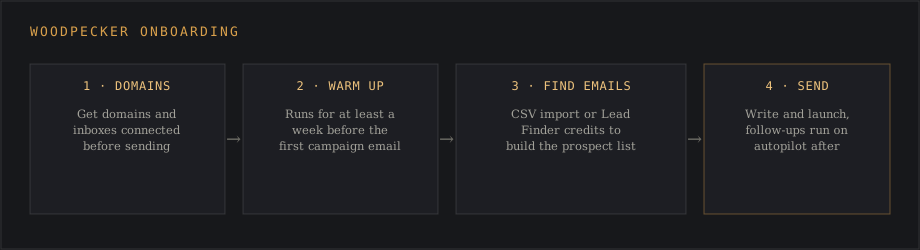
The first email in a sequence typically goes out once warm-up has run for at least a week, with follow-up automation handling everything after it, and the same account handles the cleanup work of removing bad addresses before they hurt sender reputation.
↑ FACT SHEETWoodpecker pricing
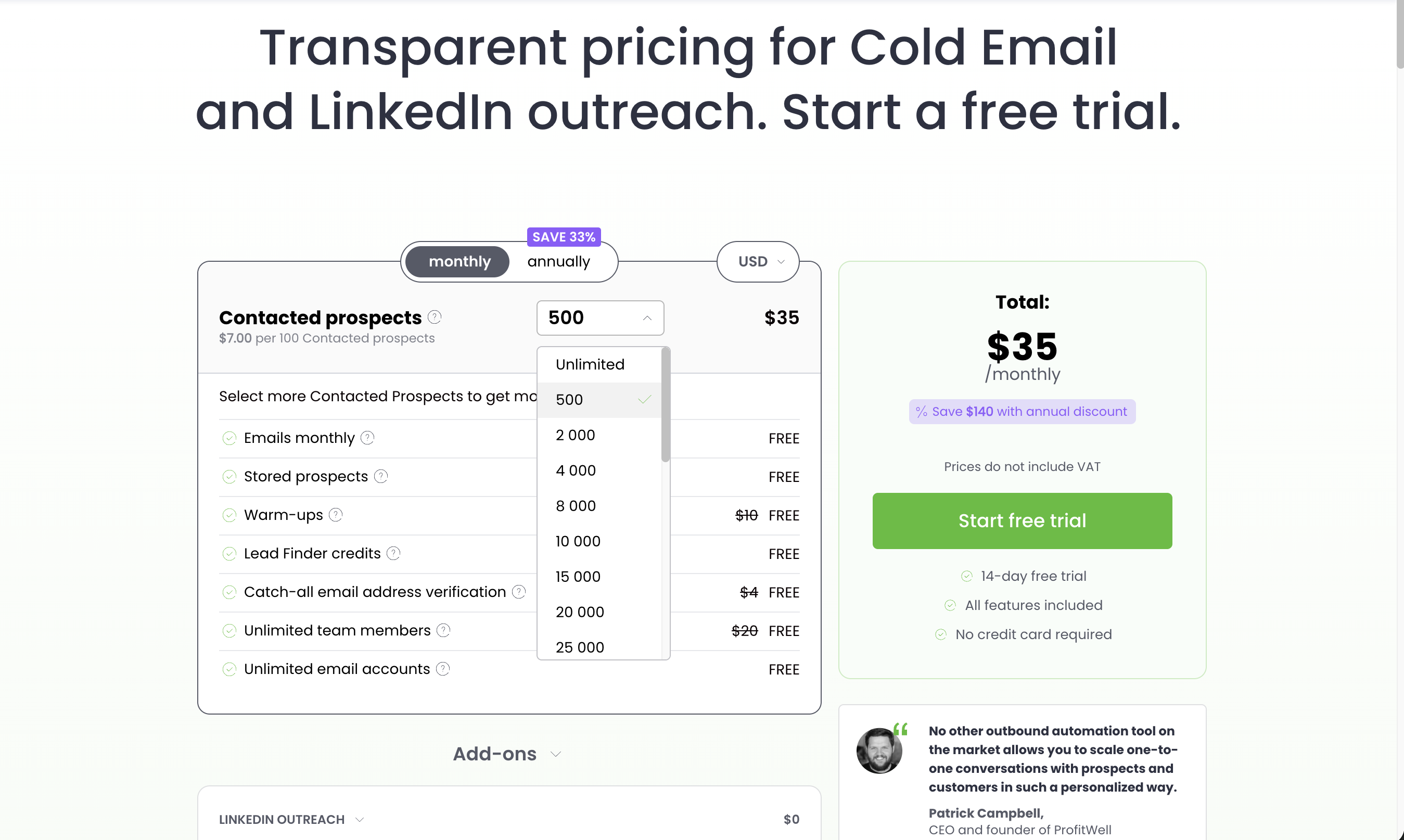
Woodpecker's live pricing calculator starts at $0 and rises $7 for every 100 contacted prospects added, with no cap on how many prospects a single account can hold in storage before they're contacted.
That's a different shape from the flat $20-a-month cold-email plan and $33-a-month agency plan that Saleshandy's Woodpecker review and The Advisor Coach's review still cite; both figures describe an older tier structure the June 2026 page replaced.
Several third-party roundups still quote Woodpecker's pre-June flat tiers. Check the live calculator before budgeting off any figure from a review dated earlier than mid-2026.
Woodpecker's pricing page carries a testimonial from Patrick Campbell, CEO and founder of ProfitWell, framing the pitch around personalization:
No other outbound automation tool on the market allows you to scale one-to-one conversations with prospects and customers in such a personalized way.
Patrick Campbell, CEO and founder, ProfitWell, Woodpecker's pricing page.
| Feature | What it costs |
|---|---|
| Email warm-up | 4 slots included free; additional slots $5/month per email account |
| Email verification | Unlimited catch-all verification included on every plan |
| Sending unit | Billed per 100 contacted prospects at $7/100, not per seat |
| LinkedIn outreach | Add-on at $29/month per connected account |
| Team seats | Unlimited team members included free |
| Email accounts | Unlimited email accounts included free |
| API, webhooks, MCP, CLI | Bundled add-on at $20/month, not included by default |
Vendor list price. Verified against Woodpecker's own pricing page, 9 August 2026.
What's included free
At the entry usage level, Woodpecker bundles four allowances at $0:
- 16,000 emails sent per month.
- 4,000 stored prospects.
- 4 warm-up slots.
- 100 Lead Finder credits.
Unlimited team members and unlimited email accounts cost nothing at any usage level, so a five-person team shares one account without per-seat charges, a detail that separates Woodpecker from the seat-priced rivals covered later in this review. The same free allotment applies during the 14-day trial, so a team can test deliverability before paying anything.
A Capterra review from the CEO of an internet company, dated April 2020, called out the pricing comparison directly:
Competitive pricing - during our selection we looked at competitors and Woodpecker won the day for pricing and value.
Larry K., Chief Executive Officer, Internet company, Capterra, April 2020.
Add-ons and what they cost
LinkedIn outreach automation runs $29/month per connected account. Extra warm-up slots cost $5/month per email account beyond the four included, and a Google or Microsoft mailbox add-on runs $6/month against $4/month for a Maildoso or Mailforge mailbox. New domains cost roughly $1/month each when billed annually, and a dedicated sending server through Infraforge runs $59/month.
Integrations, API access, webhooks, the MCP server, and the CLI sit behind the separate $20/month add-on.
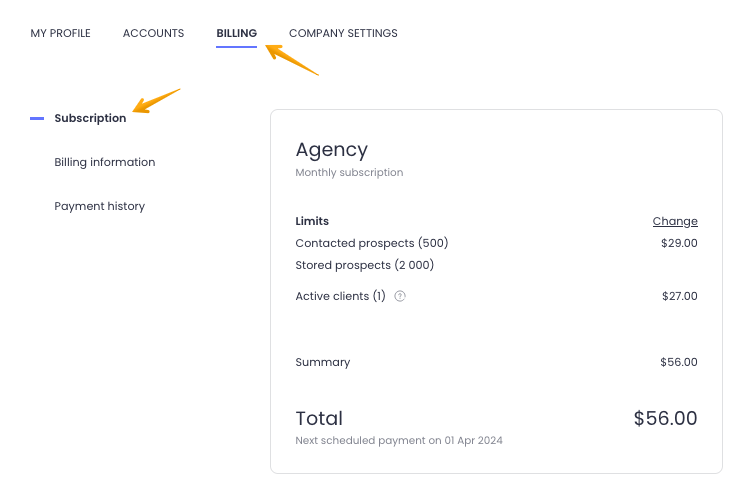
The Agency Panel bills $27/month per active client, plus $5/month per client for white-labeling, and bulk actions can stop, pause, or start client campaigns across every connected account from one screen. A paid outbound workshop runs $2,000 for four two-hour sessions, $500 for each additional session.
↑ FACT SHEETWhere Woodpecker delivers: deliverability and warm-up
Woodpecker's warm-up runs on the Mailivery engine, bundled free for up to four email accounts. Inbox rotation spreads sends across multiple connected mailboxes, and a domain audit flags missing SPF or DKIM records before a domain goes live. Adaptive sending varies timing per send, a mechanic meant to protect sender reputation across every connected domain, old and new alike.
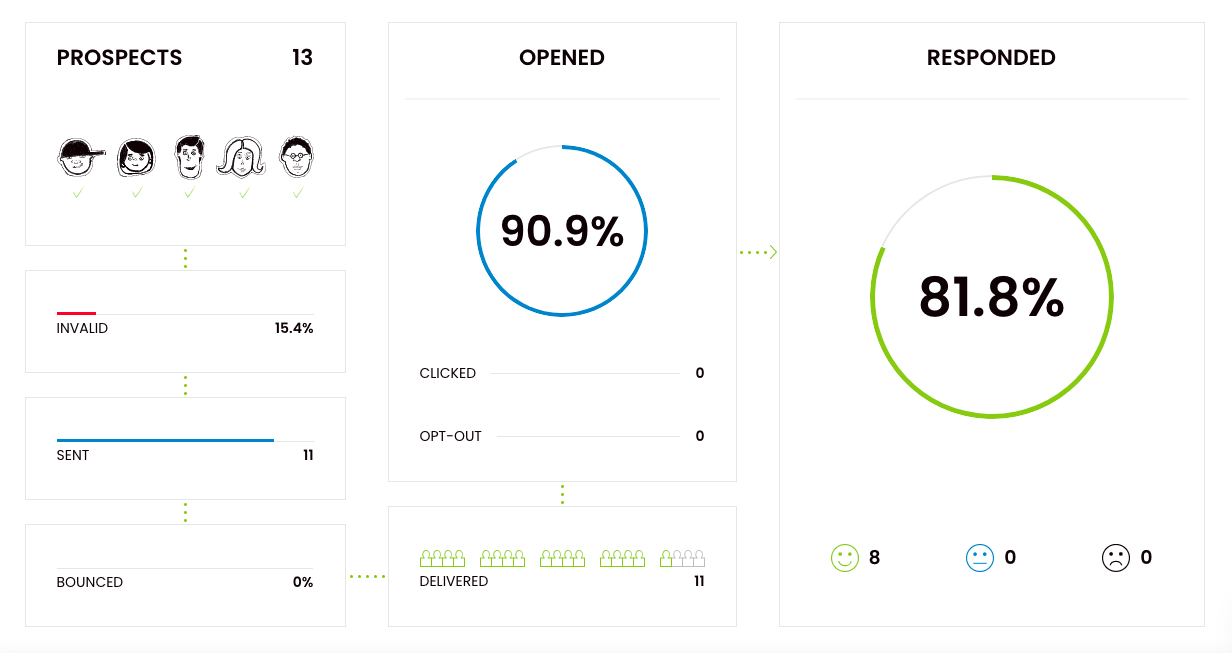
Woodpecker's own LinkedIn company page claims up to 99% email deliverability. That number comes straight from Woodpecker's own marketing, with no third-party audit behind it, so weigh it against the mixed warm-up reports below before you rely on it.
User reports on warm-up quality vary sharply. A Capterra review from a marketing consultant who used the tool for six to twelve months, dated July 2022, found the warm-up incomplete:
The email warmup tool was very average, warmed up 9 emails through their software and 3 of them were still landing in spam.
Dorothy D., Marketing Consultant, Marketing and Advertising, Capterra, July 2022.
A more recent G2 review, from a small-business president dated September 2025, questioned how the warm-up gets disclosed:
Their warm-up process is quite unusual and, in my experience, very misleading. There is no clear explanation that they will send messages resembling spam, which are completely off-brand, totally unrelated, and very alarming when discovered. Although these emails are sent to a closed network, this detail is not communicated, leading to unnecessary panic and the fear that your inboxes have been compromised.
Kristin S., President, small-business, G2, September 2025.
Against that, a G2 reviewer identified as a CEO at a small business, writing in August 2024, rated Woodpecker's inbox placement above a named rival:
The high deliverability rates ensure my emails land in inboxes, not spam folders. It also offers one of the best user experiences, superior to Instantly.
Piotr M., CEO, small-business, G2, August 2024.
Support quality and what users complain about
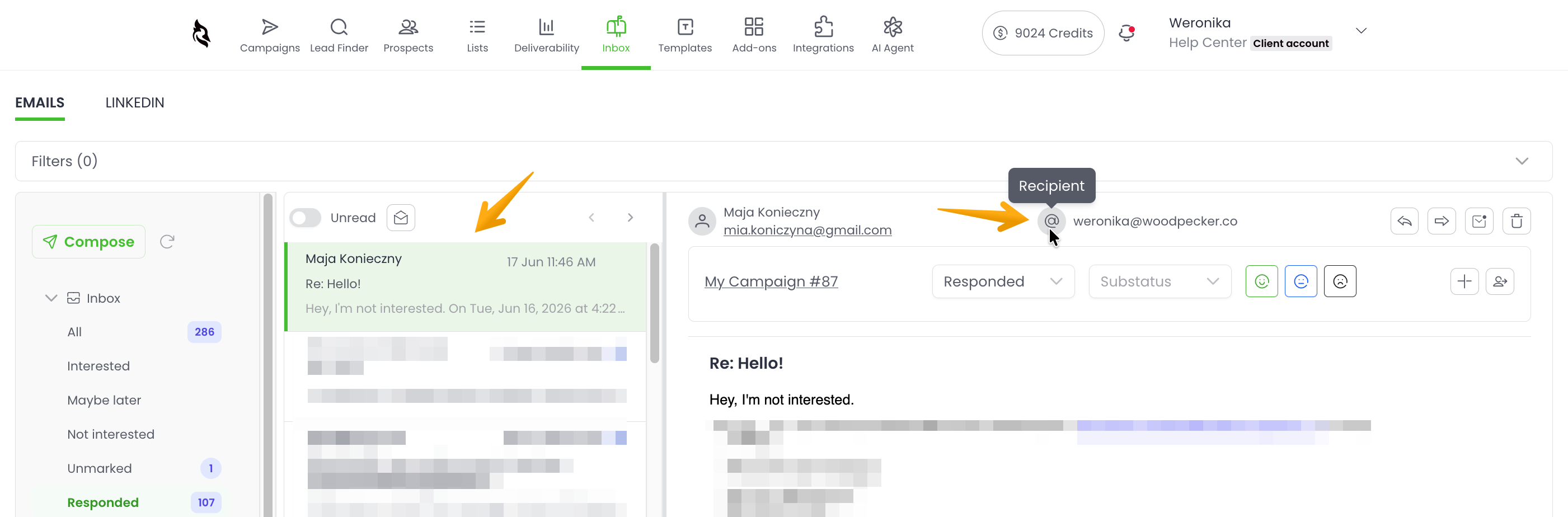
Aggregate scores read well: Woodpecker holds 4.5 out of 5 on G2 across 105 reviews and 4.5 out of 5 on Capterra across 33 reviews, where Capterra's own customer-service sub-score sits at 4.3. TrustRadius puts it at 8.1 out of 10 across 8 reviews from named customers.
Underneath that average, individual accounts split hard. A self-employed founder wrote a Capterra review in November 2024 titled "Unparalleled Customer Service," describing a support team that sent personal screen-recording videos and ran a 45-minute walkthrough call:
I learned more of what went wrong over a video demo call with Woodpecker than I did in the year I had been with Saleshandy.
Rowena T., President, small business, Capterra, November 2024.
Other accounts describe the opposite experience. A director at a computer software company, in an October 2023 Capterra review, reported it plainly:
Worst and rude support agents-- No refund policy. Once trapped and you are trapped-- Product doesnot work and not send emails-- They have some secret logs which they always point to when emails are not going-- ZERO technical support.
Umang A., Director, computer software company, Capterra, October 2023.
What users complain about most
An owner of a small marketing and advertising business, in an August 2022 Capterra review, flagged a reliability bug:
The cost wasn't as good as the alternatives I found. The 2nd thing I didn't like was the fact it kept freezing up when sending emails. Support did get them to unfreeze but that was after several hours were lost.
Heath H., Owner, Marketing and Advertising, Capterra, August 2022.
A March 2018 Capterra review from a partner at an internet company named two specific gaps: no A/B testing to compare email variants, and a clunky opt-out link workflow.
That first gap has since closed. Woodpecker's current pricing page lists A/B tests, up to five versions, under its Automation feature set, so split-testing subject lines and email bodies is a shipped capability.
What users praise most
Reviewers who switched from another tool most often cited deliverability or price as the reason, echoing the pricing quote cited earlier. A VP of marketing at an information-technology company, in a March 2024 Capterra review, framed Woodpecker's narrow scope as a feature:
It doesn't do everything that a full-featured sales engagement solution does, but it does what it does very well (cold emailing) and is easy to use... It doesn't have all the capabilities of something like Outreach, but it's not going after that market.
Michael L., VP Marketing, Information Technology and Services, Capterra, March 2024.
Praise clusters around simplicity more than raw feature count. Reviewers who had used heavier sales-engagement platforms before switching consistently called Woodpecker faster to set up and lighter to run day to day, even when they acknowledged it does less.
Integrations and the LinkedIn outreach add-on
Native, no-extra-charge integrations connect Woodpecker to Zapier, Hubspot, and Pipedrive, plus Calendly, Google Sheets, Clay, and Persana. Claude and an MCP server connection are newer additions, alongside a CLI, but core API access, webhooks, the MCP server, and the CLI all sit behind the separate $20/month add-on.
LinkedIn outreach automation, at $29/month per connected account, lets a sequence combine email steps, LinkedIn touchpoints, and manual tasks like calls through an Aircall integration.
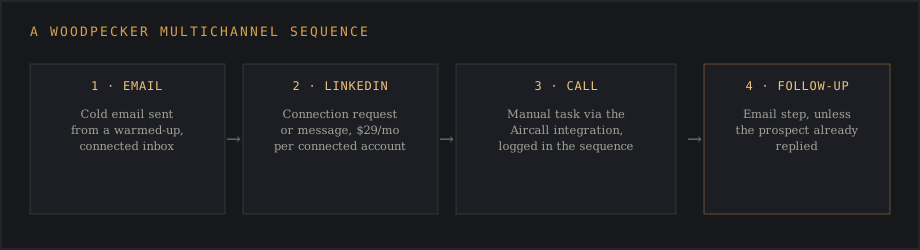
Unlike LinkedIn Sales Navigator, which is built for search-based prospecting inside LinkedIn itself, Woodpecker's add-on layers sequencing on top of a connected account.
That puts a lightweight multichannel sequence within reach of a single Woodpecker account, without the dialer-plus-database bundle a platform like Apollo sells as its core product.
Security and compliance
Woodpecker's current feature list states five security and compliance positions:
- GDPR and CCPA compliant.
- Data stored on ISO-certified infrastructure.
- CASA Tier 2 certification.
- Two-factor authentication available on the account.
- Listed as a Google-compliant OAuth 2 partner for connecting Gmail accounts.
None of these claims carries a published audit date on the pricing page itself, so they read as vendor-stated compliance posture.
Woodpecker vs Apollo.io, Cognism, Lusha and Instantly.ai
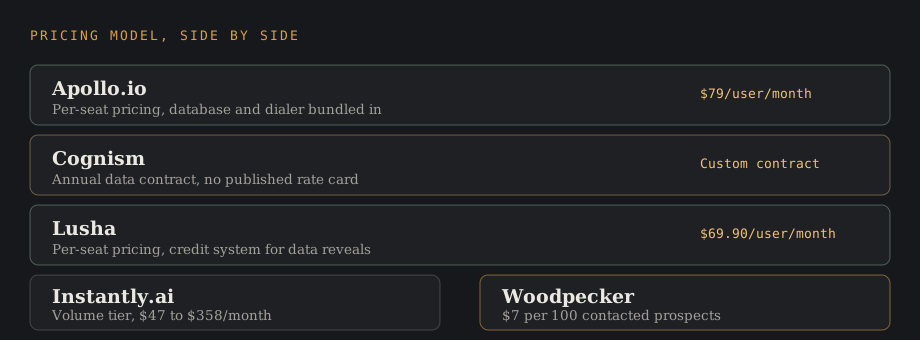
All four alternatives solve some piece of outbound prospecting, but none price the same way Woodpecker does. Apollo and Lusha charge per seat; Cognism sells annual data contracts; Instantly, the closest structural match, still prices by email volume tier.
Apollo.io
Apollo bundles a 275-million-contact database, a parallel dialer, and sequencing in one login, priced at $79 per user per month on its Professional plan, or $395/month for a five-person team.
That's a materially higher entry cost than Woodpecker's usage-based model with free unlimited seats, but it buys a shared contact database Woodpecker doesn't sell.
A team that wants to find leads and call them without leaving the platform gains from Apollo; a team that already has a data source and only needs a lean sender loses money on Apollo's per-seat floor.
Cognism
Cognism publishes no public pricing at all, selling instead through annual Sales Prospecting contracts built around Diamond Data, its phone-verified contact database of more than 10 million numbers. It has no native sequencing or dialer, feeding tools like Salesloft or Outreach instead, which makes it a data source to pair with Woodpecker.
Lusha
Lusha runs on a credit system, at $69.90 a month for the Pro plan, which covers two seats and adds $49.90 for each seat after that, charging 1 credit per email reveal and 5 per phone reveal against a database of 280 million direct dials. A G2 reviewer working as an enterprise BDR, in a July 2024 review, compared the sequencing experience directly:
Woodpecker makes it easy to craft sequences, which is something I disliked about Outreach, Salesloft, Hubspot, Lusha (other sequencers). Woodpecker is foolproof, lighter, and quick to use in general.
Josh B., Enterprise BDR, small business, G2, July 2024.
Lusha wins for a recruiter or seller who needs fast contact lookups from a LinkedIn profile; it loses as a sequencing tool, which was never its job.
Try it yourself
Sign up for Lusha
Free plan available, credit-based pricing after that.
 Visit Lusha →
May earn a commission if you sign up through this link, at no extra cost to you. Full affiliate disclosure.
Instantly.ai
Instantly's Growth plan runs $47/month for unlimited email accounts and warm-up, 1,000 uploaded contacts, and 5,000 emails sent per month. Its top self-serve tier, Light Speed, runs $358/month for 500,000 emails and a dedicated IP-rotation system called SISR.
Against Woodpecker, Instantly's tiers scale further on raw send volume, but the G2 reviewer quoted in the deliverability section above rated Woodpecker's inbox placement above it directly, and Instantly doesn't match Woodpecker's free unlimited seats and free catch-all verification.
Who Woodpecker is built for
Woodpecker fits a founder, a small sales team, or a lead-gen agency running cold outreach across email and LinkedIn as a single channel, at a volume where paying $7 per 100 contacted prospects beats a flat per-seat bill. It fits a team that wants free unlimited team members and email accounts by default, a detail no seat-priced competitor in this review matches.
Woodpecker ranks fifth in our lead intelligence software ranking, ahead of 6sense on price transparency, a public calculator against three demo-gated bundles, and behind Clay on lead-sourcing volume, 100 free Lead Finder credits against Clay's 30,000-a-year data-credit floor.
It doesn't appear among the nine platforms ranked on our sales intelligence list, which skews toward contact databases and revenue platforms like Gong. AI sales engagement platforms such as Amplemarket bundle more automation at a higher starting price; Woodpecker stays deliberately narrower and cheaper at low volume.
A buyer who wants a shared contact database, a built-in dialer, or a single enterprise contract covering data plus sequencing won't find it here; Apollo and Cognism sell that shape.
It also doesn't fit a buyer who can't tolerate landing on the slow-response side of the support split documented above, since the same product produced both a five-star "unparalleled customer service" review and a one-star "rude support agents" review within roughly a year of each other.
FAQ
How much does Woodpecker cost?
$7 per 100 contacted prospects, pay-as-you-go, with unlimited seats and unlimited email accounts included at every usage level. The entry usage tier bundles 16,000 emails sent per month, 4,000 stored prospects, 4 warm-up slots, and 100 Lead Finder credits at $0.
Does Woodpecker charge per seat?
No. Team members and email accounts are unlimited and free on every plan; the only unit that scales cost is the number of prospects contacted, at $7 per 100.
What changed in Woodpecker's June 2026 pricing update?
On June 18, 2026, Woodpecker replaced its flat monthly tiers, previously around $20 for cold email and $33 for the agency plan, with a single usage-based rate of $7 per 100 contacted prospects. Several third-party review sites still cite the older flat tiers.
Is Woodpecker good for LinkedIn outreach?
It adds LinkedIn touchpoints to an email sequence for $29/month per connected account, combining email steps, LinkedIn actions, and manual tasks like calls. It's a sequencing add-on.
Is Woodpecker's customer support reliable?
Reports vary sharply by account. Aggregate ratings sit at 4.5/5 on G2 and Capterra, but individual reviews range from a 45-minute personalized walkthrough call to complaints about slow, unhelpful responses and no refund policy. Test the support channel during the 14-day trial before committing real sending volume.
Bottom line
Woodpecker fits a founder, a small sales team, or a lead-gen agency running cold outreach across email and LinkedIn as a single channel, at a volume where paying $7 per 100 contacted prospects beats a flat per-seat bill. It fits a team that wants free unlimited team members and email accounts by default, a detail no seat-priced competitor in this review matches.
It doesn't fit a buyer who wants a shared contact database, a built-in dialer, or a single enterprise contract covering data plus sequencing; Apollo and Cognism sell that shape, Woodpecker doesn't.
It might suit a mid-market team already running Zapier, Hubspot, or Pipedrive, provided that team budgets for the $20/month integrations add-on and the $29/month LinkedIn add-on up front.
Test the warm-up and inbox placement during the 14-day, 100-email trial before committing real sending volume, and weigh the support split documented above against how much risk tolerance the team has for a slow response during a live campaign.
Budgeting off the flat $20 or $33 monthly tiers older write-ups still quote is the mistake buyers make most often here, since Woodpecker replaced that structure on June 18, 2026.
Disclaimer
This page includes one or more affiliate links. If you sign up for a product through one of them, this site may earn a commission at no extra cost to you.