6sense review
 By Jan Suski. I go deep on every review, checking every number against its source and digging up details other coverage misses, a habit from six years of SEO and link building for tech companies. Bylines at Surfer, Brand24, and Senuto. How the scoring works.
· Prefer this source on Google
Best for
Enterprise revenue teams running account-based marketing and sales with the account volume and reps to use continuous intent data and multi-channel orchestration.
Not for
A single marketer or small sales team that won't use enough of the platform to offset the ramp time and an enterprise-level contract.
What it costs
No public rate card. Implementation alone runs $5,000 to $50,000 on top of a subscription scaled to company size and data volume, quoted case by case.
- Intent network
- Signalverse: keyword searches and content consumption tracked across B2B content sites, research platforms and review sites
- Buying stages
- Four scored stages: awareness, consideration, decision and purchase
- Predictive scoring
- Fit plus stage, measured against engagement patterns from accounts that already closed
- Score refresh
- Continuous and same-day
- Account identification
- De-anonymizes website visitors at company level, matched to firmographic data already on file
- Orchestration
- Display advertising, website personalization, outreach sequences and rep alerts from one workspace
- CRM integration
- Salesforce and Microsoft Dynamics, with account level insights written into records reps already use
- Chrome extension
- Contact info and company data pulled while browsing LinkedIn or a company website
- Outreach sequences
- Automated and built around a contact's buying stage
- Account lists
- Synced between sales and marketing so both teams work the same records
- Activity log
- Actions CRM log of every touchpoint, with automated and manual sends on one timeline
- Ad platform export
- Segment sync to Google Ads or LinkedIn Ads is more limited than the CRM sync
- Persona targeting
- No fine job titles matching inside account lists, so exports need manual cleanup
- Meeting booking
- Not available from a flagged account; reps switch to a separate scheduling tool
- Mobile app
- None; used as a browser dashboard and CRM add-on
Contracts observed
- Median contract
- $62,440 a year across 385 purchases on Vendr
- Enterprise range
- Roughly $50,000 to $300,000 or more by modules, credit volume and company size
- Implementation cost
- $5,000 to $50,000 on top of the subscription, scaled to how much data needs cleaning first
- Discount lever
- 15 to 37 percent off the first quote at quarter end with a competing quote in hand
- Implementation
- Four to eight weeks before data reaches the dashboard, longer across several CRM systems
- Ramp to proficiency
- Two to three months to build segments and master the platform, per user reports
- Free plan
- Discontinued on 12 August 2026, with free logins and new sign-ups closed
- Paid plans
- Three Sales Intelligence bundles, sold by quote with no prices listed
- Paid plans
- Nothing listed on the public pricing page; custom quotes built after a sales conversation
Demandbase
Not forA team that shortlisted 6sense because the ramp looked long, since Demandbase's own G2 reviewers report the same multi-week configuration and lean on outside help to finish it.
ZoomInfo
Not forA marketing team buying for orchestration, because the display advertising, website personalization and stage-based sequencing 6sense runs from one workspace are not what ZoomInfo's database is built to do.
Pairs well with 6sense
Which contract figures are third-party buyer reports, and what 6sense doesn't publish
6sense lists no paid prices. The $62,440 median comes from Vendr's 6sense marketplace page, read on 1 October 2026. The $50,000 to $300,000 range, the $5,000 to $50,000 implementation band and the 15 to 37 percent discount come from third-party buyer reports.
The four to eight week implementation window and the two to three month ramp come from buyer and user reports. The free plan's end on 12 August 2026 comes from 6sense's own RevCity community announcement. Figures as of the 9 August 2026 update, with the median and the free plan re-checked on 1 October 2026.
6sense is a revenue intelligence platform built around intent data, predictive analytics, and account identification.
Amanda Kahlow co-founded the company in San Francisco in 2013, and the company has grown into one of the larger account-based marketing and sales platforms sold to enterprise revenue teams.
This 6sense review covers what the platform does, how its intent data and predictive analytics work, what it costs, where users report a real ramp time, and if the price is worth it for a given sales team or marketing department.
It also covers the company's history, its Glassdoor rating as an employer, and the questions buyers ask most about 6sense before signing a contract, including if the AI behind the platform works.
Company History and Funding
6sense was founded in 2013 by Amanda Kahlow, Viral Bajaria, and a small founding team.
The company raised a $12 million Series A in 2014 and a $20 million Series B in 2015 to build its predictive engine, landing early enterprise customers including IBM and NetApp.
Jason Zintak became CEO in September 2018 and pushed the company toward orchestration.
The company raised $200 million in a Series E round in January 2022 at a $5.2 billion valuation, and by 2024 the company reported more than $200 million in annual recurring revenue with 30 percent growth in its customer base.
↑ FACT SHEETWhat Is 6sense Used For?
Sales teams and marketing departments use 6sense to find target accounts that are actively researching solutions before they ever fill out a form.
The platform combines intent data, contact data, and firmographic data to flag high value accounts and high intent accounts earlier than a spreadsheet ever could.
A rep can see buyer intent signals building for weeks before any demo request comes in, then reach out with the right message once one enters an active buying stage.
Marketing teams use the same account data to target advertising and personalize a company website for known accounts, and sales reps use it to prioritize which target accounts get a call today, ahead of next quarter.
The underlying goal, across both sales and marketing, is turning anonymous visitors and cold contact records into a ranked list a rep can work in buying-stage order.
6sense, which holds a spot in our market intelligence tools ranking, positions itself as one of the key solutions in this category, alongside a handful of point solutions chasing the same buyers, and it prices itself accordingly.
Who Founded 6sense? Where Is It Headquartered?
6sense was founded by Amanda Kahlow, Viral Bajaria, and a founding team in 2013, and the company is headquartered in San Francisco, with additional offices in Austin, New York, London, Pune, and Bengaluru.
What Is the "6th Sense" in Humans?
People searching for 6sense sometimes land here after typing a question about proprioception, the biological sense that lets a person track their own body position without looking.
That sense has nothing to do with the company; the name is a marketing reference to giving sales and marketing teams a sixth sense about buyer behavior. No claim about human physiology is intended.
How Does 6sense Work?
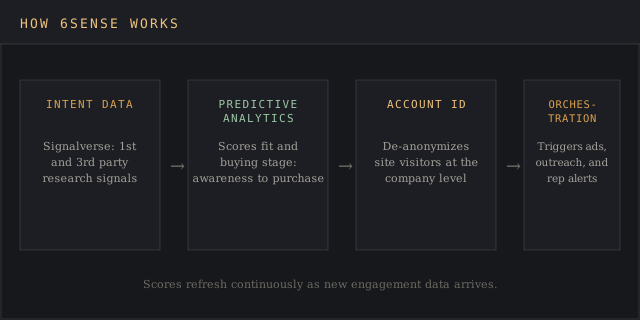
6sense pulls in first party data from a company's own website, CRM, and marketing systems, then layers on third party intent data bought from a publisher network of B2B content sites, research platforms, and review sites where buyers research vendors before contacting one.
The company calls this network Signalverse, and it is the raw material behind every score the platform produces.
Intent Data and Buyer Intent
Intent data sits at the core of the platform. 6sense tracks keyword searches and content consumption across its publisher network to build first party intent data profiles for every profile on a target list.
When several people at one company research the same topic, that pattern becomes an intent signal, and enough intent signals stacking up push it into the high intent accounts category.
Buyer intent is scored continuously, so the sales team sees the change the same day it happens.
Predictive Analytics and Buying Stage
The predictive AI model behind 6sense scores every profile by fit and by buying stage: awareness, consideration, decision, and purchase.
Predictive analytics compares a target account's current engagement data against patterns from accounts that already closed, so a rep sees what a target is doing, and roughly which buying stage it's in.
Real time insights refresh these scores as new engagement data arrives, and marketing can see the same buying-stage data the sales team sees.
Account Identification
The account-ID layer de-anonymizes anonymous website visitors at the company level, matching browsing activity to firmographic data already on file.
A visit that would otherwise show up as an unnamed IP address in Google Analytics instead gets tied to a real company record, with job titles and contact level data attached once a match is confirmed.
This is the piece that turns raw website visits into usable account level insights, and it is the one feature reviewers mention most when asked if 6sense earns its price.
Orchestration Across Channels
6sense supports multi channel orchestration: once a target shows buyer intent, the platform can trigger personalized display advertising, adjust website content for that visitor, queue a personalized outreach sequence, and alert a rep, all from one workspace.
The company positions this personalized engagement as its key differentiator against point solutions that only cover one channel of a much longer buying process.
6sense Compared to Other Platforms
Buyers evaluating 6sense typically shortlist it against a handful of other well-known names in the same space before picking one.
- Demandbase competes most directly, with a similar mix of scoring and orchestration built for large enterprise budgets.
- ZoomInfo leans harder on a contacts and company database first, with intent added as a layer.
- Clearbit, now folded into HubSpot, suits a lighter, self-serve setup. Our Clearbit pricing report covers what that HubSpot route costs in 2026.
- Bombora supplies raw intent signal data that some buyers license directly, skipping a full platform purchase.
- Terminus focuses more narrowly on advertising and orchestration than on scoring or identification.
Reviewers who compare all five generally say 6sense wins on depth and loses on price and simplicity, a tradeoff smaller buyers weigh carefully before signing.
Key Features
Beyond account signals and predictive scoring, 6sense bundles a set of key features aimed at connecting marketing efforts to sales follow-up.
Both sales teams and marketing rely on the same records to avoid duplicate outreach to the same website visitors.
- CRM integration with Salesforce and Microsoft Dynamics, pulling account level insights and CRM data directly into records reps already use.
- A Chrome extension for pulling contact info and company data while browsing LinkedIn or a company website, so a rep never has to leave the tab to find a contact.
- Automated outreach sequences and email outreach built around a contact's buying stage.
- Account lists that sync records between sales and marketing so both teams work from the same data and the same insights.
- AI-powered insights surfaced directly on a dashboard, showing which accounts moved buying stage in the last day.
Reps who need a contact quickly point to the extension as one of the platform offers they use daily, since it surfaces contact info without leaving a browser tab, and syncs that contact info straight into CRM systems.
6sense keeps an actions CRM log of every touchpoint, and automated outreach runs alongside manual sends so reps and managers see the same timeline of activity and the same insights against each account.
↑ FACT SHEETHow Much Does 6sense Cost? Is There a Free Plan?
Pricing: The Free Plan Ended in August 2026
6sense discontinued its Sales Intelligence free plan on 12 August 2026. Free accounts can no longer log in, new registrations are closed, and paid subscriptions carry on unchanged.
Until that date the free tier gave a limited number of monthly credits for company search, people search, and a browser lookup tool, with no intent data, predictive scoring, or account-level identification.
Smaller companies that used it to test contact quality now need a demo and a paid quote to see the same data.
Paid Plans and the Pricing Page
6sense does not list paid pricing on its public pricing page or its other key pages; the company builds custom quotes after a sales conversation.
Our full breakdown of 6sense pricing covers every tier, the credit model and the hidden costs. Vendr's marketplace records a median 6sense contract of $62,440 a year across 385 purchases. Third-party buyer reports put enterprise deployments at roughly $50,000 to $300,000 or more depending on modules, credit volume, and company size, and implementation can add several thousand dollars on top of the subscription.
Buyers who negotiate at the end of a quarter and bring a competing quote report discounts as high as 15 to 37 percent off the number first quoted on that pricing page.
↑ FACT SHEETImplementation and Setup
Implementation typically runs four to eight weeks before a company's sales team and marketing department see real data flowing into the dashboard, longer for a company connecting several CRM systems and a large website at once.
Buyers report added implementation costs of $5,000 to $50,000 on top of the subscription, scaled to how much of the company's existing contact data and website history needs cleaning before the account-ID layer can trust it.
A dedicated customer success manager runs the kickoff calls and helps map which website pages, contact fields, and CRM objects the account-ID layer needs first, so the sales team is not left guessing which target accounts to work while data is still syncing.
- Export a current contacts file so field mapping can start before the first kickoff call.
- List every CRM system and marketing tool already in use, including any that overlap with 6sense.
- Flag key pages on the company website that should trigger alerts once identification is live.
- Name an internal owner on the buyer's side to run the rollout day to day.
Does 6sense Integrate With Other Tools?
Yes. Beyond the Salesforce and Microsoft Dynamics connections, 6sense syncs with common CRM systems and marketing automation platforms so account data, contact data, and engagement data stay aligned across a company's website, CRM, and ad stack.
The one real gap reviewers flag is exporting segments to ad platforms; syncing an account list to Google Ads or LinkedIn Ads is more limited than syncing to a CRM, and marketing has to work around it manually.
Does 6sense AI Work? Is 6sense Reliable?
Reviewers on G2 and TrustRadius generally credit the intent data and predictive analytics with real accuracy gains for the account intelligence sales reps use daily.
Several users report the platform correctly flagged high value accounts weeks before those accounts reached out on their own, giving both sales and marketing a head start on outreach and a clearer GTM strategy for the quarter.
Reliability has limits. Intent scores are described as opaque, with some reviewers unable to see exactly which signals drove a given score, and false positives can send a sales rep chasing an account that was never in market.
Judged against simpler contact tools, 6sense is more reliable at spotting real buyer behavior in depth, but it is not infallible, and a marketing or sales team should treat every score as a starting point.
Who Is 6sense Best For?
6sense fits companies running account-based marketing programs with enough in-market accounts, and enough sales reps, to justify the setup and the price.
A large marketing team coordinating with sales on a shared account list gets clear value from the buying-stage data and from knowing which named accounts are already browsing the company website.
A single marketer or a small sales team is unlikely to use enough of the platform to offset the cost, and would get greater precision for less money from a narrower contact tool sized to a smaller footprint.
Teams mainly hunting for contact info may prefer that lighter tool too.
↑ FACT SHEETWeaknesses and Limitations
- A real ramp period: some users report it takes two to three months to fully set up segments and master the platform.
- Persona targeting inside account lists lacks fine job titles matching, so exports to ad platforms need manual cleanup.
- Intent signals can produce false positives, flagging an account as in-market when it is only doing unrelated research.
- Smaller companies often find the platform harder to justify next to lighter tools built for simpler use cases.
- Reps cannot always book meetings directly from a flagged account without switching to a separate scheduling tool first.
User Experience and Onboarding
Steep Learning Curve
New users consistently describe a demanding ramp tied to the sheer number of data sources, segments, and settings.
Getting comfortable with segment building and keyword searches takes real time, and user friendliness suffers early on for a marketing or sales team that expected a simpler dashboard on day one.
Onboarding Process
The onboarding process includes guided setup calls and a customer success manager assigned to walk a new account through configuration.
Some reviewers say the setup itself is thorough, even if the underlying platform stays complex well past the first month, and a dedicated success contact remains the main point of contact through that stretch.
Customer Service
Support quality gets consistently positive marks, with a named contact available to troubleshoot account engagement and configuration questions.
Response times on demo requests and support tickets are reported as fast relative to the size of the contract, and other reviewers specifically credit the account team over the software itself for a smooth first year, with sales teams in particular valuing having one place to check status.
Is 6sense a Good Company to Work For?
6sense carries an employee rating of 3.6 out of 5 on Glassdoor from more than 650 reviews, with 63 percent of employees saying they would recommend the company to a friend.
Staff rate the company's culture and values at 3.7, work-life balance and career opportunities at 3.6, and compensation and benefits at 3.9.
Reviewers describe approachable leadership and a strong product team, alongside complaints about a competitive internal environment and shifting organizational priorities as the company scaled past its Series E round.
Where Do People Leave Reviews of 6sense?
Most public product feedback lands on G2 and TrustRadius, where reviewers rate intent data quality, ease of use, and support separately.
Buyers researching a GTM strategy overhaul tend to read both sites before a demo request, since pricing is not published on the company's site and word of mouth carries more weight than usual.
Employee reviews of 6sense as a company to work for concentrate on Glassdoor instead, a separate audience from the buyers rating the product on G2, and a marketing hire researching the company culture should read both before accepting an offer.
Is 6sense Worth It?
For a company with enough qualified accounts, enough sales reps, and a real account-based marketing motion already in place, 6sense is worth the price: the intent data and predictive analytics genuinely shorten the time between an account actively researching solutions and a rep making contact.
For a smaller company or a single marketer, a lighter contact tool covers the need without the steep ramp time or the enterprise price tag attached to the full platform. The 6sense free plan that once filled that gap closed on 12 August 2026.
FAQ
What is 6sense used for?
Finding target accounts through intent data and predictive analytics, then routing those insights to sales teams and marketing so a lead gets contacted before it ever fills out a form.
What does the company 6sense do?
6sense builds and sells a revenue intelligence platform: intent data, account matching, predictive scoring, and cross-channel execution sold mainly to enterprise sales and marketing departments.
Who is the founder of 6sense?
Amanda Kahlow co-founded 6sense in San Francisco in 2013, alongside Viral Bajaria and other early team members.
Where is 6sense headquartered?
San Francisco, with additional offices in Austin, New York, London, Pune, and Bengaluru.
Does 6sense AI work?
Reviewers generally say yes for spotting real buyer intent, though intent scores can feel opaque and occasionally flag accounts that are not in market.
Is 6 Sense reliable?
Reliable enough for prioritization, according to most reviewers, but not a guarantee; treat every score as a signal to check.
Is 6sense a good company to work for?
Mixed to positive. Glassdoor rates it 3.6 out of 5 from more than 650 reviews, with 63 percent of employees recommending it to a friend.
How long does 6sense take to set up?
Most deployments take four to eight weeks, longer for a company with several other databases or a large website to connect.
Does 6sense have a mobile app?
6sense is used mainly as a browser dashboard and CRM add-on.
Bottom Line
6sense remains one of the more complete intent data and predictive analytics platforms for account-based revenue teams, combining account matching, contact data, and multi channel orchestration that larger sales and marketing teams rely on for sharper insights and to prioritize target accounts.
The tradeoffs are real: a steep ramp time, an enterprise price with no published pricing figures, and intent scores that occasionally miss.
Companies with the account volume and the sales reps to use it get a genuine head start on buyer intent; smaller teams will likely find the cost and the ramp time working against them.